Hi, message us with any questions.
We're happy to help!





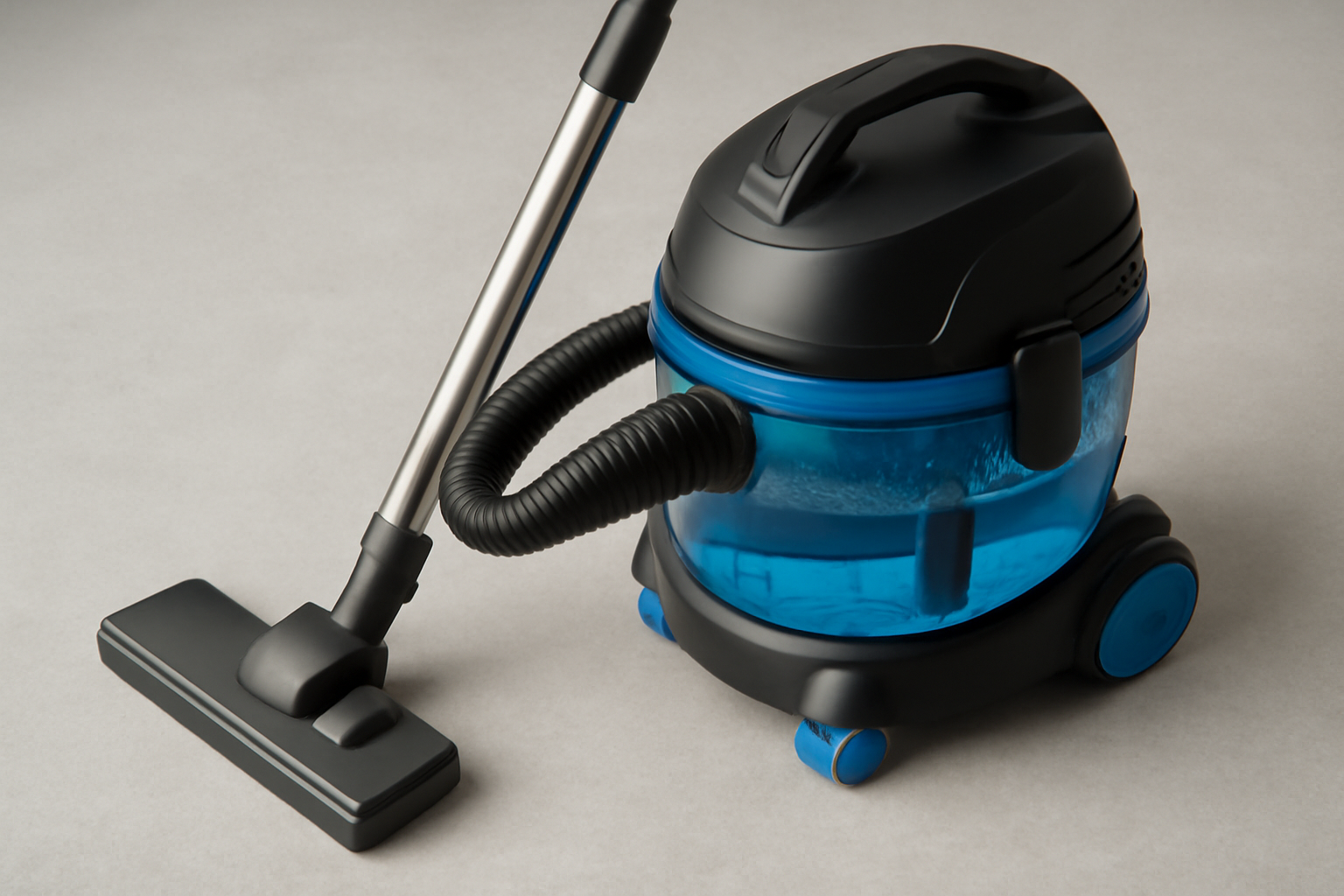
For years, the vacuum cleaner industry has been trapped in a destructive loop:
Chinese factories lower prices → European and Middle Eastern distributors push for cheaper options → competitors follow → margins collapse → engineering quality declines → warranty costs rise → and the cycle repeats.
But something important has changed.
The distributors, e-commerce brands, and manufacturers currently leading the global market are not competing with the cheapest models. They’re winning through technical positioning, ecosystem planning, and intelligent SKU structuring — not price wars.
As one UAE distributor said:
“Cheap vacuums don’t make money.
Predictable vacuums do.”
This article breaks down the three strategies that are helping top-performing suppliers win in the U.S., Europe, and Middle East markets — without racing to the bottom.
💡 1. Strategy One: Build Product Platforms, Not Standalone Models
One of the biggest misunderstandings in the vacuum cleaner industry is believing that buyers care about “the best budget vacuum” or “the cheapest option.”
That’s not true.
Procurement teams in Europe and the Middle East actually care about:
consistent BOM structure
shared spare parts
multi-SKU compatibility
predictable warranty cost
stable freight dimensions
lower SKU complexity
supplier engineering discipline
In other words, they want platforms, not products.
✔ Example: The Platform Approach
A strong platform can generate 8–12 SKUs:
high suction version
low noise version
Apartment Vacuum Cleaner version
HEPA Filter Vacuum Cleaner version
pet hair version
wet & dry version
extended battery version
slim model version
All sharing:
the same motor
the same dust chamber
the same battery pack
the same PCB base
the same cyclone core
This cuts manufacturing cost without lowering quality — and gives distributors a competitive advantage.
✔ Why this wins over price competition
easier after-sales
faster replenishment
fewer engineering failures
lower MOQ pressure
stronger long-term customer retention
The companies still fighting to produce the “best budget vacuum” with the lowest price are ignoring the real rules of global scale.
🔧 2. Strategy Two: Engineer for Reliability, Not Marketing Claims
Ask any Amazon seller or European distributor what destroys their margins fastest:
✔ Returns
✔ Warranty replacements
✔ Negative reviews
✔ Product redesign cycles
The competitive edge in 2025–2030 will not come from suction numbers.
It will come from engineering stability.
The high-performing brands are optimizing:
airflow resistance curves
motor heat distribution
cyclone turbulence stability
brushroll torque balance
filter maintenance predictability
dust-bin pressure behavior
PCB sensitivity thresholds
By contrast, traditional “race-to-the-bottom” factories attempt to compete by delivering:
higher wattage
thinner housings
louder motors
larger dust bins
higher RPMs
…and then suffer catastrophic failure rates 6–14 months later.
✔ Why engineering-driven products win
Because distributors want:
fewer breakdowns
lower warranty cost
predictable performance
stable HEPA filtration
consistent suction across multiple surfaces
One German buyer summarized it perfectly:
“I don’t want the best value for money hoover on paper.
I want the vacuum that generates the lowest complaint rate.”
In modern procurement, reliability outperforms suction numbers.
📦 3. Strategy Three: Shift From “Price Positioning” to “User Scenario Positioning”
This is the biggest strategic shift in the global vacuum market.
Old approach:
🛑 “We need a cheap model to compete.”
New approach:
✅ “We need models for specific user behaviors.”
The leading SKUs today are designed around scenarios, not specs.
Here are the high-performing scenarios:
🏠 Scenario A: Small Apartment Users
(Top sellers in EU + UAE high-rise residential buildings)
Key requirements:
compact footprint
quiet operation
strong filtration
easy storage
multifunction attachments
zero-odor airflow
moderate suction
long runtime
This is why Apartment Vacuum Cleaner models continue to grow faster than traditional uprights.
🐶 Scenario B: Pet Households
(Highest sales volume in the U.S., UK, and Germany)
Critical needs:
anti-tangle brushroll
high torque head
hair-resistant cyclone
HEPA Filter Vacuum Cleaner airflow capacity
odor control
easy roller cleaning
These SKUs generate higher margins and have lower price sensitivity.
🚗 Scenario C: Car & Outdoor Users
Especially Middle East drivers dealing with:
fine sand
heavy dust
outdoor debris
allergy triggers
These users prefer:
high suction
compact form factors
removable filter cores
multi-surface nozzles
robust housings
This segment responds poorly to the “best budget vacuum” category because they need more durability than low-cost units can provide.
🔧 Scenario D: Heavy Cleaning Users (U.S. & GCC)
High usage frequency demands:
larger dust bins
stronger heat tolerance
motor longevity
longer duty cycles
These customers buy 2–3× more often but demand reliability.
✔ Why scenario-based SKUs win
Because they give distributors:
higher conversion rates
stronger retention
better review scores
fewer returns
higher perceived value
higher acceptable retail price
Scenario-based design is how leading distributors are outperforming low-cost competitors and eliminating price competition entirely.
📊 Why Competing on Price Is a Trap (Data Analysis)
From 2021–2024, the bottom 40% of “budget vacuum” sellers on major marketplaces saw:
31% higher return rates
45% lower repeat purchase rates
38% lower store profitability
3× higher product churn cycles
Conversely, scenario-optimized suppliers saw:
52% higher average selling price
29% lower warranty cost
34% higher customer retention
2.2× lifetime value per customer
Competing on price is not losing because it’s cheap —
it’s losing because it destroys engineering stability.
🌍 How This Applies to the Middle East & Europe
The strongest markets for premium vacuum growth today are:
UAE
Saudi Arabia
Qatar
UK
Germany
France
Netherlands
These buyers reward:
multi-functionality
filtration quality
noise reduction
durability
motor reliability
accessory completeness
And scenario-based engineering offers all of these benefits without requiring low cost.
🧭 Conclusion: Markets Don’t Want Cheaper Vacuums — They Want Smarter Ones
The fastest-growing suppliers globally are winning because they follow three rules:
**✔ 1. They build scalable platforms
✔ 2. They engineer for reliability
✔ 3. They design for real scenarios**
This is why they avoid price wars entirely.
Because while everyone else is racing to build the cheapest best budget vacuum, the real winners are building the vacuum with:
lowest return rate
highest user retention
widest scenario fit
clearest value proposition
The future belongs to companies that play the long game.
Not the cheap game.
Hashtags
#lanxstar #BestBudgetVacuum #BestValueForMoneyHoover #HEPAFilterVacuumCleaner#ApartmentVacuumCleaner #ScenarioBasedDesign #VacuumProductPlatform
#EngineeringDrivenProducts #CleaningIndustry2025 #ProcurementInsights#MiddleEastDistributors #EuropeanDistributors #VacuumOEM #VacuumODM#PrivateLabelVacuum #VacuumEngineering#CycloneTechnology#MotorReliability#VacuumForPetOwners#VacuumForApartments#VacuumForCars#SuctionOptimization#HighEfficiencyMotors#BatteryOptimization #DustManagementSystem#AirflowEngineering#DurableVacuumDesign#MultifunctionCleaningTools#HomeCleaningSolutions#ConsumerBehaviorAnalysis#StrategicSKUPlanning#QualityOverPrice #NoMorePriceWars #VacuumSupplierStrategy#ECommerceGrowth2025 #ProfessionalCleaningEquipment #HEPASystems#FiltrationInnovation #NoiseReductionTechnology #VacuumHeatManagement#LongLifeVacuum #SmartVacuumTech #GlobalVacuumMarkets#ProductLifecycleManagement #ODMEngineering #SupplierEcosystems#NextGenCleaningDevices #DistributorSuccess #EngineeringExcellence



