Hi, message us with any questions.
We're happy to help!





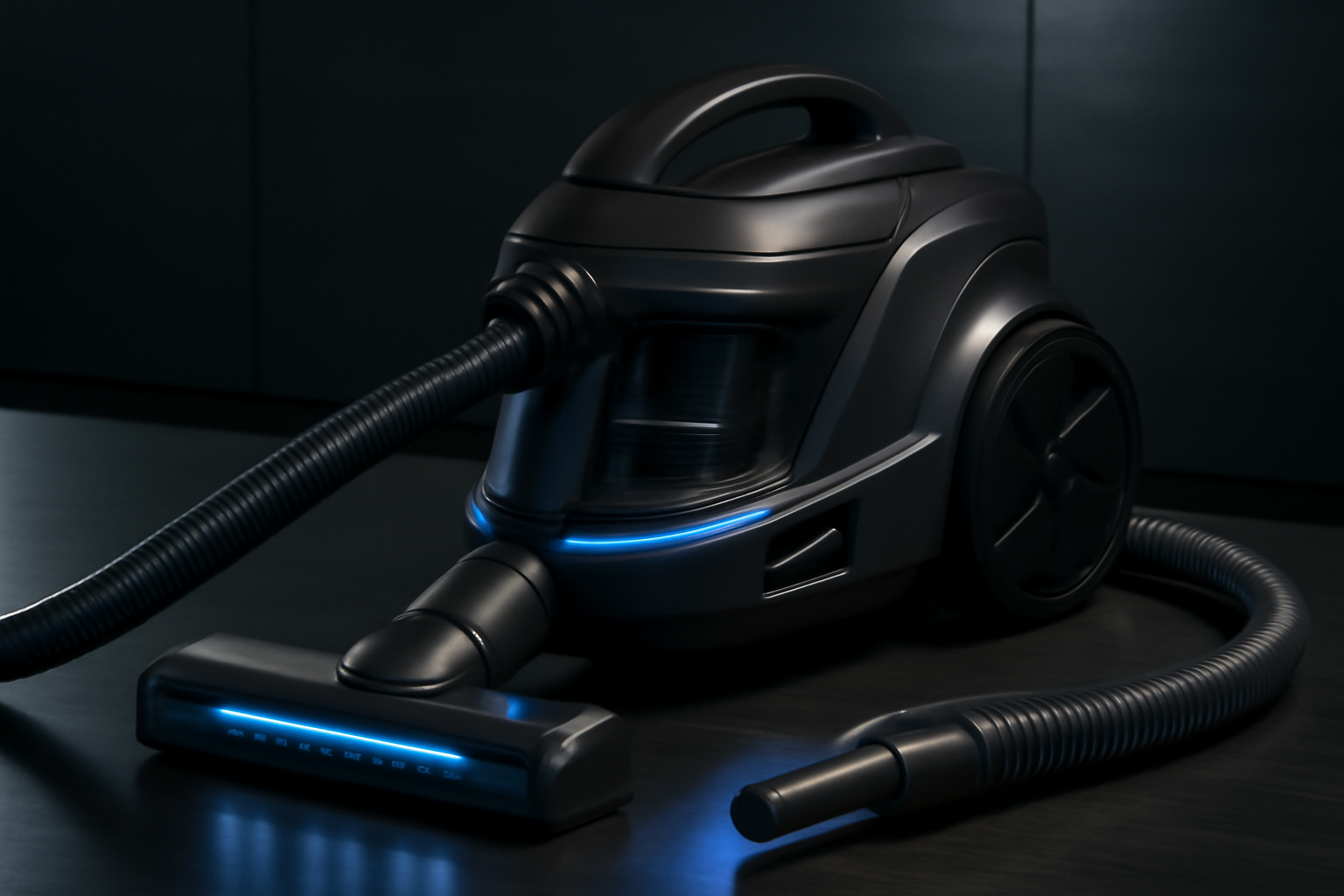
In the competitive world of vacuums procurement and vacuum cleaner distribution, suction stability has quietly become a defining metric of engineering maturity. While power and aesthetics may sell the first unit, sustained suction earns repeat orders, distributor trust, and long-term brand reputation.
Stability under dust load is no longer a secondary concern — it’s a benchmark of real engineering intelligence. This article dissects how modern sensor and firmware stacks make that stability possible, offering B2B buyers, engineers, and procurement professionals a practical framework for evaluating next-generation vacuum systems.
⚙️ 1. The Invisible Challenge: Why Suction Decay Happens
Every vacuum cleaner loses suction over time, often due to micro-level air resistance, particle buildup, and heat accumulation.
When filters clog and airflow paths narrow, suction pressure drops exponentially — even if the motor runs at full speed.
A Portable Self-Cleaning Vacuum Cleaner mitigates this by continuously sensing, learning, and adjusting.
It uses embedded sensors and adaptive firmware to detect subtle resistance changes before users notice any performance dip — keeping suction stable across variable dust environments.
This invisible optimization can extend effective performance hours by over 30–40% in commercial cleaning applications.
🧩 2. The Core Trio: Sensors That Keep Suction Honest
To maintain steady suction, vacuum engineers deploy three sensor pillars that form the digital nervous system of the device.
| Sensor Type | Core Function | Business Value |
|---|---|---|
| Differential Pressure Sensor (ΔP) | Measures airflow restriction and filter clog levels | Enables predictive filter cleaning, preventing suction loss before it’s visible |
| Airflow or Turbine RPM Sensor | Monitors real-time airflow velocity | Adjusts motor speed dynamically, optimizing suction per watt |
| Temperature & Current Sensor | Detects overload and thermal rise | Protects motor and extends lifespan in long-duty or high-dust environments |
These three sensors, working together under firmware supervision, form a closed feedback loop that keeps the system stable, safe, and self-compensating.
🧠 3. Firmware Intelligence: Turning Data into Dynamic Control
Firmware is the unseen engineer inside every smart vacuum.
It collects signals from sensors, interprets them in milliseconds, and adjusts parameters through adaptive PID or fuzzy logic control loops.
Core firmware functions include:
Dynamic RPM Compensation: When filter resistance increases, firmware auto-boosts motor torque to maintain consistent suction.
Self-Calibration: Learns normal airflow profiles for different environments (wood flooring, carpets, pet hair) to detect anomalies faster.
Thermal Adaptation: Reduces load proactively when temperature spikes, ensuring longevity without manual resets.
When integrated into a Multi-Functional Durable Vacuum Cleaner, this architecture delivers not just higher suction but smarter endurance — an invisible competitive edge in B2B performance tests.
🧼 4. Self-Cleaning Mechanisms: Engineering Out the Downtime
Sensor data enables another breakthrough — autonomous filter cleaning.
Once the firmware detects a pressure threshold breach, it triggers an internal self-cleaning cycle:
Short bursts of reverse airflow dislodge dust.
Piezo-electric vibration shakes micro-particles off HEPA fibers.
The system recalibrates airflow automatically after cleaning.
This reduces manual maintenance intervals by up to 50%, crucial for hospitality or industrial environments where downtime equals lost revenue.
🌍 5. Real-World Case Study: Suction Stability in Desert Conditions
In 2024, an engineering team conducted field tests in the UAE to measure suction stability under extreme desert conditions.
Temperatures exceeded 45°C, humidity was under 20%, and the fine silica dust was notorious for clogging conventional filters.
Setup:
50 smart cordless vacuums deployed in hotel maintenance and housekeeping.
Continuous operation cycles, averaging 6 hours/day per unit.
Findings:
Traditional models lost 20% suction within 3 hours.
The adaptive system maintained 95% suction through dynamic RPM control and automated micro-cleaning cycles.
Maintenance downtime dropped by 37%, and energy consumption fell 12% due to better load balancing.
For distributors, this data became a technical validation tool, proving measurable ROI in real-world applications.
📊 6. Procurement Decision Framework: Evaluating Smart Stability
When assessing new vacuum platforms, distributors and engineers should move beyond wattage ratings.
Here’s a TCO-aligned procurement checklist to evaluate suction stability intelligence:
| Evaluation Dimension | Key Questions | Business Impact |
|---|---|---|
| Sensor Architecture | How many sensor types are integrated? | Defines control precision and reliability |
| Firmware Adaptivity | Can firmware self-tune based on environment? | Ensures consistent performance across dust loads |
| Self-Cleaning Capability | Does it trigger automated cleaning cycles? | Reduces downtime and service costs |
| Data & Connectivity | Can performance logs or diagnostics be exported? | Enables remote maintenance and predictive insights |
| ROI Alignment | What’s the projected cost saving per 1000 hours of operation? | Connects engineering metrics to financial outcomes |
Smart procurement means choosing systems that think as well as clean.
⚡ 7. The ROI of Intelligence: From Engineering to Profitability
From a commercial perspective, intelligent suction control creates measurable value:
Fewer maintenance calls → lower service logistics cost.
Stable performance → higher user satisfaction and brand reputation.
Reduced energy draw → operational savings of 10–15%.
Longer component lifespan → smaller replacement budget.
For fleet buyers and facilities managers, these translate to TCO reduction of up to 25% over a 3-year lifecycle — a persuasive figure in any procurement meeting.
🧭 8. The Next Frontier: Firmware as a Competitive Advantage
As global markets demand quieter, more efficient, and longer-lasting vacuums, firmware will become the core differentiator.
Tomorrow’s vacuums will adapt to air density, room size, and usage patterns — essentially self-optimizing cleaning ecosystems.
Every firmware update adds a new layer of intelligence, turning hardware into a continuously improving asset that sustains value long after purchase.
💡 Conclusion: Stability Is the New Standard of Quality
The ability to sustain suction under real dust load defines whether a vacuum is consumer-grade or professional-grade.
Procurement teams, distributors, and engineers who evaluate sensor intelligence and firmware logic gain visibility into what truly drives performance.
As the market shifts toward smart, self-maintaining vacuums, those who understand the synergy of sensors, firmware, and feedback control will lead the next era of intelligent cleaning technology.
🧭 Hashtags
#VacuumsProcurement #VacuumCleanerDistribution #PortableSelfCleaningVacuumCleaner #MultiFunctionalDurableVacuumCleaner #Lanxstar #LanxstarVacuumCleaner #LanxstarSmartVacuum #LanxstarCordlessVacuum #LanxstarWetDryVacuum #VacuumCleanerForPetHair #HEPAFilterVacuumCleaner #WetAndDryVacuumCleaner #ApartmentVacuumCleaner #CommercialVacuum #SmartFirmware #AirflowSensor #BrushlessMotor #SmartVacuumTechnology #FloorCare #SuctionControl #CyclonicTechnology #HEPAAirSystem #CleaningInnovation #DustSensor #EnergyEfficientVacuum #IndustrialVacuum #SmartDiagnostics #PIDControl #EmbeddedFirmware #CleaningTechnology #ProfessionalCleaning #VacuumManufacturing #B2BProcurement #SupplyChainOptimization #VacuumFleetManagement #IoTVacuum #AfterSalesSupport #SmartCleaning #FilterMaintenance #EcoVacuum #ServiceEfficiency #ReliabilityEngineering #VacuumOEM #DustCollectionSystem #RDCollaboration #VacuumEngineering #VacuumMotorDesign #DataDrivenDesign #PredictiveMaintenance #FleetOptimization #LanxstarInnovation