Hi, message us with any questions.
We're happy to help!





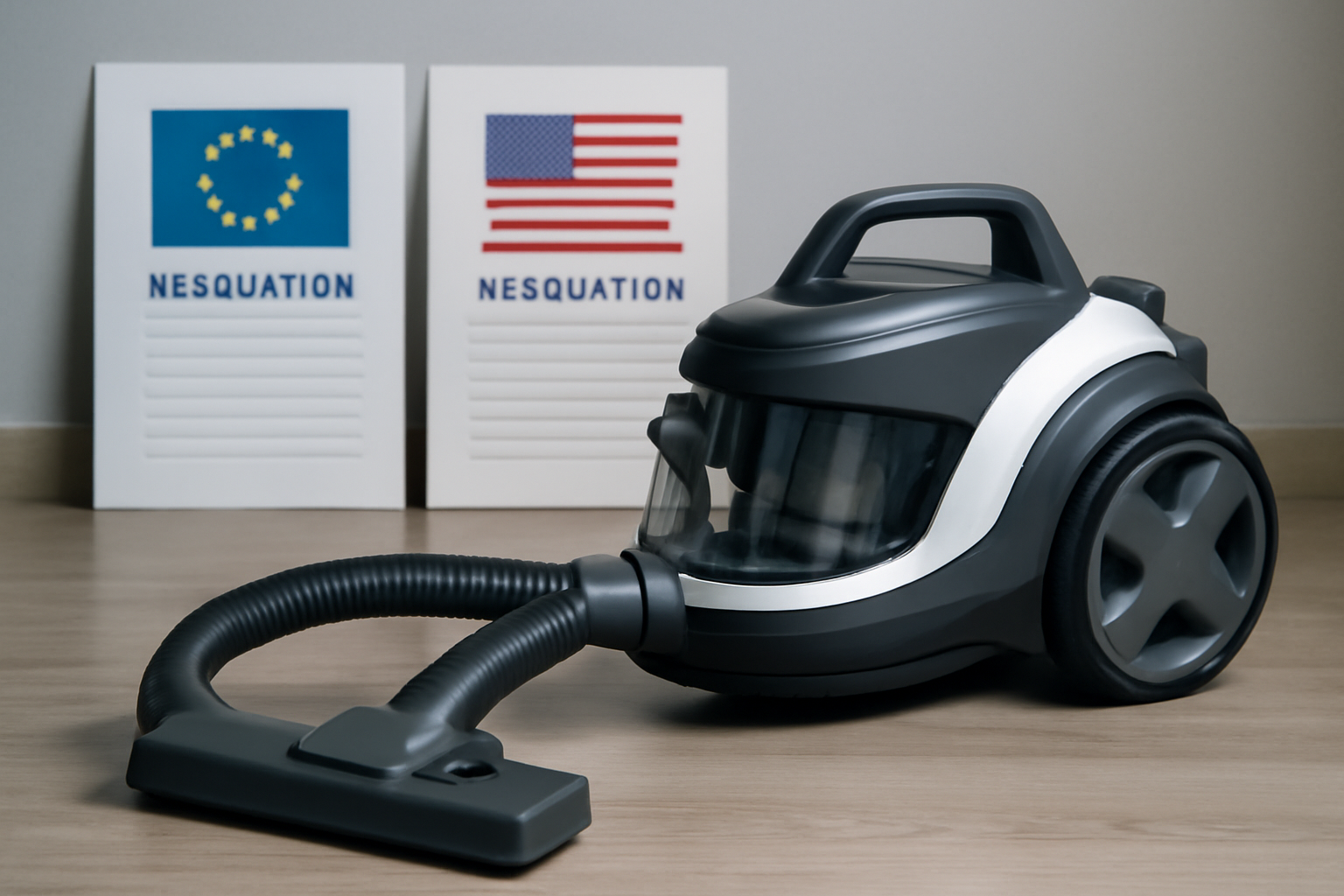
For manufacturers and distributors in vacuums procurement and vacuum cleaner distribution, 2025 marks the beginning of a new regulatory era. The vacuum cleaner industry—once driven by suction wattage and design appeal—is now being reshaped by sustainability mandates, repairability rights, and carbon accountability.
If you export to Europe or North America, your product specs, documentation, and testing protocols are about to face the most comprehensive transformation in a decade.
This article explains what’s changing, why it matters, and how forward-thinking engineering teams can turn compliance into a long-term competitive advantage.
⚖️ 1. The Policy Shift: From Performance to Sustainability Metrics
The European Union’s Ecodesign for Sustainable Products Regulation (ESPR) and the U.S. Energy Efficiency and Right-to-Repair initiatives are not optional; they are redefining what a “qualified product” means.
Under the new rules, vacuums will be assessed not just for suction power or motor efficiency, but for:
Repairability score (availability of spare parts, ease of disassembly)
Energy efficiency under load rather than no-load conditions
Recycled content ratio in plastics and packaging
Noise and durability benchmarks
This shift directly impacts engineering, supply chain, and marketing alike—because sustainability now defines technical excellence.
🌍 2. Europe’s Ecodesign Revolution: Beyond Energy Labels
The EU’s regulatory ecosystem is becoming the most detailed globally.
From 2025, every vacuum model sold in the region must align with:
Digital Product Passport (DPP): An online database storing every model’s lifecycle data—materials, components, carbon footprint, and repair instructions.
Extended Producer Responsibility (EPR): Manufacturers will finance recycling, collection, and product end-of-life treatment.
Energy Label Reform: Efficiency is regraded under realistic dust load, not lab-perfect airflow conditions.
For example, a Fast Lightweight Vacuum Cleaner may no longer qualify for high energy ratings if it loses suction rapidly during endurance testing.
This forces brands to invest in design optimization and firmware control rather than superficial wattage inflation.
⚡ 3. U.S. Standards: Repairability and “Energy Under Real Use”
Across the Atlantic, the U.S. Department of Energy (DOE) and several state-level authorities—like California’s Energy Commission—are aligning with the EU trend.
The focus areas include:
Modular Design: Replaceable motors, filters, and PCB units must be accessible without specialized tools.
Energy Use per Square Meter: Efficiency is calculated per cleaning area, not per minute of runtime.
Recyclable Packaging Mandates: Plastic inserts, blister shells, and mixed polymers are being phased out.
For exporters, meeting these standards isn’t just about compliance—it’s about keeping access to high-value markets that prioritize eco-performance.
🔋 4. Design Engineering Implications: The Rise of Smart Efficiency
The next generation of vacuums will need to perform smarter, not just harder.
A modern Energy-Saving Efficient Powerful Vacuum Cleaner achieves compliance by combining brushless motors, AI-driven airflow control, and optimized aerodynamics to reduce energy draw without sacrificing performance.
Core engineering principles for compliance-ready design:
Use high-torque, low-heat motors for consistent suction at lower wattage.
Adopt modular subassemblies that enable partial replacement instead of full unit disposal.
Implement real-time energy metering within firmware for self-regulation and reporting.
Integrate eco-materials like biodegradable plastics or aluminum chassis for durability with recyclability.
These innovations not only satisfy regulations but also cut manufacturing waste and improve cost-per-unit lifespan.
🧠 5. Documentation, Traceability & Supplier Transparency
Both EU and U.S. frameworks now require traceability by component—meaning every motor, PCB, or filter must have verifiable sourcing and testing documentation.
Engineering and procurement teams must implement:
Digital component trace maps linking suppliers, batch codes, and material origins.
Lifecycle audits performed quarterly for critical parts.
Cloud-based compliance repositories shared with customs and distributors.
The side effect?
Transparent traceability reduces counterfeit risk, improves warranty data accuracy, and reassures importers that the product meets all regional eco-standards.
📊 6. Strategic Advantage: Turning Compliance into Marketing Power
While most companies view new regulations as cost burdens, strategic exporters see them as trust multipliers.
Distributors increasingly seek compliant, low-carbon, and easily serviceable models because they:
Reduce after-sale liabilities
Qualify for government procurement contracts
Align with sustainability reporting requirements (ESG frameworks)
Communicating “regulatory intelligence” in marketing builds immediate credibility with professional buyers—especially in Europe and the Middle East, where eco-compliance directly influences purchasing decisions.
🧩 7. Procurement Framework: A New Scoring Model
For procurement specialists, the traditional checklist—price, power, delivery time—is now obsolete.
A compliance-aware evaluation matrix might look like this:
| Evaluation Dimension | Key Questions | Business Impact |
|---|---|---|
| Energy Efficiency | What’s the energy use per cleaning area? | Lowers operational cost and meets energy label targets |
| Repairability Index | Can key parts be replaced within 15 minutes? | Reduces service cost and downtime |
| Recyclable Content | What percentage of materials are circular? | Improves ESG alignment and resale value |
| Supplier Traceability | Are material sources documented digitally? | Strengthens compliance and import readiness |
| Noise & Durability | Tested under real dust load? | Ensures performance and user satisfaction |
Procurement now demands technical literacy—those who understand this framework will negotiate from a position of expertise.
🚀 8. Preparing for 2025–2027: Action Steps for Exporters
Redesign for modularity: Make motors, filters, and brushes easy to detach and replace.
Digitize compliance: Store product data, test reports, and manuals in a central online database.
Audit your supply chain: Validate environmental certifications for materials and components.
Simulate long-term use cases: Test suction, energy efficiency, and noise under realistic dust conditions.
Communicate transparently: Offer buyers full lifecycle documentation to build trust before shipment.
Early adopters will not only survive regulatory tightening—they’ll become preferred partners for distributors seeking reliable, compliant products.
💡 Conclusion: Regulation as the Next Growth Catalyst
The coming wave of EU and U.S. regulations will not cripple innovation—it will refine it.
Manufacturers who proactively align design, firmware, and documentation will find themselves ahead in both compliance and competitiveness.
In the future, success in the vacuum industry will belong to companies that treat regulation not as paperwork, but as a framework for building cleaner, smarter, and longer-lasting machines.
🧭 Hashtags
#VacuumsProcurement #VacuumCleanerDistribution #FastLightweightVacuumCleaner #EnergySavingEfficientPowerfulVacuumCleaner #Lanxstar #LanxstarVacuumCleaner #LanxstarSmartVacuum #LanxstarCordlessVacuum #LanxstarWetDryVacuum #VacuumCleanerForPetHair #HEPAFilterVacuumCleaner #WetAndDryVacuumCleaner #ApartmentVacuumCleaner #CommercialVacuum #EcoDesign #EPR #RightToRepair #EnergyEfficiency #SustainableManufacturing #EcoVacuum #CarbonReporting #SmartAppliances #GreenCompliance #B2BProcurement #SustainableDesign #DigitalProductPassport #CircularEconomy #RecyclableMaterials #FirmwareOptimization #BrushlessMotor #LowNoiseVacuum #DurabilityTesting #SupplyChainTransparency #VacuumFleetManagement #ESG #LifecycleAnalysis #EngineeringCompliance #SmartVacuumTechnology #CleaningInnovation #RegulatoryUpdate #HomeApplianceDesign #IndustrialVacuum #EcoEngineering #ProductTraceability #VacuumOEM #VacuumSustainability #ComplianceAudit #EnergyLabel #RepairableVacuum #SmartCleaning #RegulatoryStrategy



