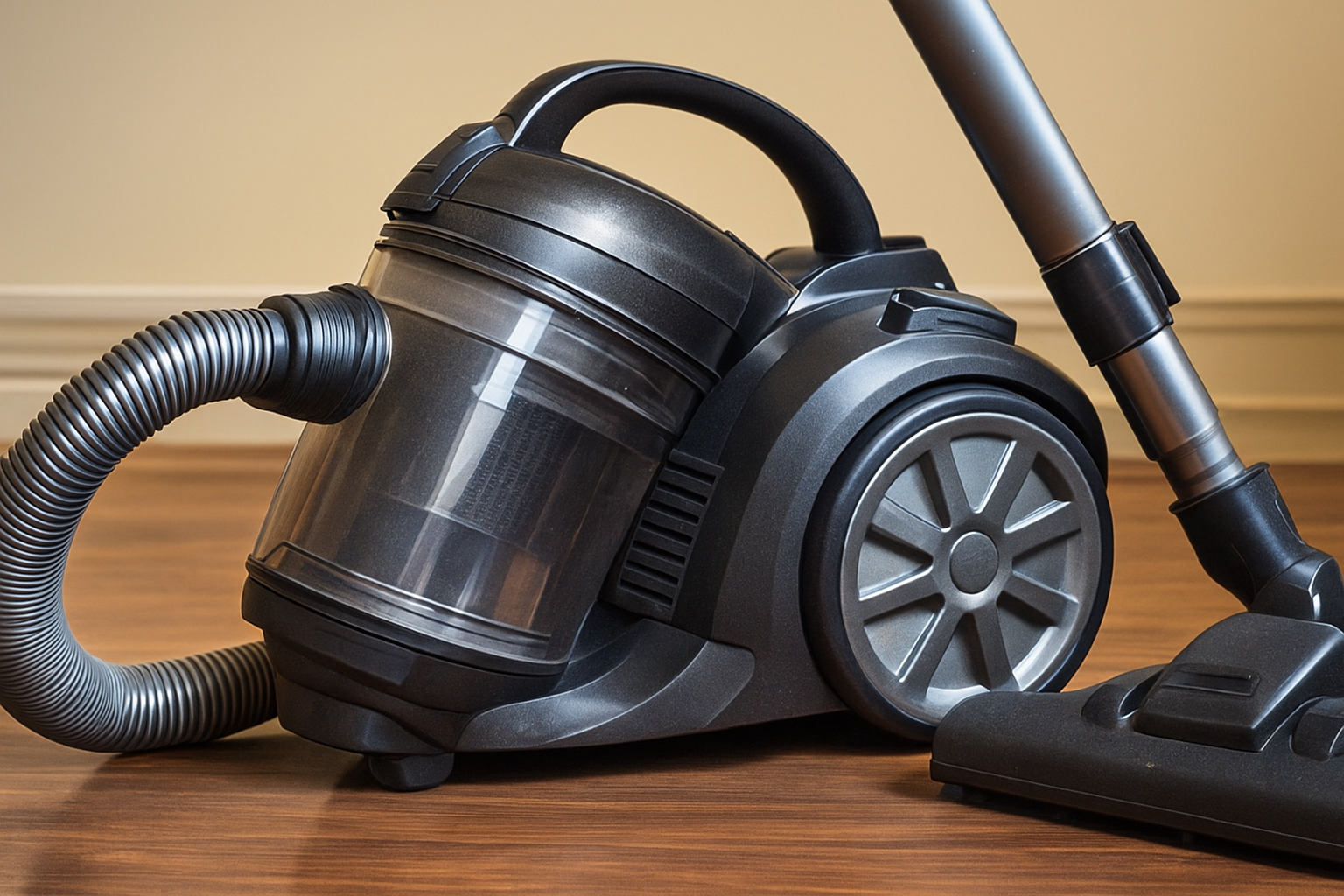
 “Reliability isn’t luck; it’s the result of good design, honest materials, and consistent care.”
In today’s market, every manufacturer claims durability, yet few vacuums actually survive five years of constant use. True reliability has nothing to do with warranty stickers or marketing slogans. It is an engineering story—one built from motor efficiency, material quality, airflow design, and how the user treats the machine once it leaves the factory.
⚙️ 1. Engineering Begins with Balance
A long-lasting vacuum starts with balance: the harmony between power, cooling, and vibration control. If any element dominates, reliability collapses.
The motor must generate strong suction while staying cool. To achieve this, engineers calculate airflow geometry so that air moves smoothly around the coils instead of trapping heat. Even a small obstruction or sharp angle inside the duct can raise internal temperature by ten degrees, enough to shorten the motor’s life by months.
Bearings and impellers are equally crucial. Perfect alignment minimizes friction, reducing the strain that slowly wears away brushes and shafts. When these parts stay balanced, noise stays low, energy waste drops, and the whole system breathes easier.
🧱 2. Materials That Endure
No matter how brilliant the design, cheap materials doom it. Reliability is a chemical reality: polymers harden, metals fatigue, and seals shrink when they face years of heat and vibration.
Modern durable vacuums use reinforced ABS or polyamide composites for housings, strong enough to handle both impact and heat. Flexible components like hoses are often made from EVA or polyurethane, chosen for elasticity that resists cracking after tens of thousands of bends.
Even the filter frame and gaskets matter. Silicone rubber keeps elasticity longer than common PVC, preventing air leaks that force the motor to overwork. When engineers choose materials by performance rather than price, they buy reliability in advance.
🔬 3. Testing Before Trust
Reliability is proven in laboratories long before customers plug the product in. Engineers run vacuums through endurance cycles, pushing them continuously for hundreds of hours to monitor temperature rise and suction stability.
They drop units from a meter high, vibrate them on shaking tables, and expose them to rapid humidity changes. The goal is not destruction for its own sake but to reveal weak joints, brittle plastics, or seals that might fail after two summers in storage.
Products that pass these tests don’t simply last longer—they fail more gracefully, allowing maintenance rather than total replacement.
💨 4. Cooling and Clean Airflow
Heat is the quiet enemy of longevity. A well-designed vacuum keeps its motor cool through controlled airflow and smart thermal management.
Some systems use dual-channel airflow, separating suction air from cooling air so that dust never touches the coils. Others rely on temperature sensors that automatically lower motor speed when heat builds up. Even the filter placement affects cooling: if filters sit too close to the intake, airflow pressure drops, trapping hot air around the motor.
When air moves freely, everything else lasts longer—from the insulation varnish on copper wires to the grease inside bearings.
🧰 5. Maintenance: The User’s Share of Reliability
Engineering alone cannot guarantee endurance; habits complete the equation.
Emptying the dust bin before it overflows prevents suction strain. Cleaning or replacing filters on schedule keeps airflow constant. Storing the vacuum in moderate temperatures stops plastics from aging prematurely. Simple steps—wiping seals, checking hoses for leaks, and letting the motor rest during heavy work—extend life more effectively than any service contract.
Reliability, in this sense, becomes a partnership between maker and user.
🌍 6. Innovation for the Next Five Years
Reliability is evolving. The latest generation of vacuums integrates brushless DC motors that operate with less friction and fewer moving parts. Smart sensors monitor temperature, dust load, and energy consumption, adjusting performance in real time. Materials science is introducing recyclable composites and antimicrobial coatings, giving components longer functional life while meeting sustainability goals.
The future of reliability is not only endurance but also efficiency—machines that last longer, waste less energy, and require fewer replacements.
✨ 7. Conclusion
A vacuum that endures five years or more is not a coincidence; it’s the result of balanced design, quality materials, rigorous testing, and responsible use. Reliability begins in the engineer’s blueprint and continues in the user’s routine.
“Durability isn’t about surviving abuse—it’s about performing perfectly, every ordinary day.”
With thoughtful design and care, a well-built vacuum becomes more than an appliance; it becomes a long-term partner in clean living.
📊 SEO TAG
vacuum reliability, durable vacuum cleaner, long lifespan vacuum, strong suction vacuum, reliable vacuum motor, brushless vacuum cleaner, vacuum testing, airflow design vacuum, durable materials, vacuum cooling, thermal management vacuum, maintenance tips, high efficiency vacuum, quiet reliable vacuum, industrial vacuum reliability, sustainable cleaning appliance, energy efficient vacuum, vacuum endurance test, vacuum design innovation, vacuum maintenance routine, robust vacuum housing, vacuum hose durability, vacuum filter care, vacuum performance, vacuum lifetime, extended warranty vacuum, reliable suction system, vacuum heat control, vacuum maintenance guide, vacuum motor durability, efficient airflow system, anti vibration vacuum, eco vacuum cleaner, modern vacuum technology, reliable home vacuum, quality engineering vacuum, long life motor, vacuum parts longevity, energy saving cleaner, low noise durable vacuum, high durability design, engineering reliability, product testing vacuum, consumer maintenance tips, appliance longevity, sustainable design, cleaning technology, durable performance, vacuum innovation, five year reliability.