Hi, message us with any questions.
We're happy to help!





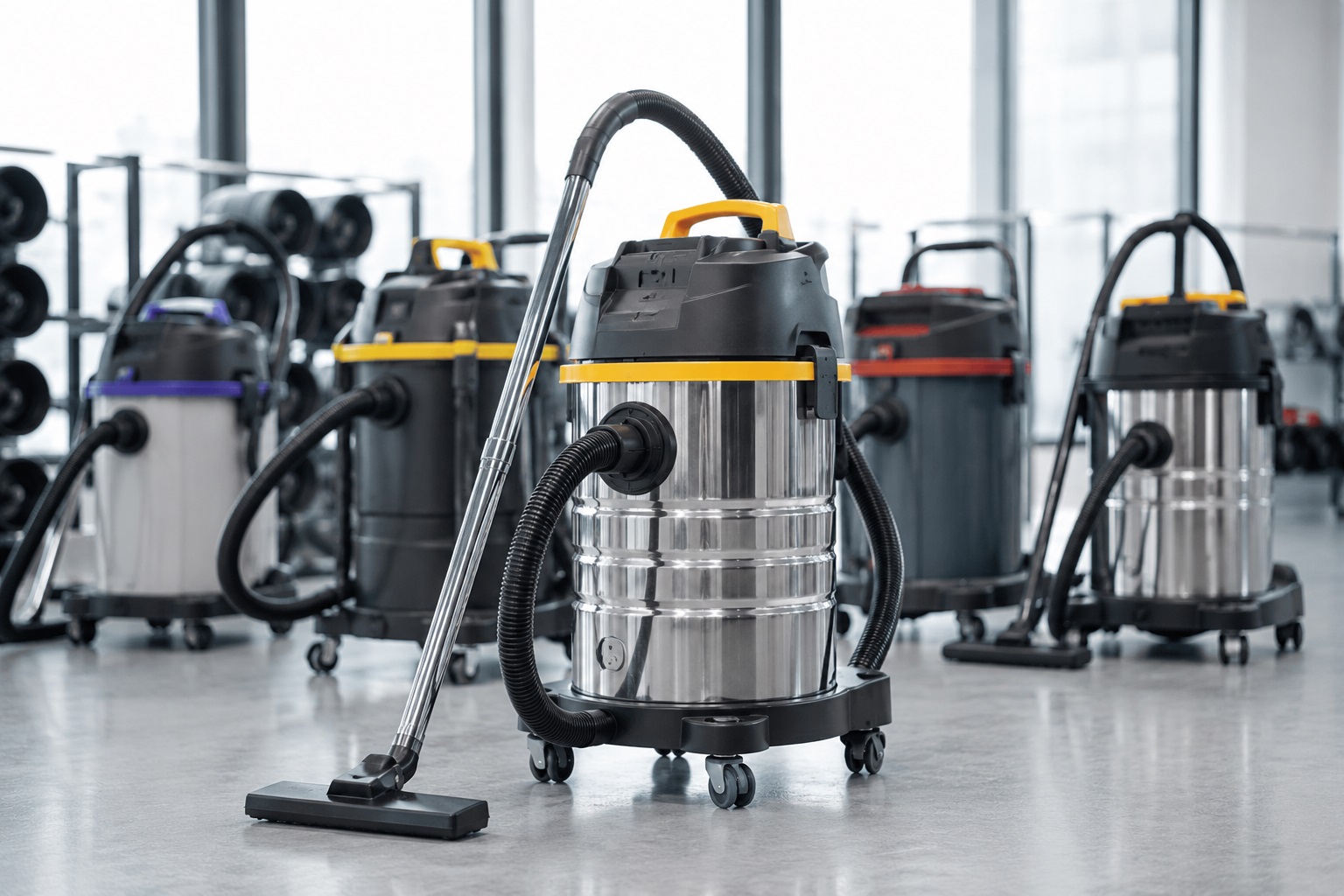
The vacuum cleaner industry is entering a new competitive era.
In 2026, distributors are no longer competing only on:
product pricing
catalog size
container discounts
Instead, they are competing on:
delivery speed
inventory flexibility
supply chain stability
private-label branding
operational efficiency
For many vacuum cleaner distributors in Europe and North America, the biggest challenge is no longer finding products.
The real challenge is:
finding a supplier capable of supporting sustainable business growth in an unstable global market.
Today’s distributors need more than factories.
They need:
operational partners
flexible OEM suppliers
scalable manufacturing systems
reliable logistics coordination
stable after-sales ecosystems
This is why the relationship between distributors and vacuum cleaner suppliers is changing rapidly.
📉 Why Traditional Vacuum Cleaner Supply Models Are Becoming Obsolete
A few years ago, many distributors selected suppliers based mainly on:
low prices
large production capacity
cheap container rates
But in 2026, that strategy is becoming increasingly risky.
Because modern distribution is now controlled by:
inventory speed
market responsiveness
fulfillment efficiency
e-commerce pressure
The global vacuum market has become significantly faster.
Distributors now face:
shorter product life cycles
Amazon pricing competition
regional fulfillment pressure
higher customer expectations
unstable freight conditions
As a result:
slow and inflexible suppliers are becoming operational liabilities.
🚨 Why Slow Vacuum Suppliers Will Lose Distributors in 2026
One major industry trend is clear:
speed is becoming more profitable than low pricing.
In modern wholesale operations, delayed supply chains create serious risks:
inventory shortages
missed seasonal demand
retailer penalties
Amazon ranking loss
customer churn
Many distributors now prioritize:
fast delivery vacuum capability
replenishment stability
production transparency
instead of only focusing on factory quotations.
📦 Real Business Scenario: Fast Delivery Saved a Distributor’s Peak Season
A regional vacuum cleaner distributor in Southern Europe experienced severe inventory shortages during a peak retail season.
The company’s previous supplier required:
rigid production scheduling
large minimum orders
long shipment cycles
As demand increased unexpectedly, replenishment delays caused:
out-of-stock situations
retailer dissatisfaction
lost seasonal revenue
The distributor later partnered with a more flexible OEM vacuum supplier offering:
faster production coordination
mixed-container support
lower MOQ flexibility
emergency reorder capability
As a result:
stock turnover improved
inventory pressure decreased
sales recovery accelerated
This reflects a growing industry reality:
fast supply chains create competitive advantage.
🧠 Why Low MOQ Is Sometimes More Important Than Low Pricing
One of the biggest changes in modern vacuum distribution is inventory strategy.
In the past, distributors often accepted:
large container orders
aggressive inventory stocking
long product cycles
But today’s market changes too quickly.
Consumer demand now shifts rapidly toward:
cordless systems
compact commercial units
quieter vacuum models
smart cleaning products
Distributors carrying excessive inventory may face:
warehouse pressure
discount-driven profit loss
dead stock risk
reduced cash flow flexibility
This is why many distributors now prioritize:
low MOQ vacuum capability over ultra-low factory pricing.
A flexible MOQ structure allows distributors to:
test new products faster
reduce inventory exposure
respond to market trends quickly
launch private-label programs efficiently
In 2026:
flexibility creates survival advantage.
🏭 Real Procurement Failure Scenario
A North American distributor sourced low-cost vacuum cleaners from multiple factories to maximize short-term margins.
Initially, pricing appeared competitive.
However, operational problems quickly emerged:
inconsistent product quality
delayed spare parts
unstable packaging standards
weak after-sales support
Within one year, the distributor faced:
increased warranty claims
retailer complaints
higher return rates
damaged online reviews
The company eventually switched to a more stable wholesale vacuum cleaner supplier focused on:
QC standardization
spare parts continuity
production consistency
long-term OEM cooperation
Operational stability improved significantly afterward.
This highlights an important B2B truth:
the cheapest supplier often becomes the most expensive operational mistake.
🔧 What Vacuum Cleaner Distributors Really Need in 2026
Modern distributors increasingly evaluate suppliers using long-term operational logic instead of simple price comparison.
📌 1. Fast Delivery Capability
Modern distributors require:
stable lead times
transparent production schedules
rapid replenishment systems
because inventory delays now directly impact:
platform rankings
retailer relationships
seasonal revenue
Fast delivery is no longer a bonus.
It is becoming a minimum requirement.
📌 2. Flexible Low MOQ Support
Many distributors need smaller trial orders for:
new regional markets
e-commerce testing
private-label launches
product category expansion
Suppliers capable of supporting flexible low MOQ vacuum programs gain major competitive advantages.
📌 3. Stable Product Quality
One of the biggest hidden costs in vacuum distribution is after-sales failure.
Distributors increasingly evaluate:
motor lifespan
airflow consistency
hose durability
filtration quality
thermal stability
because poor quality directly damages:
online ratings
retailer confidence
customer retention
📌 4. OEM Branding Capability
Modern distributors increasingly want:
exclusive branding
customized packaging
localized manuals
differentiated product positioning
Professional OEM vacuum suppliers help distributors avoid becoming generic price competitors.
🧪 Engineering Transparency Is Becoming a Trust Signal
Professional distributors are becoming more technical.
Many serious buyers now request:
airflow testing reports
motor lifecycle data
filtration certifications
noise testing
energy efficiency reports
instead of only asking for quotations.
This is especially true in:
Europe
North America
commercial cleaning sectors
where compliance and product consistency matter heavily.
🔬 Engineering Insight: Why Some Factories Cannot Support Long-Term Distributors
One hidden industry problem is manufacturing inconsistency.
Some factories constantly change:
motor suppliers
plastic material sourcing
component vendors
to reduce short-term production costs.
This creates:
unstable product quality
inconsistent spare parts
maintenance complications
distributor reputation risk
Professional vacuum cleaner manufacturers increasingly focus on:
stable component ecosystems
standardized QC systems
long-term engineering consistency
because distributor trust depends heavily on reliability.
📊 Distributor Priorities in 2026
| Distributor Priority | Operational Impact |
|---|---|
| Fast Delivery | Prevent inventory shortages |
| Low MOQ | Reduce inventory risk |
| Stable QC | Lower warranty costs |
| OEM Support | Strengthen private branding |
| Spare Parts Stability | Improve after-sales operations |
| Flexible Production | Adapt to market shifts |
| Certification Compliance | Meet regional regulations |
| Logistics Transparency | Improve inventory planning |
🌍 Why Smart Distributors Prefer Long-Term Manufacturing Partners
The strongest distributors increasingly avoid switching suppliers frequently.
Instead, they seek strategic manufacturing partners capable of supporting:
long-term growth
product evolution
inventory planning
compliance stability
scalable OEM expansion
Because in modern distribution:
operational stability creates long-term profitability.
A professional vacuum cleaner supplier is no longer simply a factory.
The supplier becomes part of the distributor’s supply chain infrastructure.
🚫 Common Mistakes Vacuum Cleaner Distributors Should Avoid
❌ Choosing Suppliers Based Only on Price
Low pricing often creates:
unstable quality
inconsistent delivery
poor communication
hidden operational costs
❌ Ignoring Spare Parts Ecosystems
Without stable access to:
filters
motors
hoses
accessories
after-sales operations become difficult.
❌ Overlooking Production Scalability
Some factories perform well at low volume but fail under growth pressure.
Distributors should evaluate:
real production capacity
QC scalability
delivery consistency
before expanding partnerships.
❌ Ignoring Supply Chain Responsiveness
Modern markets change rapidly.
Distributors need suppliers capable of adapting quickly to:
market trends
seasonal demand
urgent replenishment requirements
Slow suppliers increasingly lose long-term relevance.
📈 The Future of Vacuum Cleaner Distribution
The future of vacuum distribution will be driven by:
faster e-commerce cycles
regional private-label expansion
supply chain optimization
smart inventory systems
operational flexibility
Distributors increasingly prefer suppliers capable of offering:
fast delivery vacuum programs
low MOQ flexibility
scalable OEM support
stable manufacturing ecosystems
The market is shifting from:
price competition
toward:
operational efficiency competition.
✅ Final Verdict
In 2026, vacuum cleaner distributors need much more than low-cost products.
They need suppliers capable of supporting:
faster inventory turnover
flexible MOQ systems
stable product quality
reliable logistics
scalable OEM partnerships
long-term operational growth
The best OEM vacuum supplier is not necessarily the factory with the cheapest quotation.
It is the supplier that helps distributors reduce operational risk while improving market responsiveness and profitability.
Because in modern wholesale distribution:
speed, flexibility, and stability outperform cheap pricing.
👥 Suitable Readers
European vacuum cleaner distributors
North American vacuum wholesalers
Commercial cleaning equipment importers
OEM sourcing managers
Amazon vacuum sellers
Private-label vacuum brands
Industrial cleaning equipment buyers
Vacuum cleaner startup entrepreneurs
Hashtags
vacuumcleanerdistributor, OEMvacuumsupplier, wholesalevacuumcleaner, fastdeliveryvacuum, lowMOQvacuum, vacuumcleanersupplier, vacuumcleanermanufacturer, privatelabelvacuumcleaner, commercialcleaningvacuum, industrialvacuumcleaner, vacuumcleanerOEM, vacuumcleanerODM, B2Bvacuumcleaner, cleaningequipmentwholesale, vacuumcleanerfactory, commercialvacuumcleaner, wholesalecleaningequipment, professionalvacuumcleaner, vacuumcleanerimporter, privatebrandvacuum, smartvacuumdistribution, commercialcleaningequipment, vacuumcleanerbusiness, Amazonvacuumseller, vacuumcleanerstartup, facilitycleaningsolutions, vacuumdistributionbusiness, globalvacuummarket, vacuumindustrytrends, vacuumcleanerprocurement, industrialcleaningsolutions, cleaningequipmentdistributor, vacuumcleanerwholesalebusiness, commercialcleaningindustry, OEMcleaningequipment, vacuumproductdevelopment, vacuumlogisticssolutions, lowinventoryrisk, flexibleMOQfactory, fastshippingvacuumcleaner, scalablemanufacturing, commercialvacuumsolutions, vacuumspareparts, qualitycontrolvacuum, vacuumcertification, cleaningequipmentfactory, Europeanvacuumbuyers, NorthAmericanvacuummarket, Lanxstar, vacuumbrandgrowth



