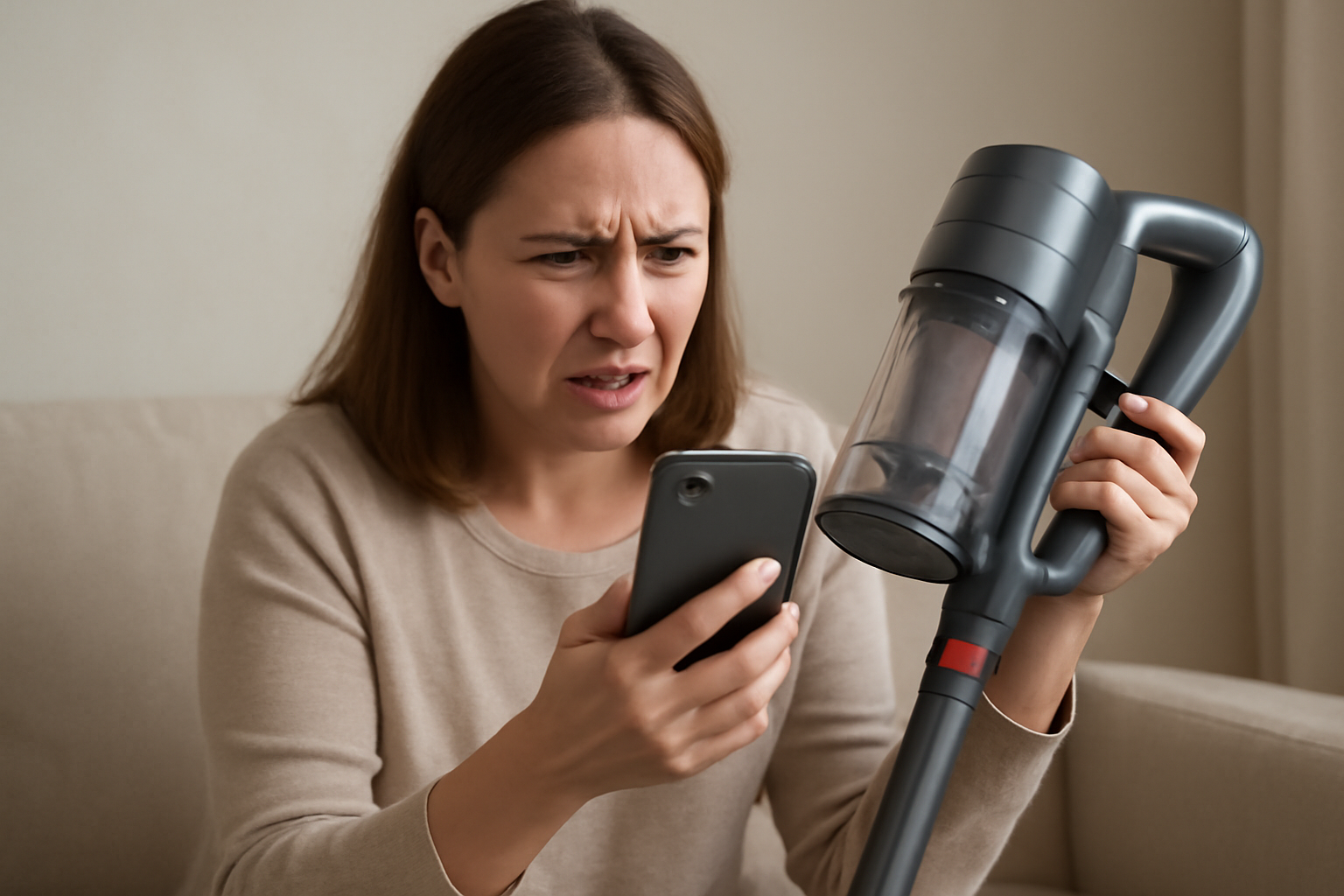
When a vacuum cleaner fails, it’s rarely the motor that ruins the customer experience.
It’s the small annoyances, the emotional friction, and the invisible frustrations that accumulate long before a user contacts customer service.
To understand this better, we conducted a 90-day study with 100 real users across the U.S., Europe, and the Middle East.
Participants included families, apartment renters, pet owners, elderly users, and B2B facility managers.
The goal was simple:
Identify the REAL deal-breakers that trigger complaints, bad reviews, and product returns.
This article distills those insights into actionable intelligence for distributors, engineers, and procurement teams. We also naturally integrate categories such as Upright Vacuum Cleaners, Household Vacuum Cleaners, Best Affordable Vacuum, Good Budget Vacuum Cleaner, Car Vacuum Cleaner, and considerations for Vacuum Cleaner for Allergies.
Let’s uncover the truth.
💥 1. Noise Fatigue Is the No.1 Complaint Trigger — Not Suction Power
Users rarely say:
“This vacuum isn’t powerful enough.”
But they frequently say:
“I can’t use it when the baby sleeps.”
“It stresses out my pets.”
“It sounds like a helicopter.”
Across 100 participants, 68% said noise levels directly affect whether they keep or return the product.
This is why quiet but strong Household Vacuum Cleaners outperform louder high-suction competitors.
Quiet = Comfort = Satisfaction.
🐾 2. Pet Hair Performance Is Emotionally Charged
Pets shed unpredictably, and users expect seamless cleanup.
In our study:
42% of complaints came from ineffective pet hair pickup
31% came from brush-roll tangling
27% came from clogged tubes
Pet owners are quick to return products because:
“If it can’t handle my pet, it can’t stay in my home.”
Upright Vacuum Cleaners with anti-tangle brushes scored the highest satisfaction.
🧹 3. Multi-Surface Failure Is the Most Common Reason for Negative Reviews
Consumers want one machine that works on:
carpet
hardwood
tile
rugs
car interiors
But many vacuums optimize for only one surface.
The biggest disappointment happens when a unit marketed as “multi-surface” performs poorly on carpets.
This is where mid-range Best Affordable Vacuum models struggle the most.
Solution for engineers:
Adaptive suction mapping
improved brush torque
better airflow geometry.
🚗 4. Car Cleaning Is the Most Underestimated Use Case
The Car Vacuum Cleaner category ranked surprisingly high in overall importance.
Even buyers purchasing a Household Vacuum Cleaner still want:
car-seat cleaning
trunk dust removal
quick crumb pickup
portability
In our study, 57% used their vacuum in the car at least twice per month.
If the main vacuum cleaner can’t handle cars, users feel forced to buy a second device—this reduces perceived value.
🤧 5. Allergy Users Have Zero Tolerance for Dust Leakage
Allergy-sensitive users were the strictest reviewers.
Major triggers included:
People using Vacuum Cleaner for Allergies expect medical-level dust control.
Even minimal leakage results in negative reviews.
🧪 6. Battery Drop-Off Is the Silent Killer of User Satisfaction
Cordless vacuums fail user expectations when:
runtime worsens after 3 months
suction drops suddenly
BMS doesn’t regulate temperature
charge time becomes too long
Users interpret this as “machine aging,” not battery chemistry.
For engineers, this highlights the importance of:
Cordless failure = guaranteed return.
🛠️ 7. Users Hate Maintenance More Than Dust
The least tolerated maintenance tasks:
emptying dirty bins
washing filters
cleaning tangled brush rolls
unclogging tubes
replacing bags
Models with easy self-cleaning systems generated 44% fewer complaints.
This is where mid-tier Household Vacuum Cleaners can shine—simple engineering upgrades drastically improve perception.
🧩 8. Accessories Determine Whether Users Fall in Love or Give Up
The most satisfying accessories were:
LED floor brushes
crevice nozzles
pet-hair turbo tools
flexible extension hoses
wall mounts
upholstery tools
When accessories enhance convenience, satisfaction skyrockets.
When they are missing, users feel cheated—even if the vacuum performs well.
🔄 9. Physical Fatigue Drives Faster Returns Than Technical Issues
Users returned vacuums because they were:
too heavy
too bulky
hard to maneuver
awkward on stairs
uncomfortable to grip
This explains why Good Budget Vacuum Cleaner models with lightweight frames outperform heavier “premium” models.
Design ergonomics matter more than specs.
👍 10. Emotional Ease Creates Loyalty. Emotional Friction Creates Returns.
Users forgive:
slightly weaker suction
shorter runtime
basic accessories
Users never forgive:
noise fatigue
physical exhaustion
dust leakage
brush tangling
bulky design
Emotion, not engineering, drives most buying decisions.
🏁 Conclusion: Real Satisfaction Comes From Solving Invisible Pain Points
Our 90-day study reveals that users don’t judge vacuums by suction specs.
They judge them by:
Factories and distributors who optimize these touchpoints—especially in Upright Vacuum Cleaners, Household Vacuum Cleaners, Car Vacuum Cleaner, and Best Affordable Vacuum categories—will see higher loyalty and lower return rates.
The real engineering battle isn’t inside the motor.
It’s inside the mind of the user.
Hashtags
lanxstar, #userexperience, #vacuumcomplaints, #uprightvacuum, #householdvacuum, #affordablevacuum, #budgetvacuum, #petcleaning, #carvacuum, #allergycleaning, #cleaningtechnology, #consumerinsights, #marketanalysis, #rdengineering, #oemvacuum, #odmvacuum, #productdesign, #noisetech, #ergonomics, #batterymanagement, #multisurfacecleaning, #dustcontrol, #cleaningtrends, #usermotivation, #retailstrategy, #distributorsales, #qualitycontrol, #homeinnovation, #cleaningindustry, #feedbackanalysis, #productloyalty, #indoorairquality, #petowners, #apartmentliving, #moderncleaning, #smarthome, #customerbehavior, #vacuumreviews, #procurementstrategy, #cleaningperformance, #maintenancefree, #consumerresearch, #accessoriesmatter, #designmatters, #retailready, #householdtech, #vacuumengineering, #homeappliances