Hi, message us with any questions.
We're happy to help!





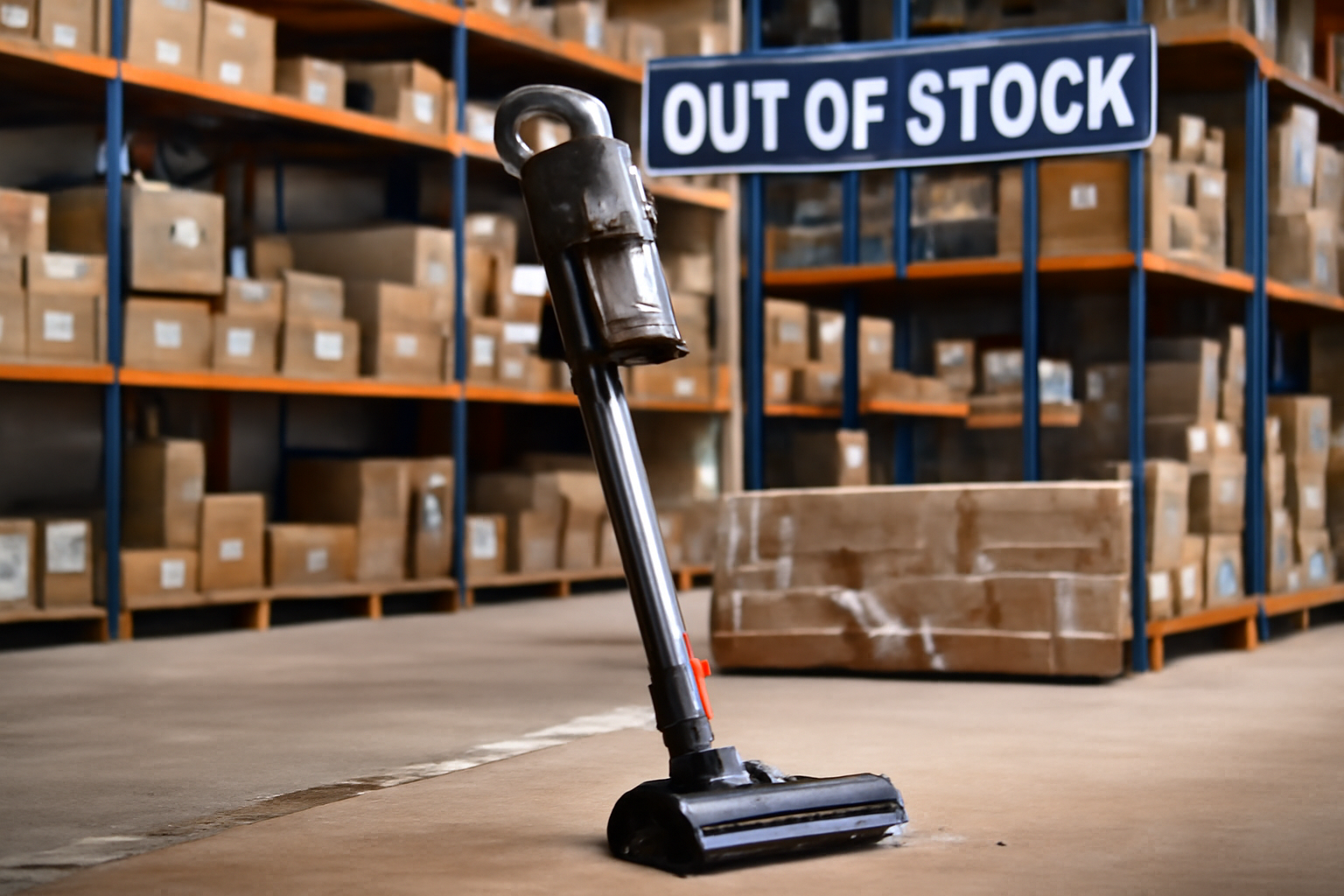
In the U.S. appliance market, distributors behave differently from the rest of the world. They’re not just selling units—they’re managing risk, reputation, return rates, and long-term contract value.
And nothing illustrates this better than the phenomenon insiders call “The Loyalty Paradox.”
It sounds irrational:
Some U.S. distributors would rather let shelves go empty for weeks than replace their vacuum cleaner brand with another manufacturer—even when they could restock immediately.
Why?
Because switching brands kills more profit long-term than a temporary out-of-stock ever will.
This article breaks down the hidden economic, behavioral, and engineering logic behind this paradox. If you're a global manufacturer, procurement manager, or R&D engineer serving the U.S. or Middle Eastern market, understanding this phenomenon will directly influence your supply chain strategy, product design, and factory competitiveness.
This article includes natural references to Upright Vacuum Cleaners, Household Vacuum Cleaners, Cordless Handheld High Suction Vacuum Cleaner, Quiet Vacuum Cleaner, Handheld Vacuum Cleaner, and procurement-related topics such as vacuum cleaner distribution.
🔥 1. The First Truth: American Consumers Punish “Inconsistent Product Lines”
U.S. buyers notice everything.
When a retailer suddenly changes vacuum brands, consumers interpret it as:
“The old brand failed.”
“The store doesn’t trust its supplier.”
“There must be quality issues.”
This damages retailer credibility—not the brand’s.
This is why distributors strongly prefer stable, high-quality Upright Vacuum Cleaners and Household Vacuum Cleaners with consistent packaging, consistent reviews, consistent performance, and predictable QC.
A temporary out-of-stock is forgiven.
A sudden brand change is not.
💵 2. Returns Are the Silent Profit Killer in the American Market
The U.S. retail ecosystem is uniquely brutal:
Free returns, fast process, no questions asked.
A poor-quality vacuum cleaner can cause:
15–40% return rate spikes
reverse logistics fees
repackaging losses
warehouse handling costs
refund penalties from marketplaces
Once a distributor finds a supplier with stable, reliable performance, they stick with it—even if stock briefly runs out.
And this is where categories like Quiet Vacuum Cleaner, Handheld Vacuum Cleaner, and Cordless Handheld High Suction Vacuum Cleaner matter. These products traditionally trigger fewer returns because they match core American cleaning needs:
powerful spot-cleaning
quiet operation for apartments
easy storage
high suction for carpets and pet hair
Fewer returns → higher loyalty.
🧠 3. Distributors Don’t Buy Vacuums. They Buy “Predictability.”
A vacuum model that performs consistently across batches is worth more than a slightly cheaper alternative.
American distributors measure suppliers by:
batch-to-batch quality consistency
long-term durability under customer usage
reliable spare parts supply
constant packaging revisions
software and firmware stability (for smart models)
full transparency during vacuum cleaner distribution
A factory that can deliver predictable quality builds trust.
A factory that cannot becomes a financial liability.
This is why distributors do not “switch” brands easily—trust takes years to build and seconds to lose.
📦 4. U.S. Retail Chains Penalize Suppliers That Trigger Customer Complaints
When a vacuum triggers complaints, it’s not just refunds.
Large chains like Walmart, Target, Home Depot, Lowe’s, and BestBuy may:
reduce shelf placement
cut buying volume
lower category ranking
charge penalty fees
suspend vendor codes
This is why category stability matters more than short-term supply issues.
A product like a Quiet Vacuum Cleaner reduces complaint volume dramatically, especially in multi-family housing areas common across the U.S.
🦾 5. The Engineering Requirement: “American Durability Standards” Are Brutal
U.S. consumers do not tolerate weak performance on:
thick carpets
long pet hair
hardwood floors
large cleaning cycles
heavy debris
Vacuum cleaners face daily torture tests.
This is why Upright Vacuum Cleaners dominate the U.S. market—they simply handle these stresses better.
Distributors stick to brands that:
don’t clog
don’t overheat
don’t lose suction after 3 months
don’t fail under pet hair load
don’t produce mechanical noise over time
This is why loyalty stays high: engineering drives trust.
🏗️ 6. Packaging Plays a Bigger Role in Loyalty Than Suppliers Realize
Retailers measure packaging by:
stacking strength
damage rate per pallet
visual consistency
regulatory compliance
barcode accuracy
“shelf presence” impact
A packaging redesign—if done poorly—can trigger:
shipping failures
cracked housings
increased return volume
So distributors stick with the brand whose packaging has proven reliable through thousands of shipments.
Switching creates unnecessary risk.
💬 7. Customer Reviews Control the U.S. Market
American consumers read reviews with religious intensity.
A distributor with a 3-year history of five-star reviews for their Upright Vacuum Cleaners and Household Vacuum Cleaners will not switch suppliers because:
A new product = zero history = no trust.
Even one low-quality model can tank the entire brand ranking.
This makes switching brands far riskier than temporary stock-outs.
🧩 8. Logistics Advantage: A Predictable Supplier Saves Millions Over Time
American retailers and e-commerce giants value:
accurate timelines
predictable lead times
synchronized container scheduling
stable carton dimensions
repeatable palletization
reliable vacuum cleaner distribution documentation
When a supplier proves they can deliver 10+ containers per year without drama, switching brands becomes irrational—even if they temporarily run out of stock.
🧲 9. Emotional Momentum: Consumers Build “Cleaning Habits” Around One Brand
This is the part few suppliers understand:
Cleaning habits create brand loyalty.
When American families get used to:
a certain noise level
a certain grip angle
an accessory compatibility set
a certain suction response
They emotionally resist switching.
Retailers know this.
This creates a behavior-driven loyalty effect, not just a product-driven one.
🏁 Conclusion: Brand Switching Destroys More Value Than Stock-Outs
The real reason American distributors avoid switching is simple:
It destroys review history
It disrupts customer habit
It risks higher return rates
It collapses trust
It creates retail chain penalties
It introduces unknown engineering reliability
It resets packaging optimization
It breaks supply chain predictability
Once a vacuum brand proves trustworthy—through stable engineering, strong quality control, reliable support, and smooth vacuum cleaner distribution—distributors treat it as a long-term asset.
Out-of-stock hurts.
But switching brands hurts far more.
This is The Loyalty Paradox, and understanding it is the key to winning in the U.S. vacuum cleaner market.
Hashtags
lanxstar, #vacuumdistribution, #usretailmarket, #uprightvacuum, #householdvacuum, #brandingstrategy, #supplychain, #consumerloyalty, #cleaningindustry, #retailrisk, #productreturns, #qualitycontrol, #smartdistribution, #oemvacuum, #odmvacuum, #noisetech, #quietcleaning, #handheldvacuum, #cordlessvacuum, #marketinsights, #engineeringquality, #usconsumers, #brandloyalty, #cleaningdevices, #b2bprocurement, #retailbuyers, #distributorsales, #hardwareengineering, #performanceengineering, #cleaningdevices, #retailanalysis, #productdesign, #durabilitytesting, #consumerbehavior, #innovation, #cleantech, #vacuumprocurement, #marketstrategy, #distributorinsights, #petcleaning, #carpetcleaning, #homeappliances, #americanretail, #retailgrowth, #vacuumtrends, #bestpractices, #qualitysuppliers, #efficiency, #ecommercetrends, #buyersguide