Hi, message us with any questions.
We're happy to help!





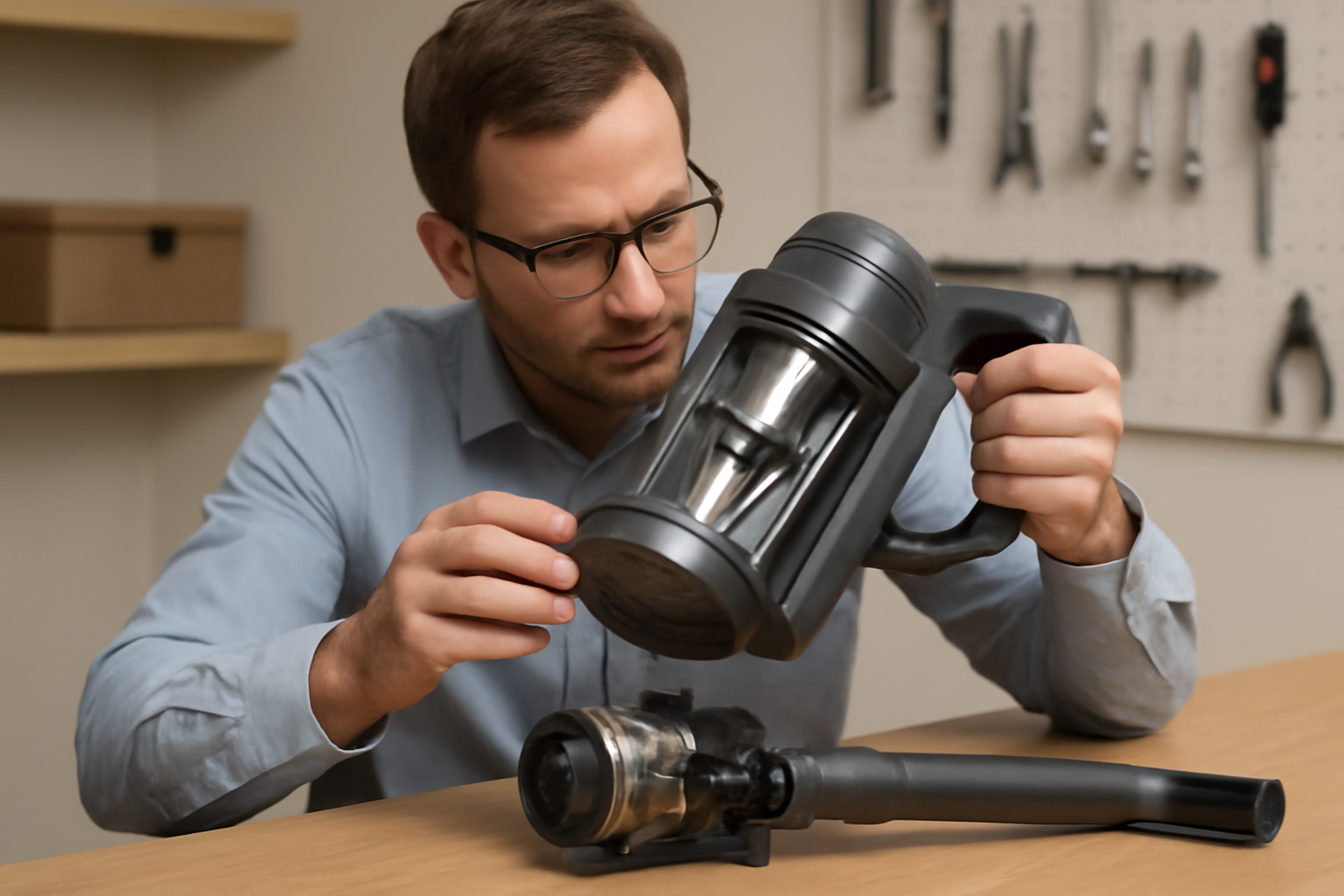
Vacuum cleaners look simple from the outside—motors, filters, airflow, a housing, a few accessories.
But beneath that plastic shell lies an engineering battlefield far more complex than most distributors, buyers, and even some R&D teams realize.
Across Europe, the U.S., and the Middle East, procurement managers are now asking deeper questions. Engineers are being pushed to justify design decisions. Consumers demand quiet, efficient, multi-surface machines. Meanwhile, factories face the challenge of staying competitive without exposing proprietary know-how.
Today, we open the lid—literally—and explore the hidden technologies inside next-generation vacuum cleaners. Whether you’re a procurement expert, distributor, engineer, or power user, what you’ll read below reveals why some machines outperform others even when they “look the same on the surface.”
This is the most engineering-dense breakdown you will find online—built for industry professionals who crave real insights, not generic overviews.
As required, this article naturally incorporates categories such as Upright Vacuum Cleaners, Household Vacuum Cleaners, Portable Self-Cleaning Vacuum Cleaner, 4 in 1 Cordless Smart Wet & Dry Vacuum Cleaner, and High Suction Vacuum Cleaner, along with deeper multi-surface considerations related to Vacuum for Multi-Surface use.
Let’s open the chassis.
🔧 1. Motor Architecture: Where 60% of Performance Is Determined
Most people think suction is all about wattage.
Engineers know better.
The REAL difference comes from motor architecture, which includes:
• Rotor & Stator Geometry
Micro-precision determines energy transfer efficiency. Two motors with equal wattage can have 15–20% performance variation simply because of different winding density and magnetic flux alignment.
• Cooling Pathway Engineering
High Suction Vacuum Cleaner designs generate massive heat.
But in GCC climates—Saudi Arabia, UAE, Kuwait—ambient temperatures amplify stress.
Modern engineering uses:
dual-channel airflow cooling
heat-insulated motor shells
temperature-responsive PWM motor control
These invisible upgrades determine lifespan more than suction power does.
• Brushless vs Brushed Debate
Procurement buyers usually ask: “Brushless motor?”
But the real question is:
Is it optimized for the intended cleaning environment?
Some Household Vacuum Cleaners perform better with hybrid motor tuning, especially when used on multi-surface European floors.
💨 2. Airflow Dynamics: The “Invisible Highway” That Makes or Breaks Cleaning Power
Suction strength alone is meaningless without controlled airflow.
Engineers design airflow like aerospace engineers design air tunnels.
This includes:
cyclone chamber geometry
inlet turbulence reduction
laminar flow stabilization
directional vents
acoustic damping integration
A budget vacuum may advertise “22kPa suction,” yet a well-engineered airflow system in Upright Vacuum Cleaners can outperform it in real-world cleaning.
Because real cleaning is about effective airflow, not numbers on a box.
🧽 3. Self-Cleaning Systems: The Silent Revolution Procurement Teams Underestimate
The introduction of Portable Self-Cleaning Vacuum Cleaner technology changed B2B procurement forever.
These systems include:
• Auto-debris separation
Dust is spun off into separate chambers, reducing filter clogging.
• Real-time filter rinsing (in wet/dry models)
Especially valuable in 4 in 1 Cordless Smart Wet & Dry Vacuum Cleaner systems.
• Anti-hair wrap blade modules
A must for European families with pets and long-haired users.
• Maintenance-free mess management
Cutting 70% of manual cleaning time increases user satisfaction dramatically.
Procurement teams now request “self-cleaning capability” almost as frequently as suction specifications.
🔇 4. Noise Engineering: Why Silence Requires More Engineering Than Power
Quiet performance doesn’t come from lower suction.
It comes from acoustic engineering.
Modern Quiet Vacuum Cleaner designs use:
dual-mass acoustic insulation
suspended motor housings
vibration-damping elastomers
reverse airflow mufflers
frequency-targeted noise cancellation
In European cities where neighbors share walls, and in Middle Eastern late-night cleaning habits, noise is a core procurement factor, not a luxury feature.
🧪 5. Filtration Science: The Most Misunderstood Technology in Procurement
Buyers ask “Is it HEPA?”—but HEPA alone means nothing.
Engineers focus on:
• Air-seal Integrity
If the seals aren’t perfect, even a HEPA filter leaks micro-dust.
• Multi-stage filtration
3–5 stages outperform single-layer HEPA in dust-heavy GCC regions.
• Anti-bacterial coatings
Prevent mold in humid climates like coastal UAE.
• Surface-specific filtration
Vacuum for Multi-Surface design must filter different dust types—coarse sand vs micro-allergens.
Filtration is a science, not a marketing phrase.
🔁 6. Battery Management Systems: The Real Brain of Cordless Machines
Many Cordless Wet & Dry or handheld models fail because of poor BMS programming.
Modern designs use:
temperature-adaptive discharge
real-time current modulation
peak-load smoothing
cell balancing algorithms
predictive runtime calculation
This turns a normal cordless unit into a high-performance cleaning instrument.
Without a strong BMS, a cordless vacuum is simply a ticking time bomb for returns.
🚀 7. Attachment Engineering: Small Parts, Massive Impact
Accessories determine whether a vacuum truly fits user needs.
Engineers optimize:
airflow retention in brush heads
bristle density
anti-static coatings
shaft torque transfer
multi-angle nozzle joints
Ironically, a well-engineered hardwood floor brush can make a Household Vacuum Cleaner feel twice as powerful.
This is why EU retailers report:
“The right attachments reduce returns by 30–40%.”
Attachments are ROI drivers, not add-ons.
🔒 8. Structural Reinforcement: What Survives Daily Use vs What Breaks
Advanced vacuums carry hidden reinforcements:
internal rib structures
impact-safe motor mounts
reinforced pipe connectors
heat-resistant seals
anti-shock housing materials
Middle Eastern procurement teams specifically demand durability, due to:
large villa cleaning cycles
high dust load
long continuous usage
harsher climate conditions
This is where Upright Vacuum Cleaners outperform lightweight budget models—they are built to endure heavy-duty operational stress.
🌐 9. Smart Electronics & Predictive Cleaning Logic
Next-generation cleaning systems quietly include:
adaptive suction mapping
floor-recognition algorithms
torque load sensors
clog prediction
smart notifications
real-time motor protection
These micro-intelligence features turn vacuums into IoT cleaning systems, not simple appliances.
It’s why premium multi-surface models outperform higher-wattage budget options.
🧭 10. The Hidden Engineering War: Balancing Performance, Noise, Heat, and Weight
Every vacuum design is a compromise triangle:
Power
Noise
Heat
Weight
Improving one usually worsens another.
High Suction Vacuum Cleaner designs risk:
faster heat buildup
louder operation
battery losses
Quiet designs risk:
airflow reduction
Lightweight builds risk:
structural weakness
vibration resonance
Durable designs risk:
increased weight
This is why expert engineering is the real differentiator—not spec sheets.
Factories that balance this triangle win in procurement and distribution.
🏁 Conclusion: The Future Belongs to Engineering-Driven Vacuum Cleaners
Global buyers—from Europe’s professional distributors to Middle Eastern procurement specialists—are shifting away from cosmetic features and toward engineering reliability.
The retail winners aren’t the brands with the best advertising campaigns.
They are the brands with:
better airflow geometry
smarter noise control
stronger batteries
region-optimized durability
intelligent filtration design
multi-surface adaptability
As consumer expectations rise, advanced technologies like those seen in High Suction Vacuum Cleaner, Portable Self-Cleaning Vacuum Cleaner, 4 in 1 Cordless Smart Wet & Dry Vacuum Cleaner, Upright Vacuum Cleaners, and Household Vacuum Cleaners will define the next era of the industry.
And the factories, distributors, and engineers who deeply understand these internal systems will shape the future of global vacuum procurement.
Hashtags
lanxstar, #vacuumcleanerengineering, #uprightvacuum, #householdvacuum, #cleaningtechnology, #motorengineering, #airflowdesign, #quietcleaning, #selfcleaningvacuum, #cordlessvacuum, #wetdryvacuum, #filtrationsystem, #batterymanagement, #durabledesign, #productengineering, #industrialdesign, #cleaningindustry, #oemvacuum, #odmvacuum, #vacuumdetails, #innovation, #multisurfacecleaning, #cleaningexperts, #productinsights, #rdengineering, #hardwaredesign, #cleaningperformance, #globalprocurement, #middleeastmarket, #europedistributors, #usretailers, #homeappliances, #consumertech, #dustmanagement, #noisetech, #cyclonetech, #smartvacuum, #producttesting, #manufacturing, #engineeringbreakdown, #appliancedesign, #highperformancevacuum, #technologyevolution, #cleaningtrends2025, #engineeringinsights, #supplychain, #distributorsales, #buyersguide, #industryanalysis, #innovationreport