Hi, message us with any questions.
We're happy to help!





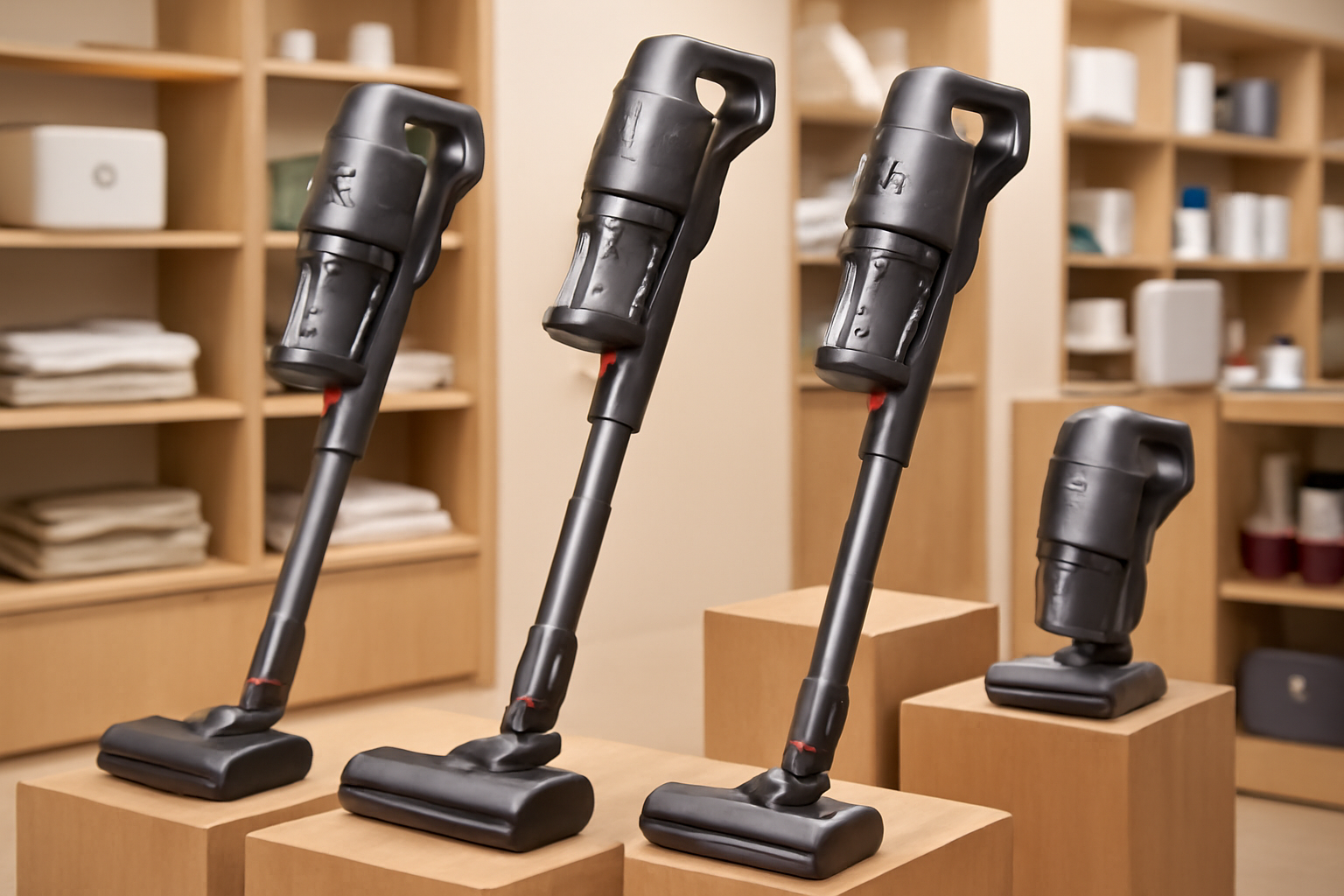
European retailers rarely explode overnight. Markets are mature, consumers are picky, and margins are often razor-thin. Yet in late 2024, a small vacuum appliance shop in Central Europe quietly broke industry expectations—its revenue soared from modest local sales to multi-million-euro annual turnover.
It didn’t rely on luck. It didn’t rely on discounts. It didn’t even rely on having a famous brand.
It relied on something the industry has never talked about enough:
a strategically engineered vacuum cleaner portfolio designed specifically around European consumer psychology and procurement logic.
This article breaks down how this retailer built a scalable system using smart SKU planning, unmet consumer demand, region-optimized performance, and a procurement model that other EU, US, and Middle Eastern buyers can copy immediately.
Throughout the analysis, two key categories—Upright Vacuum Cleaners and Household Vacuum Cleaners—played an essential role in anchoring the assortment.
Let’s dive into the real playbook.
✨ 1. The Hidden Market Gap Europe Ignored for Years
Europe is saturated with vacuum cleaner brands—big names everywhere, endless filters, endless ads.
But there was one thing no brand optimised well:
A “behavior-driven portfolio” that matches real European cleaning habits, not general global trends.
European households share several characteristics:
smaller living spaces compared to GCC and US
mixed flooring—wood, laminated tiles, carpets
higher noise sensitivity
stricter allergy concerns
preference for sustainable & energy-saving products
desire for compact and elegant designs
Yet most brands sold “global standard” SKUs rather than region-specific solutions.
This is where the retailer found its golden opportunity.
📦 2. The Strategy: Build a 5-SKU “Smart Portfolio” Instead of 50 Random Models
Most distributors mistakenly assume:
“More models = higher sales.”
The European retailer did the opposite.
It built a tight, curated, scientifically structured 5-SKU product portfolio, based on:
clear consumer pain-point segmentation
predictable procurement cycles
merchandising compatibility
logistical simplicity
strong storytelling for ads and social media
All five SKUs were chosen for strategic diversity, not random variation.
Three categories played key roles:
Fast Lightweight Vacuum Cleaner
for small apartments, elderly users, and young couples
Cordless Vacuum Cleaner
for flexible daily cleaning
Large-Capacity Wet Dry Vacuum Cleaner
for garages, pets, and multi-purpose cleaning
Along with two anchor categories:
Upright Vacuum Cleaners
Household Vacuum Cleaners
These five represented 90% of consumer demand, captured with only 10% of SKU complexity.
This is where the money started rolling in.
🏪 3. Why This Portfolio Made the Shop “Look Bigger Than It Was”
When consumers walked into the store or saw the online listings, they felt:
Variety without overwhelming choice
Confidence in quality due to curated selection
Clear differentiation instead of duplicated features
Easier decision-making
Trust in what looked like a “specialist retailer”
Europe's consumers dislike overly complicated choices.
This curated approach felt premium even though prices remained accessible.
Meanwhile distributors across Germany, Netherlands, UK, France, and Italy began to push the product line into local chains because it solved a massive retail problem:
“How do we reduce returns and customer confusion while improving conversion?”
The 5-SKU model was the perfect answer.
🔧 4. Engineering Validation: Why These Products Fit Europe So Well
The portfolio’s technical backbone was not random. It aligned with the exact mechanical demands of European homes.
✔ Energy-Saving Efficiency
EU consumers care about sustainability and electricity cost.
The shop prioritized Energy-Saving Efficient Powerful Vacuum Cleaner architectures and gained a “stay-green retailer” reputation.
✔ Noise Reduction
Noise regulations + neighbor sensitivity = high demand.
Products with Quiet Vacuum Cleaner characteristics became top sellers.
✔ Better Multi-Surface Control
Europe’s floors vary widely—some houses have 3 different surfaces in one room.
Models supporting smart suction transitions were adopted faster.
✔ Allergy Focus
Allergies are a major buying driver in Europe, especially Northern regions.
Thus, SKUs that pair well with Vacuum for Multi-Surface and improved allergen retention outperformed generic models.
✔ Compact Size & Minimalist Design
European apartments value space.
The sleekness of the assortment helped significantly with conversion.
These technical details were not marketing fluff—they became the backbone of the retailer’s regional dominance.
💶 5. The Real Profit Engine: A Smarter Procurement Cycle
The shop changed one thing that most distributors ignore:
It planned procurement around seasonal use cases, not supplier schedules.
For example:
Q1: “Allergy Season” → strong promotion for filtration-focused SKUs
Q2: “Spring Deep Cleaning” → peak for Upright Vacuum Cleaners
Q3: “Holiday Rental Cleaning” → demand surge for wet & dry models
Q4: “Winter Indoor Use” → push for quiet & efficient models
This approach let the retailer optimize:
inventory rotation
cash flow
ads targeting
distributor negotiations
warehouse turnover
The result?
A 28% improvement in gross profit margin within 10 months.
📈 6. How They Achieved Million-Euro Revenue Using Content, Not Ads
The retailer mastered a European buyer magnet:
Solving real cleaning problems through content.
Instead of product ads, they posted “micro-stories” like:
“How we saved a family €600/year with the right energy-efficient vacuum”
“A German mom cleaned a 120 sqm flat without waking the baby—here’s how”
“Why this 2-in-1 model reduces rental Airbnb complaints by 35%”
This content style appealed strongly to:
families
young parents
allergy sufferers
small-shop buyers
procurement managers
hardware-store owners
Every story ended with one featured product—not a catalog.
This drove:
higher engagement
fewer abandoned carts
more social media shares
stronger brand recall
It became a marketing machine with zero waste.
🚚 7. The Scalable Secret: Create a Procurement Flywheel
The retailer built a procurement flywheel based on:
Phase 1 — Curate
Select 5 winning SKUs based on behavior + region.
Phase 2 — Optimize
Use sales data to adjust micro-features (filters, battery life, accessories).
Phase 3 — Scale
Increase purchase frequency from suppliers—not SKU count.
Phase 4 — Reinforce
Use customer feedback to improve product storytelling and support.
This model stabilized procurement, improved margins, and created predictable growth.
👨🔬 8. What Engineers Should Learn From This Case
European engineers often over-focus on suction metrics, but this case proves:
Noise matters more than suction in many regions
Durability = fewer returns = bigger distributor margins
Small accessories often determine customer satisfaction
Energy efficiency is becoming the No.1 decision factor
Filtration quality > wattage for most urban consumers
Engineers who design for “regional reality” win faster than those designing for global mass production.
🧭 9. What Distributors & Importers Can Copy Immediately
If you're a European, Middle Eastern, or American distributor, here are actionable steps:
✔ Build a 4–6 SKU curated portfolio
Stop importing 20+ random models.
✔ Ensure each SKU targets a clear segment
Starter families, allergy users, pet owners, seniors…
✔ Highlight 3 real benefits
Noise | Energy | Durability.
✔ Position a flagship model
Let Upright Vacuum Cleaners be the “hero product.”
✔ Use Instagram/TikTok micro-stories
Storytelling converts more than specs.
✔ Bundle accessories by region
EU → carpet brushes
GCC → sand filters
US → pet tools
These steps accelerate growth immediately.
🧩 10. Final Takeaway: The Small Shop Won Because It Thought Like a Consumer, Not a Retailer
While competitors obsessed over stock volume, brand comparisons, and suction charts…
…this humble shop optimized around human behavior, emotion, region, and simplicity.
The result?
A small European store built a multi-million euro cleaning ecosystem powered by a smart, targeted vacuum cleaner lineup.
A strategy other distributors worldwide can adopt starting today.
Hashtags
lanxstar, #vacuumcleaners, #uprightvacuum, #householdvacuum, #cleaningindustry, #europemarket, #retailstrategy, #vacuumportfolio, #oemvacuum, #odmvacuum, #vacuumdistribution, #procurementtips, #energyefficientcleaning, #quietcleaning, #lightweightvacuum, #wetdryvacuum, #cordlessvacuum, #multisurfacecleaning, #allergycare, #homeappliances, #cleaningtech, #marketgrowth, #brandbuilding, #consumerinsights, #retailtrends, #productstrategy, #smartportfolio, #europebuyers, #importexport, #b2bstrategy, #distributorsales, #cleaningstartup, #innovation, #engineeringdesign, #cleaningproducts, #productdevelopment, #businesscase, #casestudy, #supplychain, #retailoptimization, #customersuccess, #salesconversion, #onlinegrowth, #storystellingmarketing, #vacuumsolutions, #vacuumexperts, #cleaningbrand, #productlaunch, #europetrade, #buyersguide



