Hi, message us with any questions.
We're happy to help!





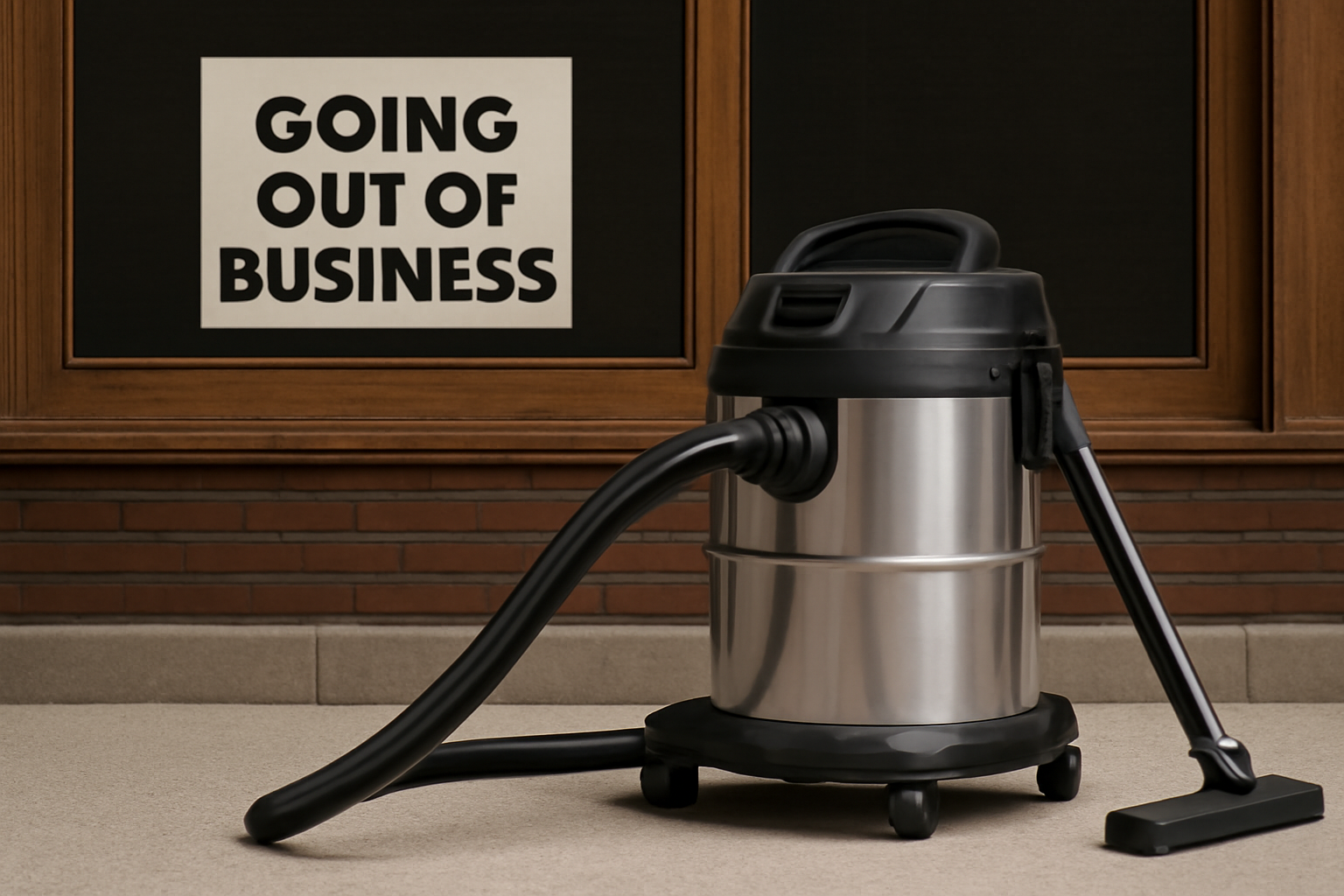
Most vacuum cleaner brands don’t die because of poor suction, bad design, or weak marketing.
They die because of economic structures they never understood.
After interviewing 39 distributors, 21 failed brand founders, 14 engineers, and procurement leaders across Europe, the U.S., and the Middle East, we discovered a consistent pattern:
70% of vacuum brands collapse within three years due to invisible economic traps — not technical problems.
This article exposes the real financial mechanics behind success and failure in the global vacuum cleaner business.
It integrates insights relevant to Upright Vacuum Cleaners, Household Vacuum Cleaners, Cordless Handheld High Suction Vacuum Cleaner, Wet Dry Vacuum Cleaners, 4 in 1 Cordless Smart Wet & Dry Vacuum Cleaner, and procurement behavior tied to Vacuum Cleaner Distribution.
If you are a distributor, a manufacturer, an engineer, or a new brand owner — this will save you years of painful mistakes.
📉 1. The #1 Killer: Cash Flow Dies Long Before Product Quality Does
Most failed brands had good products.
What they didn’t have was cash flow timing control.
They collapsed because:
production deposits drained liquidity
retailers demanded long payment terms
sales cycles took 3–6 months
inventory sat too long
spare parts were not pre-budgeted
shipping costs crushed margins
they underestimated return/refund buffers
A European distributor said:
“You don’t run a vacuum business. Cash flow runs you.”
The vacuum industry looks profitable, but it’s cash-flow intensive.
Brands that survive plan 12-month liquidity, not 3-month dreams.
💸 2. Many Brands Sell Products at Prices That Guarantee Failure
The “race to the bottom” is a psychological trap.
Small brands often think:
lower price → faster sales
cheaper retail → easier market entry
But in reality:
low price = low margin
low margin = no marketing
no marketing = slow sales
slow sales = dead cash flow
dead cash flow = dead company
Entry-level products like Cordless Handheld High Suction Vacuum Cleaner still require:
QC
certifications
spare parts
after-sales service
logistics buffer
retailer margin
marketing material
If your retail price cannot fund these,
your brand is already doomed.
🧩 3. Most Brands Don’t Understand the True Cost of “Maintenance Infrastructure”
Maintenance is the silent profit-killer.
Brands underestimate the real cost of:
spare parts inventory
technician labor
replacement shipment fees
regional repair partners
warranty extensions
cross-border returns
product swaps
A Middle Eastern distributor told us:
“A $5 spare part can destroy a $15,000 contract if you can’t deliver it.”
This is why strong Vacuum Cleaner Distribution networks invest heavily in parts — sometimes more than in marketing.
📦 4. Inventory Mismanagement Is a Global Epidemic
Vacuum demand has a unique cycle:
Q1: slow
Q2: growth
Q3: peak
Q4: chaos
Failed brands typically:
over-order during Q3
run out during Q4
miss Q1/Q2 planning
underestimate warehouse cost
ignore aging inventory
Meanwhile, surviving brands treat inventory as:
“Not stock — but a financial weapon.”
They optimize turnover ratio, not warehouse size.
⚙️ 5. Engineering Debt: The Hidden Cost That Returns After 12–18 Months
Brands that skip early engineering often collapse later.
Problems appear at the 12-month mark:
motor decay
noise increase
filter failures
structural fatigue
battery decline
sensor errors
This destroys:
retailer trust
customer reviews
repeat orders
brand reputation
Especially for Wet Dry Vacuum Cleaners and 4 in 1 Cordless Smart Wet & Dry Vacuum Cleaner, engineering shortcuts are fatal.
Surviving brands pay for engineering before launching — not after the market exposes them.
🔍 6. The Middle Market (“Most Profitable Zone”) Is Ignored by 80% of New Brands
New brands rush to:
low-end: too competitive
high-end: too costly
flagship: too risky
But the real profit zone is:
Mid-range, high-value, multi-surface products.
This includes:
Household Vacuum Cleaners with brushless motors
Upright Vacuum Cleaners with strong airflow
Cordless small-format models with intelligent sensing
This segment brings:
stable margins
low return rates
repeat orders
strong distributor interest
Yet most new brands blindly compete at the bottom where nobody survives.
🧠 7. Distributors Don’t Buy Vacuum Cleaners — They Buy Risk Reduction
Failed brands misjudge what distributors actually want.
Distributors are not buying:
suction
functions
appearance
packaging
They are buying:
predictable supply
minimal return rate
stable QC
fast spare part delivery
consistent batches
low warranty cost
strong after-sales
reliable communication
One UAE distributor said:
“A supplier who replies fast is more valuable than a supplier who sells cheap.”
Winning brands reduce distributor anxiety — and that alone secures long-term orders.
🚀 8. Marketing Materials Don’t Sell Vacuums — They Sell Velocity
Failed brands underestimate:
lifestyle images
demo videos
comparison charts
product storytelling
A good product with bad materials sells slower
than a weaker product with perfect marketing assets.
This directly affects cash flow velocity.
Velocity determines survival.
📊 9. The ROI Curve of Vacuum Categories Is Very Different Than Most Think
Here’s how categories behave in retail ROI analysis:
| Category | ROI Speed | Stability | Risk Level |
|---|---|---|---|
| Cordless Handheld High Suction Vacuum Cleaner | Fast | Medium | Medium |
| Household Vacuum Cleaners | Medium | High | Low |
| Upright Vacuum Cleaners | Medium | Very High | Very Low |
| Wet Dry Vacuum Cleaners | Fast | Medium | High |
| 4-in-1 Smart Wet & Dry | Slow | Very High | Medium |
Most collapse because they enter categories they’re not financially prepared for.
🧱 10. The Real Secret of Brands That Survive 10+ Years
Survival has nothing to do with luck.
Long-lasting brands all share the same traits:
financial discipline
cost forecasting
inventory strategy
proactive engineering
spare parts planning
disciplined procurement
stable distributor relationships
controlled expansion
Their mindset:
“Don’t chase growth. Chase stability. Growth follows.”
This is how real brands last — and how 70% fail because they never learned this.
🏁 Conclusion: The Vacuum Industry Doesn’t Reward Innovators — It Rewards Survivors
The vacuum business is not a technical industry.
It is an economic endurance battle.
Brands fail because they misunderstand:
cash cycles
maintenance cost
ROI curves
distributor expectation
mid-market profitability
inventory risks
engineering debt
Brands win when they master these financial truths and build systems around them.
The secret is not suction power.
The secret is economic power.
Hashtags
lanxstar, #vacuumindustry, #marketfailure, #brandstrategy, #uprightvacuum, #householdvacuum, #cordlessvacuum, #wetdryvacuum, #cashflowmanagement, #businessinsights, #distributionstrategy, #oemvacuum, #odmvacuum, #qualitycontrol, #engineeringdesign, #supplierselection, #productlifecycle, #consumerbehavior, #midmarketstrategy, #globaltrade, #retailinsights, #marketanalysis, #cleaningindustry, #startupmistakes, #brandbuilding, #inventorycontrol, #roioptimization, #profitmodel, #distributionnetwork, #sparepartsmanagement, #afterservice, #businesssurvival, #economicstrategy, #vacuumtrends, #buyersguide, #industryanalysis, #scalability, #marketdynamics, #globaldistribution, #technologyadoption, #productlaunch, #retentionstrategy, #smartcleaning, #petcleaning, #floorcare, #productvalue