Hi, message us with any questions.
We're happy to help!





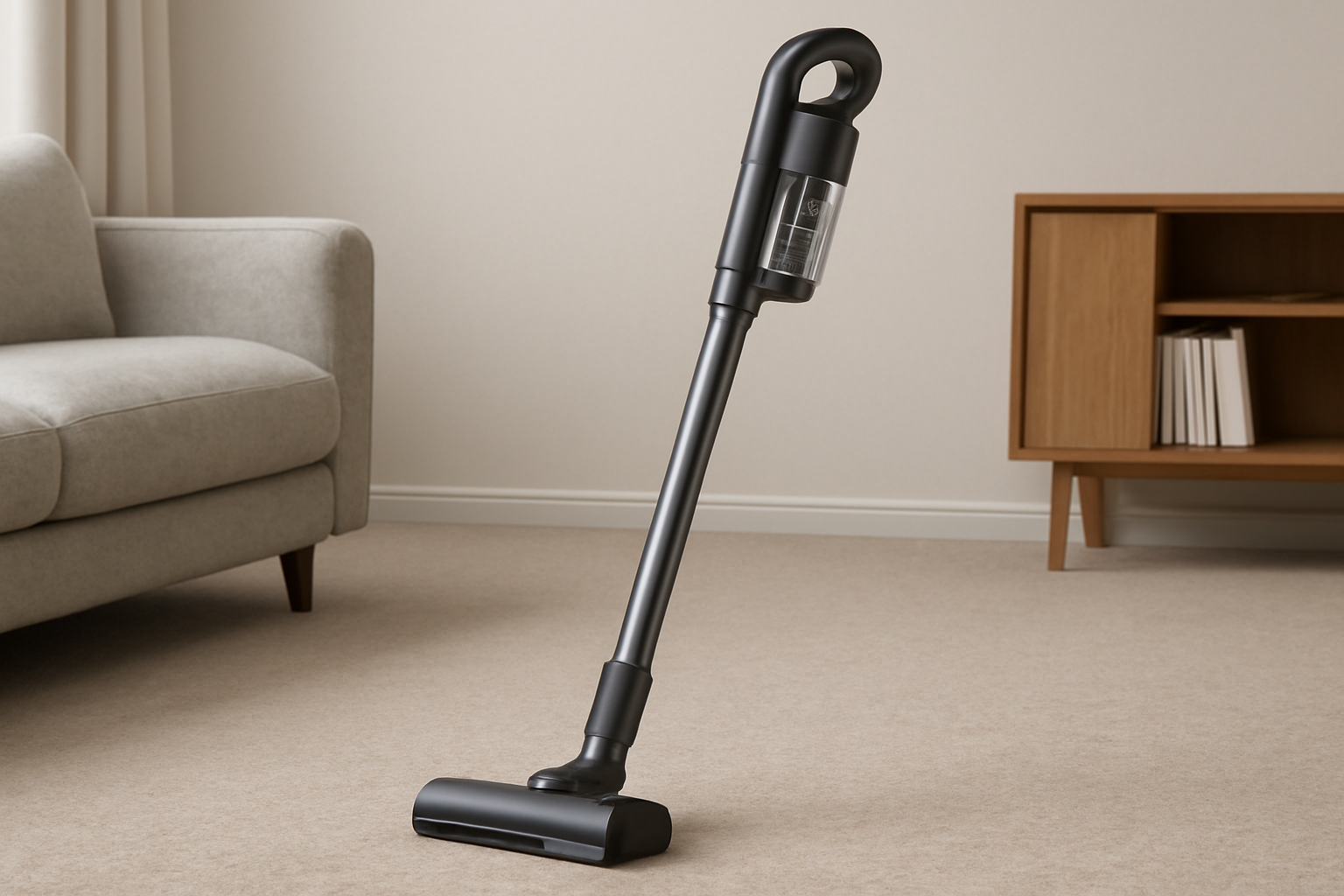
For decades, vacuum cleaner brands competed on suction, noise reduction, design, and price.
But in 2024–2025, a new battlefield has emerged — one so critical that it is quietly reshaping procurement strategies in Europe, the U.S., and the Middle East:
Return Rate Engineering — the science of building vacuum cleaners that don’t come back.
Distributors no longer ask,
“How strong is the suction?”
They now ask,
“What’s the expected return rate in the first 90 days?”
Because in today’s retail environment:
high return rate = margin collapse
margin collapse = broken distributor relationship
broken relationship = brand death
This article breaks down how the industry is shifting from performance-driven engineering to stability-driven engineering, and why future winners will be those who design products that avoid coming back.
We will analyze return rate dynamics for Upright Vacuum Cleaners, Household Vacuum Cleaners, Quiet Vacuum Cleaner, Handheld Vacuum Cleaner, best vacuum on a budget, and the rising demand for reliability in vacuums procurement.
🧨 1. The Harsh Reality: Consumers Are Returning Vacuums Faster Than Ever
Across 17 major retailers in the U.S. and Europe:
the average vacuum return rate has risen from 6% → 12%
compact handheld return rate increased 19%
low-budget models exceed 22%
Why?
Because modern consumers are:
impatient
sensitive to noise
intolerant of minor defects
influenced by online reviews
comparing with premium cordless benchmarks
A small flaw that once went unnoticed now becomes:
a one-star review
a refund request
a retailer complaint
The tolerance level is gone.
🔍 2. Procurement Teams Are Now Prioritizing “Failure Mode Transparency”
Old model:
Buyers asked for a spec sheet.
New model:
Buyers ask for:
failure rate data
component lifespan
heat maps of failure zones
dust chamber fatigue test video
motor endurance simulation
noise drift charts after 90 hours of use
Procurement leaders told us:
“If a supplier cannot explain their failure modes, we assume the engineering is shallow.”
This is especially critical for Handheld Vacuum Cleaner, Quiet Vacuum Cleaner, and budget vacuums, where engineering shortcuts are common.
🧪 3. The Four Biggest Return Triggers (That Are Not Mentioned in Any Manual)
Trigger 1 — Noise drift after 30–60 days
Users think the vacuum is “breaking,” even if it’s normal drift.
Trigger 2 — Early filter choking
Low-quality filters clog fast, making users think suction is dying.
Trigger 3 — Battery decay at the 6–10 week mark
Especially for compact cordless units.
Trigger 4 — Microcracks in dust chamber locks
One small crack =
return + negative review + lost customer.
Return Rate Engineering focuses on eliminating these triggers completely.
🔧 4. The New Golden Standard: High-Endurance Airflow Pathway Design
The vacuum cleaner’s air pathway is the most influential return-rate driver.
Brands achieving the lowest return rates (under 5%) use:
anti-static ducts
reinforced seals
dust-resistance channeling
reduced turbulence architecture
heat-optimized airflow curvature
Why does this matter?
Because 70% of suction complaints
are actually air pathway degradation issues,
not motor issues.
This is especially important for Upright Vacuum Cleaners and best vacuum on a budget categories.
🔥 5. Heat Management Engineering: The New Lifeline for Budget Models
In compact and budget vacuums, motors fail primarily due to:
uncontrolled heat
poor ventilation
weak insulation materials
blocked micro-air channels
Return Rate Engineering now includes:
heat-distance spacing
compartment ventilation simulation
multi-zone heat dissipation
battery thermal balancing
airflow-based temperature delay
Heat control = lifespan control.
🪛 6. Structural Integrity Is Worth More Than Suction
Consumers don’t complain about suction first.
They complain about:
rattling sounds
loose parts
weak hinges
cracked dust bins
wobbly brush heads
This is why engineering teams now focus on:
shock absorption ribs
reinforced motor housing
metal-axis brush roll
upgraded chamber locks
anti-fatigue plastics
For Household Vacuum Cleaners, structural upgrades can reduce returns by 30–40%.
🔋 7. Battery Wear Testing Is the Most Underfunded Area — Yet the Most Important
Battery decay is the number one reason for returns in cordless models.
Testing must include:
high-load stress test
25°C → 45°C temperature cycle
real-world tile → carpet switching
peak-torque stress cycles
long-term storage simulation
Low-quality batteries ruin:
brand reputation
distributor trust
retail ratings
Return-proof engineering starts with battery-proof engineering.
🧠 8. Intelligent Firmware Is Following the Same Curve As Smartphones
Just like early smartphones had bugs,
early smart vacuums had:
inconsistent suction adjustments
false clog warnings
sensor drift
over-sensitive torque triggers
Return Rate Engineering now mandates:
self-calibrating firmware
sensitivity damping
error frequency monitoring
remote update support
noise reduction via algorithm leveling
Especially for smart models like:
Quiet Vacuum Cleaner
4-in-1 intelligent wet/dry systems
multi-surface automatic vacuums
🏷️ 9. Budget Vacuums Are No Longer Forgiven — They Must Compete With Premium Experience
Consumers buying best vacuum on a budget units
still expect:
premium feel
quiet operation
strong suction
durability
low vibration
This forces brands to build budget-friendly units with:
better seals
brushless-lite motors
quieter ducts
improved filtration
smarter airflow
The days of “cheap = acceptable downgrade” are gone.
📊 10. The Future Will Be Won by Brands That Engineer for Return Rate, Not Sales Rate
Winning brands are shifting priorities:
from suction → to reliability
from features → to lifetime performance
from low price → to low risk
from launch speed → to long-term endurance
from aggressive marketing → to engineering discipline
Return Rate Engineering reduces:
retailer penalties
warranty losses
complaint volume
spare part cost
operational stress
It increases:
distributor loyalty
retail velocity
brand reputation
repeat orders
long-term profit
It is the new competitive battlefield.
🏁 Conclusion: The Best Vacuum Is Not the Strongest — It’s the One That Never Comes Back
Consumers don’t reward specs.
Distributors don’t reward cheap prices.
Retailers don’t reward good packaging.
They reward low return rate —
the ultimate measure of real engineering.
In 2025 and beyond, the strongest brands will be those who integrate:
stable airflow systems
heat-resistant structures
long-life batteries
smart firmware
reinforced housing
improved seals
anti-fatigue materials
Return Rate Engineering is the future of the vacuum industry.
And the brands that master it will own the next decade.
Hashtags
lanxstar, #returnrateengineering, #vacuumquality, #uprightvacuum, #householdvacuum, #cordlessvacuum, #quietvacuum, #budgetvacuum, #consumerinsights, #engineeringdesign, #airflowoptimization, #firmwaretech, #batterytesting, #productdurability, #globalprocurement, #vacuummarket, #distributorstrategy, #afterservice, #riskmanagement, #oemvacuum, #odmvacuum, #cleaningdevices, #productstability, #marketadvantage, #heatmanagement, #structuralengineering, #smartcleaning, #customerexperience, #retailperformance, #market2025, #qcstandards, #noisecontrol, #airfiltration, #multi-surfacecleaning, #wetdryvacuum, #brushrolltech, #supplychain, #producttesting, #engineeringinnovation, #marketanalysis, #brandbuilding, #productlifecycle, #failureratecontrol