Hi, message us with any questions.
We're happy to help!





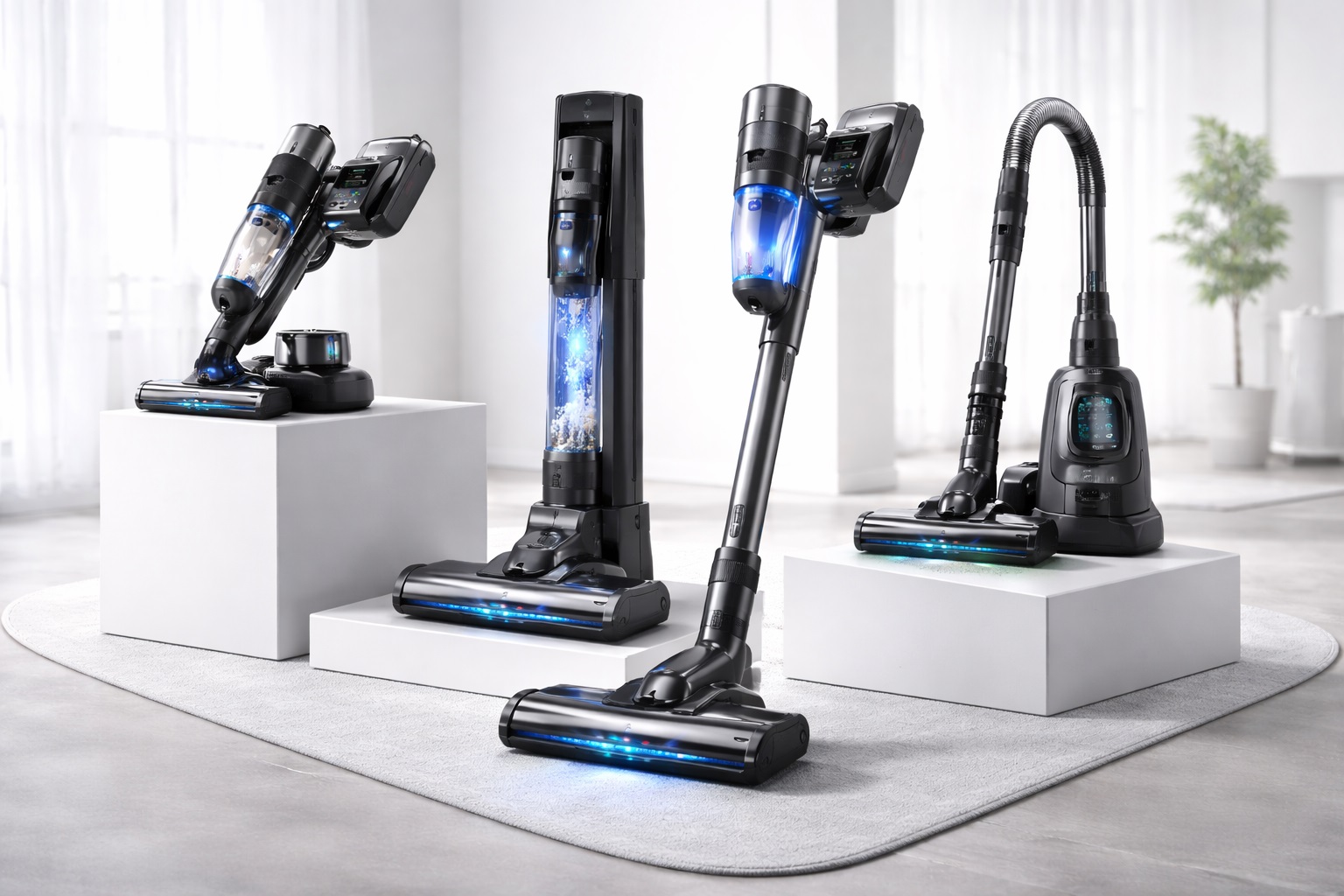
In a crowded vacuum cleaner market, positioning is not what you say—it’s what your product lineup consistently proves. Shoppers compare reviews, noise levels, filtration claims, and real-world convenience. Meanwhile, procurement teams evaluate return risk, warranty cost, and SKU clarity. If your products feel interchangeable, your only lever becomes price—and price wars are rarely sustainable.
The solution is a differentiation system that works across product design, messaging, testing, and distribution. Below are the top five product differentiation strategies that help vacuum brands stand out, protect margins, and win long-term trust.
Strategy 1: Build scenario-led SKUs (so each model owns a job) 🎯
Most brands lose positioning because they try to make one vacuum “for everyone.” Consumers don’t buy categories—they buy solutions for their home, lifestyle, and pain points.
A scenario-led lineup is the simplest way to create instant clarity:
Apartment Vacuum Cleaner: compact storage, low noise, easy maintenance
Quiet Vacuum for Night Use: low dB(A), reduced high-frequency tone, quiet mode
Vacuum Cleaner for Pet Hair: anti-tangle brush design, upholstery pickup, easy hair removal 🐾
Car Vacuum Cleaner: crevice reach for seat rails, stable suction, sealed dust handling 🚗
Portable Vacuum for Travel: compact, quick-charge, clean emptying 🧳
Whole-home daily driver: a dependable Cordless Vacuum Cleaner with multi-surface proof
When each SKU has a defined scenario, your market positioning becomes obvious—even before customers read specifications. This also reduces “internal competition” between your own models, which helps distributors build simpler shelves and cleaner listings.
Procurement advantage: scenario-led SKUs reduce returns because buyer expectations match real use.
Strategy 2: Make performance measurable (proof beats claims) ✅📊
Differentiation collapses when “powerful” and “quiet” are only words. Strong brands win by converting marketing statements into proof.
What to prove (and how it maps to search intent)
High Suction Vacuum Cleaner: show sealed suction/airflow test method + real debris pickup
Portable Quiet Vacuum Cleaner and quiet vacuum cleaner: publish noise test results and explain tone control
HEPA Filter Vacuum Cleaner: prove sealed filtration (minimize bypass leakage)
Vacuum for Multi-Surface: demonstrate hard floor + rug pickup, plus edge cleaning
Fast Lightweight Vacuum Cleaner: prove “fast” via time-to-clean and “lightweight” via ergonomics and balance
A product can have a great peak number and still disappoint if suction collapses when the filter loads or the bin fills. The differentiator is stable cleaning over time.
Engineering tip 🧪: standardize test conditions so procurement teams can compare models apples-to-apples.
Distribution tip: turn proof into assets—short demo scripts, simple comparison visuals, QR videos.
Strategy 3: Differentiate wet/dry through hygiene (not just “it can do wet”) 💦🧼
Wet/dry is one of the fastest-growing segments, but it’s also where many products fail. The biggest consumer complaint is not “weak cleaning”—it’s odor, residue, and cleanup hassle.
If you offer Wet Dry Vacuum Cleaners (or any wet dry vacuum positioning), build differentiation around hygiene lifecycle:
Easy-to-rinse tanks with minimal dead corners
Seals that prevent leakage and smell
A drying strategy that reduces residual water and mold risk
A Self-Cleaning Vacuum Cleaner workflow that actually saves time (fast + repeatable)
For premium positioning, a 4 in 1 Cordless Smart Wet & Dry Vacuum Cleaner can stand out if “smart” equals real convenience: reliable mode switching, clear alerts (dirty water full, clog detection), and consistent cleaning across modes.
For families and larger spaces, a Large-Capacity Wet Dry Vacuum Cleaner differentiates by reducing refill frequency—but it must remain manageable in weight and handling, or it creates regret purchases.
Why this strategy wins: hygiene differentiation directly improves reviews and reduces returns—two metrics that dominate e-commerce performance.
Strategy 4: Win value segments with “visible quality” value engineering 💰✨
Budget keywords drive huge traffic, but they also attract the harshest comparisons. If you chase budget demand with cheap materials, you’ll pay for it in warranty and review damage.
To compete for budget intent, use value engineering that keeps the product feeling premium where it matters:
Strong seals, satisfying clicks, stable head steering
Simple maintenance steps (easy emptying, easy filter access)
Durable parts where breakage is common (latches, joints, brush heads)
Clear consumables availability (filters, brush rolls)
This approach supports natural use of phrases like:
best vacuum on a budget, best budget hoover, good budget vacuum, best affordable vacuum, best budget vacuum, best value for money hoover, best value hoover, best vacuum cleaners on a budget, best vacuums on a budget, good budget vacuum cleaner—without turning your content into keyword stuffing.
Positioning principle: in value segments, customers forgive fewer features—but they don’t forgive frustration.
Strategy 5: Differentiate through service readiness and distribution systems 🔁📦
Many brands treat after-sales as an operational cost. In reality, it’s a differentiation engine—especially for global partners.
For vacuum cleaner distribution, the easiest products to scale are the ones with:
Reliable parts pipeline (filters, brush rolls, tanks, chargers)
Clear warranty terms and claim workflows
Simple service content (QR videos, troubleshooting guides)
Consistent packaging quality (drop protection + clear labeling)
For buyers, after-sales strength reduces hidden costs. For consumers, it removes anxiety and increases confidence to recommend and repurchase.
Extra leverage: accessory ecosystems. When accessories and consumables are planned from day one, distributors get repeat revenue and brands gain long-term customer touchpoints.
Conclusion: Differentiation is a system—build it once, scale it everywhere 🌍✅
The strongest vacuum positioning comes from repeatable differentiation, not slogans. Build scenario-led SKUs, prove performance with standardized tests, differentiate wet/dry through hygiene-first design, win value segments with visible quality, and scale loyalty through parts and after-sales systems. That’s how brands like Lanxstar can compete across regions without racing to the bottom on price.
www.lxvacuum.com
Related Keyword Groups
Lanxstar vacuum cleaner, Lanxstar vacuum positioning, vacuums procurement, vacuum cleaner distribution, vacuum product differentiation strategy, scenario-led vacuum SKU matrix, Cordless Vacuum Cleaner lineup planning, cordless handheld vacuums wholesale, Li-ion Cordless Handheld Vacuum Cleaner platform, Portable Quiet Vacuum Cleaner low noise, quiet vacuum cleaner market positioning, Quiet Vacuum for Night Use feature, Apartment Vacuum Cleaner compact design, High Suction Vacuum Cleaner stability, suction test protocol for vacuums, airflow path noise reduction, HEPA Filter Vacuum Cleaner sealed system, Vacuum Cleaner for Allergies positioning, Vacuum Cleaner for Pet Hair anti-tangle, upholstery pet hair tool performance, Vacuum Cleaner for Hardwood Floors soft roller, Vacuum for Multi-Surface pickup benchmark, Fast Lightweight Vacuum Cleaner ergonomics, Multi-Functional Durable Vacuum Cleaner reliability, latch fatigue cycle testing, brush motor endurance validation, Wet Dry Vacuum Cleaners hygiene lifecycle, wet dry vacuum odor prevention, Wet and Dry Vacuum Cleaner leak test, Self-Cleaning Vacuum Cleaner rinse and dry workflow, 4 in 1 Cordless Smart Wet & Dry Vacuum Cleaner differentiation, Large-Capacity Wet Dry Vacuum Cleaner tank handling, Car Vacuum Cleaner accessory kit strategy, Portable Vacuum for Travel compact kit, battery runtime verification for cordless, fast charging Li-ion vacuum safety, replacement HEPA filter supply chain, brush roll anti-hair wrap design, distributor-ready vacuum packaging, warranty and after-sales workflow, consumables and accessories revenue, best vacuum on a budget positioning, best budget vacuum cleaner SKU, good budget vacuum cleaner value engineering, best affordable vacuum build quality, best value hoover retail strategy, best value for money hoover messaging, best vacuum cleaners on a budget SEO, best vacuums on a budget intent, good budget vacuum for apartments



