Hi, message us with any questions.
We're happy to help!





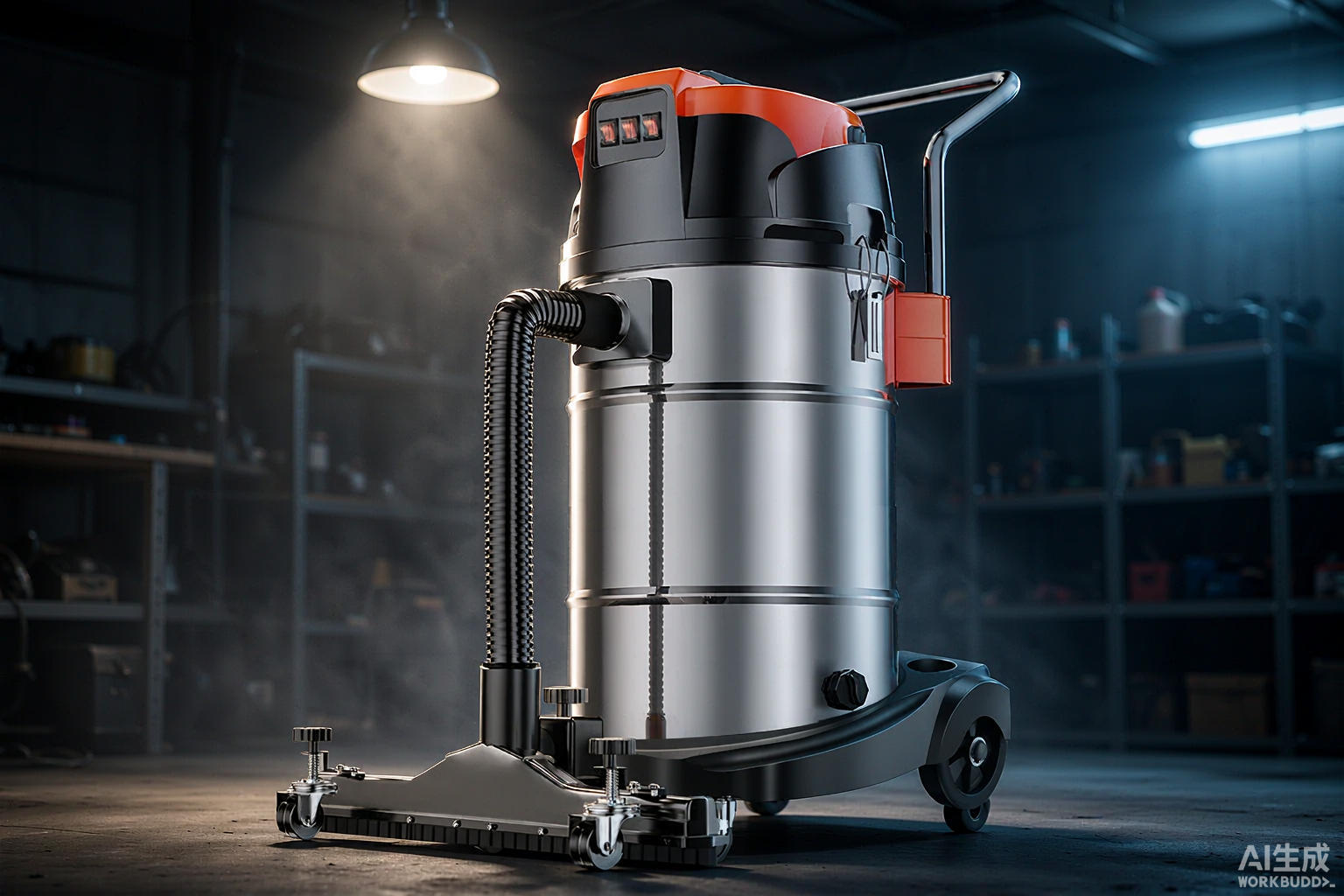
Type "shop vac" into any search bar and you will find two kinds of confusion: people asking whether a shop vac and a wet dry vacuum are the same thing, and product listings using the words interchangeably — sometimes for the same machine, sometimes not. The honest answer involves a bit of history, a bit of trademark law, and a lot of engineering. The short version: "shop vac" began life as a brand name, "wet dry" describes a machine category — and the machines themselves range from near-identical to very different depending on class. Here is the full comparison, so you buy the right machine instead of the right words.
1. The Terminology: Brand, Category and Common Noun 🏷️
The confusion has a real origin:
🏭 "Shop Vac" is a trademarked brand — an American manufacturer whose yellow machines popularized the canister-style workshop vacuum in North America. Through genericization, "shop vac" became the everyday noun for the whole category, the way "hoover" did in the UK
🌊 "Wet dry vacuum cleaner" is the category description: a canister vacuum engineered to collect both dry debris and liquids, protected by a float valve
🌍 Regional vocabulary: "shop vac" dominates North America; "wet and dry vacuum" or "wet/dry vacuum cleaner" is the standard term across Europe, Asia and global trade. A vacuum cleaner manufacturer in China building for export uses "wet dry vacuum cleaner" on the carton because that is what customs codes, tenders and Amazon categories say
So on terminology alone: a shop vac is a wet dry vacuum (the brand makes them), but not every wet dry vacuum is a Shop Vac (the brand). In practice, when buyers say "shop vac" they mean any workshop-class wet/dry canister machine — which brings us to the engineering comparison that actually matters.
2. Motor Architecture: Where the Real Difference Lives ⚙️
If there is one engineering line that separates machine classes, it is this one:
🧠 Bypass motors: The working airstream never passes through the motor windings. Dust and moisture stay out of the electricals. This is the architecture of every serious wet dry vacuum cleaner — it is what makes liquid pickup possible without killing the machine
⚠️ Through-flow motors: Air passes directly over the motor. Cheaper to build, acceptable for clean dry dust, fatal with moisture and self-destructive around fine grinding dust
Most "shop vacs" in the consumer price tier actually use through-flow or partially protected motors — fine for sawdust, terrible for water. Every genuine wet/dry machine from a professional industrial vacuum cleaner supplier uses a full bypass architecture. If you plan to collect liquids, this is the first specification to verify, on either side of the terminology.
3. The Side-by-Side Comparison 📊
Dimension | Typical "Shop Vac" (retail tier) | Professional Wet Dry Vacuum Cleaner |
Motor | Often through-flow; single motor | Full bypass; often a dual motor vacuum cleaner option |
Tank | Plastic drum (PP) | Stainless steel vacuum tank or heavy-duty composite; 0.6–0.8mm steel |
Liquid pickup | Sometimes, if float valve fitted | Certified wet mode with float protection, standard |
Filtration | Basic cloth/bag; optional fine filter | Cartridge; HEPA filter vacuum cleaner options; pre-separator compatibility |
Duty cycle | Light, intermittent | Continuous multi-hour daily duty |
Noise | 75–85 dB typical | Engineered low noise vacuum cleaner variants at 62–68 dB |
Lifespan in a pro workshop | 6–18 months | 5–10 years with service |
Price | $40–120 retail | $150–600+ through trade channels |
Typical buyer | Homeowner, weekend workshop | Trade workshop, facility fleet, contractor |
Read the table carefully and you will see the real answer to "is there a difference": within the overlapping category there are two machine classes wearing the same name. The words are synonyms; the engineering is not.
4. Where Each Machine Wins 🏆
The Retail "Shop Vac" Wins When…
🏠 It serves a home garage or hobby bench, used monthly rather than daily
🧹 The debris is clean dry dust — sawdust, drywall, leaves, car interiors
💰 The budget is genuinely tight and replacement is acceptable — a best vacuum on a budget-class purchase where "cheap and replaceable" is a rational strategy
🪶 Weight and price matter more than durability
The Professional Wet Dry Vacuum Wins When…
🔧 The machine runs daily in a workshop, garage or facility — the heavy duty vacuum cleaner duty class
💧 Liquids are real: coolant, washdown water, floods, vehicle interiors after extraction
🫁 Fine dust is a health or compliance matter: brake dust, grinding dust, silica — where a sealed HEPA filter vacuum cleaner stage is required
🏢 It feeds a fleet: cleaning contractors, facility managers and distributors standardizing on one platform with shared spares
📉 Total cost matters more than sticker price — three retail machines replaced per year cost more than one professional machine kept for six
5. The Hidden Category Trap in Product Listings ⚠️
Buyers comparing listings should watch for three specific misdirections:
🚫 "Wet/dry" on a machine without a float valve: Some listings describe basic machines as wet/dry because they tolerate damp debris. Genuine liquid pickup requires float protection — check the spec sheet, not the title
🚫 Peak watts as suction: Input wattage says nothing about working vacuum. A professional high suction power vacuum cleaner states suction in mbar/kPa and airflow in CFM or L/s; retail machines hide behind wattage
🚫 "Stainless steel" without gauge: Thin decorative steel dents and rusts like plastic fails differently. Ask for the millimeter figure — a real industrial vacuum cleaner factory states it in the datasheet
These traps exist on both sides of the shop-vac/wet-dry divide — which is exactly why the terminology question matters. Words don't protect you; specifications do.
6. Which Words Should Buyers Even Use? 🗣️
Practical guidance by situation:
🛒 Retail shoppers in North America: "Shop vac" will find you the category. Filter results for float valves, steel tanks and bypass motors to find the professional end
🌍 Global B2B buyers and importers: Use "wet dry vacuum cleaner" and "industrial vacuum cleaner" in tender and sourcing language — it maps to harmonized categories and avoids brand-name confusion in contracts
📦 Distributors and private label brands: Consider stocking both vocabulary tiers deliberately — retail packaging can say "shop vacuum" for the consumer SKU while the same platform's pro version, sourced via OEM vacuum cleaner or private label vacuum cleaner programs from a vacuum cleaner manufacturer in China, carries professional wet/dry designation
✍️ Content and product teams: Use both terms where genuinely interchangeable, but never call a through-flow machine a wet/dry machine. Accuracy is a compliance matter, not pedantry
7. Real Cases: The Terminatomy in Practice 📁
Case 1 — Homeowner vs Machine Shop, Same City 🇺🇸
Two buyers in the same week ordered from the same US distributor. The homeowner bought a 79 retail shop vac for a garage bench — a rational buy for monthly sawdust duty. The machine shop owner initially tried the same SKU for daily coolant cleanup and killed two machines in five months (through-flow motors ingesting moisture). The fix was not "a better shop vac" — it was a class change: a 60 L stainless **wet dry vacuum cleaner** with a bypass motor and pre-separator. Same word, two different machines: the price difference was 260, and the second machine is in year four.
Case 2 — European Distributor's Listing Overhaul 🇩🇪
A German tool distributor discovered its webshop's "shop vacuum" category — imported from a US supplier's naming — was confusing continental customers and suppressing search traffic. Re-categorizing to "wet dry vacuum cleaner" with an explanatory comparison page (very much like this one) lifted category conversion 22% within a quarter. Customers did not need persuasion; they needed clarity.
Case 3 — Facility Manager's Tender Language Fix 🇬🇧
A UK facility manager inherited a tender template specifying "shop vacs" for a warehouse cleaning contract. Bidders quoted retail-tier machines. Rewriting the tender around "wet dry vacuum cleaner, bypass motor, float protection, 30L minimum stainless tank, HEPA option" changed the entire bidder pool — professional commercial grade vacuum cleaner platforms appeared, warranty terms improved, and the winning fleet is now in year three with under 1% claim rate. Precise language bought better machines at the same budget.
Case 4 — Private Label Program Across Both Vocabularies 🇨🇦
A Canadian retailer ran a two-tier house brand: a consumer SKU boxed as a "shop vacuum" for the DIY shelf, and a professional wet/dry line for the trade counter — both manufactured on one platform family through an ODM vacuum cleaner program with a China factory partner. Same engineering DNA, different tank sizes and filtration, vocabulary matched to each aisle. Shelf clearance ran 30% faster on the relabeled professional tier, confirming that customers respond to honest categorization.
8. The Bottom Line 🎯
Is there a difference between a shop vac and a wet dry vacuum? As words: barely — one is a genericized brand, the other the category it named. As machines: everything — motor architecture, tank material, filtration class, duty cycle and lifespan separate a $79 weekend tool from a ten-year trade platform. Buy by specification, not by label: verify the bypass motor, the float valve, the tank gauge and the filtration class, and the terminology question answers itself. Professional buyers who want the durable end of the category — and distributors who want to stock it — will find that factory-direct manufacturers like Lanxstar specify exactly this way.
If you are interested, please feel free to contact us anytime — our team will help you map the right machine class to your actual duty, whatever you call it. Begin at www.lxvacuum.com 🚀
50 Related Keywords
shop vac vs wet dry vacuum, shop vac, shop vacuum, wet dry vacuum cleaner, wet and dry vacuum cleaner, difference between shop vac and wet dry vacuum, wet dry vacuum comparison, workshop vacuum cleaner, garage vacuum cleaner, industrial vacuum cleaner, industrial wet and dry vacuum cleaner, commercial vacuum cleaner, commercial grade vacuum cleaner, heavy duty vacuum cleaner, dual motor vacuum cleaner, high suction vacuum cleaner, high suction power vacuum cleaner, large-capacity wet dry vacuum cleaner, stainless steel vacuum tank, HEPA filter vacuum cleaner, wet and dry suction system, industrial dust extractor, low noise vacuum cleaner, portable quiet vacuum cleaner, multi-functional durable vacuum cleaner, fast lightweight vacuum cleaner, energy efficient vacuum cleaner, best vacuum on a budget, good budget vacuum cleaner, best value for money hoover, industrial cleaning equipment, commercial cleaning equipment, construction site cleaning equipment, factory floor cleaning, warehouse cleaning solution, car detailing vacuum cleaner, vacuum cleaner supplier, vacuum cleaner supplier China, vacuum cleaner manufacturer, vacuum cleaner maker, vacuum manufacturer, industrial vacuum cleaner supplier, industrial vacuum cleaner factory, factory direct vacuum cleaner, wholesale vacuum cleaner, bulk vacuum cleaner purchase, buy industrial vacuum cleaner, OEM vacuum cleaner, private label vacuum cleaner, Lanxstar