Hi, message us with any questions.
We're happy to help!





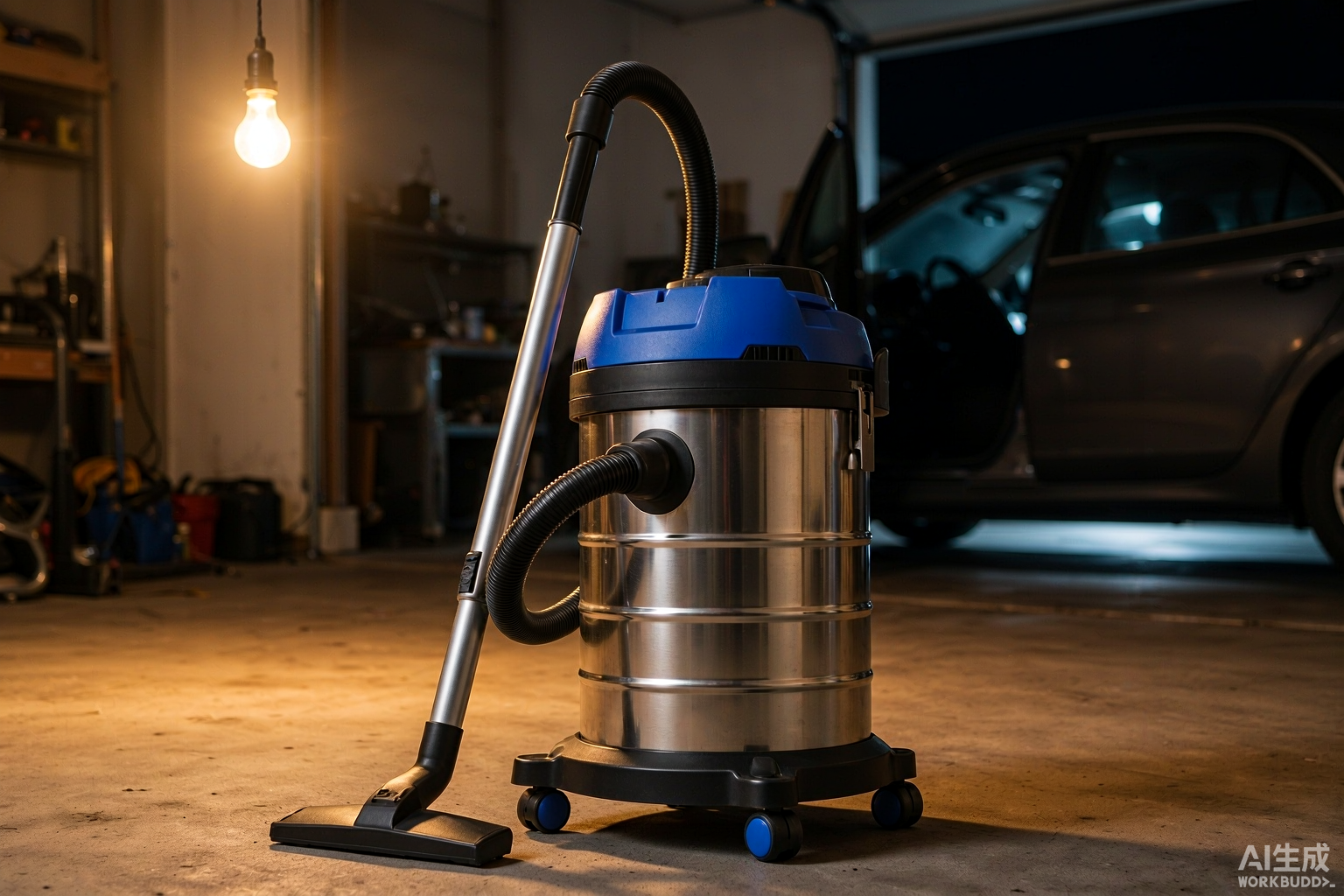
Walk a trade counter and every shop vacuum claims the same things: powerful, heavy duty, professional. Tear down three of them and the claims evaporate — one has a bypass motor, two don't; one has 0.8mm stainless, two have mystery-gauge steel; one filters to HEPA, two pass fine dust straight back into the shop air. Features are not marketing words; they are engineering facts you can verify. This guide ranks the fifteen features that actually determine whether a shop vacuum survives professional workshop duty — and which are worth paying for at which tier.
Tier One: Non-Negotiable Features 🏆
1. Bypass Motor Architecture ⚙️
The defining feature of a real workshop vacuum cleaner. In a bypass motor, the working airstream never passes through the motor windings — dust and moisture cannot reach the electricals. Through-flow (consumer-type) motors ingest shop air, and fine grinding dust slowly abrades and shorts them. If a machine at any price lacks bypass architecture, it is not a shop vacuum; it is a domestic machine wearing one. This single feature separates machines that last a decade from machines that last a season.
2. Stainless Steel Tank, Honest Gauge 🛢️
A stainless steel vacuum tank at 0.6–0.8mm survives dropped spanners, bench knocks and daily trolley abuse; a plastic drum cracks against the first dropped tool, and thin mystery steel dents and rusts at the dents. Ask for the gauge in writing — it is the most commonly fudged number in the category. Gauge also predicts weight-bearing: a full wet tank (water at 1 kg/L) stresses thin walls at the seams.
3. Float Valve Liquid Protection 🌊
Wet pickup without a float valve is a motor lottery. The float shuts suction before liquid reaches the motor — the difference between a routine wet job and a dead machine. Verify it works: reputable demonstration involves actual water, not a diagram. For any shop doing washdown or coolant cleanup, this feature is entry criteria, not an upgrade.
4. Crushproof, Antistatic Hose 🧵
The hose is the most-abused component on any shop vac: dragged over swarf, run over by trolleys, bent around machine beds. Cheap smooth hoses split and collapse; a proper crushproof design springs back. In dry, dusty environments, an antistatic lining prevents static build-up that gives operators shocks and clings dust to the hose wall. A high suction vacuum cleaner is only as good as the hose delivering the airflow.
Tier Two: High-Value Features Worth Paying For 💎
5. Pre-Separator / Cyclone Stage 🌀
The single best value upgrade in the category. A pre-separator captures 90%+ of bulk chips and dust before they reach the main filter — filter changes drop from monthly to yearly, and sustained suction holds instead of fading mid-job. For CNC shops and fabrication floors, this feature pays for itself in consumables within the first year.
6. HEPA or Fine-Cartridge Filtration 🧬
Grinding dust, welding residue and brake dust are lung-penetrating. A HEPA filter vacuum cleaner stage captures 99.97% at 0.3 microns and, in professional garages handling brake service, is increasingly a compliance requirement rather than a preference. Check the seal engineering too — unsealed HEPA media leaks around the edges and performs like a cheap filter with better marketing.
7. Tool-Free Filter Access and Cleaning 🔧
A filter you cannot reach is a filter that never gets cleaned. Quick-release filter cages and integrated cleaning systems (manual shakers or pulse-clean on larger units) keep performance where it belongs. Shops measure this honestly: minutes of maintenance per week, and whether it happens during work or after suction has already died.
8. Drain Port on the Tank 🚰
Emptying 40 liters of collected liquid by tipping a heavy tank is a daily back injury in development. A proper drain port with a hose fitting turns wet-tank emptying into a two-minute no-lift task. On any machine above 30 L intended for wet work, this feature is mandatory — its absence tells you the designer never watched the machine being used.
9. Blower Function 💨
Reverse the airflow and the machine becomes a blower: clearing chips from machine beds and lathe ways, blowing down benches, drying parts and vehicles, clearing debris from equipment housings. For garages and fab shops, this is a second tool for free — and the feature trade customers cite most often as "didn't know I needed it until I had it."
10. Onboard Tool and Cord Storage 🧰
Wands, crevice tools, brushes and the power cord stored on the machine actually get used; stored on a shelf across the shop, they don't. It sounds trivial until you watch a professional lose ten minutes a day hunting for the crevice tool. Professional duty includes professional logistics — a well-designed storage layout is a productivity feature, not a convenience.
Tier Three: Situational Features — Right Shop, Right Value 🎯
11. Dual Motors 🔋
A dual motor vacuum cleaner adds airflow (both motors) and redundancy (one motor while the other is serviced). Justified for daily-shift fabrication and CNC duty where downtime costs more than the second motor; unnecessary for a weekend workshop. Buy it for duty cycles, not prestige.
12. Variable Suction Control 🎚️
Full power tears dust from a bench straight past what you're trying to pick up and screams past noise limits. Variable control enables delicate work — cleaning around finished parts, upholstery in vehicles, dust near assemblies. Paired with a governed motor, it also feeds energy efficiency claims worth documenting where ESG reporting exists.
13. Quiet Engineering 🔇
A low noise vacuum cleaner rating (sub-68 dB) matters in shared industrial units, studios attached to retail, and residential-area workshops with noise-ordinance constraints. Noise comes from motor mounting isolation, airflow path design and housing damping — genuine engineering, not a marketing decibel. For most standalone workshops, standard noise is acceptable; for shared or regulated spaces, this feature is decisive.
14. Large Castors and Cable Restraint 🛞
Swarf and extension cords jam small wheels dead. Large, debris-rolling castors plus a strain-relieved cable restraint with 5+ meters of cord keep the machine moving between bays without unplugging itself or tipping on its face. Boring, structural, and the difference between a machine that travels the shop and one that lives in a corner.
15. Certified Power Switching and Emissions ⚡
Professional machines carry proper IP-rated switching, thermal motor protection and market certification (CE/GS/ETL as relevant). In workshops handling combustible dust concentrations or solvent vapor, an ATEX-rated variant is not a feature — it is the law of the zone. Ask any industrial vacuum cleaner supplier where their compliance boundary sits before you cross it.
How to Read Feature Lists When Buying 🧭
Feature literacy converts shopping into specifying:
🏪 Trade counter buyers: Verify Tier One features physically — motor type on the label, tank gauge with a micrometer, float valve with water, hose flexibility with your hands
🏭 Fleet buyers: Score machines by Tier One + Tier Two first; Tier Three by your actual site constraints. Write the tiers into the tender so suppliers must respond feature-by-feature
📦 Distributors developing house brands: An ODM vacuum cleaner program should build the full Tier One in at minimum, then differentiate on Tier Two — that is where margin and loyalty live. A genuine vacuum cleaner manufacturer in China with its own industrial vacuum cleaner factory engineers these tiers natively; trading-company "brands" cherry-pick whatever a commodity factory offers that week
💰 Budget buyers: The best vacuum on a budget is never the machine with the longest feature list — it is the one with all four Tier One features and nothing else. A good budget vacuum cleaner with bypass motor and stainless tank beats a feature-stacked plastic unit every time. That is the honest best value for money hoover math in this category
Real Cases: Features Deciding Outcomes 📁
Case 1 — Fabrication Shop's Filter Economics 🇩🇪
A Hamburg fabrication shop tracked consumables across two machines: a standard unit and one upgraded with a pre-separator (feature #5). Over twelve months the standard machine consumed 14 cartridge filters; the pre-separated machine consumed 2. At €19 per filter plus the labor of changing them, the €120 pre-separator upgrade returned roughly €300 in year one — before counting the sustained suction the old machine lost as each filter clogged.
Case 2 — Garage Chain's Brake-Dust Compliance 🇬🇧
A UK garage group faced a brake-dust hygiene audit across twelve sites. Machines lacking sealed HEPA (feature #6) were flagged; the audit explicitly noted unsealed filtration releasing captured dust during filter service. The group standardized on a sealed-HEPA wet dry vacuum cleaner platform, wrote the feature into their internal service standard, and passed the follow-up audit cleanly. One feature, twelve sites, one compliance problem solved.
Case 3 — Woodworking Shop's Hose Lesson 🇨🇦
A Montreal woodworking shop destroyed three "professional" hoses in a year on shavings volume and cart traffic before specifying crushproof antistatic hose (feature #4) on their replacement machine. Three years later the original hose still runs. The static benefit they hadn't expected: dust stopped clinging to the hose interior, keeping airflow — and suction — measurably higher between cleanings.
Case 4 — Distributor's Tier-Based House Brand 🇺🇸
A US tool distributor launched a workshop line via an OEM vacuum cleaner program built explicitly on this tier structure: entry model with Tier One only, mid model adding Tier Two, pro model adding dual motors and quiet engineering. The tiering simplified counter sales conversations ("which tier fits your shop?"), and the entry model — honest, minimal, bypass-motored — became their highest-volume SKU by displacing big-box plastic units at nearly the same price. Feature architecture, executed as product strategy.
The Bottom Line 🎯
The best shop vacuum features are not the longest spec sheet — they are the fifteen engineering facts above, ranked by duty. Tier One defines the category: bypass motor, honest-gauge stainless tank, float protection, real hose. Tier Two earns its price in consumables, compliance and daily speed. Tier Three matches site constraints instead of padding the brochure. Buy the tiers in order, verify them physically, and refuse to pay for marketing words — that discipline is precisely how factory-direct brands like Lanxstar build trade credibility, and exactly how professionals should buy.
If you are interested, please feel free to contact us anytime — tell us your workshop's duty profile and we will map the exact feature tier that fits it. Begin at www.lxvacuum.com 🚀
50 Related Keywords
shop vacuum features, best shop vacuum, workshop vacuum cleaner, garage vacuum cleaner, shop vacuum, wet dry vacuum cleaner, wet and dry vacuum cleaner, industrial vacuum cleaner, industrial wet and dry vacuum cleaner, commercial grade vacuum cleaner, heavy duty vacuum cleaner, dual motor vacuum cleaner, high suction vacuum cleaner, high suction power vacuum cleaner, large-capacity wet dry vacuum cleaner, stainless steel vacuum tank, HEPA filter vacuum cleaner, wet and dry suction system, industrial dust extractor, low noise vacuum cleaner, portable quiet vacuum cleaner, multi-functional durable vacuum cleaner, fast lightweight vacuum cleaner, energy efficient vacuum cleaner, best vacuum on a budget, good budget vacuum cleaner, best value for money hoover, industrial cleaning equipment, commercial cleaning equipment, construction site cleaning equipment, factory floor cleaning, car detailing vacuum cleaner, vacuum cleaner supplier, vacuum cleaner supplier China, vacuum cleaner manufacturer, vacuum cleaner manufacturer in China, vacuum cleaner maker, vacuum manufacturer, industrial vacuum cleaner supplier, industrial vacuum cleaner factory, factory direct vacuum cleaner, wholesale vacuum cleaner, bulk vacuum cleaner purchase, vacuum cleaner price wholesale, buy industrial vacuum cleaner, best industrial vacuum cleaner, OEM vacuum cleaner, ODM vacuum cleaner, private label vacuum cleaner, Lanxstar



