Hi, message us with any questions.
We're happy to help!





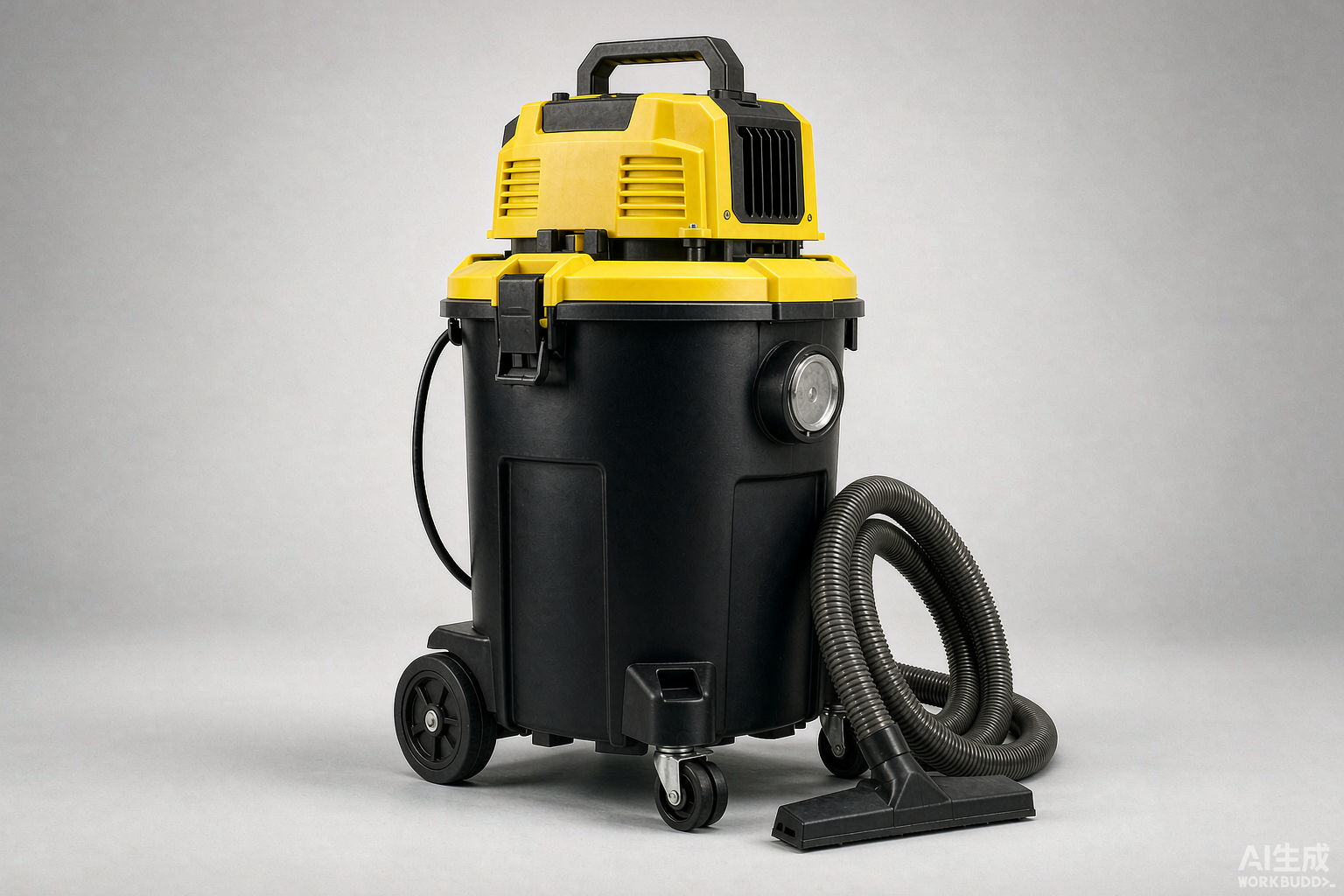
A garage is not a living room with worse lighting. It is a worksite where the floor collects engine oil, coolant spills, metal shavings, brake dust, sand and rubber debris — sometimes in the same afternoon. A household vacuum brought into this environment usually dies within months: the filter clogs with fine dust, the plastic tank cracks against a workbench leg, and the motor burns out because it was never engineered to run five hours a day.
Choosing a heavy-duty vacuum cleaner for garage cleaning means matching engineering facts to your actual workload. This guide walks through the seven decisions that separate a machine that lasts eight years from one that lasts eight months. 🧰
1. Start With Your Actual Garage Workload 📋
Before comparing specs, write down what your garage floor actually collects in a week:
Liquids: oil, coolant, washer fluid, rainwater tracked in by vehicles
Fine dust: brake dust, sanding residue, concrete powder
Sharp solids: metal chips, screws, glass shards, gravel
Daily runtime: 30 minutes for a home garage, 4–8 hours for a professional shop
That last number matters most. Duty cycle — not peak suction — is what separates a heavy-duty vacuum cleaner from a retail-grade machine dressed in industrial styling. A motor rated for continuous daily operation is built with different windings, bearings and cooling than one rated for 15-minute bursts.
2. The Motor Is the First Decision ⚙️
There are two motor architectures, and only one belongs in a garage:
Flow-through motors pull air through the motor windings themselves. They are cheap and fine for dry household dust — but a garage is humid, oily and dusty, and that air stream slowly kills the windings.
Bypass motors isolate the motor from the air stream. Dirty, damp air goes into the tank; clean cooling air cools the motor separately. This is the architecture behind every genuine industrial vacuum cleaner.
For a professional garage running multiple shifts, a dual motor vacuum cleaner doubles both airflow and redundancy: if one motor needs service, the machine still runs at half capacity instead of stopping the whole bay. For a home garage, a single high-quality bypass motor is usually enough.
Look for a rated runtime of "continuous" or at least 240 minutes without forced cooldown — written, not implied. ❗
3. Tank Material: Buy the Steel Once 🛡️
In a garage, the tank takes abuse the floor doesn't document:
Stainless steel tank (0.6–0.8mm, real grade): resists oil, solvent splashes, and the accidental kick from a rolling toolbox. A stainless steel vacuum tank also won't absorb odors the way plastic does — a real advantage when the last job involved fuel spills.
Structural foam or thick polyethylene: acceptable for home garages and occasional wet work, but it degrades under solvent contact and cracks under impact.
Thin "decorative" steel: painted thin-gauge steel rusts from the inside out once it holds wash water. Ask for the steel grade and thickness in writing.
Tank capacity is a productivity decision, not a prestige one. For a pro garage, 20–30L keeps daily dry cleaning efficient; a large-capacity wet dry vacuum cleaner in the 60–100L class makes sense for high-volume shops and post-wash water pickup — at that size, insist on a drain port and castors rated for a full tank.
4. Wet Pickup: Float Valve or Fools' Gold 💧
Any vacuum marketed for garage use must pick up liquids safely. The engineering that makes this possible is a float valve — an automatic shutoff that seals the airway when the tank reaches its wet capacity, protecting the motor from liquid ingestion.
The listing tricks to reject:
"Wet and dry capable" with no mention of a float valve or wet capacity rating
Wet capacity stated as equal to the tank's total volume (the honest figure is typically 50–70% of nominal capacity)
No maximum liquid density specified — heavy oil-and-water mixtures behave differently than clean water
For oil and coolant pickup, also check whether the machine lists oil-resistant seals and a drain port you can open without removing the tank from the trolley. In a working garage, the difference between a 2-minute drain and a 15-minute wrestling match happens three times a day. ⏱️
5. Filtration: Breathing Protection Is Not Optional 🫁
Garage dust is not just dust. Brake friction material historically contained fine particulate that no one should inhale, and sanding residue plus tire wear add to the airborne load. A serious HEPA filter vacuum cleaner with a sealed filtration path keeps those particles in the tank instead of returning them to the air you and your customers breathe.
For metal-heavy work, pair fine filtration with a pre-separator or cyclone stage. Metal chips are filter-killers: they shred pleated cartridges within weeks. A cyclone stage catches 90%+ of the mass before it reaches the filter, extending filter life from weeks to months — one of the cheapest lifetime-cost upgrades available.
When wood or body-shop sanding dust is involved, ask about anti-static hoses and grounding. Static buildup in dry workshops is not superstition; it delivers genuinely annoying shocks and can attract dust to the hose surface, choking airflow. ⚡
6. Noise, Power Draw and the Real Running Costs 🔇
Professional garages run vacuums while customers wait, phones ring and colleagues talk. Machines above 75dB(A) make that impossible; well-engineered low noise vacuum cleaner models in the 64–70dB range let cleaning happen during business hours instead of after closing.
Runtime electricity is the hidden line item. A modern energy efficient vacuum cleaner with a well-designed airflow path delivers the same cleaning result at lower wattage — across a two-machine shop running six hours a day, the annual difference is real money, and an energy-saving efficient powerful vacuum cleaner design now qualifies for tenders that score sustainability.
7. The Garage-Specific Checklist ✅
Score every candidate machine against this shortlist:
Bypass motor, continuous-duty rated ✅
Stainless steel tank, grade and thickness documented ✅
Float valve with an honest wet-capacity figure ✅
Sealed HEPA filtration plus pre-separator for metal work ✅
Drain port sized for oil-water mixtures ✅
Blower function for clearing driveways and bays ✅
Anti-static hose and impact-rated castors ✅
Noise ≤70dB(A) for customer-facing operations ✅
Certifications (CE/GS at minimum; ETL/UL for North America) ✅
Spare parts availability with a written SLA from the supplier ✅
A machine that fails items 1–4 is not a heavy-duty vacuum; it is a household machine with marketing. A machine that passes all ten will survive the garage and the procurement audit. 🏆
Real Garage Cases 📊
Case 1 — Eight-bay service chain, Manchester, UK 🇬🇧: The shop replaced six retail-grade "garage vacuums" (failing every 4–7 months) with four bypass-motor machines with stainless tanks and pre-separators. Filter costs dropped from a monthly line item to a quarterly one, and the fleet passed its third year with zero motor failures. The service manager's conclusion: the heavy-duty units cost 60% more upfront and 40% less per year of service.
Case 2 — Detailing studio, Texas, USA 🇺🇸: A two-bay detail shop specified a dual motor vacuum cleaner with sealed HEPA filtration for interior and brake-area work, using the blower port to clear sand from customer pickups before they entered the bay. The documented professional setup became part of their premium pricing story — customers could see and hear the difference. Service ticket average rose 8%.
Case 3 — Logistics depot garage, Rotterdam, Netherlands 🇳🇱: A fleet workshop handling 20+ trucks daily needed wash-water removal without blocking the pit area. They deployed one 70L large-capacity wet-dry machine with a drain port at the pit edge and two 25L machines for bay-level dry cleaning. Wet cleanup time per truck dropped from 22 minutes to 9.
Case 4 — Home garage, Ontario, Canada 🇨🇦: An enthusiast learned the classic lesson in reverse — after killing two plastic-tanked machines in 18 months (one cracked against a jack stand, one motor died after coolant pickup), he bought a mid-tier stainless machine with a float valve. Six years later it is still in service, and his total spend ended up lower than the replacement treadmill. The "buy it once" math works at every scale. 💡
Buying Path: From One Garage to a Fleet 🤝
For individual garages, prioritize items 1–4 of the checklist and accept trade-offs elsewhere. For buyers scaling up — chains, distributors building a garage line, or importers sourcing a commercial vacuum cleaner program — the smarter path is:
Validate one sample machine against your worst-case workload (see our sample-testing guide)
Negotiate a spare-parts package with the first order, not after the first breakdown
Standardize on one platform across bays so filters, hoses and castors share one SKU set
For chains and private labels, discuss OEM/ODM configurations directly with an industrial vacuum cleaner factory — tank size, cord length and accessory kits can be tailored to your market without re-engineering the core machine
A reliable vacuum cleaner manufacturer in China with vertical integration can document every spec on the checklist above and back it with sample units for your own testing — which is precisely the transparency a heavy-duty purchase deserves.
The Bottom Line 🎯
A heavy-duty garage vacuum is not defined by peak watts on the box. It is defined by a bypass motor built for continuous duty, a steel tank that shrugs off impacts, a float valve that makes wet pickup boring and safe, and filtration that protects the air in the room. Buy those four things correctly, and everything else on the spec sheet is refinement rather than risk.
If you are interested, please feel free to contact us anytime. And when you are ready to see machines engineered for exactly this workload, explore the range at www.lxvacuum.com
50 Related Keywords
wet dry vacuum cleaner, wet and dry vacuum cleaner, heavy duty vacuum cleaner, dual motor vacuum cleaner, stainless steel vacuum tank, low noise vacuum cleaner, energy efficient vacuum cleaner, high suction power vacuum cleaner, HEPA filter vacuum cleaner, industrial vacuum cleaner, commercial vacuum cleaner, industrial cleaning equipment, commercial cleaning equipment, shop vacuum cleaner, garage vacuum cleaner, workshop vacuum cleaner, industrial dust extractor, commercial grade vacuum cleaner, car detailing vacuum cleaner, construction site cleaning equipment, warehouse cleaning solution, facility management cleaning equipment, factory floor cleaning, large-capacity wet dry vacuum cleaner, wet and dry suction system, fast lightweight vacuum cleaner, portable quiet vacuum cleaner, best budget vacuum, best vacuum on a budget, good budget vacuum cleaner, vacuum manufacturer, vacuum cleaner supplier, vacuum cleaner manufacturer, vacuum cleaner manufacturer in China, vacuum cleaner maker, industrial vacuum cleaner supplier, industrial vacuum cleaner factory, vacuum cleaner supplier China, wholesale vacuum cleaner, bulk vacuum cleaner purchase, bulk order vacuum cleaner, factory direct vacuum cleaner, OEM vacuum cleaner, ODM vacuum cleaner, private label vacuum cleaner, import vacuum cleaner from China, vacuum cleaner distributor Europe, cleaning equipment supplier, industrial equipment supplier, Lanxstar