Hi, message us with any questions.
We're happy to help!





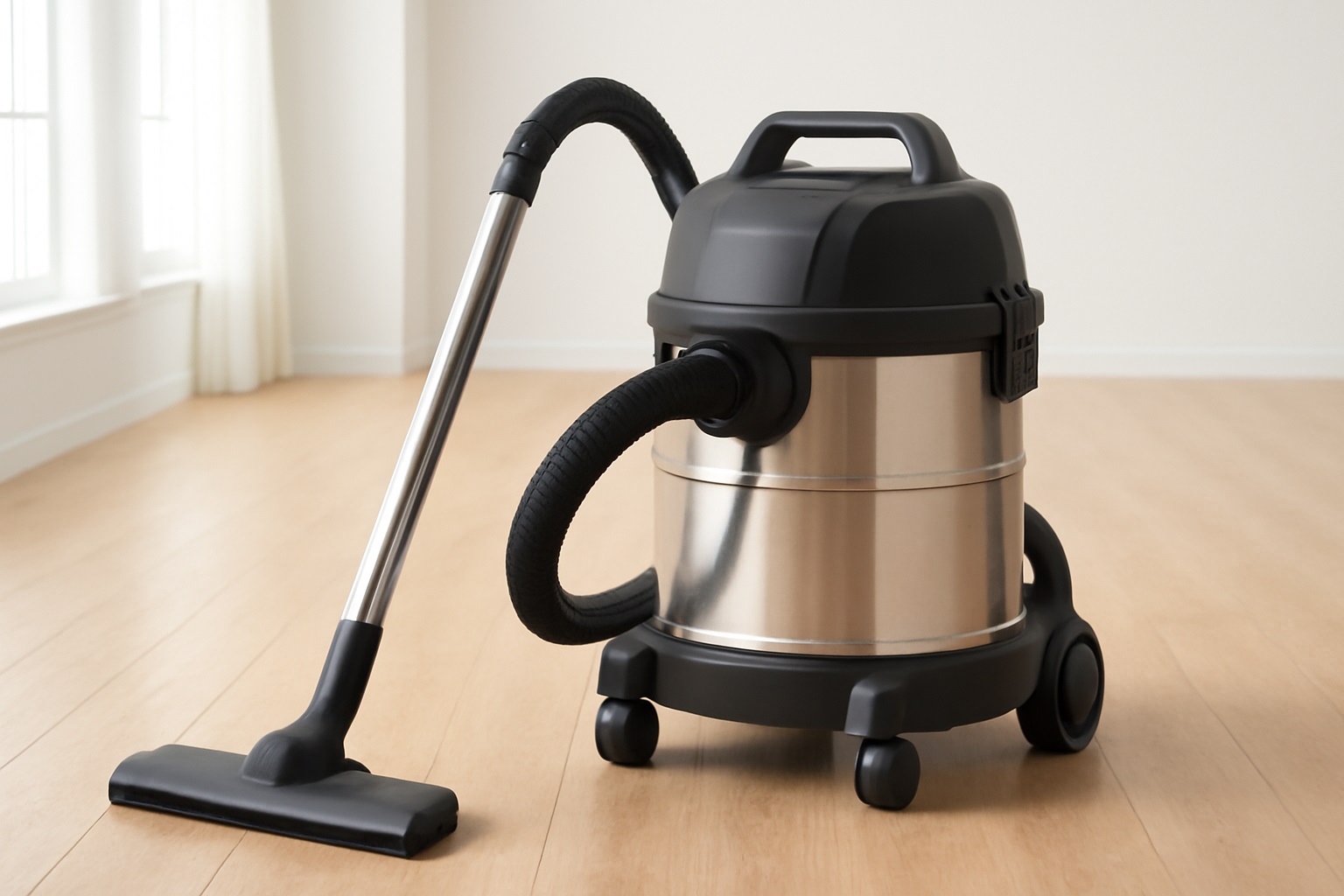
If you’re sourcing a Barrel Vacuum Cleaner for a factory, “How many square meters do we clean?” feels like the obvious sizing question. But here’s the procurement truth: Cleaning Area alone does not determine Vacuum Capacity. Two facilities with the same area can need radically different tank sizes because debris type, soil rate, disposal workflow, and operator habits change everything.
This guide is written for EU & Middle East B2B procurement buyers who want a capacity decision that is defendable, repeatable, and cost-focused—especially when choosing a Large-Capacity Vacuum Cleaner for big floor plans.
We’ll cover:
how to convert Cleaning Area into realistic collection volume,
a simple sizing formula you can use in RFQs,
capacity bands by scenario (light / mixed / heavy),
and where Upright Vacuum Cleaners and Household Vacuum Cleaners fit in a factory (without breaking your TCO).
🧭 1) Define “Cleaning Area” the Procurement Way (Not the Floorplan Way)
Most teams overestimate Cleaning Area because they count the whole building. For sizing Vacuum Capacity, you only want the area that actually generates debris.
Build a 3-number area map
A1: High-debris area (m²)
Production lines, machining zones, packaging, sanding, cutting, loading docksA2: Medium-debris area (m²)
Main aisles, staging zones, warehouse lanesA3: Low-debris area (m²)
Offices, showrooms, corridors, meeting rooms
Why it matters: A barrel that’s perfect for A2 can be painfully small for A1—even if A1 is only 20% of your total m².
🧮 2) Convert Area into Volume: The “m² → Liters per Shift” Estimator
To choose Vacuum Capacity, you need a rough estimate of how many liters you collect per cleaning cycle.
Use this practical estimator
Collected Volume (L/day) = Cleaning Area (m²/day) × Soil Rate (L/m²) × Collection Factor
Soil Rate (L/m²) depends on your debris:
Light dust / office-like zones: 0.0002–0.0006 L/m²
Mixed debris (packaging + dust): 0.0006–0.0020 L/m²
Heavy debris (chips/shavings/dense dust): 0.0020–0.0080 L/m²
Collection Factor (how complete the cleaning is):
quick pass spot-clean: 0.5–0.8
thorough end-of-shift clean: 0.9–1.1
You don’t need perfect math. You need a range that prevents the classic mistake: buying a tank that forces constant emptying.
📦 3) The Real Capacity Rule: Size for “Emptying Frequency,” Not Maximum Liters
Barrel specs show a number (e.g., 20L, 30L, 60L), but usable capacity is almost always less.
The 70% rule (a buyer’s default)
Plan to use ~70% of rated capacity because:
filters need headspace to keep airflow stable,
overfill increases clogging and mess during disposal,
operators stop using machines that are annoying to empty.
Usable Capacity ≈ Rated Capacity × 0.7
Procurement goal: 1 emptying per shift for most general cleaning, or 1–2 emptyings in heavy zones—unless disposal is extremely fast and sealed.
📐 4) A Simple Capacity Sizing Formula You Can Put in Your RFQ
Once you estimate liters per day, you can size the barrel logically.
Capacity Needed (L) = (Collected Volume per Shift ÷ Target Emptyings per Shift) ÷ 0.7
Choose Target Emptyings per Shift
Best practice for productivity: 1
Acceptable in heavy debris zones: 2
Avoid if possible: 3+ (operators hate it, cleaning compliance drops)
🧾 5) Capacity Bands by Cleaning Area (With a Reality Check)
Here are practical bands that work for many facilities—but only if debris is “average mixed” (dust + packaging + general dirt).
🟢 Small-to-medium cleaning programs
Cleaning Area: ~500–2,000 m²/day
Suggested Vacuum Capacity: 20–30L
Works when debris is light-to-moderate and disposal is easy.
🟡 Mid-size factories / warehouses with mixed debris
Cleaning Area: ~2,000–8,000 m²/day
Suggested Vacuum Capacity: 30–60L
This is where many buyers move toward a Large-Capacity Vacuum Cleaner to avoid 3–5 emptyings per shift.
🔴 Large facilities or heavy-debris operations
Cleaning Area: ~8,000–20,000+ m²/day
Suggested Vacuum Capacity: 60L+ or multiple units + zoning
Often, the best answer is not a single giant tank—it’s two correctly placed machines plus a handheld for detail work.
Reality check: If your debris is dense (metal chips, wet slurry, heavy powder), you’ll hit “practical full” much sooner than the liters suggest.
🧱 6) Debris Type Changes Everything: Capacity Without Filtration is a Trap
In factories, capacity decisions fail when you ignore what fills the tank.
Fine powder (flour/gypsum/cement-like)
Tank fills slowly, but filters load fast
A bigger barrel doesn’t help if airflow collapses early
Buying move: prioritize filtration strategy and separator design, then choose capacity.
Chips and shavings (metal/plastic)
Tank fills fast and gets heavy quickly
Buying move: choose larger capacity and ensure discharge/emptying is safe and quick.
Fibers (textile lint/insulation)
Tank volume can look “full” even when weight is low
Buying move: capacity matters, but anti-wrap tools and anti-matting filtration matter more.
Wet pickup (coolant/water)
Liquids eat capacity fast and increase disposal complexity
Buying move: size for fewer trips and choose designs that empty cleanly.
🪣 7) Don’t Forget Disposal Logistics: The Hidden Driver of “Right Capacity”
Two factories can collect the same liters/day but need different capacities because disposal time differs.
Ask these four disposal questions
How far is the disposal point from the cleaning zones?
Is disposal sealed/clean or messy/manual?
Is there a shared disposal station that creates a queue?
Do operators have time to empty, or do they abandon cleaning when it’s inconvenient?
Procurement insight: If disposal is slow, choose a Large-Capacity Vacuum Cleaner even for moderate areas. You’re buying back labor minutes and compliance.
🧰 8) How to Avoid Overspending: When Smaller Capacity Wins
Bigger isn’t always better. A too-large barrel can create:
heavier handling (operator fatigue),
more storage space needs,
higher cost with little benefit in low soil-rate areas.
Choose smaller capacity when:
Cleaning Area is large but debris is light (e.g., clean warehouse aisles),
you’re doing frequent micro-cleanups rather than deep cleans,
disposal is fast and close.
In these cases, a mid-size Barrel Vacuum Cleaner plus a Handheld (for machines) can beat a “one giant barrel” strategy.
🚦 9) Where Upright and Household Vacuums Fit in This Capacity Conversation
This matters because buyers sometimes try to “fill gaps” with consumer-style tools.
🧹 Upright Vacuum Cleaners
Best for:
offices, carpeted areas, controlled environments
Not a capacity solution for:production debris, chips, heavy dust zones
🏠 Household Vacuum Cleaners
Okay for:
light-duty rooms, occasional use
Risky for factories because:filters clog quickly, thermal stress rises, and replacement cycles shorten
Procurement boundary: Household Vacuum Cleaners should not be used as a substitute for correctly sized factory cleaning capacity.
🧠 10) Two Worked Examples (So You Can Defend the Purchase Internally)
Example A: 5,000 m²/day mixed debris warehouse + packaging
Soil Rate: 0.0012 L/m² (mixed)
Collection Factor: 0.9
Collected Volume = 5,000 × 0.0012 × 0.9 = 5.4 L/day
This looks small—because packaging debris is bulky but not always “liquid volume measurable.” In real life, it may behave like 15–30L/day depending on scrap type.
Procurement decision:
A 30–60L Barrel Vacuum Cleaner is typically safer to keep emptying to 1/shift and maintain operator adoption.
Example B: 1,200 m²/day machining area with metal chips
Soil Rate: effectively high (dense, heavy)
Even if the “liter estimate” looks manageable, chips fill and weigh down the tank quickly.
Procurement decision:
Choose a Large-Capacity Vacuum Cleaner (60L+) or two zoned barrel units so operators don’t stop to empty constantly—and so you avoid unsafe lifting events.
✅ 11) The Procurement Checklist: Capacity Questions That Prevent Bad Buys
Use these questions in your RFQ and evaluation:
📌 Cleaning program inputs
What is our true Cleaning Area by zone (A1/A2/A3)?
What debris types dominate each zone?
How many shifts and how many cleaning events per shift?
📌 Capacity & usability
What is the rated Vacuum Capacity and the recommended “max fill” line?
How fast and clean is emptying in real use?
Is the barrel stable at partial and full load?
📌 Performance stability
How does performance change as the filter loads?
Is the design optimized for fine powder or for chips?
📌 Total cost
Filter/consumable replacement expectations
Spare parts and service availability in EU/MENA
Expected downtime risks (what breaks first: hose, seals, wheels, latches?)
Conclusion 🏁🔧
Choosing the right Vacuum Capacity for a Barrel Vacuum Cleaner is not just an area calculation—it’s a productivity and compliance decision. Start by mapping the real Cleaning Area by debris zones, estimate collection volume, then size capacity based on target emptying frequency (ideally 1 per shift). If disposal is slow or debris is heavy/bulky, moving up to a Large-Capacity Vacuum Cleaner often pays back quickly through fewer interruptions and better cleaning consistency.
Finally, keep your categories honest: Upright Vacuum Cleaners and Household Vacuum Cleaners belong in controlled, light-duty spaces—not as substitutes for properly sized factory cleaning capacity.
Hashtags
Lanxstar, Barrel Vacuum Cleaner, Cleaning Area sizing, Vacuum Capacity planning, Large-Capacity Vacuum Cleaner, Industrial Vacuum solutions, factory cleaning program, warehouse aisle cleaning, production floor housekeeping, end-of-shift cleaning, spot cleaning routine, debris volume estimation, m2 to liters formula, soil rate mapping, zone cleaning strategy, disposal logistics design, emptying frequency target, filter loading curve, airflow retention, suction vs airflow, fine dust filtration, powder dust control, metal chips cleanup, shavings collection, textile lint removal, wet pickup capacity, coolant vacuuming, wet and dry vacuum use, separator pre-filter, cyclonic separation option, hose diameter selection, long hose loss control, accessory kit planning, floor nozzle choice, crevice tool for machines, operator compliance cleaning, ergonomic handling, stable caster wheels, easy-empty barrel, sealed disposal method, consumables cost control, TCO vacuum buying, RFQ checklist vacuum, EU distributor support, MENA service network, spare parts availability, facility maintenance equipment, Upright Vacuum Cleaners, Household Vacuum Cleaners, procurement-ready specification, multi-site standardization, B2B vacuum sourcing