Hi, message us with any questions.
We're happy to help!





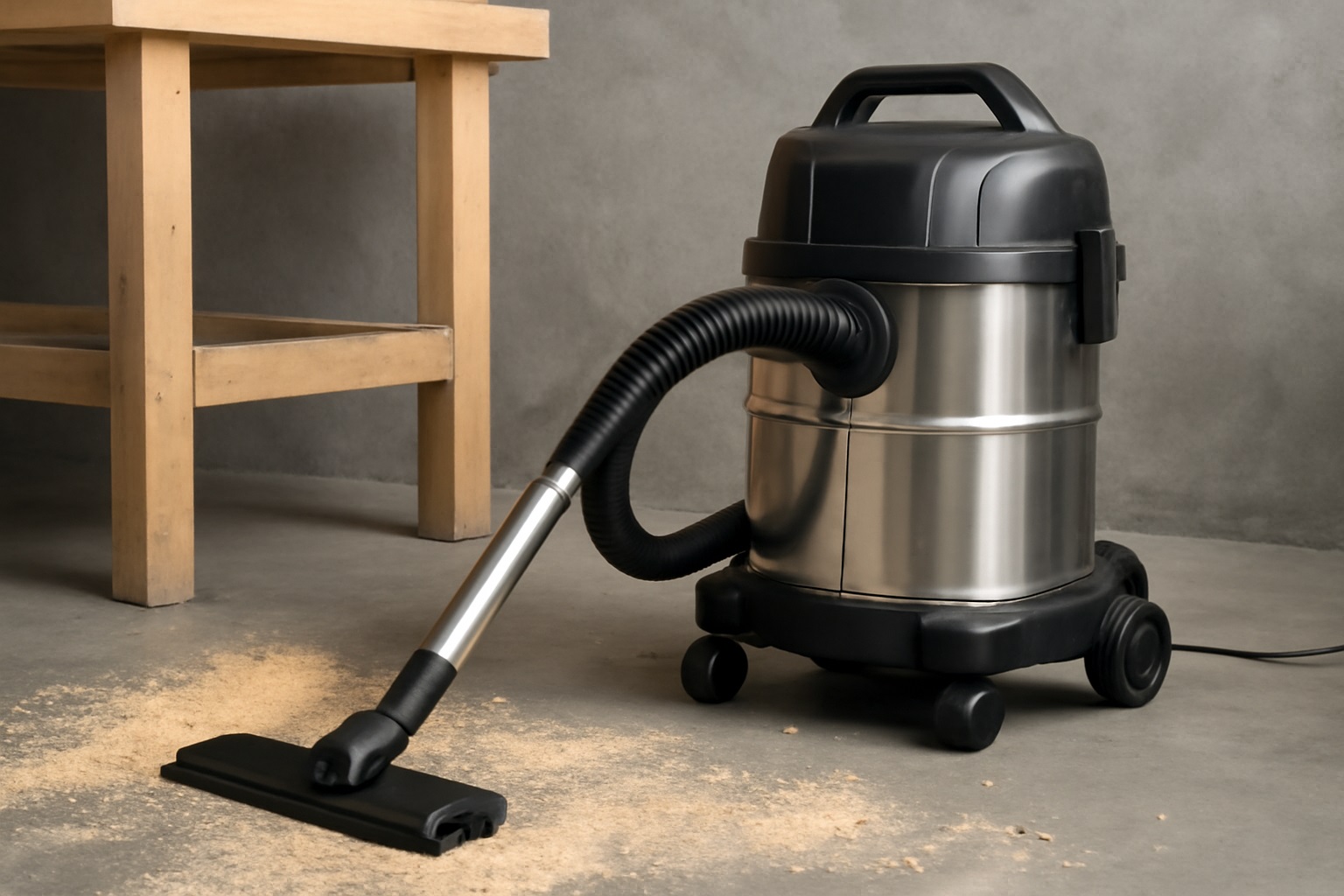
Buying a Barrel Vacuum Cleaner for a factory often starts with one question: “How much Suction Power do we need?” The problem is that suction is the easiest number to market—and one of the easiest to misunderstand. In real facilities, “more suction” can mean more clogging, more noise, more operator fatigue, and higher consumable cost, especially when the work environment is dusty, oily, or continuous-duty.
This guide is written for EU & Middle East B2B procurement buyers who want a practical, defensible method for Vacuum Power Selection. You’ll learn what suction specs matter, how environment changes requirements, and how to avoid paying for power you can’t actually use on the floor. We’ll also clarify where an Industrial Vacuum is the correct step up, and where Upright Vacuum Cleaners and Household Vacuum Cleaners still fit (carefully) in facility cleaning programs.
🧭 1) Stop Shopping by “Watts”: Use the 3-Performance Metrics
Many buyers compare motor watts first. That’s a fast way to overpay.
The three metrics that actually shape cleaning performance
Sealed suction / pressure (kPa or water lift): helps lift heavy debris and overcome restrictions
Airflow (CFM or m³/h): determines how quickly you can transport debris through the hose
Performance under load: how long suction and airflow stay usable as filters load
Procurement reality: Two machines can show similar Suction Power on paper, but one stays productive for 30 minutes while the other collapses after 5 minutes because of filtration design.
🧪 2) Your Work Environment Is the Spec: Build an “Environment Profile”
Before you choose power, define where the vacuum will work. Create a simple environment profile using these inputs:
🧱 Debris type
Fine powder (cement-like, flour-like, toner-like)
Coarse dust (sawdust, sanding)
Chips/shavings (metal, plastic)
Fibers (textile lint, insulation)
Wet pickup (water, coolant)
🕒 Duty pattern
30–60 second spot cleans
End-of-shift deep cleans
Continuous or near-continuous operation
🧯 Risk and compliance sensitivity
Hazardous dust / sensitive product zones
Static-sensitive areas
Any explosive/combustible dust risk (site-specific requirements apply)
🧰 Cleaning distance and access
Short reach around machines
Long aisles and wide open floors
Tight equipment frames and cable trays
Key point: In many factories, suction power should be chosen to match restriction + filter loading, not “maximum suction.”
📏 3) The “Suction Myth” That Causes Bad Purchases
The common myth: Higher Suction Power = Faster Cleaning.
What happens in real factories:
Fine dust clogs filters faster, so power feels strong at minute 1 and weak by minute 10
Small hoses and narrow nozzles create restriction, making suction numbers look good while pickup slows
Overpowered setups increase noise and heat, lowering operator compliance (people avoid using them)
Better goal: Choose a barrel vacuum that maintains stable pickup throughout the shift, not one that wins the first 30 seconds.
🧷 4) Choose Suction Power by Debris Category (Practical Rules)
Here’s a field-focused way to select suction power and avoid mismatches.
🟫 Fine powder environments (packaging, mixing, flour/gypsum/cement-like dust)
What you need most: filtration strategy + airflow stability
If you only chase higher suction, you often get faster filter loading
Look for designs that keep airflow stable and make filter cleaning easy
Buyer rule: In fine powder, “usable suction over time” beats peak suction every time.
🪵 Coarse dust environments (woodworking, general workshop dust)
What you need most: balanced suction + airflow
You want enough suction to lift debris, but airflow to transport it without clogging
Accessories matter: floor nozzles and hose diameter can change pickup speed dramatically
🧲 Chips/shavings environments (machining, cutting, plastic granules)
What you need most: airflow + anti-jam pathway
Chips can jam narrow bends and cheap hose assemblies
A strong vacuum that clogs is weaker than a “moderate” vacuum that runs uninterrupted
Buyer rule: prioritize a clear path and separation design over headline suction.
🧵 Fiber environments (textile lint, insulation)
What you need most: anti-wrapping tools + easy cleaning
Fibers mat filters and wrap around tools
Strong suction without the right tools becomes a maintenance problem
💧 Wet pickup (water/coolant)
What you need most: safe wet handling + stable suction
Liquids behave differently: they can surge, foam, and overwhelm filters
Emptying and containment become major labor drivers
🧰 5) Hose Length and Diameter: The Hidden Suction Killer
A barrel vacuum can test great in a lab and perform poorly in a factory—because the hose setup is wrong.
Practical procurement rules
Long hose runs increase losses; you need better airflow and lower restriction
Small diameter hoses clog easily with chips and mixed debris
Nozzle design affects pickup more than buyers expect
Procurement tip: Ask suppliers what hose diameter and maximum recommended hose length they support for your debris type—and request the matching accessory kit as part of the quote.
🧼 6) Filtration Determines How “Powerful” the Vacuum Feels After 15 Minutes
Suction power without filtration is like horsepower without traction.
What to evaluate (beyond “HEPA” marketing)
Filter surface area (more area often means slower clogging)
Pre-separation options (reduces filter loading)
How quickly operators can restore performance (cleaning method)
Consumable cost and replacement cycle in similar factories
Buyer lens: A slightly lower peak suction barrel that maintains airflow can outperform a “High Suction Power” machine that loses performance quickly.
🏭 7) When Barrel Vacuum Cleaner Power Isn’t Enough: Step Up to Industrial Vacuum
Sometimes the question isn’t “how much suction?”—it’s “is this the right class of machine?”
You likely need an Industrial Vacuum approach when:
duty cycle is continuous
dust is hazardous or compliance-driven
extremely fine dust destroys performance quickly
you need specialized containment, separation, or site-specific safety features
failure or downtime is high-cost (cleaning is mission-critical)
Decision shortcut: If you’re buying power to compensate for an environment problem (hazard, continuous duty, extreme dust), it’s often better procurement to move to an Industrial Vacuum specification instead of oversizing a barrel unit.
🧹 8) Where Upright and Household Vacuums Fit (Without Breaking TCO)
🧷 Upright Vacuum Cleaners
They can be a smart addition for:
office zones, carpets, showrooms
They’re usually a poor fit for:chips, heavy dust loads, production debris
Reason: They’re optimized for surface cleaning, not industrial debris transport.
🏠 Household Vacuum Cleaners
Use only for:
very light-duty areas with low frequency
Avoid in production zones because:filters clog quickly in industrial dust
thermal stress and wear accelerate
replacement churn quietly increases total cost
Procurement boundary: Don’t use Household Vacuum Cleaners to “fill gaps” created by underpowered or wrong-spec factory equipment.
🧠 9) A Buyer’s Test Plan: How to Verify Suction Power in Your Environment
If you want decisions that hold up internally, test in conditions that resemble your floor.
✅ Test 1: “15-minute reality test”
Run continuous cleaning for 15 minutes on your real debris. Measure:
pickup quality at minute 1 vs minute 15
whether operators need to stop to unclog or clean filters
✅ Test 2: “Hose stress test”
Use your required hose length and typical nozzle. Check:
clogging frequency
pickup speed on mixed debris
✅ Test 3: “Consumables preview”
Ask for:
expected filter life range in similar facilities
filter cost per month estimate (even a range is useful)
✅ Test 4: “Operator adoption test”
Have typical operators use the unit:
is it too loud? too hot? too heavy?
If they avoid it, your “powerful” vacuum becomes a warehouse ornament.
🧾 10) RFQ Questions That Force Useful Answers (Copy/Paste)
Use these to drive honest comparisons in Vacuum Power Selection:
Environment & duty
What debris types is this Barrel Vacuum Cleaner designed for?
What duty cycle is recommended (spot, shift-clean, continuous)?
What hose length/diameter is recommended for our scenario?
Power & performance
What are the sealed suction and airflow figures?
How does performance change as filters load? (explain the curve)
What is the recommended maintenance interval to keep suction stable?
Filtration & consumables
Filter type, surface area, cleaning method
Consumable pricing and estimated replacement frequency
What typically fails first in factory settings (hoses, seals, wheels, latches)?
Service readiness (EU/MENA)
Spare parts availability and lead time
Warranty scope and service network
✅ Conclusion 🏁🔧
Choosing Barrel Vacuum Cleaner Suction Power is not about chasing the highest number—it’s about matching your work environment, hose setup, filtration reality, and duty cycle so performance stays stable during real use. For fine powder, filtration and airflow retention often matter more than peak suction. For chips and mixed debris, a clear path, correct hose diameter, and accessory selection can outperform bigger motors. And when the environment is compliance-heavy or continuous-duty, stepping up to an Industrial Vacuum specification is often the most cost-effective decision.
With an environment profile, a simple test plan, and RFQ questions that expose performance under load, your Vacuum Power Selection becomes predictable—and defendable.
Hashtags
Lanxstar, Barrel Vacuum Cleaner, Suction Power, Vacuum Power Selection, Industrial Vacuum, Upright Vacuum Cleaners, Household Vacuum Cleaners, sealed suction kPa, water lift measurement, airflow CFM m3h, suction vs airflow, performance under load, filter loading curve, fine dust environment, powder dust control, machining chips cleanup, metal shavings vacuuming, plastic granules pickup, textile lint removal, insulation fiber cleanup, wet pickup water, coolant spill cleanup, hose diameter selection, long hose performance, nozzle efficiency, floor tool selection, crevice tool for machinery, anti-clog filtration, pre-separator option, cyclonic separation, consumables cost control, filter replacement planning, downtime reduction cleaning, operator adoption factors, noise level management, heat management vacuum, ergonomic handling, easy-empty barrel design, sealed disposal workflow, facility housekeeping program, safety audit cleanliness, contamination prevention, B2B vacuum sourcing, procurement RFQ checklist, EU service support, MENA distributor network, spare parts availability, continuous duty threshold, compliance driven cleaning, factory cleaning system, workshop vacuum solution, warehouse aisle cleaning, mixed debris pickup



