Hi, message us with any questions.
We're happy to help!





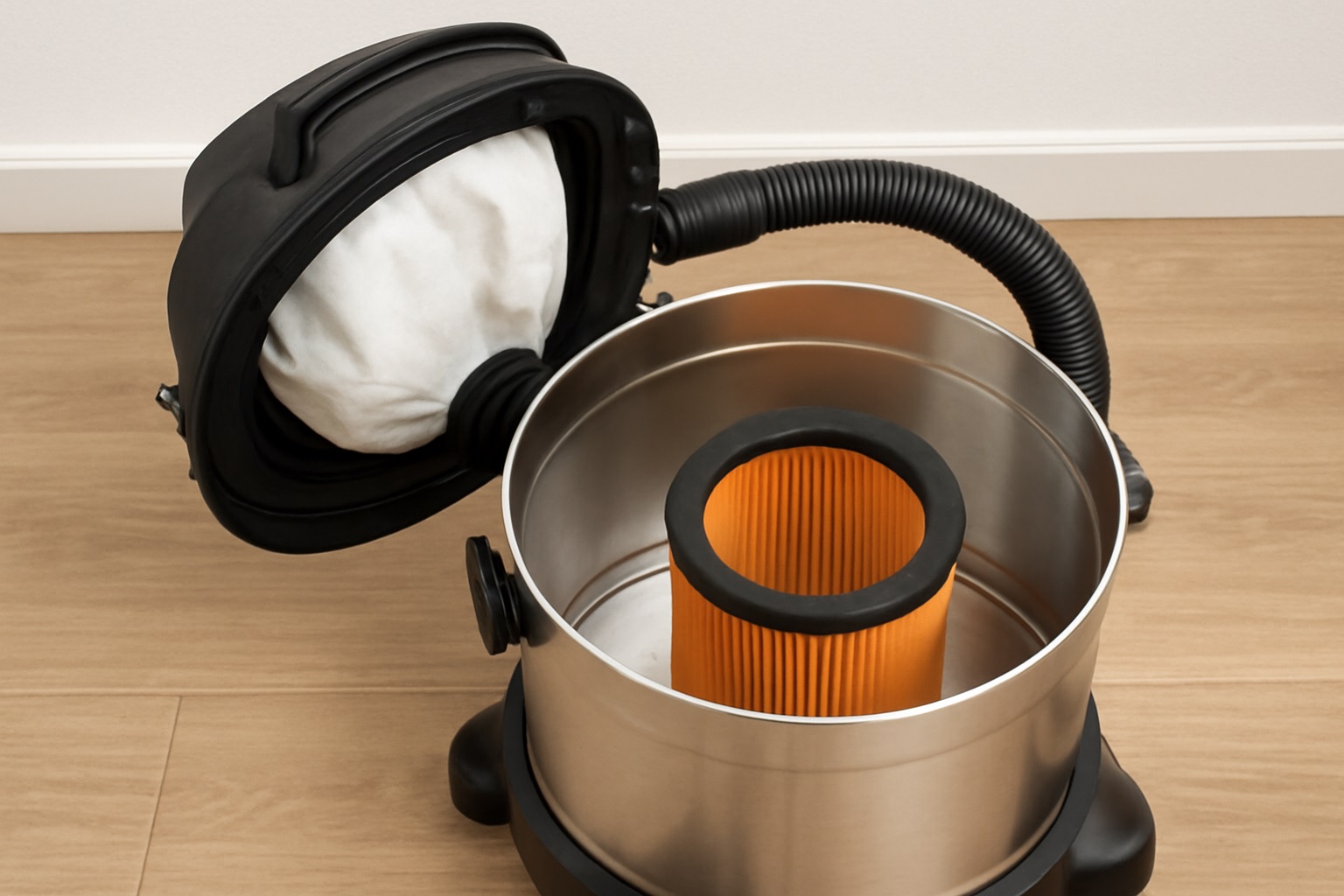
If you’re sourcing a Barrel Vacuum Cleaner for a factory, the Filtration System is not a “nice feature”—it is the machine’s real productivity engine. Two vacuums can look similar in suction specs, yet one keeps working all shift while the other turns into a clogging, dusty, filter-eating headache.
This guide is written for EU & Middle East B2B procurement buyers who want to understand filtration clearly, compare suppliers fairly, and choose the right mix of HEPA Filters and Industrial Filters without falling into keyword-heavy marketing claims. We’ll also explain why Upright Vacuum Cleaners and Household Vacuum Cleaners often fail in industrial dust environments—even when they advertise “HEPA.”
🧭 1) The Golden Rule: Filtration = Airflow Retention (Not Just “Dust Capture”)
Most teams evaluate filtration by asking, “Will it stop dust?” The better procurement question is:
How long will it keep airflow usable before maintenance is required?
In real factories, filtration has two jobs:
Capture particles (protect people, product, and the motor)
Maintain performance under load (avoid downtime and operator frustration)
Procurement takeaway: A strong Filtration System is one that stays productive after 10–20 minutes on your real dust—not one that looks impressive in a brochure.
🧱 2) The Main Filtration Types You’ll See in a Barrel Vacuum Cleaner
Below are the most common filter categories in a Barrel Vacuum Cleaner and what they’re actually good for.
🧺 A) Bag Filtration (Disposable Bags / Liner Bags)
A bag acts as both collection container and pre-filter.
Best for:
cleaner disposal requirements
environments where “dust release” during emptying is a problem
teams that want fast turnaround (swap bag, keep working)
Watch-outs:
ongoing consumable cost
wrong bag media can choke airflow quickly in fine powder
cheap bags can tear and create bypass mess
Buyer move: If your procurement team cares about cleanliness at disposal, bags can reduce the hidden cost of “dust clouds” and cleanup time.
🧻 B) Cloth / Fabric Filters (Washable, Reusable)
Often marketed as “eco” or “low consumable.”
Best for:
coarse dust, light debris
sites with maintenance discipline (washing schedules)
Watch-outs:
fine powder can embed and permanently reduce airflow
washing labor is real cost
downtime if cleaning isn’t planned
Buyer move: Use fabric filters when you have the right dust type and a maintenance routine. Otherwise, they become “permanent clogs.”
🧊 C) Cartridge Filters (Pleated Paper, Polyester, Nano-coated)
Cartridges are common “industrial-grade” choices because pleats increase surface area.
Best for:
general factory dust
mixed debris where you need stable airflow
sites that want a balanced TCO
Key procurement variables (often hidden):
filter surface area (bigger area = slower loading)
media type (polyester handles moisture better; nano-coating can reduce clogging)
seal quality (gaskets matter more than marketing)
Buyer move: When comparing quotes, request filter area (m²) and recommended cleaning method. “Cartridge filter” alone tells you almost nothing.
🌀 D) Cyclone / Pre-Separator Systems (Not a Filter, But a Game-Changer)
A separator removes a large portion of debris before it hits the filter.
Best for:
heavy dust volume
chips and shavings
fine powder environments where filters load fast
any site that wants to cut consumables cost
Why it matters: Separators don’t replace filters—they protect them. In many procurement cases, adding a separator is cheaper than buying “more power.”
Buyer move: If your current units clog fast, a better separation stage often beats upgrading the motor.
🧽 E) Foam / Sponge Filters (Often Used for Wet Pickup)
Used as pre-filters or for wet applications.
Best for:
wet pickup or damp debris
catching larger particles early
Watch-outs:
poor for fine dust alone
needs cleaning to prevent odors and flow restriction
🧬 3) HEPA Filters: What They Are (and What They Are Not)
HEPA Filters are typically used when you need higher-grade particle capture—often for fine dust control.
But procurement teams should avoid “HEPA as a label” and ask better questions.
✅ What you should confirm
Is it a true HEPA stage or a “HEPA-like” claim?
Is the HEPA placed as a final stage (after pre-filter/separator), or will it be overloaded immediately?
The practical truth
A HEPA stage can be the right choice, but HEPA should not be your first line of defense in heavy dust environments. If you feed a HEPA filter raw factory dust, you’ll pay for it—fast.
Buyer move: Specify a multi-stage Filtration System: pre-separation → main filter → HEPA (if required).
🧠 4) Industrial Filters: What “Industrial” Should Mean in Your RFQ
“Industrial Filters” is often used as a vague marketing phrase. In procurement, make it measurable.
Ask suppliers to specify:
media type (polyester, cellulose, coated, nano)
filter area (m²)
cleaning mechanism (manual shake, reverse-air, pulse, washable)
sealing method (gaskets, clamps, fitment design)
expected replacement interval in similar applications
Procurement takeaway: “Industrial Filters” without surface area + media + maintenance method is not a spec—it’s a slogan.
🧪 5) Multi-Stage Filtration: The Most Cost-Effective Factory Setup
A strong Barrel Vacuum Cleaner setup usually uses stages like:
🔰 Stage 1: Pre-separation
cyclone, baffle, or drop-out chamber
removes bulk debris and reduces filter load
🛡️ Stage 2: Main filter (cartridge or fabric)
handles the majority of capture while maintaining airflow
🧼 Stage 3: Fine filter (optional)
secondary cartridge or finer media
🧬 Stage 4: HEPA filter (optional, final)
for higher-grade fine particle capture needs
Why buyers like this: You protect the expensive stages (like HEPA) and reduce downtime. It’s a TCO strategy, not just a cleanliness upgrade.
📉 6) The Loading Curve: How Filters “Get Smaller” Over Time
Factories don’t suffer because a vacuum lacks suction—factories suffer because filters load and airflow collapses.
Signs your Filtration System is mismatched
strong pickup for 1–2 minutes, then sudden drop
frequent operator “shaking” or removing filters
dust leaking during disposal
high monthly filter spend
Buyer move: Request a simple performance statement from suppliers:
“What happens to airflow after 10 minutes on fine dust?”
If they can’t answer, you’re buying uncertainty.
🧯 7) Bypass and Seals: The Silent Failure Mode Buyers Miss
Even the best filter media fails if air finds a shortcut around it.
Common bypass points in a Barrel Vacuum Cleaner
poor gasket compression
warped filter frames
lid seal failure
cracked housings
misaligned filter seating after cleaning
Procurement check: Ask for pictures or drawings of how filters seal. A robust clamp + gasket design often matters more than the filter name.
🧰 8) Match Filtration to Your Work Environment (Fast Decision Guide)
Here’s a quick, practical mapping:
🟫 Fine powder (packaging, mixing, powder handling)
pre-separator strongly recommended
large-area cartridge filters
HEPA Filters as final stage if required
🧲 Chips/shavings (machining)
separation first (chips shouldn’t hit the final filter directly)
durable main filter media
avoid narrow pathways that jam
🧵 Fibers (textiles)
anti-matting solutions and easy-clean media
frequent maintenance design matters more than “high suction”
💧 Wet pickup (coolant/water)
wet-rated filtration and motor protection
easy-to-clean pre-filters
disposal workflow matters
🧹 9) Where Upright and Household Vacuums Fit (Filtration Reality)
🧷 Upright Vacuum Cleaners
Useful for:
offices, carpets, controlled zones
Why they struggle in factories:their filtration and air paths are not designed for heavy industrial dust loading
🏠 Household Vacuum Cleaners
They may claim HEPA, but in many production zones they:
clog quickly on fine dust
overheat or wear early
create higher churn and hidden replacement costs
Procurement boundary: Use Upright Vacuum Cleaners and Household Vacuum Cleaners for low-dust, controlled areas—not as substitutes for industrial-grade Filtration System requirements.
📝 10) Copy/Paste RFQ Checklist for Filtration (Procurement-Ready)
When comparing suppliers, include these questions:
Filtration architecture
What stages are included in the Filtration System?
Is pre-separation included or optional?
Main filter specs
Filter media type and surface area (m²)
Recommended cleaning method and interval
Expected replacement frequency in similar factories
HEPA stage (if included)
Is the HEPA filter final-stage?
What pre-filtration protects it?
Typical HEPA replacement interval estimate
Sealing & bypass prevention
How is filter sealing achieved (gasket type, clamp method)?
How does the design prevent bypass after filter cleaning?
TCO + service
Consumables pricing list
Spare parts availability in EU/MENA
Typical failure points (seals, latches, hoses, housing)
Conclusion 🏁🔧
A Barrel Vacuum Cleaner is only as good as its Filtration System. If you buy filtration based on labels—“industrial,” “HEPA,” “high power”—you risk fast clogging, high consumable spend, and operator avoidance. Instead, choose filtration by work environment, focus on airflow retention under load, demand multi-stage protection for fine dust, and treat sealing and bypass prevention as first-class procurement criteria.
Do that, and your HEPA Filters and Industrial Filters become a productivity tool—not a monthly expense surprise.
Hashtags
Lanxstar, BarrelVacuumCleaner, FiltrationSystem, HEPAFilters, IndustrialFilters, UprightVacuumCleaners, HouseholdVacuumCleaners, multiStageFiltration, cycloneSeparator, preSeparator, cartridgeFilter, pleatedFilter, polyesterFilter, nanoCoatedFilter, baggedVacuumSystem, dustContainment, fineDustControl, powderHandling, machiningChipsCleanup, metalShavingsCollection, textileLintRemoval, wetPickupFiltration, coolantSpillCleanup, filterLoadingCurve, airflowRetention, suctionVsAirflow, filterBypassPrevention, gasketSealDesign, sealedDisposal, consumablesCostControl, totalCostOfOwnership, downtimeReduction, factoryHousekeeping, warehouseCleaning, productionFloorCleaning, auditReadinessCleaning, operatorFriendlyMaintenance, quickFilterChange, washableFilterMedia, HEPAFinalStage, preFilterProtection, dustExtractionTools, industrialCleaningEquipment, B2BSourcing, procurementRFQChecklist, EUDistribution, MENAServiceNetwork, sparePartsAvailability, facilityMaintenanceProgram, OEMVacuumSupplier