Hi, message us with any questions.
We're happy to help!





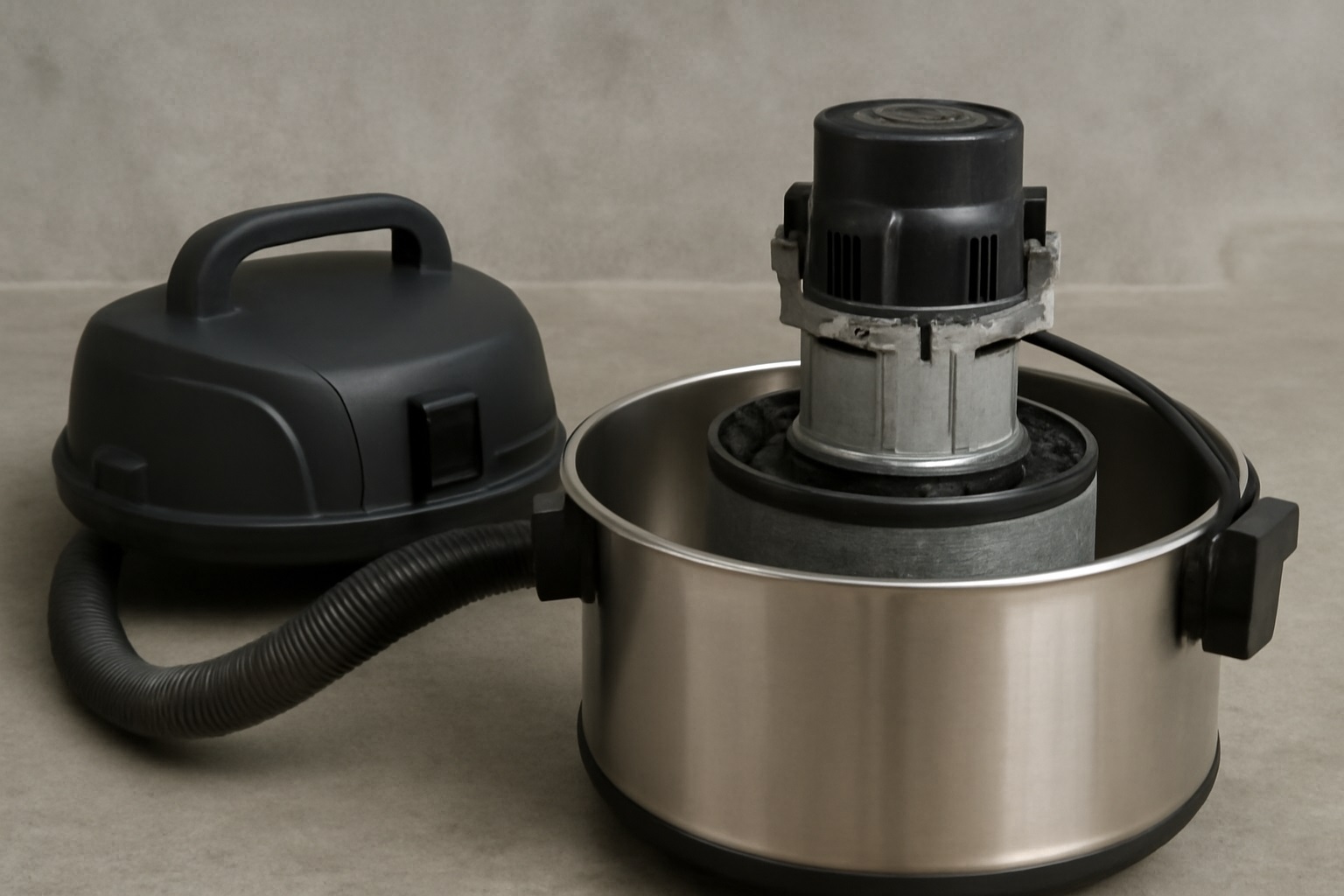
If you buy a Barrel Vacuum Cleaner for factory use, the motor is the most expensive failure you can “accidentally” purchase. Many products list impressive Motor Power numbers—yet burn out early when used in dusty, hot, continuous-duty environments. That’s because industrial requirements are rarely defined by watts alone. They’re defined by duty cycle, thermal design, sealing, bearings, protection systems, and serviceability.
This guide is written for EU & Middle East B2B procurement buyers who need a practical way to evaluate whether a vacuum’s Electric Motor is truly an Industrial Motor (or just a consumer motor in industrial clothing). We’ll also clarify when Industrial Vacuum class machines are the correct move, and where Upright Vacuum Cleaners and Household Vacuum Cleaners should be limited in facility programs.
🧭 1) Define “Industrial Requirements” for Your Site (4 Questions)
Before evaluating motors, specify what “industrial” means in your facility.
🕒 1) Duty cycle
intermittent spot cleaning (short bursts)
end-of-shift cleaning (long runs)
near-continuous operation
🌡️ 2) Ambient conditions
high heat areas near ovens/compressors
dust-loaded air
humidity or wet pickup exposure
🧱 3) Debris aggressiveness
fine powders (filter loading, motor stress)
chips/shavings (blockage risk)
fibers (air restriction and heat)
🔌 4) Electrical environment (EU/MENA realities)
220–240V typical, but frequency and site stability vary
50/60Hz compatibility matters if you ship across regions
Procurement takeaway: A motor that is “strong” for a warehouse office is not automatically “industrial” for a machining bay.
⚡ 2) Stop Using Watts as the Main Test (Motor Power ≠ Industrial Motor)
Manufacturers often highlight input watts because it’s easy to market. But Motor Power alone doesn’t tell you:
how efficiently the motor converts power to airflow
how it handles heat under restricted airflow (dirty filters)
how long it survives in dust intrusion conditions
Better power questions to ask
What is the recommended continuous run time (duty rating)?
What thermal protection exists and at what temperature does it trigger?
What is performance under filter load (when airflow drops)?
Buyer truth: Many “high power” motors die early because they run hot when the filter loads—exactly what happens in real factories.
🧯 3) The 6 Motor Criteria That Signal “Industrial-Ready”
Use this checklist when evaluating an Electric Motor in a Barrel Vacuum Cleaner:
✅ 1) Duty rating (continuous vs intermittent) 🕒
Ask for a stated duty cycle rating. If the supplier can’t define duty cycle, that’s a red flag.
What “industrial-ready” looks like:
Clear guidance such as “continuous duty under specified airflow conditions” or defined operational limits.
✅ 2) Thermal design + protection 🌡️
Industrial environments cause airflow restrictions (clogging, long hoses, fine dust), which means heat spikes.
Look for:
thermal cutoff protection
controlled restart behavior
cooling airflow path that resists dust loading
Procurement test: Ask what happens when the filter is 50% loaded. Does the unit protect itself or cook silently?
✅ 3) Sealing and dust ingestion resistance 🧱
Motors fail early when fine dust enters bearings or windings.
Ask about:
motor housing sealing approach
pre-filtration protecting the motor
bypass prevention at gaskets and lid seals
Reality: An “Industrial Motor” without good upstream filtration is still vulnerable.
✅ 4) Bearings and balance quality 🔩
Bearings are a common industrial failure point.
Industrial-ready signals:
higher-grade bearings
stable noise signature under load
less vibration at operating speed
Buyer trick: A motor that grows noticeably louder over time in demos often indicates bearing stress.
✅ 5) Serviceability and spare parts 🧰
Industrial procurement isn’t just performance—it’s repair economics.
Ask:
is the motor replaceable as a module?
are carbon brushes serviceable (if brushed)?
what is the expected service interval?
If your region requires fast turnaround, insist on parts availability in EU/MENA.
✅ 6) Electrical compatibility and protection 🔌
For EU and Middle East sourcing, confirm:
voltage range and frequency support
surge protection / soft-start (if offered)
cable and plug standards for your market
Procurement note: Motors designed for one frequency may run hotter or differently on another if not specified properly.
🧠 4) Brush vs Brushless: What Procurement Should Know
This is a frequent confusion point.
🧹 Brushed motors
Pros:
simpler, often lower cost
strong short-term performance
Cons:brushes wear (maintenance item)
more dust sensitivity
can run hotter depending on design
⚙️ Brushless motors
Pros:
typically longer lifecycle
often better efficiency and heat behavior
less maintenance on brushes (none)
Cons:higher upfront cost
electronics quality matters (controller failure becomes the risk)
Procurement rule: Brushless is not automatically industrial, but it often gives you better TCO when run-time is high.
🏭 5) When a Barrel Vacuum Cleaner Motor “Meets Industrial” vs When You Need Industrial Vacuum Class
A Barrel Vacuum Cleaner can meet many industrial needs, but there’s a threshold.
A barrel vacuum motor may be sufficient when:
duty is intermittent or shift-based, not continuous
dust load is manageable with good filtration
the environment is not compliance-hazardous
you can maintain filters and airflow regularly
You should consider Industrial Vacuum solutions when:
continuous duty is required
very fine dust loads the system rapidly
hazardous dust or strict containment is required
downtime is extremely costly
Procurement takeaway: Don’t try to “buy your way” into industrial duty by choosing the highest Motor Power barrel vacuum if the real need is a different machine class.
🧪 6) A Practical Verification Plan (No Lab Needed)
If you want a decision that holds up internally, run these checks:
✅ Test A: 20-minute heat and stability test 🌡️
run in your environment for 20 minutes
check performance drop and casing heat
note if thermal protection triggers too early
✅ Test B: Filter load simulation 🧼
run with typical dust until pickup starts dropping
track how quickly performance collapses
see how easy it is to restore airflow
✅ Test C: Start/stop stress 🔁
Factories often do repeated bursts. Run 30 cycles of:
20 seconds on / 10 seconds off
Watch for inconsistent startup, smell, unusual noise.
✅ Test D: Noise and vibration signature 🔊
compare units under the same load
high vibration often predicts early bearing wear
📝 7) RFQ Questions That Force Motor Truth (Copy/Paste)
Include these in your RFQ to prevent “industrial” being used as a label.
Motor specification
Motor type (brushed/brushless), rated voltage, frequency
Rated duty cycle and recommended continuous runtime
Thermal protection method and trigger conditions
Protection and reliability
What upstream filtration protects the motor?
How is motor sealing designed against fine dust intrusion?
What is the expected motor life in similar industrial applications?
Serviceability
Motor replacement method and lead time for parts
Brush replacement procedure (if brushed)
Warranty coverage specific to motor and electronics
Regional requirements
EU/MENA plug/cable standards and certifications
Spare parts availability and service network details
✅ Conclusion 🏁⚙️
To determine whether the Electric Motor of a Barrel Vacuum Cleaner meets industrial requirements, don’t shop by Motor Power alone. Define your duty cycle and environment, then evaluate thermal protection, sealing, bearings, serviceability, and electrical compatibility. A true Industrial Motor is one that survives airflow restriction, dust exposure, and real operator behavior—not one that simply claims high watts on a label.
When your application crosses into continuous duty, hazardous dust, or mission-critical uptime, it’s often better procurement to specify an Industrial Vacuum class solution rather than oversizing a barrel unit.
Hashtags
Lanxstar, Barrel Vacuum Cleaner, Electric Motor, Industrial Motor, Motor Power, vacuum motor duty cycle, continuous duty rating, intermittent duty use, thermal protection cutoff, heat management design, airflow restriction tolerance, filter load performance, dust ingress prevention, motor sealing strategy, gasket bypass prevention, bearing quality check, vibration signature test, noise increase warning, brushed motor maintenance, brushless motor lifecycle, controller reliability, motor module replaceable, spare parts availability, EU voltage 230V, MENA voltage compatibility, 50Hz 60Hz support, surge protection vacuum, soft start motor, cable and plug standards, industrial cleaning equipment, factory housekeeping program, machining bay dust, fine powder dust control, chips and shavings pickup, textile lint environment, wet pickup motor safety, coolant spill cleanup, suction stability over time, airflow retention under load, consumables impact on motor, TCO motor evaluation, procurement RFQ checklist, service network readiness, warranty motor coverage, industrial vacuum threshold, Upright Vacuum Cleaners, Household Vacuum Cleaners, B2B vacuum sourcing, OEM vacuum supplier, compliance driven cleaning, downtime reduction strategy, operator usage patterns, heat and noise adoption factors, reliability verification test plan



