Hi, message us with any questions.
We're happy to help!





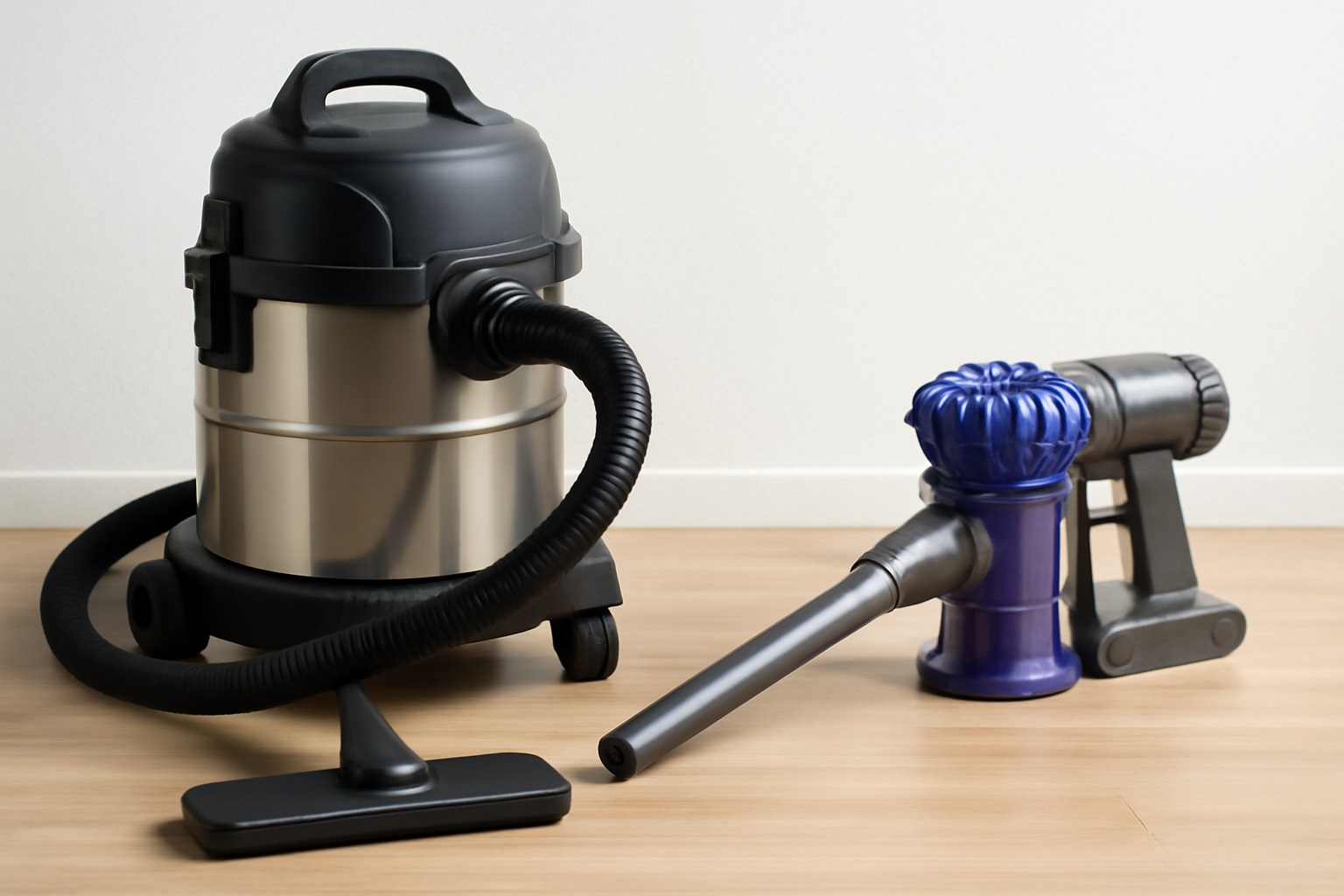
Factory cleaning isn’t a “nice-to-have.” It affects safety, product quality, uptime, and even audit outcomes. Yet many purchasing decisions still get made on a single spec—usually suction—or on what a competitor is buying.
If you’re an EU or Middle East B2B procurement buyer, this guide will help you choose between a Barrel Vacuum Cleaner and a Handheld Vacuum using a practical framework that prevents the most common factory mistake: buying a tool that looks efficient but quietly increases labor, downtime, and consumable costs.
We’ll also cover where an Industrial Vacuum system is the real answer, and when Upright Vacuum Cleaners and Household Vacuum Cleaners should (or shouldn’t) enter a factory purchase discussion. This is a hands-on Vacuum Comparison designed for real facilities.
🧭 1) Start With the Job, Not the Device: The “4-Zone Cleaning Map”
Before comparing machines, map how cleaning happens in your facility. Most factories have four cleaning zones:
Zone A — Open floors & aisles
Pallet dust, packaging debris, general dirt
Cleaning needs speed, capacity, and easy maneuvering
Zone B — Machines, edges, and tight spaces
Dust around controls, vents, conveyor frames
Cleaning needs reach, precision, and frequent short bursts
Zone C — High-residue production areas
Chips, powders, fibers, sticky debris
Cleaning needs separation, filtration resilience, and stable airflow
Zone D — Offices / clean rooms / showrooms
Light debris, carpets, controlled environment
Cleaning needs convenience and surface care
Procurement takeaway: A Barrel Vacuum Cleaner usually dominates Zones A and parts of C. A Handheld Vacuum is unmatched in Zone B. The “best choice” is often a combination strategy, not a single device.
🔍 2) What a Barrel Vacuum Cleaner Really Buys You (Beyond “Bigger”)
A Barrel Vacuum Cleaner isn’t just a larger canister. In a factory, it buys three procurement advantages:
✅ Capacity that reduces labor
When debris volume is moderate-to-high, emptying frequency becomes a hidden labor cost. Larger capacity means fewer interruptions and more consistent cleaning routines.
✅ Better airflow stability for longer sessions
Even when suction is strong, performance collapses when filters load. Many barrel designs allow larger filter area or better separation, helping airflow remain usable longer.
✅ Versatility through hose + tool kits
A properly specced hose diameter and nozzle set can dramatically improve pickup speed—sometimes more than upgrading motor power.
If your facility has open floor space, mixed debris, or frequent end-of-shift cleaning, the Barrel Vacuum Cleaner tends to provide the best “cost per cleaned square meter.”
🖐️ 3) What a Handheld Vacuum Really Solves (And What It Cannot)
A Handheld Vacuum is often purchased because it feels “efficient” and modern. In factories, it excels when:
✅ Cleaning time is fragmented
Operators need quick cleanup of small spills, panel dust, control boxes, and machine edges.
✅ Reach and convenience matter more than capacity
Short bursts, frequent movement, high agility.
✅ You’re solving detail cleaning, not bulk debris transport
Handhelds are precision tools.
But handhelds also have predictable factory limits:
Small bins fill quickly (labor + interruptions)
Filters clog faster when used against fine powders
Performance drop-off is more noticeable
Not ideal for chips, heavy debris, or long hose runs
In procurement terms: Handhelds are fantastic “productivity enhancers” for micro-messes—but they are rarely the backbone of a factory cleaning system.
⚖️ 4) The Comparison Buyers Should Use: The “6-Factor Scorecard”
Here’s a Vacuum Comparison scorecard you can reuse internally:
1) Debris volume per shift
High volume → Barrel Vacuum Cleaner wins
Low volume, localized → Handheld Vacuum wins
2) Debris type
Chips, shavings, mixed debris → Barrel Vacuum Cleaner (with correct separation)
Light dust on surfaces → Handheld Vacuum
Fine powder → depends on filtration design (either can fail without the right filter strategy)
3) Cleaning radius
Need to cover long aisles → Barrel Vacuum Cleaner
Need to reach inside machine frames → Handheld Vacuum
4) Operator behavior
If your operators will “skip maintenance,” choose the option that stays usable longer without attention (often a barrel with smarter filtration).
If operators need speed and will only clean for 30–60 seconds at a time, handhelds drive compliance.
5) Consumable costs
Filters, pre-filters, bags, battery replacement
Many buyers underestimate handheld battery lifecycle costs compared to barrel consumables.
6) Downtime risk
The most expensive vacuum is the one that sits unusable because the filter is clogged, the battery is dead, or the hose has cracked.
🧪 5) The Trap: “High Suction” Claims vs Real Factory Pickup
Buyers often assume handhelds are weaker and barrels are stronger. In reality, both can be marketed as high power, but factory pickup depends on airflow under load.
Practical buyer rule
If your dust is fine and abundant, performance is determined by:
filter area and clog resistance
separation before the filter
ease of restoring airflow (cleaning mechanism)
So instead of asking only for a stronger unit, ask:
“How does airflow change after 15 minutes on fine dust?”
“What is the recovery time to restore performance?”
“What is the filter replacement cost per month in similar factories?”
This approach prevents “spec-sheet wins, real-world losses.”
🧰 6) When You Actually Need an Industrial Vacuum (Not Just a Better Barrel)
Sometimes neither barrel nor handheld is the correct answer. You need an Industrial Vacuum when:
dust is hazardous, very fine, or compliance-driven
use is continuous duty
you require specialized filtration, separation, or containment
you must protect motors from aggressive dust loads
static/explosion risk exists (site-specific compliance requirements apply)
Procurement insight: Buying a mid-grade barrel and then “forcing” it into hazardous dust conditions is a classic false economy. If your site crosses the threshold, specify Industrial Vacuum solutions upfront.
🧹 7) Where Upright and Household Vacuums Fit (Yes, They Can—But Carefully)
🏢 Upright Vacuum Cleaners
Best used for:
offices, reception areas, carpets
controlled zones where debris is light and predictable
Not recommended for:workshop debris, chips, heavy dust loads
🏠 Household Vacuum Cleaners
They can be okay for:
very light-duty areas, low use, non-production spaces
Risk in factories:accelerated wear, frequent clogs, thermal stress
higher downtime and replacement frequency
Procurement view: Household Vacuum Cleaners are rarely a good value in production zones because the failure rate silently destroys TCO.
🧩 8) The “Best Answer” in Most Factories: A Two-Tier Toolkit
For many facilities, the best purchasing strategy is:
Tier 1: Barrel Vacuum Cleaner as the backbone
handles aisles, floors, general debris
larger capacity reduces labor and interruption
consistent performance in longer cleaning sessions
Tier 2: Handheld Vacuum as the compliance tool
ensures quick cleanup at machines
encourages frequent cleaning (operators actually use it)
prevents dust from becoming “tomorrow’s problem”
This combination usually beats buying “one expensive unit for everything,” because it matches human behavior and zone-based cleaning reality.
🧾 9) RFQ Questions That Reveal the Right Winner
If you’re sourcing, add these questions to your RFQ. They force suppliers to provide usable answers rather than marketing.
For Barrel Vacuum Cleaner bids
What debris types is it proven against (powder/chips/fibers/liquid)?
What is the recommended hose diameter for chips vs fine dust?
How is filter performance maintained under load?
What is the typical filter cost per month in real factories?
How long does emptying take, and how clean is disposal?
For Handheld Vacuum bids
Battery runtime under real use (not lab mode)
Replacement battery cost and typical lifecycle
How quickly does suction drop as the filter loads?
Is it designed for fine powder, or only light dust?
Are spare parts and service available locally in EU/MENA?
A supplier who answers these clearly is usually a supplier worth shortlisting.
🧠 10) A Procurement Decision Framework You Can Defend Internally
Use this decision rule:
Choose a Barrel Vacuum Cleaner when…
you clean large floor areas
debris volume is moderate-to-high
you need fewer interruptions and better TCO
performance must hold for longer cleaning sessions
Choose a Handheld Vacuum when…
your main pain is machine-edge dust and small spills
cleaning must be fast, frequent, and convenient
detail cleaning is driving quality or safety concerns
Choose Industrial Vacuum solutions when…
compliance, hazardous dust, continuous duty, or specialized containment is mandatory
Final note: the goal is not owning “the strongest vacuum.” The goal is owning the system that keeps cleaning consistent, predictable, and cost-controlled.
Hashtags
Lanxstar, Barrel Vacuum Cleaner, Handheld Vacuum, Industrial Vacuum, Vacuum Comparison, Upright Vacuum Cleaners, Household Vacuum Cleaners, factory vacuum solution, manufacturing floor cleaning, machine area dust removal, workshop cleaning equipment, high airflow vacuum, suction vs airflow, dust containment disposal, filter clog resistance, long hose performance, vacuum accessory kit, floor nozzle selection, crevice tool for machinery, chips and shavings cleanup, fine powder filtration, textile lint cleanup, packaging debris pickup, warehouse aisle cleaning, end-of-shift cleaning routine, continuous spot cleaning, downtime reduction strategy, consumables cost control, filter replacement planning, battery lifecycle cost, cordless handheld runtime, maintenance-friendly vacuum, operator compliance cleaning, procurement RFQ checklist, total cost of ownership vacuum, EU distributor support, MENA distributor support, spare parts availability, service network readiness, industrial housekeeping program, safety audit cleanliness, quality contamination prevention, equipment ventilation dusting, static risk awareness, sealed suction measurement, airflow retention under load, durable hose material, caster durability, easy-empty barrel design, multi-zone cleaning map, B2B vacuum sourcing, OEM vacuum supplier