Hi, message us with any questions.
We're happy to help!





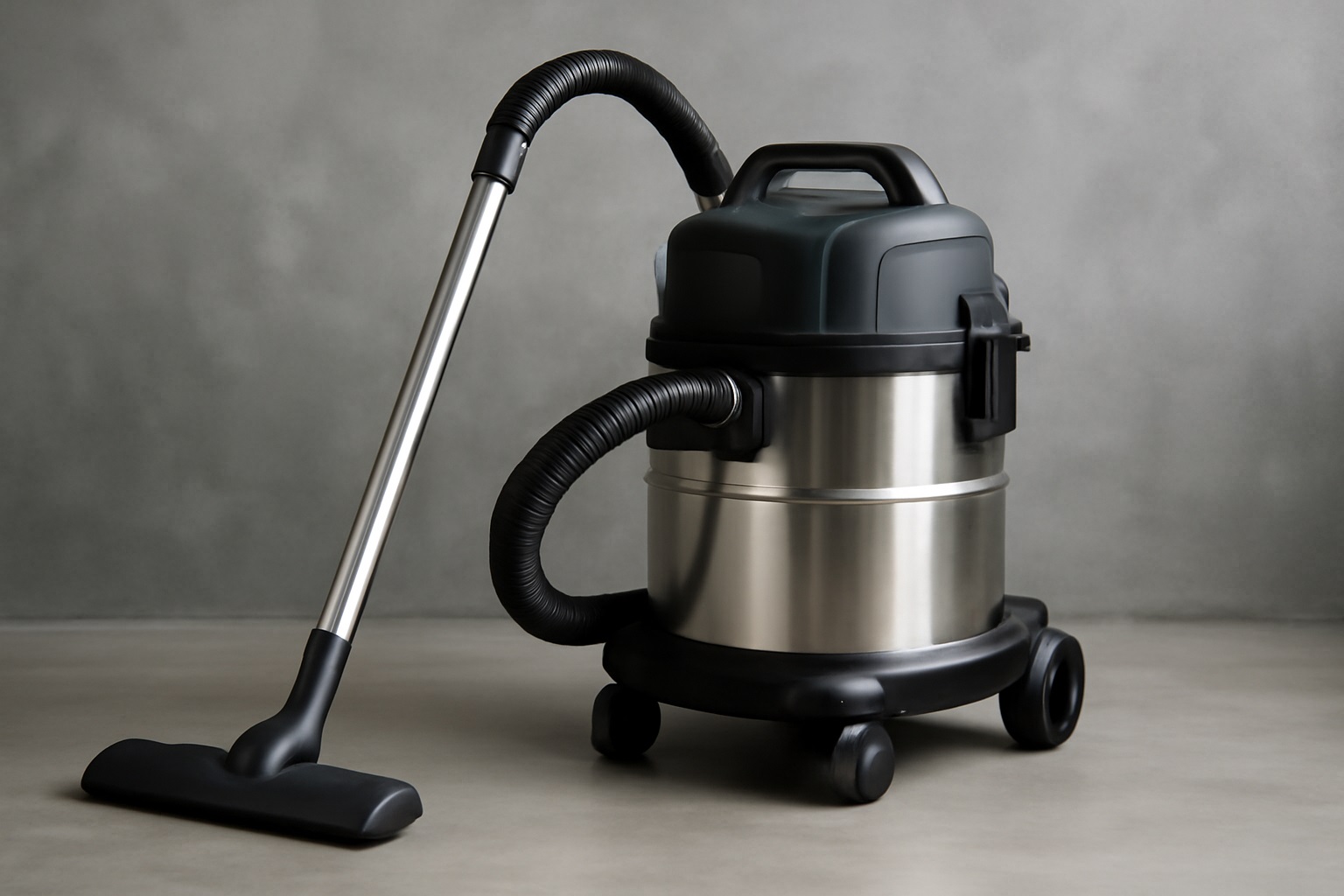
If you buy vacuum cleaners for a factory, you already know the uncomfortable truth: the “best” machine on paper often becomes the worst one on the floor. Specs look perfect, yet the unit clogs, hoses crack, operators complain, filters cost more than expected, and suddenly you’re running a patchwork fleet of mismatched machines.
This guide is written for EU & Middle East vacuum cleaner procurement buyers who need repeatable, defendable Vacuum Cleaner Selection decisions—not guesswork. We’ll focus on how to choose a Barrel Vacuum Cleaner for factory use, while also explaining where Industrial Vacuum Cleaner systems, High Suction Vacuum Cleaner models, Upright Vacuum Cleaners, and even Household Vacuum Cleaners fit (or don’t).
1) Start with a “Dirt Profile,” Not a Product List 🧪🧹
Most factory purchases fail because teams shop by category (“industrial,” “barrel,” “high suction”) rather than by the material they’re removing.
Create a dirt profile using five questions:
✅ What is the debris form?
Fine dust (flour, gypsum, cement, toner-like powder)
Coarse dust (sawdust, sanding debris)
Chips & shavings (CNC/lathe metal, plastic granules)
Fibers (textile lint, insulation)
Wet/liquid (coolant, water spills)
✅ How much debris per shift?
Estimate liters or kilograms collected per day. Capacity decisions become obvious once you quantify this.
✅ What is the pickup distance?
If operators must vacuum from far away, you’re solving airflow + hose losses, not just suction.
✅ Is dust hazardous or combustible?
This is the line between “routine cleaning” and “compliance-driven procurement.”
✅ Where does the debris go after pickup?
If it must be emptied into sealed bins, you’ll need better dust containment and a smarter discharge design.
Procurement insight: A Barrel Vacuum Cleaner is often ideal when you need multi-area mobility, moderate-to-heavy debris volume, and simple maintenance, but only if filtration and hose/nozzle matching are correct.
2) Understand What a Barrel Vacuum Cleaner Does Best (and Why) 🛢️✨
A Barrel Vacuum Cleaner is essentially a practical, mobile platform with:
larger dust capacity than many compact units,
stable rolling design,
flexible hose-based cleaning for corners, machines, and floor edges,
often lower total cost than complex central systems.
When it’s the best choice
A Barrel Vacuum Cleaner shines in factories that have:
multiple zones requiring spot cleaning,
mixed debris (dust + chips + packaging scraps),
limited maintenance staff (you want quick checks, easy filter access),
frequent movement around machines and aisles.
When it’s not
If you have continuous production dust at high volume or compliance-heavy applications, you may need a dedicated Industrial Vacuum Cleaner setup (e.g., specialized filtration, anti-static design, continuous-duty motors).
3) Suction Isn’t Enough: Use the “3-Air” Model for Real Performance 🌬️📏
Many buyers search for a High Suction Vacuum Cleaner because suction is easy to market. But factories punish machines that optimize suction while ignoring the other two “airs.”
The 3-Air Model
Suction (sealed pressure) – helps lift heavy debris and overcome resistance
Airflow (moving volume) – determines how much debris you transport through hoses
Air path efficiency – bends, hose diameter, filter clogging, and nozzle design
Field reality: Long hoses + small diameters + clogged filters = “high suction” that doesn’t pick up anything.
Practical rule of thumb
For fine dust: prioritize filtration surface area + anti-clog design
For chips/shavings: prioritize airflow + larger hose diameter
For mixed debris: balance all three—don’t buy on suction alone
4) Match the Vacuum to the Work Method, Not Just the Facility 🧩🚶
In EU/MENA sites, the same factory can have different cleaning behaviors:
one team does end-of-shift deep clean,
another does continuous spot clean,
another cleans around sensitive equipment.
Cleaning method → vacuum requirement
Continuous spot cleaning: needs quick-start, durable hose, and reliable filter that doesn’t choke
End-of-shift deep cleaning: needs higher capacity barrel, stronger airflow, and faster emptying
Machine-area cleaning: needs accessories and a stable vacuum that won’t tip, plus manageable noise
This is why some factories use a combination:
Barrel Vacuum Cleaner for general floors and aisles
Industrial Vacuum Cleaner for specialized dust points
Upright Vacuum Cleaners for offices or clean zones
5) Don’t Overbuy Industrial: The “Industrial Vacuum Cleaner” Threshold ⚙️🛡️
“Industrial” is a label, not a guarantee. You should specify what “industrial” means for your site.
You likely need an Industrial Vacuum Cleaner if you have:
very fine dust that quickly loads filters,
hazard or compliance requirements,
24/7 continuous duty environments,
dust that damages motors without proper separation,
static-sensitive or explosive-risk environments.
If you do not have these, a properly configured Barrel Vacuum Cleaner can outperform “industrial-labeled” machines that were designed for lighter use.
Procurement hack: Ask vendors for failure stories:
“What breaks first in your machines in a machining plant / cement packaging line / textile mill?”
Good suppliers answer in details (hoses, seals, filters, wheels). Weak suppliers talk in marketing slogans.
6) Filtration Is Your Total Cost of Ownership (TCO) Engine 🧼🧠
In many factories, the machine cost is not the expensive part. Filters and downtime are.
Filter strategy by debris type
🧷 Fine powder (gypsum/flour/cement-like):
large-area filtration
anti-clog mechanism
pre-separation helps dramatically
🧲 Metal chips and shavings:
separation before the filter (cyclonic or baffle design)
rugged internal surfaces
avoid narrow pathways that jam
🧵 Fibers (textiles):
anti-wrap accessories
filters that don’t mat quickly
easy-to-clean housings
A “buyer’s test” for filtration
Ask the supplier to explain:
how airflow drops as the filter loads,
how the filter is cleaned (manual shake, reverse air, pulse, washable),
how long it takes to return to “like-new” airflow.
If they cannot quantify performance decay, you’re buying an uncertainty.
7) Capacity & Emptying: The Labor Multiplier 🪣⏱️
Barrel capacity is not just convenience—it’s labor cost.
Simple emptying math
If a team empties a vacuum:
6 times per shift, 4 minutes each = 24 minutes per shift
across 2 shifts, that’s 48 minutes/day
multiply by labor rate + interruptions = real money
Look for:
easy-open latches that don’t deform over time
stable barrel design that doesn’t wobble under load
dust containment options if your site needs clean disposal
Hidden detail: A slightly bigger barrel that empties cleanly can beat a “more powerful” machine that wastes operator time.
8) Hose Diameter, Length, and Nozzles: The Performance You Can Feel 🧯🧷
Accessories are where procurement can win instantly without paying for bigger motors.
Fast selection rules
Longer hose = you need more airflow and less restriction
Small hose + heavy debris = clogging and frustration
Wrong nozzle = “vacuum is strong” but pickup is slow
A practical accessory kit for factories
crevice tool for machine edges
wide floor nozzle for aisles
brush tool for panels and vents
a larger-diameter pickup for chips (if relevant)
This is where Vacuum Cleaner Selection becomes operational, not theoretical.
9) Compare Barrel vs Upright vs Household (Without Bias) 🏷️🧭
🧹 Upright Vacuum Cleaners
Best for:
carpets and office areas
controlled, clean environments
Not ideal for:workshop debris, chips, heavy dust loads
🏠 Household Vacuum Cleaners
Best for:
light duty, occasional cleaning
Risks in factories:rapid clogging, overheating, short lifespan
higher downtime frequency
may not meet safety expectations for industrial dust
🛢️ Barrel Vacuum Cleaner
Best for:
mixed cleaning tasks, mobility, capacity
factories that need practical performance and serviceability
Tradeoffs:depends heavily on filtration and accessory matching
🏭 Industrial Vacuum Cleaner
Best for:
hazardous or high-volume dust
continuous duty requirements
Tradeoffs:higher upfront cost, sometimes more complex maintenance
The smartest buyers don’t “pick a category.” They pick a system: machine + filter strategy + accessories + training.
10) The RFQ Checklist Buyers Should Use (Copy/Paste) 📝✅
When sending an RFQ, include these questions to force real answers:
🧾 Application
Debris type (dust/chips/fibers/liquid): ______
Daily volume estimate: ______
Hose length required: ______
Use pattern (spot/deep clean): ______
⚙️ Performance
How does airflow change when the filter loads?
What is the recommended hose diameter for our debris type?
What accessories are included for machines/floors?
🧼 Filtration & Maintenance
Filter cleaning method and frequency
Expected filter replacement interval in similar factories
Time required for emptying/cleaning
💰 Total Cost
Consumables list and pricing (filters, bags, hoses)
Warranty scope (motor, electronics, accessories)
Typical failures and spare parts availability in EU/MENA
This RFQ format instantly separates serious suppliers from brochure sellers.
11) Make It Stick: Standardize, Train, and Audit 🔁📊
Even the best Barrel Vacuum Cleaner fails if operators use it wrong:
using a narrow nozzle for chips,
running with clogged filters,
dragging hoses until they crack,
overfilling barrels.
Simple operational fixes
color-code accessories by zone
teach “filter check in 30 seconds”
enforce a fill line
do a monthly audit: hoses, seals, filter condition
Procurement wins when the solution is repeatable across sites—not when it’s a one-time purchase.
Conclusion 🎯🏁
Choosing a Barrel Vacuum Cleaner for a factory isn’t about buying the strongest motor—it’s about building a cleaning system that matches your debris, workflow, and maintenance reality. If you define your dirt profile, optimize filtration, match hose/nozzles, and quantify labor time, you’ll avoid the most common failure pattern: “great specs, poor real-world pickup.”
For EU and Middle East B2B buyers, the best Vacuum Cleaner Selection decision is the one that delivers stable airflow over time, fast emptying, low consumable costs, and operator-friendly usability—not the one that wins a spec-sheet contest.
Hashtags
Lanxstar, Barrel Vacuum Cleaner, Industrial Vacuum Cleaner, High Suction Vacuum Cleaner, Vacuum Cleaner Selection, Upright Vacuum Cleaners, Household Vacuum Cleaners, factory cleaning vacuum, manufacturing dust control, workshop vacuum system, heavy duty vacuum cleaner, large capacity vacuum, drum vacuum cleaner, wet and dry vacuum, industrial dust extraction, fine dust filtration, HEPA filtration option, cyclonic separation, pre-separator unit, anti-clog filter design, long hose vacuum performance, wide floor nozzle, crevice tool for machines, chip pickup vacuum, metal shavings vacuum, textile lint vacuum, packaging debris cleanup, warehouse aisle cleaning, end-of-shift cleaning, continuous spot cleaning, low downtime cleaning, filter replacement cost, consumables management, hose durability, caster wheel durability, sealed suction vs airflow, airflow retention, noise level compliance, ergonomic handle design, easy emptying barrel, dust containment disposal, maintenance-friendly design, spare parts availability, EU compliance sourcing, MENA distributor support, B2B vacuum supplier, OEM vacuum manufacturing, procurement RFQ checklist, total cost of ownership vacuum, industrial cleaning equipment, facility maintenance tools, production line housekeeping