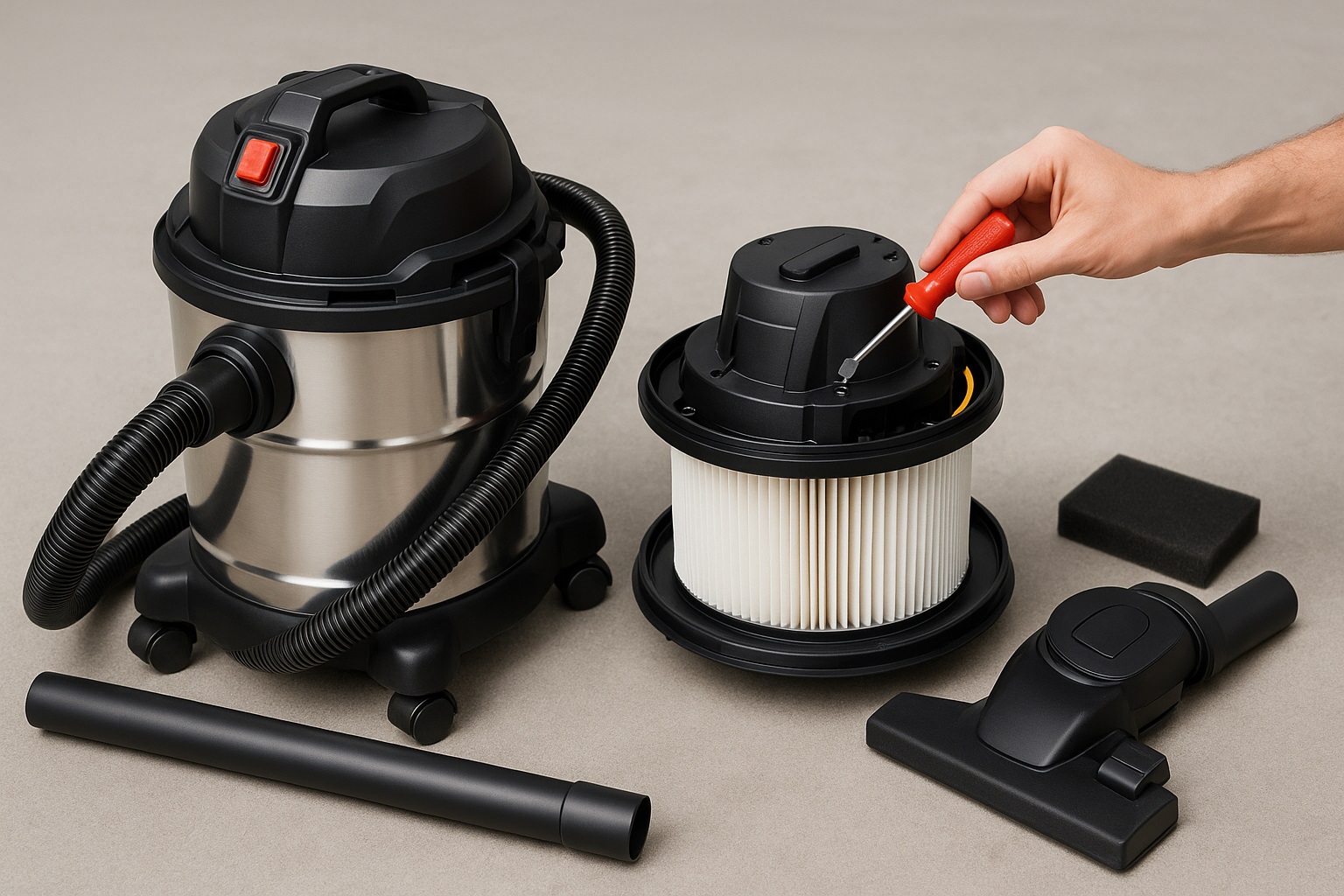
Barrel vacuum cleaners are designed for durability and continuous commercial use, but even the most robust equipment requires proper maintenance. Without regular care, suction performance drops, energy consumption increases, and unexpected downtime becomes more likely.
A structured maintenance routine helps businesses extend equipment lifespan, reduce repair costs, and maintain consistent cleaning quality across all commercial environments.
1. Daily Pre-Use Inspection for Safe Operation 👀
Before each use, operators should perform a quick visual and functional check.
Daily inspection should include:
Checking hoses and connectors for cracks or blockages
Ensuring the barrel and lid are properly sealed
Confirming power cords and plugs are undamaged
These simple checks prevent avoidable failures and improve workplace safety.
2. Regular Dust Container and Barrel Cleaning 🪣
Overfilled or dirty barrels reduce airflow efficiency and suction performance.
Best practices include:
Emptying the barrel before it reaches maximum capacity
Cleaning the interior regularly to prevent dust buildup
Ensuring the barrel is completely dry before reuse
Proper barrel cleaning supports stable suction and prevents odor or hygiene issues.
3. Filter Cleaning and Replacement Schedule 🌫️
Filters are critical to both performance and air quality.
Maintenance recommendations:
Clean reusable filters according to manufacturer guidelines
Replace disposable filters on schedule
Inspect seals to ensure no dust bypass occurs
Neglected filters increase motor strain and reduce overall cleaning efficiency.
4. Motor Protection and Ventilation Care ⚡
The motor is the heart of the barrel vacuum cleaner.
To protect motor performance:
Keep ventilation openings free from dust
Avoid operating the vacuum with clogged filters
Allow cooling time after extended use
Proper motor care prevents overheating and significantly extends service life.
5. Hose, Nozzle, and Accessory Maintenance 🔄
Accessories experience the most physical wear.
Routine care includes:
Removing debris from hoses and nozzles
Checking fittings for secure connections
Replacing worn accessories promptly
Well-maintained accessories ensure consistent cleaning results and reduce strain on the main unit.
6. Scheduled Preventive Maintenance for Commercial Use 📅
High-frequency commercial environments benefit from scheduled maintenance plans.
Preventive maintenance may include:
A preventive approach reduces unexpected breakdowns and improves operational planning.
7. Proper Storage and Handling Practices 📦
Incorrect storage shortens equipment lifespan.
Recommended storage practices:
Store in a dry, dust-free environment
Avoid placing heavy objects on hoses or cords
Secure the vacuum during transport between sites
Proper handling protects both structural components and electrical systems.
8. Training Operators for Correct Use 🧠
Many maintenance issues result from improper use rather than equipment defects.
Effective training should cover:
Correct startup and shutdown procedures
Proper filter and barrel management
Safe handling and transport
Well-trained operators help maximize performance and reduce long-term costs.
Conclusion: Maintenance Protects Performance and Investment 🏆
Consistent maintenance is essential for keeping barrel vacuum cleaners operating at peak performance in commercial and industrial environments. By following daily inspections, proper filter care, motor protection, and preventive maintenance schedules, businesses can significantly extend equipment lifespan and reduce operating costs.
A well-maintained barrel vacuum cleaner is not just more reliable—it is a smarter long-term investment.
For businesses seeking reliable barrel vacuum cleaners and professional support for long-term operation and maintenance, more information is available at www.lxvacuum.com.
Target Readers 🎯
Commercial cleaning procurement managers
Facility and maintenance managers
Professional cleaning contractors
Industrial equipment operators
Vacuum cleaner distributors and after-sales teams
50 Related Keyword Groups
barrel vacuum cleaner maintenance, commercial vacuum maintenance, industrial vacuum maintenance, barrel vacuum care guide, commercial vacuum cleaner service, industrial cleaning equipment maintenance, vacuum cleaner filter maintenance, barrel vacuum motor protection, vacuum cleaner preventive maintenance, commercial vacuum lifespan, industrial vacuum care tips, professional vacuum maintenance, cleaning equipment maintenance guide, vacuum cleaner service schedule, barrel vacuum durability care, commercial vacuum performance maintenance, industrial vacuum servicing, vacuum cleaner maintenance checklist, commercial cleaning equipment care, vacuum cleaner filter replacement, barrel vacuum spare parts, industrial vacuum motor care, low maintenance commercial vacuum, vacuum cleaner after sales service, commercial vacuum reliability, vacuum cleaner maintenance best practices, industrial cleaning equipment care, professional vacuum service guide, barrel vacuum long term performance, commercial vacuum downtime reduction, industrial vacuum maintenance plan, vacuum cleaner operator training, commercial vacuum service support, barrel vacuum cleaning tips, industrial vacuum upkeep, commercial vacuum maintenance costs, vacuum cleaner servicing guide, professional cleaning equipment care, barrel vacuum cleaner supplier support, industrial vacuum maintenance solutions, B2B vacuum cleaner after sales, commercial vacuum service strategy, vacuum cleaner maintenance management, long lasting commercial vacuum