Hi, message us with any questions.
We're happy to help!





Introduction
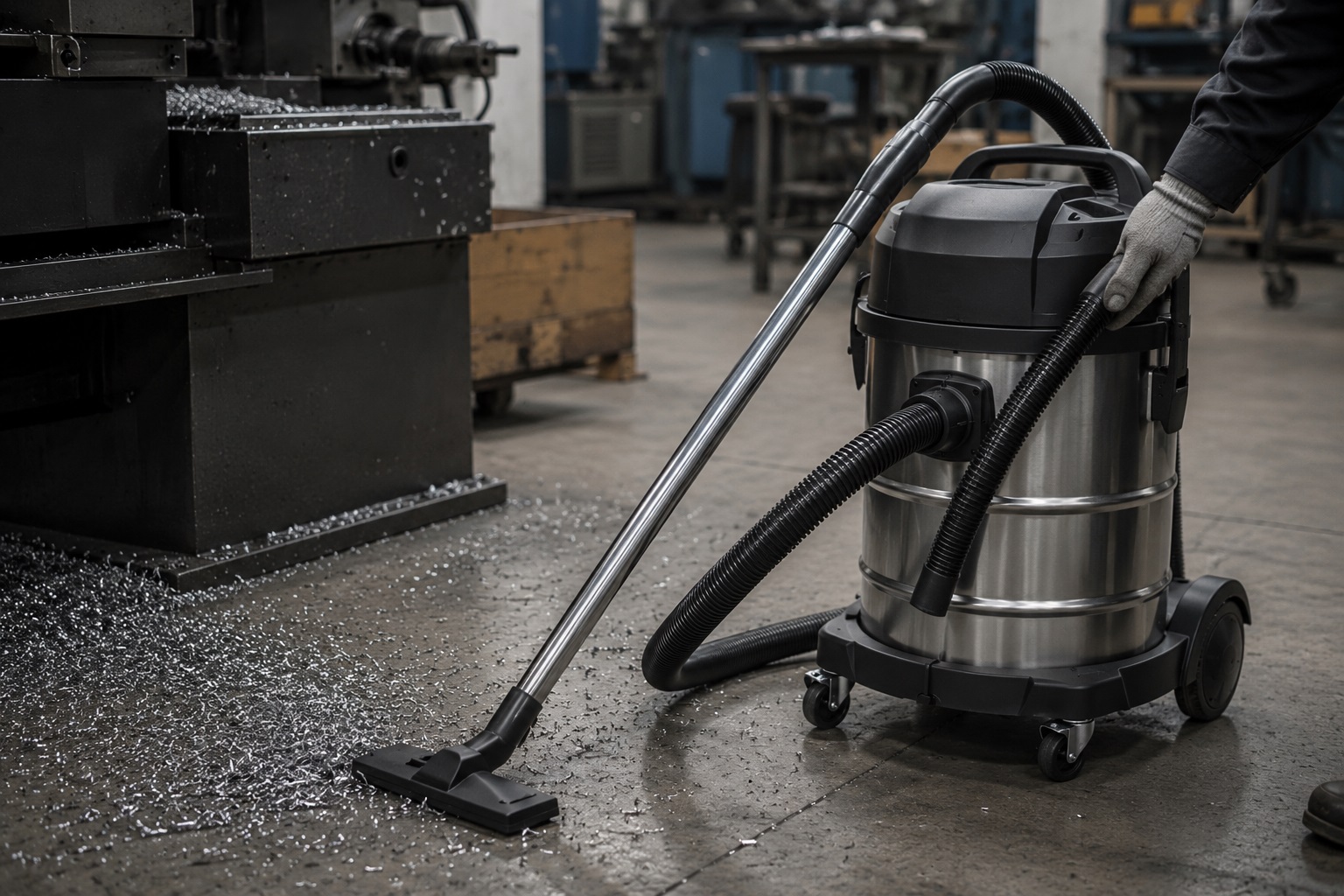
Metal shavings are an unavoidable byproduct of modern machining. Whether generated by CNC milling, turning, drilling, grinding, or cutting operations, these sharp chips and fine particles accumulate rapidly throughout a facility. Many workshops still view cleaning as a routine housekeeping task, sweeping metal chips at the end of each shift or relying on compressed air to move debris away from workstations.
However, this traditional approach no longer meets the demands of today's precision manufacturing environment.
Modern machining facility cleaning is about far more than maintaining a tidy workspace. Metal chips can damage machine components, contaminate finished products, reduce cooling efficiency, create slip hazards, shorten tool life, and even increase fire risks when combustible metal dust is involved.
Here's a perspective that many manufacturers still overlook:
Most machine shops don't struggle with cleaning—they struggle with contamination control.
Cleaning removes visible waste. Contamination control prevents metal debris from reducing productivity, damaging equipment, and increasing operational costs.
For B2B buyers evaluating a metal shavings vacuum, understanding this difference is the first step toward making a smarter purchasing decision.
🔧 Why Metal Shavings Are More Expensive Than Most Factories Realize
Metal chips appear harmless because they are produced continuously during normal machining operations. In reality, they create a chain reaction of hidden costs.
Common problems include:
Scratched precision components
Premature bearing wear
Damaged conveyor systems
Blocked coolant channels
Increased machine downtime
Longer cleaning hours
Workplace injuries from sharp debris
Contaminated finished products
Fine metal particles can enter linear guides, ball screws, electrical cabinets, and cooling systems. Over time, these contaminants accelerate wear and reduce machine accuracy.
Many manufacturers spend significant budgets upgrading CNC equipment while overlooking a relatively inexpensive improvement: professional metal debris removal.
The goal isn't simply to remove chips—it is to protect production assets.
🏭 Cleaning vs. Contamination Management: A Shift in Mindset
Traditional workshops follow a simple routine:
Production → Chips Accumulate → Manual Cleanup → Production Continues
High-performing facilities operate differently:
Production → Continuous Chip Collection → Preventive Cleaning → Equipment Protection → Stable Production
This shift changes the role of a metal shavings vacuum.
Instead of acting as a cleaning tool used after production, it becomes part of the production process itself.
By collecting chips close to their source, manufacturers reduce contamination before it spreads across machines, floors, and finished parts.
This proactive approach improves machine shop maintenance, supports lean manufacturing, and minimizes unnecessary interruptions.
⚙️ Different Metal Debris Requires Different Cleaning Solutions
Not all metal waste behaves the same.
Selecting the wrong vacuum often leads to clogged filters, poor suction, or unnecessary maintenance.
| Material | Typical Source | Recommended Solution |
|---|---|---|
| Steel chips | CNC turning | Heavy-duty chip vacuum |
| Aluminum shavings | Milling machines | High-airflow industrial vacuum |
| Cast iron dust | Grinding operations | High-efficiency filtration system |
| Stainless steel particles | Polishing | Multi-stage filtration |
| Mixed chips with coolant | CNC machining | Wet and dry industrial vacuum |
| Fine metal dust | Surface grinding | Industrial vacuum for metal dust with HEPA filtration |
Understanding the type of waste generated is more important than simply choosing the largest motor.
🛒 B2B Buyer's Guide: How to Choose the Right Metal Shavings Vacuum
Many buyers compare industrial vacuums based on horsepower alone.
Professional procurement teams evaluate the entire operating environment.
1. Airflow vs. Vacuum Pressure
Heavy chips require strong vacuum pressure.
Lightweight aluminum shavings benefit from higher airflow.
Matching airflow to application improves cleaning efficiency.
2. Dry or Wet Collection
Many machining facilities generate both metal chips and coolant.
A wet and dry system reduces manual cleanup while simplifying waste management.
3. Filtration Performance
Fine metal dust is far more difficult to capture than large chips.
Choose an industrial vacuum for metal dust with high-efficiency filtration capable of protecting equipment and improving workplace air quality.
4. Continuous Operation
Machine shops often operate two or three shifts.
Equipment should support continuous industrial use without overheating or losing suction.
5. Dust Container Capacity
Frequent emptying reduces productivity.
Larger collection bins improve operational efficiency in high-volume machining facilities.
6. Maintenance Accessibility
Filter replacement, chip disposal, and routine inspection should require minimal downtime.
Easy maintenance reduces long-term ownership costs.
7. Mobility
Large factories benefit from portable systems capable of moving between machining centers.
Smaller facilities may prefer centralized cleaning solutions.
8. Future Expansion
Can additional production lines be connected?
Can the system integrate with centralized vacuum pipelines?
Thinking ahead prevents future replacement costs.
📊 The ROI Most Buyers Never Calculate
Many procurement decisions focus only on purchase price.
The more important calculation is operational savings.
A professional metal shavings vacuum helps reduce:
Machine downtime
Manual cleaning labor
Tool wear
Equipment failures
Spare parts consumption
Workplace accidents
Product contamination
Maintenance frequency
Instead of asking,
"How much does this vacuum cost?"
Ask,
"How much downtime can this vacuum prevent?"
That question usually leads to a better investment decision.
🏗️ Workshop Cleaning Equipment Should Match Production Processes
Different production areas require different cleaning approaches.
CNC Machining
Primary contaminants:
Steel chips
Aluminum shavings
Coolant
Recommended solution:
Wet and dry industrial vacuum systems with chip separation.
Grinding Area
Primary contaminants:
Fine abrasive dust
Metal powder
Recommended solution:
High-filtration industrial vacuum for metal dust.
Welding Area
Primary contaminants:
Welding slag
Metal particles
Recommended solution:
Spark-resistant industrial vacuum systems.
Tool Maintenance Area
Primary contaminants:
Small chips
Dust
Oil residue
Recommended solution:
Portable workshop cleaning equipment with flexible accessories.
Inspection Area
Primary contaminants:
Fine metallic particles
Recommended solution:
Quiet, precision cleaning systems that prevent contamination of finished components.
🧠 Five Common Purchasing Mistakes
❌ Buying Based Only on Motor Power
Motor size does not determine cleaning performance.
Airflow, filtration, pressure, and accessories matter equally.
❌ Ignoring Metal Dust
Visible chips are easy to remove.
Microscopic dust causes more long-term equipment damage.
❌ Using Compressed Air
Blowing chips across the workshop only redistributes contamination.
Professional metal debris removal captures waste instead of spreading it.
❌ Choosing Commercial Vacuums
Commercial cleaners are not designed for heavy industrial environments.
Machine shops require equipment built for continuous-duty operation.
❌ Ignoring Total Cost of Ownership
Low purchase prices often result in:
Higher maintenance costs
Frequent filter replacement
Reduced equipment lifespan
More downtime
Lifecycle cost matters more than purchase cost.
📈 How Efficient Cleaning Supports Lean Manufacturing
Lean manufacturing focuses on eliminating waste.
Metal contamination creates several forms of waste:
Waiting during cleanup
Rework caused by contamination
Equipment downtime
Additional maintenance
Reduced machine efficiency
Professional machining facility cleaning supports lean manufacturing by keeping production stable and reducing unnecessary interruptions.
Clean workshops also improve operator morale and workplace safety.
🌍 The Future of Machine Shop Cleaning
Industrial cleaning technology continues to evolve.
Future trends include:
Smart vacuum monitoring
IoT-connected maintenance alerts
Automated chip collection systems
Centralized vacuum networks
Energy-efficient vacuum motors
Predictive filter replacement
AI-assisted maintenance scheduling
Rather than reacting to contamination, future workshops will identify dust accumulation before it affects production.
Cleaning will become another measurable production process.
💡 An Expert Perspective Most Articles Miss
Many factories measure machining performance through spindle speed, cutting time, and machine utilization.
Very few measure contamination levels.
Yet contamination influences all three.
A workshop producing precision components cannot rely solely on expensive CNC equipment if chips remain uncontrolled.
The highest-performing manufacturers treat contamination like any other production variable.
They monitor it.
Measure it.
Control it.
This is why leading factories increasingly invest in workshop cleaning equipment as part of their production strategy rather than their maintenance budget.
The competitive advantage doesn't come from owning a larger vacuum.
It comes from building a cleaner, more predictable manufacturing environment.
✅ Conclusion
Efficient metal debris removal is no longer just about maintaining a clean workshop—it is about protecting production capacity, extending machine life, improving operator safety, and increasing overall manufacturing efficiency.
The right metal shavings vacuum should be selected based on contamination type, filtration performance, operational requirements, and long-term maintenance costs rather than purchase price alone.
For machine shops seeking higher productivity, professional machine shop maintenance begins with effective contamination control. Investing in the right industrial cleaning solution today helps reduce downtime, improve product quality, and create a safer, more reliable manufacturing environment for years to come.
👥 Who Should Read This Article
European and North American industrial vacuum buyers
Machine shop owners
CNC production managers
Industrial vacuum distributors
Maintenance engineers
Manufacturing consultants
Workshop supervisors
Industrial equipment importers
Vacuum product development engineers
Hashtags
metal shavings vacuum, metal debris removal, machining facility cleaning, industrial vacuum for metal dust, workshop cleaning equipment, machine shop maintenance, industrial vacuum cleaner, heavy duty vacuum cleaner, CNC cleaning, metal chip vacuum, coolant recovery vacuum, wet and dry industrial vacuum, industrial dust collection, machining workshop cleaning, precision manufacturing, factory maintenance, contamination control, industrial cleaning equipment, HEPA industrial vacuum, production efficiency, machine tool maintenance, metal dust extraction, chip collection system, industrial housekeeping, manufacturing productivity, workplace safety, lean manufacturing, equipment reliability, downtime reduction, factory cleaning solutions, CNC machining, grinding dust removal, welding debris cleanup, maintenance engineering, factory automation, smart manufacturing, production line cleaning, industrial machinery, B2B vacuum buyers, plant engineering, vacuum technology, industrial solutions, OEM manufacturing, industrial equipment, air quality management, manufacturing operations, machine shop cleaning, industrial maintenance, workshop safety, Lanxstar



