Hi, message us with any questions.
We're happy to help!





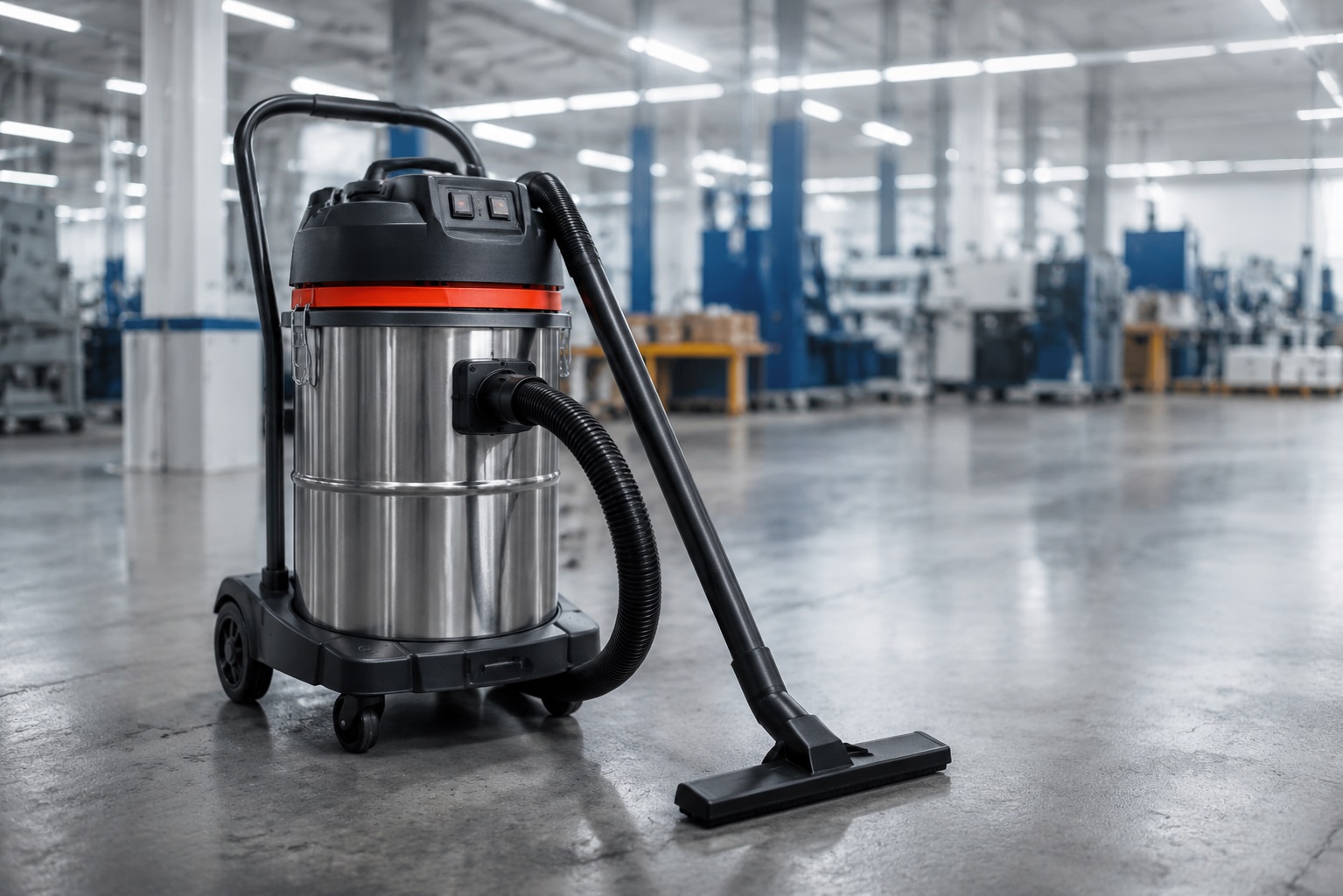
🌍 Introduction: Why Factory Cleaning Is Becoming a Strategic Asset, Not an Operational Cost
For decades, industrial cleaning was treated as a secondary maintenance task—something necessary, but rarely strategic. That mindset is rapidly disappearing.
Today, for industrial cleaning procurement managers in Europe and North America, cleaning systems are directly tied to production efficiency, ESG performance, regulatory compliance, and even brand competitiveness.
Modern factories are no longer judged only by output, but also by how responsibly they operate. This shift has elevated sustainable factory cleaning from a “nice-to-have” to a measurable operational requirement.
In manufacturing environments where dust, metal debris, oil residues, and micro-particles accumulate daily, the cleaning system is no longer just equipment—it is part of the factory’s environmental control infrastructure.
⚙️ Industrial Reality Check: Why Traditional Cleaning Methods Are Failing
Many factories still rely on outdated cleaning approaches:
Compressed air blowing (which redistributes dust into the air)
Manual sweeping (low efficiency, high labor cost)
Non-filtered vacuum systems (secondary pollution risk)
Chemical-heavy cleaning agents (ESG risk exposure)
These methods create hidden costs:
Increased airborne particulate concentration
Higher worker respiratory risk
Machine contamination and downtime
Poor audit performance under environmental compliance standards
From a procurement perspective, these inefficiencies translate into long-term operational loss, not short-term savings.
This is where industrial cleaning solutions built for sustainability become essential.
🌱 The New Standard: What “Sustainable Factory Cleaning” Really Means
Sustainability in industrial cleaning is often misunderstood as simply “using less chemicals.” In reality, it is a multi-layer operational framework:
✔ Energy-efficient equipment design
✔ High-efficiency particulate filtration (HEPA/ULPA systems)
✔ Dust containment instead of dispersion
✔ Reduced water and chemical dependency
✔ Lifecycle-oriented maintenance planning
When aligned properly, eco friendly maintenance systems do more than clean—they actively improve factory air quality and reduce environmental footprint simultaneously.
🏭 Engineering Perspective: How Vacuum Technology Supports Green Manufacturing
Modern vacuum systems used in factories are no longer basic suction devices. They are engineered environmental tools that support green manufacturing goals in three key ways:
🔬 1. Particle Containment at Source
Instead of cleaning after contamination spreads, advanced vacuum systems capture waste at the point of generation:
CNC machining stations
Metal cutting areas
Packaging lines
Assembly dust zones
This reduces airborne contamination before it becomes a compliance issue.
⚡ 2. Energy Optimization Systems
New-generation industrial vacuums are designed with:
Low-energy motors
Intelligent suction control
Modular airflow systems
This reduces energy consumption while maintaining high suction performance—supporting ESG strategy targets for energy reduction.
🌬 3. Multi-stage Filtration Architecture
A key feature in modern systems is layered filtration:
Primary cyclone separation
Secondary HEPA filtration
Optional activated carbon stages
This ensures dust is not reintroduced into the environment, improving both workplace safety and environmental compliance.
📊 ESG Strategy Integration: Why Cleaning Systems Are Now a Reporting Metric
ESG reporting is no longer limited to emissions and waste management. Industrial cleaning systems now contribute directly to:
Workplace safety indicators (S - Social)
Energy consumption tracking (E - Environmental)
Operational governance transparency (G - Governance)
Procurement teams are increasingly required to justify equipment decisions with ESG impact data.
A well-designed cleaning system supports:
Reduced particulate emissions
Lower chemical usage
Improved occupational health scores
Documentable sustainability improvements
In many audits, eco friendly maintenance practices are now a pass/fail category.
🧠 Procurement Insight: What Buyers in Europe & North America Are Prioritizing
Industrial buyers are shifting evaluation criteria from price-based to value-based procurement.
The new decision matrix includes:
✔ Filtration efficiency rating
✔ Energy consumption per hour
✔ Maintenance cycle frequency
✔ Dust containment reliability
✔ Compliance certifications (CE, OSHA, ISO)
✔ Long-term ROI vs upfront cost
Interestingly, many procurement managers now report that cheaper systems often fail ESG audits or require costly retrofitting within 12–18 months.
🧰 Real-World Application: Cleaning System Design in a Manufacturing Plant
A well-structured industrial cleaning solution typically integrates into three zones:
🏗 Production Zone
High-dust generation areas require continuous suction systems linked directly to machinery.
🧼 Maintenance Zone
Portable industrial vacuums handle periodic deep cleaning tasks and machine servicing.
📦 Logistics Zone
Forklift movement areas require large-area debris management systems to prevent contamination spread.
This zoning approach ensures cleaning is not reactive—but embedded into factory workflow.
🔋 The Hidden ROI of Sustainable Cleaning Systems
Procurement decisions often overlook long-term financial impact.
However, sustainable cleaning systems generate measurable ROI through:
Reduced machine downtime
Lower HVAC filtration load
Extended equipment lifespan
Reduced workplace injury claims
Lower regulatory penalty risk
In many industrial case studies, factories report ROI within 12–24 months after upgrading to modern systems.
🌐 Future Trend: From Cleaning Equipment to Smart Environmental Infrastructure
The next evolution of factory cleaning is already emerging:
IoT-enabled vacuum monitoring
Predictive maintenance alerts
AI-driven dust pattern analysis
Energy usage optimization dashboards
This transforms cleaning systems into data-driven environmental infrastructure, not just mechanical tools.
Factories adopting these systems early are gaining a measurable advantage in ESG scoring and global supplier competitiveness.
🧾 Conclusion: Sustainable Cleaning Is Now a Competitive Manufacturing Advantage
For industrial cleaning procurement managers, the decision is no longer whether to adopt sustainable systems—but how fast to implement them.
Factories that invest in green manufacturing-aligned cleaning infrastructure gain advantages in:
Regulatory readiness
Operational efficiency
ESG credibility
Workforce safety
Long-term cost control
In a global supply chain increasingly driven by sustainability metrics, industrial cleaning is no longer a support function—it is a strategic capability.
🖼 Image SEO Keywords (English)
industrial vacuum cleaner factory, heavy duty wet dry vacuum, stainless steel industrial vacuum, manufacturing floor cleaning equipment, industrial dust extraction system, eco friendly factory cleaning machine, green manufacturing vacuum system, high power industrial vacuum cleaner, factory maintenance equipment, HEPA filter industrial vacuum, commercial workshop vacuum system, metal debris cleaning vacuum, CNC machine cleaning vacuum, warehouse floor cleaning equipment
🏷 Hashtags
industrialcleaning, sustainablefactorycleaning, greenmanufacturing, industrialcleaningsolutions, ecofriendlymaintenance, environmentalcompliance, esgstrategy, manufacturingefficiency, factorymaintenance, industrialvacuum, wetdryvacuum, heavydutyequipment, industrialhygiene, workplacecleaning, dustcontrolsystem, manufacturingindustry, productionlinecleaning, factoryautomation, industrialequipment, cleaningtechnology, sustainabilityinmanufacturing, energyefficientsystems, airqualitycontrol, industrialsafety, occupationalhealth, b2bmanufacturing, europeindustry, northamericanmanufacturing, procurementstrategy, industrialprocurement, factoryupgrade, equipmentengineering, industrialdesign, vacuumtechnology, filtrationtechnology, hepafilter, dustextraction, metalswarfcleaning, cncmaintenance, workshopcleaning, logisticswarehousecleaning, factoryoperations, supplychainmanufacturing, industrialinnovation, smartfactory, iotindustrialsystems, predictivemaintenance, industrialefficiency, Lanxstar, manufacturingfuture



