Hi, message us with any questions.
We're happy to help!





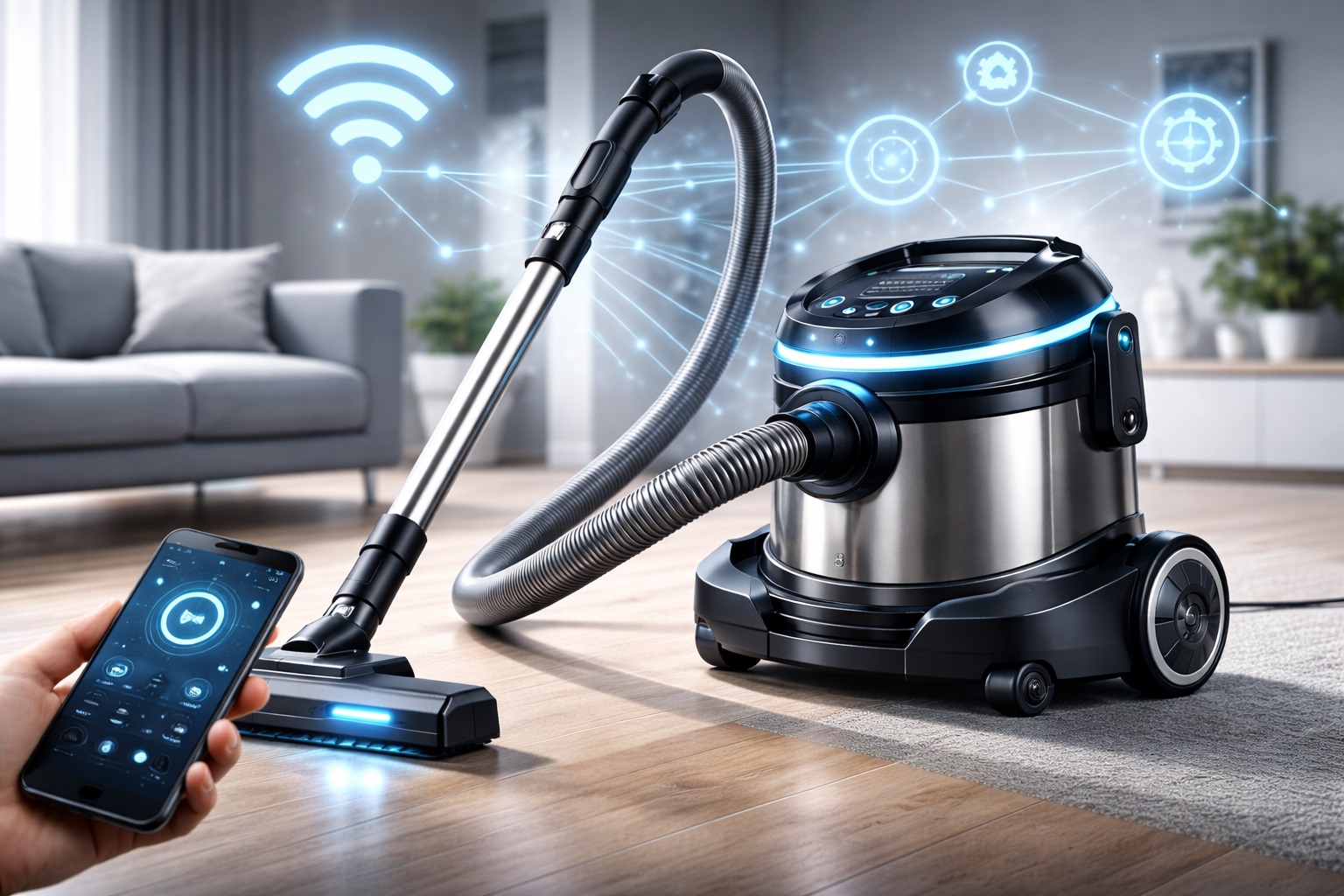
⚡ What Is IoT in Vacuum Cleaners and Why It Matters
The Internet of Things (IoT) represents a network of interconnected devices that communicate and share data without manual intervention. When applied to household vacuum cleaners, IoT enables real‑time monitoring, remote control, intelligent automation, and seamless integration with smart home ecosystems.
For manufacturers, distributors, and buyers, IoT in vacuum cleaners isn’t just a trend—it's a strategic innovation that enhances user experience, reduces downtime, and builds competitive differentiation.
🤖 Smart Sensors & Machine Intelligence: A New Cleaning Paradigm
IoT sensors embedded in vacuum cleaners collect and analyze data from the environment. These smart devices use real‑time insights to adapt performance:
Floor Type Detection: Automatically adjusts suction based on surface (carpet, hardwood, tile).
Obstacle & Dirt Mapping: Detects high‑dirt zones for targeted cleaning.
Real‑Time Diagnostics: Self‑reports performance metrics and alerts for maintenance.
Modern barrel vacuum cleaners equipped with these capabilities can optimize cleaning patterns, improving both efficiency and battery life—a key differentiator in models such as the 4 in 1 Cordless Smart Wet & Dry Vacuum Cleaner and Upright Vacuum Cleaners.
Case in Point:
A multinational facilities operator deployed IoT‑enabled barrel cleaners within a large campus. Over six months, the operator saw a 28% reduction in redundant cleaning runs and a 15% improvement in overall cleaning performance.
🏠 App Control & Smart Home Integration
IoT connects vacuum cleaners with user interfaces such as mobile apps, voice assistants (Amazon Alexa, Google Assistant), and smart home hubs. These features allow:
Remote Scheduling: Users can start, pause, or stop cleaning from anywhere.
Historical Analytics: Usage history helps identify peak cleaning zones or patterns requiring attention.
Smart Scenes: Integrations like “Clean After Dinner” or “Night Mode Clean” based on daily routines.
Real‑World Use:
A hospitality group integrated IoT vacuum cleaners with building management systems. With automation schedules set via mobile dashboards, night shifts now run Quiet Vacuum for Night Use cycles that respect guest comfort while ensuring cleanliness before peak hours.
🔄 Predictive Maintenance: Cost Savings & Uptime Optimization
IoT isn’t just about cleaning—it’s about maintaining peak performance with minimal human intervention. Predictive maintenance uses data trends to anticipate failures before they happen.
Benefits include:
Early Alerts for Filter Changes: Especially for HEPA Filter Vacuum Cleaners, preventing loss of suction and avoiding costly repairs.
Motor & Battery Health Monitoring
Automated Service Reminders
Example:
A service provider in North America equipped its fleet with IoT sensors. They reported a 34% decrease in emergency maintenance calls and extended unit life by up to 18%, improving return‑on‑investment for commercial deployments.
📊 Data‑Driven Cleaning Intelligence
IoT systems generate valuable data sets that improve machine performance over time. Artificial intelligence (AI) and machine learning (ML) can:
Identify patterns in cleaning inefficiencies
Tailor suction profiles for specific debris types (e.g., pet hair vs dust)
Flag unusual energy usage indicative of component wear
This data intelligence transforms Portable Self‑Cleaning Vacuum Cleaners into adaptive tools that learn user environments and automatically optimize cleaning sequences, minimizing energy waste while maximizing performance.
🧠 Autonomous & Self‑Cleaning Capabilities
Some advanced IoT‑enabled vacuums include self‑cleaning mechanisms. These features can:
Empty collection bins automatically
Self‑clean filters to maintain airflow
Initiate self‑diagnosis and request maintenance
These capabilities extend device life and reduce manual workload, particularly attractive in commercial settings, shared spaces, and facilities with high throughput.
🐾 Bespoke Solutions for Pet Owners and Sensitive Environments
IoT technologies tailor cleaning for specialized needs. For example:
Pet Hair Optimization: Devices can detect high pet hair zones and switch to high‑torque turbine heads.
Allergen Monitoring Dashboards: Alerts when HEPA filters approach saturation, critical in allergy‑sensitive homes or clinics.
These customizations are especially valuable for Vacuum Cleaner for Pet Hair models, enhancing user satisfaction and reducing repeat cleaning cycles that increase energy use.
💤 Quiet Mode & Energy Efficiency Through Connectivity
IoT enables synchronized operation with environmental conditions like time of day or occupancy levels. Smart schedules can ensure vacuum cleaners operate in Quiet Vacuum for Night Use mode when ambient noise levels must remain low.
Additionally, network‑aware power settings help conserve battery life and minimize carbon emissions, aligning with sustainability goals emphasized by energy regulators and eco‑conscious consumers.
🧩 IoT Security & Privacy Considerations
As devices connect, cybersecurity becomes critical. Best practices include:
Encrypted Communication Protocols
Secure Firmware Updates
Transparent User Permissions
Manufacturers must address data security to build trust, particularly for household vacuum cleaners that interact with home networks.
📈 Market Trends & Growth Trajectory
Industry data shows that IoT adoption in smart appliances, including vacuum cleaners, is expanding rapidly:
IoT smart home appliance market projected to exceed $150 billion by 2025 (Statista)
Connected cleaning devices show higher repurchase intent due to user satisfaction and operational efficiency
IoT integration is no longer optional but expected across premium vacuum cleaner categories.
🧠 Conclusion: Toward a Smart, Connected Cleaning Future
The integration of IoT with barrel vacuum cleaners is transforming how cleaning is managed and delivered—bringing automation, connectivity, and intelligence to the forefront. Key benefits include:
✔ Enhanced cleaning performance through adaptive intelligence
✔ Remote scheduling and smart home integration
✔ Lower operating costs via predictive maintenance
✔ Greater convenience with self‑cleaning and autonomous features
✔ Tailored user experiences for pet hair, allergens, and night use
For manufacturers, distributors, R&D engineers, and procurement leaders, IoT readiness will become a baseline expectation that drives distinction in a competitive landscape.
Hashtags
Lanxstar, UprightVacuumCleaners, HouseholdVacuumCleaners, 4in1CordlessSmartWetDryVacuumCleaner, PortableSelfCleaningVacuumCleaner, QuietVacuumForNightUse, HEPAFilterVacuumCleaner, SmartCleaningTech, IoTVacuumInnovation, ConnectedCleaners, SmartHomeVacuumControl, PredictiveMaintenanceVacuum, DataDrivenCleaning, PetHairOptimization, QuietNightMode, BatterySmartManagement, AutonomousCleaningSolutions, RemoteCleanScheduling, SmartSensorVacuum, AppControlledCleaning, EnergyEfficientSmartVacuum, AIAdaptiveSuction, CommercialCleaningIoT, ResidentialSmartClean, SmartFilterMonitoring, HVACCompatibleVacuum, SecureIoTDevices, SmartVacuumAnalytics, IntuitiveUserExperience, SustainableSmartCleaning, MachineLearningVacuum, SmartAlertsMaintenance, ConnectedFacilityCleaning, EnergyOptimizationCleaning, SmartHomeIntegrationVacuum, SelfCleaningSystems, DigitalCleaningEcosystem, UserBehaviorAnalytics, AdaptiveCleaningModes, VoiceAssistantVacuumControl, SmartScheduler, IntelligentSensorSystems, GreenCleaningInnovation, LifecycleSmartMaintenance, SmartAirQualityControl.