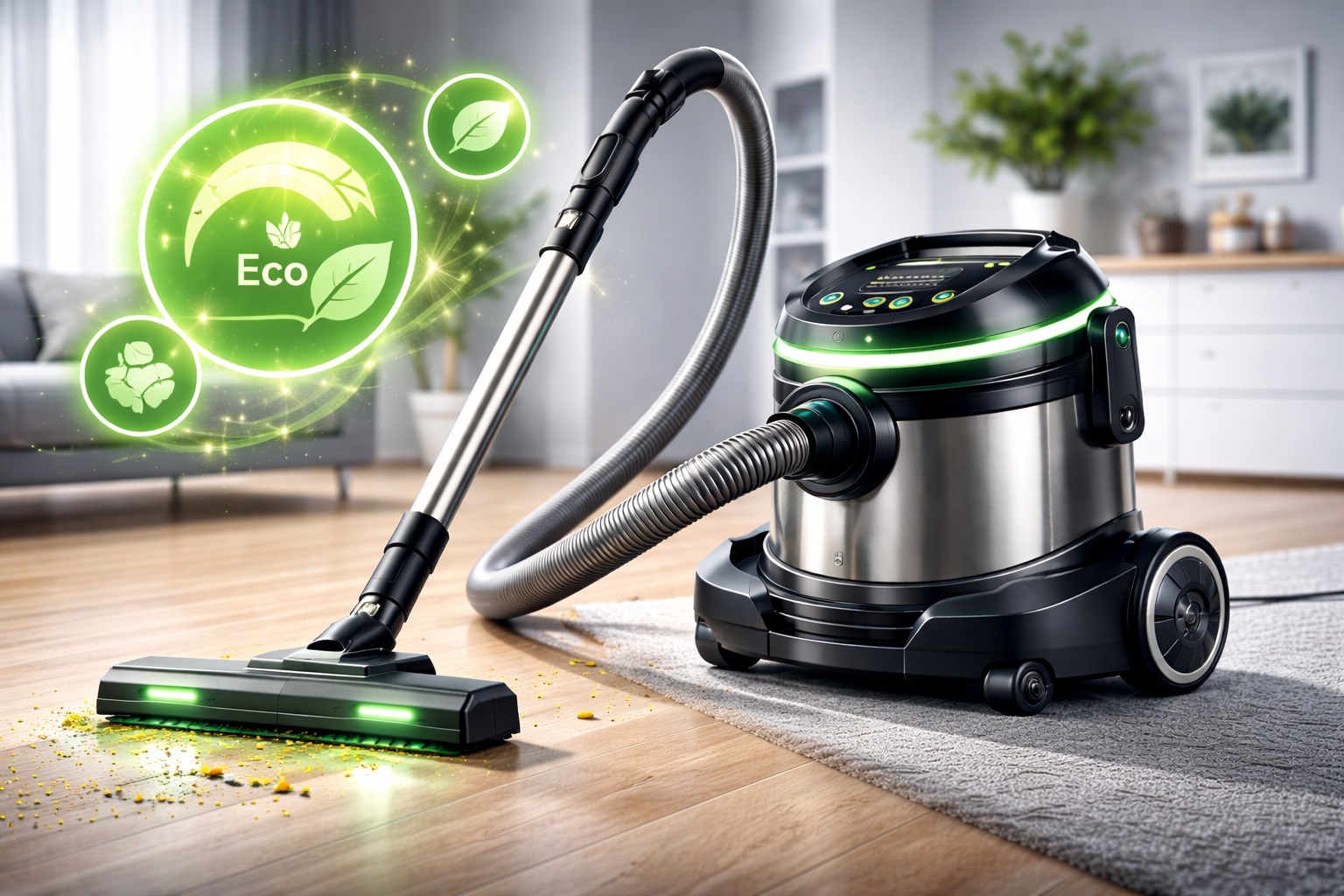
🛠️ Introduction: The Efficiency & Energy Challenge
In a world increasingly focused on sustainability and operational performance, vacuum cleaner efficiency is no longer a luxury — it’s a requirement. Barrel vacuum cleaners, once seen as heavy industrial tools, are evolving into highly efficient cleaning systems that deliver strong suction while reducing energy consumption. This transformation matters for homeowners, commercial buyers, facility managers, and product developers alike.
By 2025, innovations in motor design, airflow management, ergonomics, and smart power delivery are redefining what consumers can expect from upright vacuum cleaners, household vacuum cleaners, and specialized solutions like vacuum cleaner for pet hair and fast lightweight vacuum cleaners.
🔥 Advanced Motor & Suction Technologies
High‑Efficiency Motors
Modern barrel vacuum cleaners use advanced brushless or digital motors that:
Deliver powerful suction with less energy input
Maintain consistent performance over long cycles
Generate fewer heat losses and drag
These motors are central to energy‑saving efficient powerful vacuum cleaner designs.
Optimized Airflow Dynamics
Improving airflow within the vacuum reduces resistance and improves dirt transport — requiring less input power:
Streamlined internal channels
High‑flow nozzles with reduced turbulence
Precision‑balanced impellers
Performance Insight:
Studies show that enhanced airflow can improve cleaning efficiency by up to 25% while reducing motor workload.
Case Example:
A North American OEM reported that by integrating digital motors with optimized airflow geometry, their barrel vacuum model achieved a 20% reduction in electricity consumption while maintaining high dust‑lift performance.
⚖️ Lightweight Designs: Fast & Easy Cleaning
Fast Lightweight Vacuum Cleaners
Weight reduction doesn’t just improve portability — it improves energy use. Lighter systems require:
Less physical force from users
Lower power for transport and maneuvering
Better balance during long cleaning sessions
Manufacturers achieve this through:
User Benefit:
Facility operators reported 30% faster cleaning cycles after switching to lightweight barrels with ergonomic design — translating into lower operational hours and reduced energy use.
🐾 Targeted Pet Hair Solutions
Homes with pets present a special challenge. Repeated passes on carpets and upholstery multiply energy use — unless the vacuum is designed for vacuum cleaner for pet hair performance:
These elements reduce the number of cleaning passes needed, lowering total energy draw.
Real Use Case:
A European cleaning cooperative found that pet‑optimized barrel vacuums reduced repeat passes by nearly 40%, cutting overall runtime and energy consumption significantly.
🌙 Quiet Operation for Night Use
Noise and energy efficiency often go hand in hand. Quiet vacuum for night use designs reduce acoustic waste without compromising suction:
Insulated housings
Variable RPM control
Low‑decibel motor tuning
Quieter systems typically run more efficiently because they prioritize smooth airflow over brute force, reducing power draw during operation.
Data Insight:
Acoustic‑optimized vacuum designs show up to 15% lower peak energy draw in night‑mode tests compared to standard models.
🧠 Smart Power & Sensor Controls
Smart technologies help barrel vacuums match power output to task needs:
Surface detection sensors adjust suction for carpets vs hard floors
Auto power modulation extends battery life and reduces draw
Digital display feedback helps users optimize cleaning paths
These controls make every cleaning pass count — minimizing waste and maximizing efficiency.
🌿 Lifecycle Efficiency: From Manufacture to End‑Use
Sustainable Materials & Construction
Durable housings reduce replacement frequency
Modular parts reduce waste and repair costs
Recyclable plastics lower lifecycle carbon impact
Energy Label & Compliance Benefits
Energy‑rated models (such as ENERGY STAR®) meet strict consumption benchmarks, appealing to eco‑conscious buyers and facility procurement standards.
🧠 Conclusion: Efficiency is a Competitive Advantage
Barrel vacuum cleaners are no longer just powerful machines — they are engineered ecosystems designed to optimize performance and minimize energy use. By embracing:
✔ High‑efficiency motors and energy‑saving efficient powerful vacuum cleaner designs
✔ Fast lightweight vacuum cleaner ergonomics
✔ Pet‑friendly performance
✔ Quiet, low‑energy operation
✔ Smart sensor and power modulation controls
manufacturers can deliver solutions that meet real cleaning needs while reducing operational costs and carbon footprints. For developers, distributors, and B2B buyers, these advancements translate into stronger product propositions and sustainability alignment.
Hashtags
Lanxstar, UprightVacuumCleaners, HouseholdVacuumCleaners, EnergySavingEfficientPowerfulVacuumCleaner, FastLightweightVacuumCleaner, VacuumCleanerForPetHair, QuietVacuumForNightUse, HighEfficiencyMotors, SmartPowerControls, AirflowOptimization, DigitalMotorVacuum, ErgonomicCleaningDesign, LowEnergyCleaning, SustainableHomeAppliances, CommercialCleaningEfficiency, PerformanceDrivenVacuum, IntelligentSuctionControl, NoiseOptimizedVacuum, PetHairOptimization, LightweightCleaningSolutions, EfficientAirflowTech, ModularVacuumComponents, EnergyStarVacuum, BatteryEfficientVacuum, DigitalDisplayVacuum, SurfaceAdaptiveSuction, UrbanCleaningSolutions, FacilityCleaningInnovation, AdvancedBrushHeads, QuietNightModeTech, BEfficientCleaning, ReducedCarbonCleaning, SmartSensorVacuum, HVACCompatibleVacuum, CleaningWorkflowOptimization, LightweightErgonomics, EnergyLabelCompliant, EcoFriendlyCleaningTech, VacuumCleanerInnovation, SustainableCleaningSolutions, HomeAndCommercialCleaning, SmartHomeVacuumIntegration, SmartCleaningTrends, IntelligentMaintenanceAlerts, AdaptiveCleaningProfiles.