Hi, message us with any questions.
We're happy to help!





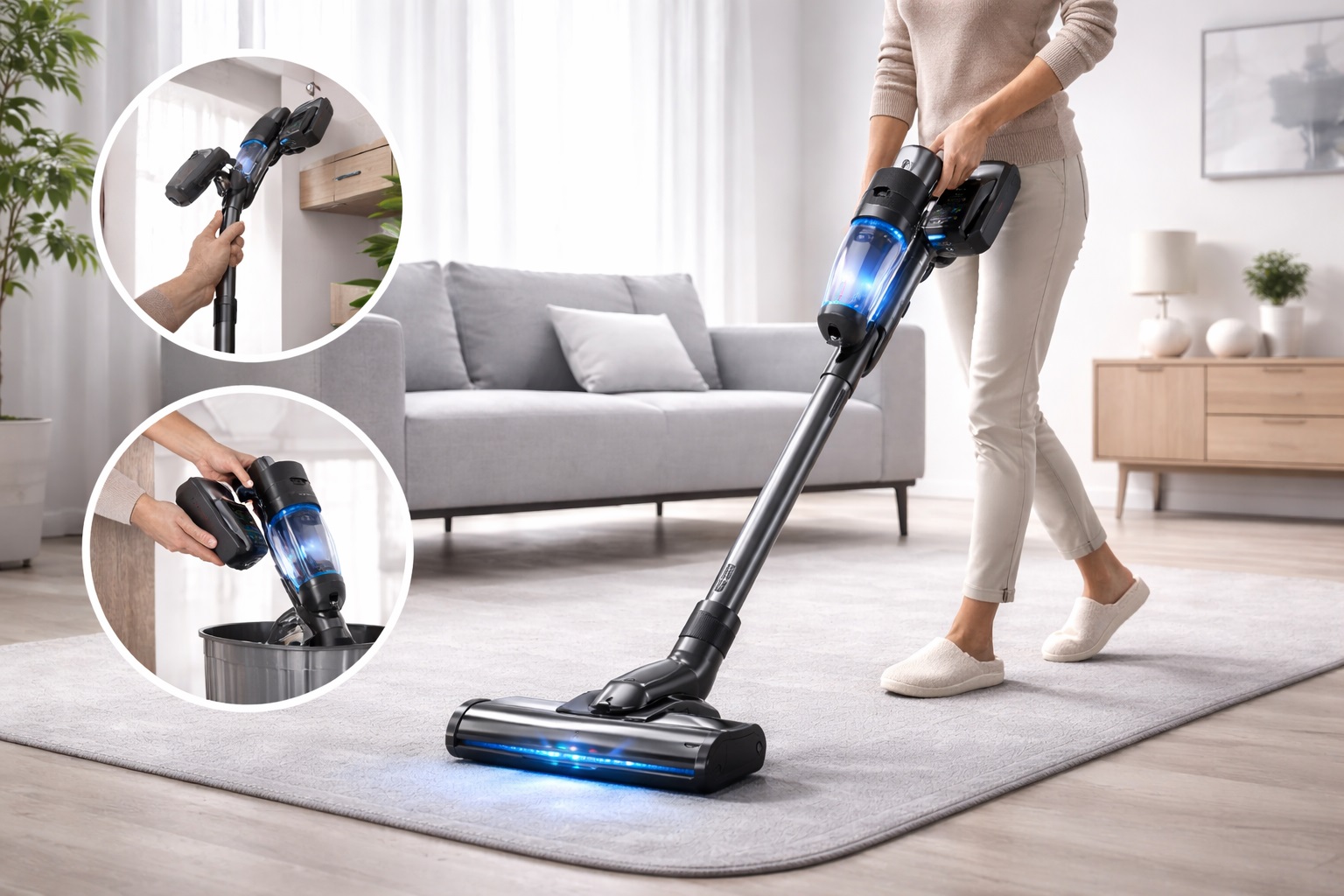
In vacuum cleaners, performance specs get attention—but user experience (UX) determines reviews, repeat purchases, and return rates. Many vacuums fail not because they can’t pick up dirt, but because they feel frustrating: heavy steering, awkward handles, messy emptying, smelly wet tanks, noisy operation, or brush rolls that trap hair every week.
Human-centered design (HCD) turns vacuum differentiation into something consumers can feel immediately. For procurement and distribution teams, it also becomes a business advantage: fewer complaints, fewer returns, and stronger brand reputation.
Below is a practical guide to redefining vacuum UX through human-centered design—across cordless, handheld, and wet/dry segments—while keeping claims measurable and SEO-friendly.
I. Human-centered design starts with “friction mapping” 🎯
Before adding new features, map the friction points that drive negative reviews. In home vacuums, the most common “UX pain clusters” are:
Handling friction: heavy, unbalanced, hard-to-steer heads
Noise friction: too loud for shared spaces or night cleaning 🌙
Maintenance friction: messy dustbin emptying, hard filter access
Hygiene friction: wet/dry tanks that smell or are annoying to clean 💦
Pet friction: brush roll hair wrap and weak upholstery performance 🐾
Portability friction: poor accessory reach for cars, stairs, and travel 🚗🧳
A differentiated vacuum doesn’t eliminate all friction—it eliminates the friction that matters most to its target users.
II. Ergonomics and balance: the fastest UX differentiator 🧍♂️🧍♀️
Consumers often describe great vacuums as “effortless,” not “high suction.” That “effortless” feeling is mainly ergonomics.
1) Handle geometry and grip comfort
Grip shape and angle influence wrist fatigue
Trigger placement should work for different hand sizes
A “no accidental button press” layout prevents frustration
This matters for both full-size cordless models and cordless handheld vacuums used for spot cleaning.
2) Center of mass and perceived weight
A Fast Lightweight Vacuum Cleaner wins when it’s not only light on paper, but also balanced in motion:
Place the center of mass closer to the hand
Reduce “top-heavy” feeling in stick vacuums
Optimize steering resistance in the floor head
3) Floor head steering and edge behavior
Consumers notice head steering instantly:
Smooth swivel without wobble
Controlled edge pickup channels for corners
Avoid “snowplow effect” that pushes debris forward
These decisions shape credibility for Vacuum for Multi-Surface claims.
III. Quiet comfort: UX is also emotional 🤫
Noise is not just a technical metric—it’s a lifestyle constraint. A quiet vacuum cleaner is a clear UX differentiator for:
apartments (Apartment Vacuum Cleaner)
families with sleeping kids
shared homes and late-night routines (Quiet Vacuum for Night Use)
Human-centered noise design includes:
“quiet mode” that still cleans common messes
reduced high-frequency whine (tone matters)
vibration reduction so the vacuum feels calmer in hand
A vacuum that is quiet, stable, and non-annoying earns positive reviews even before consumers analyze performance.
IV. Maintenance UX: where most vacuums lose loyalty 🧼
Many consumers will accept “average suction” longer than they accept “annoying maintenance.” If you want differentiation that improves reviews, design maintenance to be quick and clean.
1) Dustbin emptying without dust clouds 🌪️
One-touch release that doesn’t require touching dirt
Bin geometry that avoids debris sticking
Controlled airflow during emptying (less dust plume)
This is especially important for allergy-focused users and helps support Vacuum Cleaner for Allergies messaging.
2) Filter access and replacement clarity 😷
A HEPA Filter Vacuum Cleaner is only effective if users maintain it:
Tool-free access
Clear “wash vs replace” instructions
Easy-to-buy replacement filters (distribution advantage)
3) Anti-clog workflow
Human-centered anti-clog design isn’t just a sensor—it’s:
quick access points to remove jams
intuitive alerts (not confusing error codes)
airflow paths that reduce common clog locations
Maintenance UX reduces returns and becomes a measurable procurement benefit.
V. Pet hair UX: design for the weekly reality 🐾
Consumers with pets clean frequently, and they punish poor usability quickly.
To win Vacuum Cleaner for Pet Hair satisfaction:
Anti-tangle brush design reduces “hair surgery” sessions
Upholstery tool that actually works on fabric
Easy brush-roll access with tool-free removal
Human-centered design here is about time saved and mess avoided—the two things pet owners value most.
VI. Wet/dry UX: hygiene workflow is the feature 💦🧼
Wet/dry models are where human-centered design creates the most dramatic differentiation. The product can be powerful, but if cleaning the device is unpleasant, consumers stop using it—and it starts to smell.
If you build Wet Dry Vacuum Cleaners (or any wet dry vacuum positioning), focus on the hygiene lifecycle:
Tanks that rinse in under a minute
No hidden corners where dirty water sits
Drying pathways that reduce odor risk
Simple disassembly that doesn’t feel like “maintenance homework”
A Self-Cleaning Vacuum Cleaner becomes a true UX differentiator when:
the cycle is short
it removes residue effectively
it supports drying after rinse (critical for odor control)
For premium products, a 4 in 1 Cordless Smart Wet & Dry Vacuum Cleaner should use “smart” to reduce friction: clear alerts, guided steps, and stable performance across modes.
For larger households, a Large-Capacity Wet Dry Vacuum Cleaner improves UX by reducing refills—if the design still lifts, pours, and stores comfortably.
VII. Portability UX: accessories must be usable, not just included 🚗🧳
Many vacuums ship with accessories that look good on a feature list but are rarely used. Human-centered design treats accessories as tools for real scenarios.
Car cleaning UX 🚗
A Car Vacuum Cleaner experience should include:
crevice tools that truly reach seat rails
stable suction in tight spaces
dust containment that doesn’t leak in storage
Travel and small-space UX 🧳
A Portable Vacuum for Travel needs:
compact storage and quick charging
easy emptying with minimal dust plume
intuitive accessory swapping
For procurement and distribution, “usable accessories” increase attach rates and reduce negative reviews caused by mismatched expectations.
VIII. Human-centered differentiation can still be “powerful” ⚡
Human-centered design doesn’t replace performance—it makes performance usable.
You can still build:
High Suction Vacuum Cleaner positioning (but prioritize stability and real pickup)
Energy-Saving Efficient Powerful Vacuum Cleaner messaging (when efficiency improves runtime and reduces heat)
Multi-Functional Durable Vacuum Cleaner credibility (when durability protects long-term UX)
The difference is you translate engineering choices into outcomes users care about: less effort, less noise, less mess, less regret.
IX. UX metrics and tests that prove differentiation to buyers 🧪📊
To make UX differentiation credible for vacuums procurement and vacuum cleaner distribution, define measurable UX KPIs:
Time-to-clean a standardized area (multi-surface)
Time-to-maintain after cleaning (empty bin, rinse tank, dry steps)
Effort score (push force / steering resistance)
Noise in use (dB(A) and tone profile)
Hair-wrap interval (how long until brush needs cleaning)
Odor risk indicators for wet/dry (residual water zones, dry time)
Return drivers tracking: what complaints happen most and why
When you show these metrics, you transform “UX” from a subjective idea into a procurement-ready differentiation system.
Conclusion: Human-centered design is the shortest path to trust 🌟
In modern vacuum markets, consumers choose what feels easy—and they keep what stays easy over time. Human-centered design differentiates vacuums by removing friction: better ergonomics and balance, quieter comfort, easier maintenance, pet-hair-friendly workflows, and wet/dry hygiene routines that don’t become a burden. These UX improvements don’t just win reviews—they reduce returns and strengthen global distribution success. ✅
www.lxvacuum.com
Related Keyword Groups
Lanxstar human-centered vacuum design, Lanxstar user experience vacuum, vacuums procurement, vacuum cleaner distribution, vacuum UX differentiation, ergonomic Cordless Vacuum Cleaner design, Fast Lightweight Vacuum Cleaner balance, steering resistance vacuum head, quiet vacuum cleaner comfort, Portable Quiet Vacuum Cleaner UX, Quiet Vacuum for Night Use apartment use, Apartment Vacuum Cleaner compact docking, High Suction Vacuum Cleaner stable pickup, Vacuum for Multi-Surface usability testing, Vacuum Cleaner for Hardwood Floors soft roller UX, Vacuum Cleaner for Pet Hair anti-tangle workflow, upholstery pet tool usability, HEPA Filter Vacuum Cleaner maintenance design, Vacuum Cleaner for Allergies sealed filtration UX, dustbin emptying without dust cloud, tool-free filter access design, anti-clog vacuum workflow, vibration reduction handle comfort, grip geometry vacuum handle, modular accessory kit design, Car Vacuum Cleaner crevice reach, Portable Vacuum for Travel compact usability, cordless handheld vacuums ergonomic grip, Li-ion Cordless Handheld Vacuum Cleaner spot cleaning, wet dry vacuum hygiene workflow, Wet Dry Vacuum Cleaners easy rinse tank, Wet and Dry Vacuum Cleaner odor control, Self-Cleaning Vacuum Cleaner short cycle, rinse and dry path design, 4 in 1 Cordless Smart Wet & Dry Vacuum Cleaner guided alerts, Large-Capacity Wet Dry Vacuum Cleaner handling, Multi-Functional Durable Vacuum Cleaner reliability, latch fatigue and wobble prevention, brush roll hair wrap interval, time-to-maintain vacuum KPI, time-to-clean multi-surface KPI, low noise tone profile testing, sealed bin gasket durability, replacement HEPA filter availability, Energy-Saving Efficient Powerful Vacuum Cleaner runtime UX, thermal comfort cordless vacuum, after-sales parts readiness strategy, distributor-ready maintenance guides, QR video support for vacuums, returns reduction through UX design



