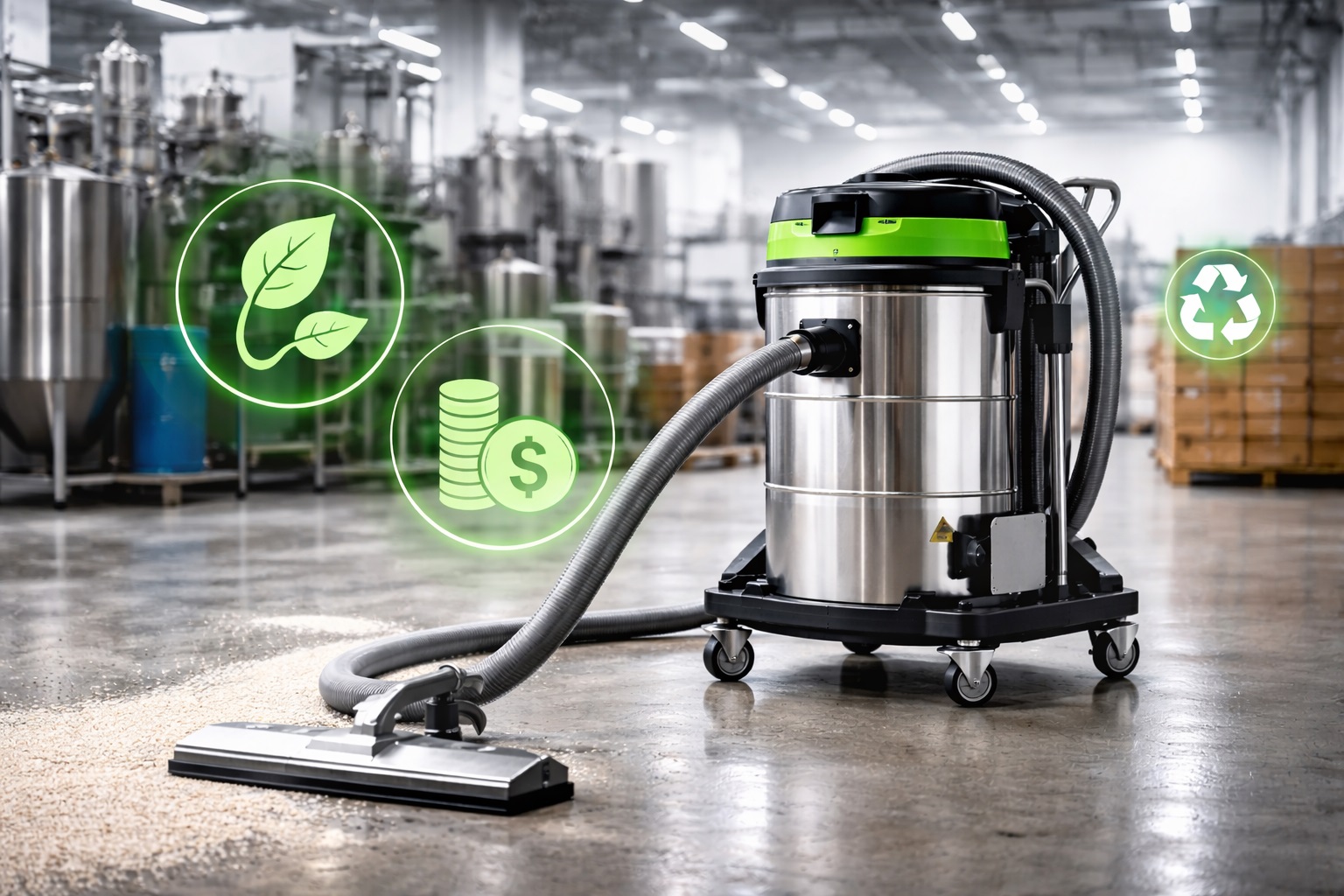
Industrial facilities operate under constant pressure to reduce costs, improve safety, and meet increasingly strict regulatory requirements. Cleaning operations, often overlooked, play a significant role in both operational expenses and compliance outcomes.
Energy-efficient vacuum cleaners are emerging as a strategic solution that balances performance with sustainability, helping facilities achieve measurable savings without compromising cleaning effectiveness.
1. Why Energy Efficiency Matters in Industrial Cleaning
Industrial cleaning is frequent and repetitive.
Vacuum cleaners often run for long hours across large facilities. Inefficient equipment increases electricity consumption and heat generation, raising operating costs and accelerating component wear.
An Energy-Saving Efficient Powerful Vacuum Cleaner delivers consistent performance while reducing energy waste.
2. The Hidden Cost of Inefficient Equipment
Energy cost is only part of the equation.
Inefficient motors generate excess heat, leading to higher failure rates and maintenance needs. Downtime caused by equipment failure disrupts cleaning schedules and increases compliance risk.
Energy-efficient systems improve both reliability and cost predictability.
3. Performance Without Compromise ⚙️
Energy efficiency does not mean weaker cleaning.
Modern industrial designs combine optimized airflow with high-efficiency motors. A High Suction Vacuum Cleaner can maintain strong suction while consuming less power through improved motor control and airflow design.
Performance stability supports consistent hygiene outcomes.
4. Supporting Regulatory and Sustainability Compliance
Compliance standards increasingly include energy considerations.
Many industrial buyers now evaluate equipment based on energy usage and environmental impact. Energy-efficient vacuum cleaners help facilities align with sustainability goals and regulatory expectations.
For vacuums procurement teams, energy performance data is becoming a standard requirement.
5. Wet and Dry Cleaning Efficiency
Industrial environments involve mixed debris.
Spills, moisture, and dry dust often coexist. Wet Dry Vacuum Cleaners designed for efficiency handle both tasks without excessive power draw.
A Wet and Dry Vacuum Cleaner platform reduces the need for multiple machines, lowering total energy consumption.
6. Lifecycle Cost Reduction Through Efficient Design
Energy efficiency impacts total cost of ownership.
Lower electricity usage, reduced maintenance, and longer service life combine to deliver significant lifecycle savings. Facilities operating multiple vacuum units see amplified benefits.
Efficiency-driven procurement decisions deliver long-term returns.
7. Heat Management and Equipment Longevity 🔧
Heat is a major factor in equipment degradation.
Efficient motors generate less heat, reducing stress on internal components. Improved cooling systems further extend service intervals.
Longer equipment life reduces replacement frequency and capital expenditure.
8. Productivity Gains from Continuous Operation
Industrial facilities require uninterrupted cleaning.
Energy-efficient vacuum cleaners are designed for extended use without overheating. This supports continuous operation during peak production or export periods.
Consistent uptime improves operational reliability.
9. Energy Efficiency as a Sales Advantage for Distributors
Efficiency sells in B2B markets.
Distributors who emphasize energy savings and lifecycle value move conversations beyond upfront price. Energy-efficient models often command higher margins due to their long-term benefits.
From a vacuum cleaner distribution perspective, efficiency strengthens value-based selling.
10. Integration with Modern Industrial Workflows
Energy-efficient equipment supports modern operations.
Lower power draw allows easier integration into existing electrical infrastructure. This is particularly important in older facilities or export warehouses with limited capacity.
Compatibility reduces installation barriers.
11. Choosing the Right Energy-Efficient Vacuum Cleaner
Selection should be application-driven.
Buyers should evaluate suction stability, airflow efficiency, motor technology, and filtration performance. Energy efficiency must be balanced with durability and cleaning effectiveness.
Manufacturers such as Lanxstar design industrial vacuum platforms optimized for both power and efficiency.
12. The Future of Energy-Efficient Industrial Cleaning
Efficiency will continue to gain importance.
Rising energy costs, stricter regulations, and sustainability commitments are accelerating adoption. Facilities that invest early gain cost advantages and compliance resilience.
Energy-efficient vacuum cleaners are becoming standard, not optional.
Conclusion
Energy-efficient vacuum cleaners offer industrial facilities a clear path to reducing operating costs while improving compliance and reliability. By focusing on lifecycle value rather than short-term savings, buyers can achieve stronger financial and operational outcomes.
For global buyers and distributors, energy efficiency is now a core criterion in industrial cleaning equipment selection.
To explore energy-efficient industrial vacuum solutions designed for demanding facilities, visit
www.lxvacuum.com
Target Readers at the End 🌍
Industrial facility managers and operators
Global vacuum cleaner procurement managers
Food, chemical, and manufacturing plant owners
Industrial cleaning equipment buyers
Vacuum cleaner distributors and wholesalers
50 Related Keyword Groups
Lanxstar vacuum cleaner, energy efficient industrial vacuum, Energy-Saving Efficient Powerful Vacuum Cleaner, High Suction Vacuum Cleaner, Wet Dry Vacuum Cleaners, Wet and Dry Vacuum Cleaner, Large-Capacity Wet Dry Vacuum Cleaner, Multi-Functional Durable Vacuum Cleaner, HEPA Filter Vacuum Cleaner, industrial cleaning cost reduction, factory cleaning equipment, warehouse energy saving vacuum, compliance driven procurement, industrial hygiene equipment, professional cleaning equipment, vacuums procurement, vacuum cleaner distribution, wholesale industrial vacuum, distributor industrial solutions, lifecycle cost vacuum cleaner, durable industrial vacuum cleaner, continuous operation vacuum, low heat industrial motor, energy efficient cleaning machines, industrial dust control vacuum, liquid spill recovery vacuum, export facility cleaning equipment, sustainable industrial cleaning, regulatory compliant vacuum cleaner, long lifecycle vacuum platform