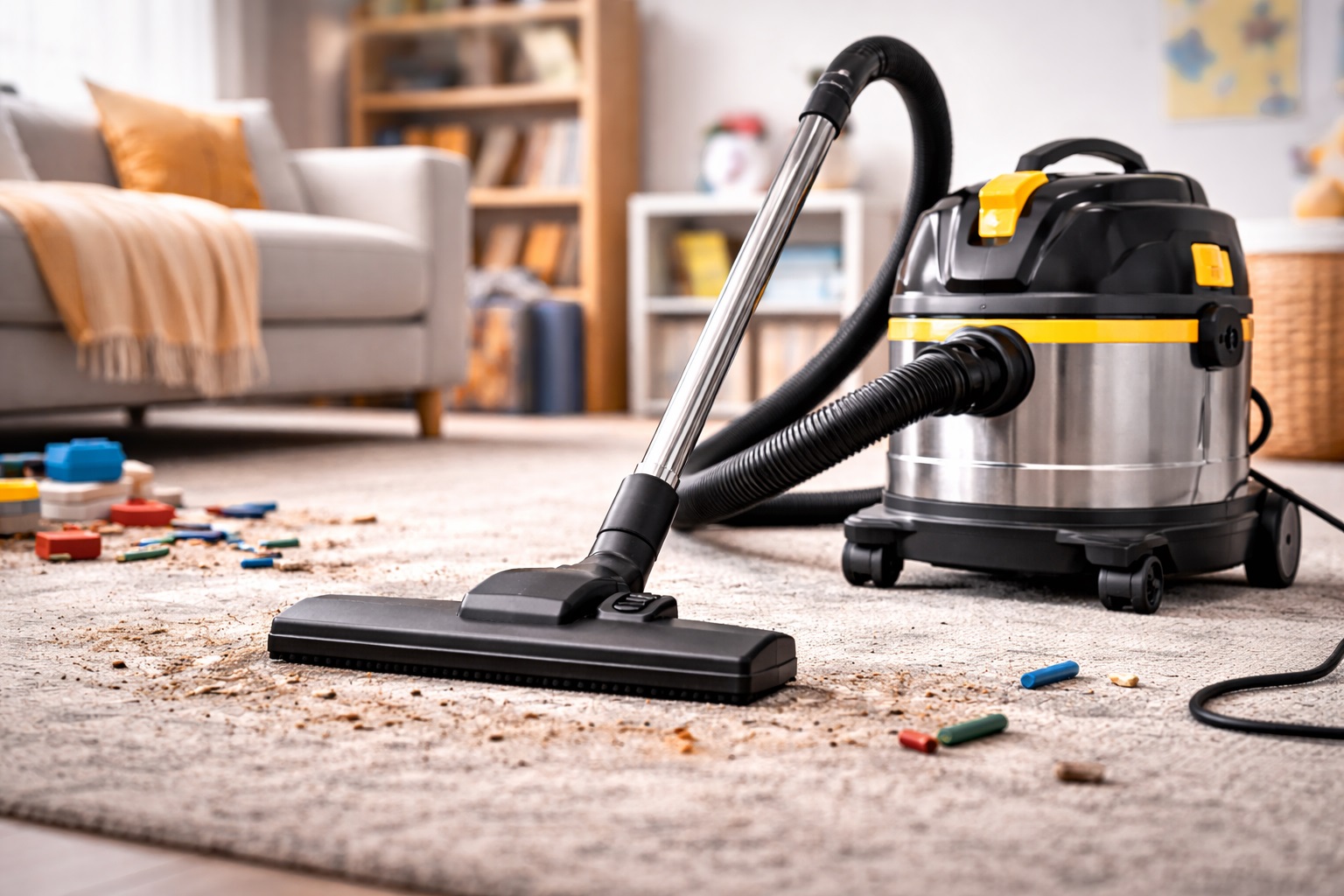
Most cleaning companies carefully track visible costs—labor, chemicals, vehicles, and equipment purchases.
Yet many still overlook one cost category that quietly erodes profit every single day: inefficient vacuum cleaners.
Here is the uncomfortable truth:
Most cleaning companies don’t lose money on bad contracts—they lose it on inefficient routines.
Vacuum cleaners rarely appear in financial loss reports, but the wrong equipment creates hidden inefficiencies that compound over time.
This article breaks down five common vacuum cleaner problems that cost cleaning companies far more than they realize—and explains how smarter equipment decisions can stop those losses.
🧠 1. Frequent Interruptions Caused by Small Dust Capacity
A small dust tank may seem like a minor inconvenience.
In large facilities, it becomes a daily productivity drain.
When operators must stop repeatedly to empty a vacuum:
Cleaning rhythm is broken
Time-on-task efficiency drops
Mistakes increase as operators rush
Across multiple sites and shifts, these interruptions silently consume paid labor hours.
A Large-Capacity Wet Dry Vacuum Cleaner allows teams to:
Clean larger areas without stopping
Maintain consistent workflow
Reduce unnecessary operator movement
Hidden cost:
Every stop to empty a tank is paid time that produces no cleaning result.
⚠️ 2. Using the Wrong Vacuum for Mixed Cleaning Scenarios
Many cleaning companies still rely on:
One machine for dry debris
Another for liquid spills
Separate tools for special zones
This leads to:
A modern wet and dry vacuum cleaner, especially when built as a Multi-Functional Durable Vacuum Cleaner, replaces multiple machines with one standardized solution.
Hidden cost:
Each extra machine adds friction to every shift—not just to your balance sheet.
🔇 3. Noise Complaints That Put Contracts at Risk
Noise is no longer a comfort issue—it is a commercial risk.
In hotels, offices, and healthcare facilities, loud equipment results in:
Guest and tenant complaints
Restricted cleaning windows
Pressure to renegotiate contracts
A Quiet Vacuum Cleaner reduces disruption during daytime operations, while a Quiet Vacuum for Night Use enables productive cleaning during off-peak hours.
Hidden cost:
One serious noise complaint can erase the savings of buying cheaper equipment.
🧹 4. Poor Performance on Pet Hair and Fine Debris
In serviced apartments, mixed-use buildings, and pet-friendly facilities, pet hair is one of the most time-consuming cleaning challenges.
Vacuum cleaners not designed for this task often:
A dedicated Vacuum Cleaner for Pet Hair emphasizes:
Hidden cost:
Every extra cleaning pass increases labor cost—the most expensive resource in cleaning operations.
🕒 5. Equipment Downtime That Disrupts Entire Shifts
Breakdowns rarely happen when schedules are flexible.
When a vacuum fails mid-shift:
A Multi-Functional Durable Vacuum Cleaner designed for continuous commercial use minimizes:
Hidden cost:
Downtime damages reliability—and reliability protects long-term contracts.
📌 Case Insight: When Small Inefficiencies Became Big Losses
A regional cleaning company servicing office buildings and serviced apartments discovered that:
Operators lost time emptying small tanks
Night cleaning was restricted due to noise complaints
Pet hair removal required repeated passes
After standardizing around:
A Large-Capacity Wet Dry Vacuum Cleaner
Low-noise designs suitable for night use
Multi-functional, durable systems
the company reported:
The key insight was simple:
Most costs didn’t disappear—they stopped accumulating.
🚀 From Problems to Procurement Decisions
If you are reviewing your vacuum fleet this year, these five problems should define your buying criteria, not just influence them.
High-performing cleaning companies don’t ask:
“Which vacuum is cheapest?”
They ask:
Where do we lose time every single shift?
Which interruptions are avoidable?
How does equipment affect client satisfaction?
Can one machine replace multiple tools reliably?
This shift turns procurement from cost control into profit protection.
✅ 30-Second Self-Check for Cleaning Company Owners
If you answer “yes” to three or more of the following, your vacuum cleaners are costing you money:
Do operators stop frequently to empty dust tanks?
Do you use different machines for dry and wet cleaning?
Have you received noise-related complaints?
Does pet hair require multiple cleaning passes?
Do vacuum breakdowns disrupt shift schedules?
If so, the issue is not your team—it’s your equipment strategy.
✅ Conclusion: The Most Expensive Problems Are Often Invisible
Vacuum cleaners may seem like basic tools, but they influence:
Labor efficiency
Client retention
Contract stability
Team morale
By addressing hidden issues such as capacity limits, noise, downtime, and task mismatch, cleaning companies can recover profit that was never meant to be lost.
The right vacuum cleaner doesn’t just clean floors—it protects margins.
🔖 Hashtags
wet and dry vacuum cleaner, Multi-Functional Durable Vacuum Cleaner, Large-Capacity Wet Dry Vacuum Cleaner, Quiet Vacuum Cleaner, Vacuum Cleaner for Pet Hair, Quiet Vacuum for Night Use, commercial cleaning equipment, industrial vacuum systems, facility cleaning solutions, professional cleaning tools
energy efficient cleaning equipment, commercial janitorial machines, B2B vacuum buyers, cleaning equipment procurement, multi surface vacuum cleaner, low noise cleaning tools, night shift cleaning equipment, pet friendly cleaning solutions, durable cleaning machines, heavy duty vacuum cleaner
vacuum downtime reduction, cleaning workflow optimization, commercial cleaning efficiency, vacuum lifecycle cost, labor efficiency cleaning, professional cleaning operations, facility management tools, sustainable cleaning equipment, industrial cleaning machines, smart cleaning technology
EU cleaning equipment market, Middle East cleaning industry, commercial cleaning strategy, contract cleaning solutions, advanced vacuum design, cleaning performance improvement, quiet commercial vacuum, large capacity vacuum systems, commercial vacuum solutions, Lanxstar