Hi, message us with any questions.
We're happy to help!





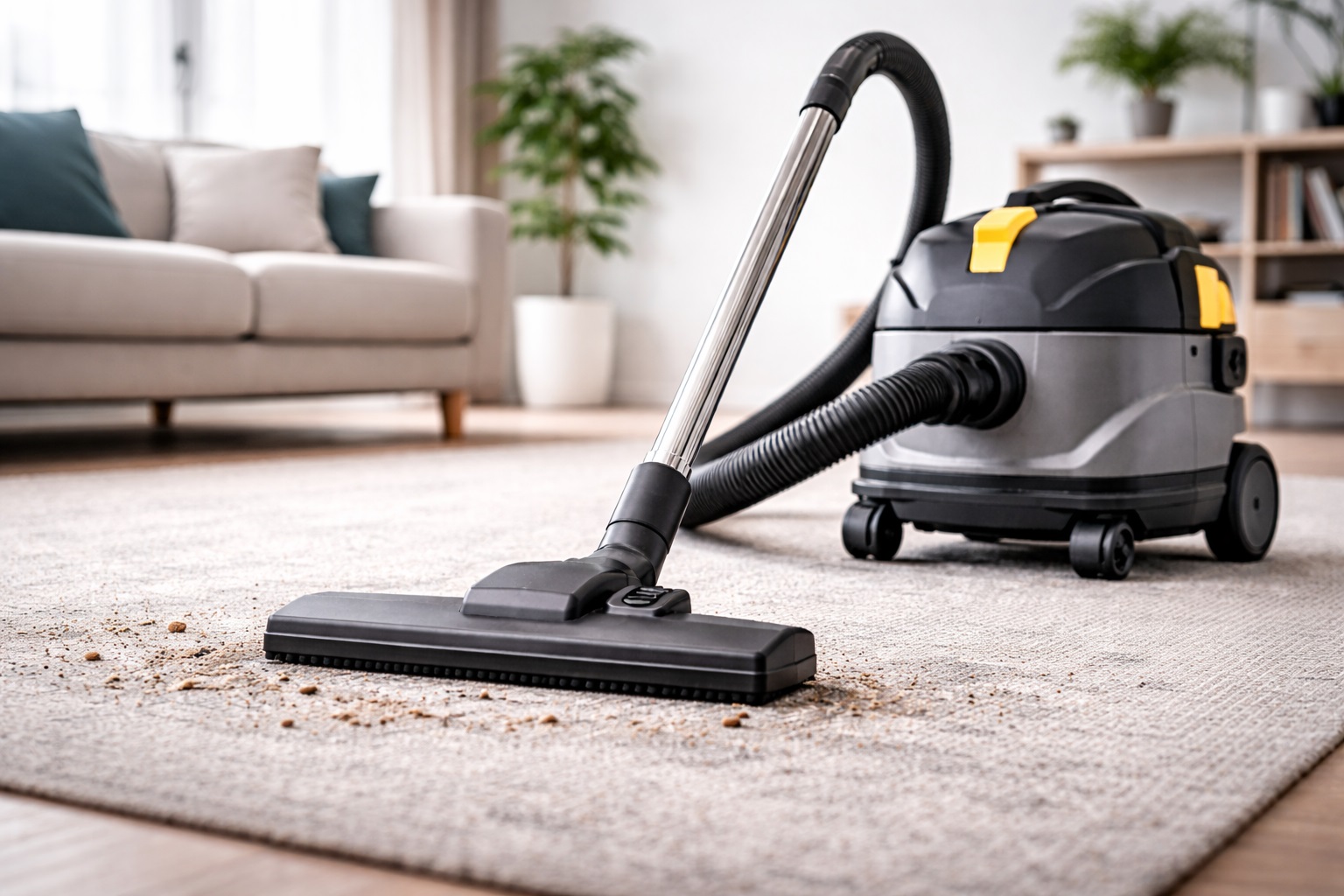
For years, commercial vacuum cleaner procurement has been driven by one simple belief:
higher power means better performance.
Across Europe and the Middle East, many B2B buyers still evaluate vacuum cleaners based on wattage and peak power numbers. Yet as cleaning environments grow more complex and operating costs continue to rise, this assumption is quietly creating inefficiency, higher energy bills, and avoidable equipment downtime.
Here is the reality many buyers overlook:
If a vacuum cleaner performs best only in a demo, it is not a commercial machine.
This article explains why higher power is not always better, what truly defines commercial vacuum performance, and how professional buyers are rethinking their decisions.
🧠 1. Why Wattage Became a Misleading Metric
Wattage was once a reasonable proxy for performance—when motors were inefficient and airflow design was primitive.
Today, wattage alone says very little about:
Actual suction at floor level
Performance stability during long shifts
Energy efficiency
Heat management and motor lifespan
In real commercial use, excessive power often causes:
Heat accumulation
Faster motor wear
Increased energy consumption
Performance drop after prolonged operation
A true High Suction Vacuum Cleaner is defined by sustained airflow and system efficiency, not by peak power numbers.
⚠️ 2. Anti-Common Sense Insight: When More Power Slows You Down
It sounds counterintuitive, but in many commercial settings:
More power can reduce overall cleaning efficiency.
Overpowered motors tend to:
Overheat during long shifts
Trigger thermal protection shutdowns
Force operators to pause or switch machines
An Energy-Saving Efficient Powerful Vacuum Cleaner focuses on controlled power delivery—ensuring suction remains stable hour after hour.
Key takeaway:
Consistency beats intensity in commercial cleaning.
🕒 3. Real Performance Is Measured in Hours, Not Minutes
Most vacuum demonstrations last minutes. Commercial cleaning lasts entire shifts:
4–8 hours of continuous operation
Multiple surface types
Minimal tolerance for interruption
This is where poorly engineered machines fail.
A Multi-Functional Durable Vacuum Cleaner maintains performance by:
Minimizing airflow loss
Preventing rapid filter clogging
Distributing mechanical stress evenly
For B2B buyers, short-term peak power is irrelevant if performance collapses mid-shift.
❌ 4. Procurement Mistake #1: Buying Power Instead of Versatility
Many buyers still purchase separate machines for:
Dry debris
Wet spills
Sensitive floors
This approach increases:
Capital expenditure
Training complexity
Maintenance and storage costs
A modern wet and dry vacuum cleaner consolidates tasks into a single platform—simplifying operations and improving labor efficiency.
🧹 5. Surface Performance: Power Without Control Causes Damage
Raw power does not guarantee better cleaning—especially on sensitive surfaces.
A well-designed Vacuum Cleaner for Hardwood Floors balances:
Suction force
Brush design
Airflow control
Too much uncontrolled suction can damage finishes or scatter debris.
Likewise, an effective Vacuum Cleaner for Pet Hair depends more on:
Consistent airflow
Fiber agitation
Anti-tangle design
than on peak wattage.
⚖️ 6. When Higher Power Is Necessary (And When It’s Not)
To be clear: higher power is not useless.
High-power systems are justified in scenarios such as:
Heavy industrial debris
Construction dust recovery
Extremely large, open facilities
However, in 80% of commercial cleaning environments—hotels, offices, retail, healthcare—
controlled suction, efficiency, and durability deliver better results than brute force power.
This distinction is critical for smart procurement.
🔧 7. Procurement Mistake #2: Ignoring Durability Under Continuous Load
High-power motors installed in non-commercial designs often fail early due to:
Thermal stress
Seal degradation
Structural fatigue
A Multi-Functional Durable Vacuum Cleaner is engineered for:
Long daily runtime
Repeated movement
Mixed cleaning scenarios
In contract-based cleaning, uptime matters more than specifications.
📌 Case Study: How a European Cleaning Company Cut Energy Use by 15%
Background
A commercial cleaning contractor serving office parks and mixed-use buildings in Western Europe relied on high-wattage vacuum cleaners, assuming stronger motors meant faster cleaning.
Identified Problems
Frequent overheating during long shifts
Rising electricity costs
Inconsistent performance on hardwood floors
Poor results when removing pet hair in residential-commercial hybrid buildings
Strategic Shift
Instead of chasing higher wattage, the company adopted:
Optimized airflow systems
Energy-Saving Efficient Powerful Vacuum Cleaner architecture
Stable suction control
wet and dry vacuum cleaner functionality
Improved performance on hardwood floors and pet hair
Results After 5 Months
~15% reduction in energy consumption
More consistent cleaning over full shifts
Fewer operational interruptions
Improved operator satisfaction
The lesson was clear:
better engineering outperformed higher power.
🚀 8. How Smart B2B Buyers Evaluate Vacuum Performance Today
Leading buyers no longer ask:
“How powerful is the motor?”
They ask:
How stable is suction after six hours?
How efficient is energy usage per shift?
Can one machine handle multiple tasks?
Will performance remain consistent over years?
This shift separates price-driven buyers from performance-driven buyers.
✅ 9. A Practical Procurement Checklist (Save This)
Before choosing a high-power commercial vacuum cleaner, ask:
Will suction remain stable after 4–6 hours of continuous use?
How much energy does the machine consume per full shift—not per minute?
Can it handle dry debris, wet spills, and mixed surfaces without switching equipment?
Is suction controlled enough for hardwood floors and pet hair?
What is the expected downtime and maintenance interval over one year?
If these questions are unanswered, wattage alone is meaningless.
✅ Conclusion: Performance Is About Control, Not Excess Power
Higher power is not the enemy—but uncontrolled power is inefficient.
Modern commercial cleaning demands:
Sustained suction
Energy efficiency
Multi-surface adaptability
Long-term durability
A well-engineered High Suction Vacuum Cleaner, combined with energy-saving and multi-functional design, will consistently outperform high-wattage machines in real-world commercial use.
The future of commercial vacuum performance belongs to smarter systems—not bigger numbers.
🔖 Hashtags
wet and dry vacuum cleaner, Multi-Functional Durable Vacuum Cleaner, High Suction Vacuum Cleaner, Energy-Saving Efficient Powerful Vacuum Cleaner, Vacuum Cleaner for Pet Hair, Vacuum Cleaner for Hardwood Floors, commercial vacuum performance, industrial cleaning equipment, facility cleaning solutions, professional vacuum systems
energy efficient vacuum technology, commercial cleaning innovation, B2B vacuum buyers, industrial vacuum solutions, cleaning equipment procurement, multi surface vacuum cleaner, hard floor cleaning equipment, pet hair removal systems, commercial janitorial tools, durable cleaning machines
vacuum airflow optimization, commercial cleaning efficiency, vacuum lifecycle cost, energy cost reduction cleaning, professional cleaning workflow, heavy duty vacuum cleaner, industrial cleaning machines, facility operations efficiency, smart cleaning equipment, vacuum durability standards
EU cleaning equipment market, Middle East cleaning industry, commercial cleaning strategy, low downtime cleaning tools, advanced vacuum engineering, facility management tools, cleaning performance optimization, sustainable cleaning equipment, commercial vacuum solutions, Lanxstar



