Hi, message us with any questions.
We're happy to help!





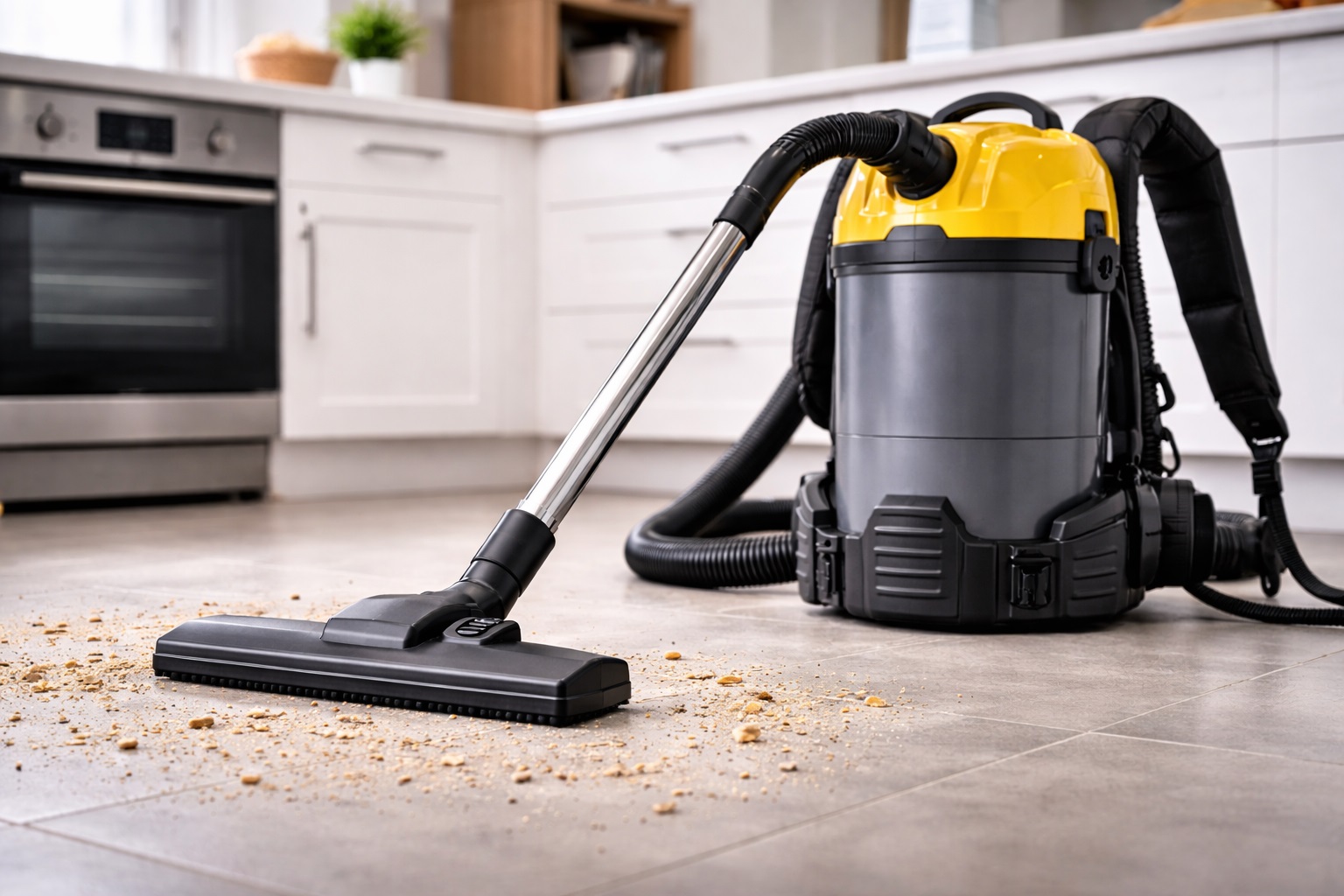
Across Europe and the Middle East, commercial cleaning companies are facing a reality that can no longer be postponed:
labor is becoming more expensive, harder to manage, and increasingly scarce.
Minimum wage increases, labor shortages, higher turnover, and stricter compliance rules are reshaping the economics of cleaning operations. In this environment, productivity is no longer a competitive advantage—it is a baseline requirement.
Here is the shift many companies are only beginning to recognize:
When labor costs rise, inefficient equipment becomes a hidden tax on every shift.
As labor economics change, the role of commercial vacuum cleaners is changing with them.
This article explains how rising labor costs are redefining vacuum cleaner requirements, why old equipment standards no longer work, and what forward-looking cleaning companies are prioritizing instead.
🧠 1. Labor Is Now the Largest—and Least Flexible—Cost
For most commercial cleaning companies today:
Labor represents 50–70% of total operating costs
Wages trend upward, rarely downward
Hiring and training take longer and cost more than before
This creates a new operational reality:
What used to be “acceptable equipment performance” is no longer viable under today’s labor economics.
When labor is expensive, even small inefficiencies scale into major financial losses.
⚠️ 2. Slower Equipment Multiplies Labor Cost Losses
In the past, inefficiency could be absorbed.
Today, every lost minute has a measurable cost.
Traditional vacuum cleaners often:
Slow operators with poor maneuverability
Require multiple passes to achieve acceptable results
Increase fatigue over long shifts
A Fast Lightweight Vacuum Cleaner directly addresses these issues by:
Reducing physical strain
Improving movement speed
Allowing consistent output without rushing
Key insight:
As wages rise, controlled speed and ergonomics matter more than raw power.
🕒 3. One Operator Must Deliver More Output Than Before
Many cleaning companies are now asking fewer people to clean the same—or even larger—facilities.
That means equipment must support:
Long, uninterrupted operating periods
Multiple cleaning scenarios
Minimal supervision
A Multi-Functional Durable Vacuum Cleaner enables one operator to:
Handle dry debris and liquid spills
Transition across surfaces without changing machines
Maintain stable performance over full shifts
This shift directly offsets rising labor costs by increasing output per worker.
❌ 4. Why Treating Vacuums as “Low-Value Tools” No Longer Works
In a high-labor-cost environment, buying cheap or disposable equipment is no longer neutral—it is risky.
Under-engineered machines lead to:
Downtime and interruptions
Slower workflows
Higher management and supervision effort
An Energy-Saving Efficient Powerful Vacuum Cleaner is now a cost-control instrument, not just an environmental choice.
Energy waste and labor inefficiency reinforce each other—and both hit margins.
🧹 5. Surface Versatility Is Now a Labor Strategy
Modern commercial spaces are rarely uniform.
A single shift may include:
Hardwood floors in lobbies
Carpeted offices
Pet hair in serviced apartments or mixed-use buildings
A Vacuum Cleaner for Hardwood Floors that also performs reliably on carpets reduces:
Tool changes
Re-cleaning
Operator hesitation
Likewise, a capable Vacuum Cleaner for Pet Hair prevents repeated passes and frustration in pet-friendly environments.
Result:
More predictable cleaning time and more stable labor planning.
🔄 6. Why Wet & Dry Capability Is Becoming a Baseline Requirement
As staffing becomes tighter, workflows must become simpler.
A wet and dry vacuum cleaner allows operators to:
Address unexpected spills immediately
Continue working without switching equipment
Reduce dependence on specialized roles
In a high-cost labor environment, adaptability is no longer optional—it is a cost-control mechanism.
📌 Case Insight: Labor Pressure Forces an Equipment Rethink
A mid-sized cleaning company servicing office buildings and serviced apartments faced:
Rising hourly wages
Difficulty staffing night shifts
Increased fatigue-related complaints
After standardizing on:
Fast, lightweight vacuum designs
Multi-functional, durable platforms
Energy-efficient performance systems
the company observed:
Faster task completion per operator
Improved scheduling flexibility
Fewer fatigue-related disruptions
The lesson was clear:
You can’t control labor costs—but you can control how effectively labor is used.
🚀 What Forward-Thinking Cleaning Companies Are Doing Differently
Instead of asking:
“How much does this vacuum cost?”
They now ask:
How much labor does it save per shift?
Can one operator clean more area with less fatigue?
Does it reduce rework, supervision, and downtime?
Will performance remain stable across surfaces and scenarios?
This reflects a fundamental shift:
commercial vacuum cleaners are now labor multipliers, not basic tools.
✅ 7. Procurement Priorities in a High-Labor-Cost Environment
If labor costs are rising, vacuum cleaner requirements should be prioritized in this order:
Operator efficiency (speed, weight, ergonomics)
Multi-function capability (wet, dry, mixed surfaces)
Durability under continuous use
Energy efficiency over full shifts
Surface adaptability (hardwood floors, pet hair, transitions)
Machines that rank high on this list consistently outperform “cheap but powerful” alternatives in real operations.
✅ Conclusion: Labor Economics Are Redefining Equipment Standards
Rising labor costs are not a temporary challenge—they are a structural change.
As a result, commercial vacuum cleaner requirements are evolving. Modern cleaning companies need equipment that is:
Fast and lightweight
Multi-functional and durable
Energy-efficient yet powerful
Safe and effective across diverse surfaces
The right vacuum cleaner does more than clean floors—it protects productivity when labor is the most expensive resource you have.
🔖 Hashtags
wet and dry vacuum cleaner, Multi-Functional Durable Vacuum Cleaner, Fast Lightweight Vacuum Cleaner, Energy-Saving Efficient Powerful Vacuum Cleaner, Vacuum Cleaner for Hardwood Floors, Vacuum Cleaner for Pet Hair, commercial cleaning labor costs, industrial vacuum systems, facility cleaning solutions, professional cleaning equipment
labor efficiency cleaning, commercial janitorial machines, B2B vacuum buyers, cleaning equipment procurement, multi surface vacuum cleaner, lightweight commercial vacuum, productivity focused cleaning tools, pet friendly cleaning equipment, durable cleaning machines, heavy duty vacuum cleaner
energy efficient cleaning equipment, commercial cleaning efficiency, vacuum lifecycle cost, labor cost control cleaning, professional cleaning operations, facility management tools, sustainable cleaning equipment, industrial cleaning machines, smart cleaning technology, cleaning workflow optimization
EU cleaning equipment market, Middle East cleaning industry, commercial cleaning strategy, labor shortage solutions, advanced vacuum design, cleaning productivity improvement, modern cleaning equipment, commercial vacuum solutions, workforce efficiency tools, Lanxstar



