Hi, message us with any questions.
We're happy to help!





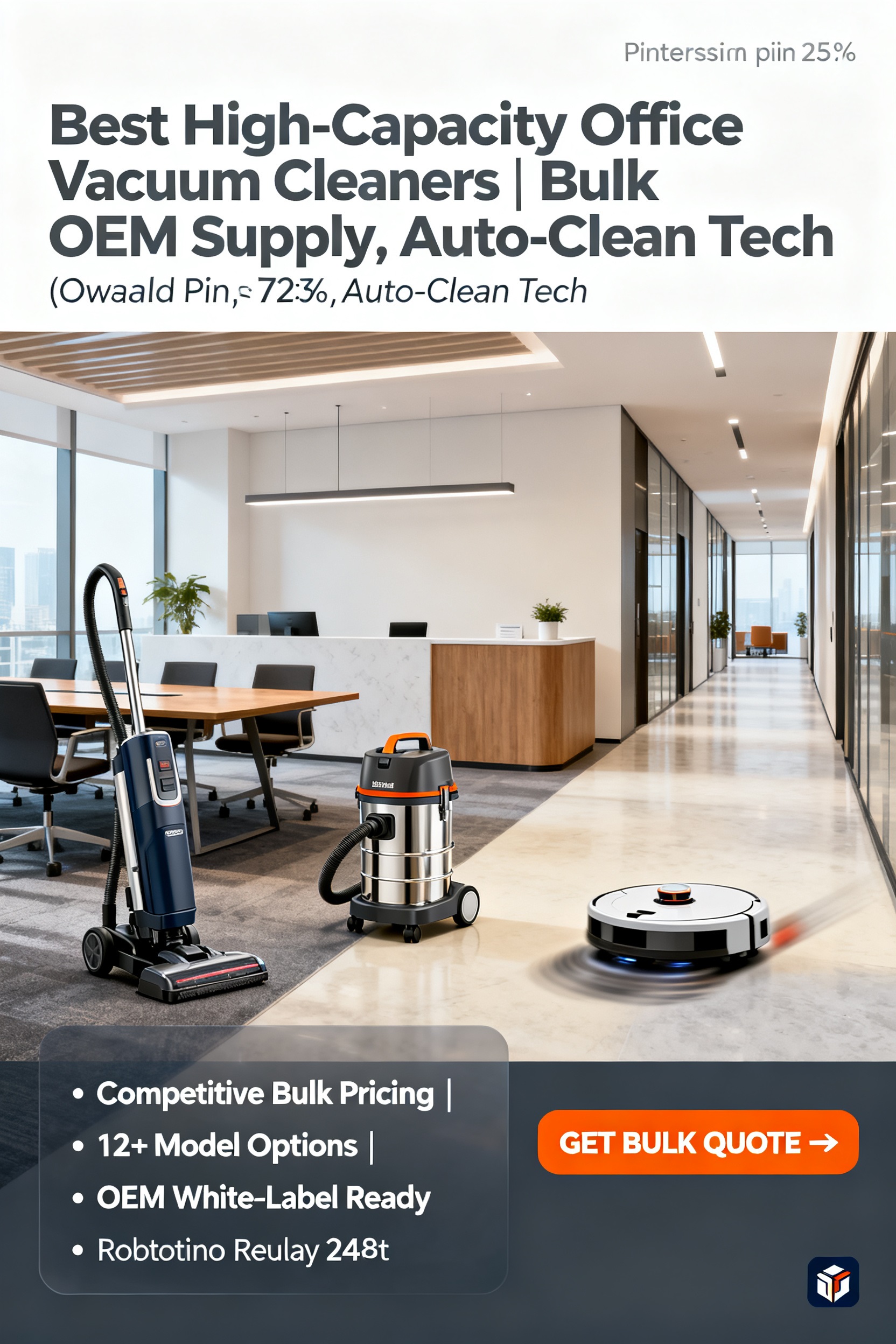
Capacity is the most misunderstood specification in commercial vacuum buying. Buyers either over-size — paying for weight, bulk and elevator congestion nobody needed — or under-size, sentencing cleaning crews to a dozen tank-emptying trips per shift. The right capacity is not a preference; it is arithmetic. It depends on floor area, floor type, dry versus wet duty, and where the machine can legally and practically be emptied. This guide runs that arithmetic for offices, so facility management cleaning equipment buyers and cleaning contractors can size their fleets correctly the first time.
1. Why Capacity Decides Productivity, Not Just Convenience 📊
Tank capacity controls two numbers that never appear on a quotation:
⏱️ Emptying frequency: Every tank dump costs 3–6 minutes — walking to the disposal point, emptying, rinsing, returning. A machine that needs emptying four times per shift burns 12–24 minutes of paid labor daily
⚖️ Pushed weight: A full tank adds real mass to every push across carpet. An over-sized large-capacity wet dry vacuum cleaner full of water weighs what a small person does — fine on a loading dock, brutal on a fifth-floor carpet route
Capacity optimization is therefore a trade: fewer dumps versus more pushed weight. Solving that trade correctly is what separates a productive commercial vacuum cleaner fleet from an expensive one.
2. The Core Rule: Match Capacity to Cleaning Route 📏
Professional cleaning plans are built around routes, not rooms. The capacity question is really a route question:
How many square meters can this machine cover between two legal, convenient emptying points?
For dry office dust on carpet, a well-filtered machine with a 20–30 L tank typically covers 800–1,200 m² before emptying. That is one full office floor in most buildings. Bigger tanks do not clean more per hour — they only delay the dump. This is why the standard professional office cleaning equipment trolley centers on a 20–40 L machine: it is sized to the route, not to ambition.
3. Capacity Tiers for Offices: What Each Size Is For 🪜
🥤 15–20 L — Small Offices and Specialist Duty
Single-floor offices under 500 m², serviced weekly
Pantry and washroom spot cleaning
Detail and edge work: skirting, under-desk passes, upholstery
Best paired as a second machine — a fast lightweight vacuum cleaner the crew carries upstairs while the main unit holds the trolley
☕ 20–30 L — The Office Standard 🏆
The workhorse tier: daily cleaning of 500–1,500 m² office floors
One tank per floor route; empty at the washroom or utility room on each level
Light enough (14–18 kg dry) for elevator-free small-building routes
This is where most commercial grade vacuum cleaner volume sits globally, and where a multi-functional durable vacuum cleaner chassis with accessory kits covers 90% of office duty
🏢 30–40 L — Large Floors and Wet Duty
Full-service daily cleaning of 1,500–3,000 m² floors or multi-floor zones
Entrance rain events, pantry floods, washroom washdown — wet duty consumes capacity far faster than dry dust (water is heavy and non-compressible)
A wet dry vacuum cleaner in this tier absorbs a lobby downpour without interrupting the route
Requires trolley transport and a plan-compatible emptying point
🏭 60–100 L — Dock, Plant and Event Duty
Loading docks, basements, parking levels, post-event lobbies
Construction dust during fit-outs; here a heavy duty vacuum cleaner or industrial vacuum cleaner profile with a stainless steel vacuum tank earns its footprint
Never goes upstairs; lives at dock level with the washdown team
A large-capacity wet dry vacuum cleaner here backs up the office fleet during floods and events without inflating the per-floor fleet
4. The Wet Capacity Trap: Dry Liters ≠ Wet Liters ⚠️
The single most common capacity mistake: assuming a 30 L dry machine handles 30 L of liquid.
🌊 Effective wet capacity is typically 50–70% of tank volume — the float valve shuts suction before the tank fills, to protect the motor
💧 Water at 1 kg per liter means a 30 L wet event can leave a 20+ kg swinging load on a trolley designed for dry dust
🧯 Overflow risk: a machine that repeatedly trips its float valve mid-task turns one job into three
For offices with real wet exposure — rainy entrances, dense pantry zones, washroom programs — specify the wet and dry vacuum cleaner by its wet rating, not its tank label, and prefer a dual motor vacuum cleaner so liquid pickup does not sacrifice dry airflow.
5. Capacity and Floor Type: The Hidden Multiplier 🧵
Floor type changes how fast a tank fills — and therefore which capacity is correct:
🧶 Carpet: holds and releases dust gradually; a 20–30 L tank covers a full floor route comfortably
🪨 Hard floors (stone, tile, vinyl): surface dust and grit collect fast in entrance zones — capacity pressure runs 1.5–2× carpet for the same area; entrance mats alone can half-fill a small tank in one pass
🚪 Entrance and lobby zones: the highest debris density in any building; schedule these first with the largest tank on the route
🏗️ Post-fit-out floors: plaster and carpet dust consume filter capacity faster than tank capacity — specify a HEPA filter vacuum cleaner and mid-size tank, and plan filter changes, not just dumps
This is why mature fleets mix capacities by zone instead of buying one size everywhere — a point experienced vacuum cleaner supplier partners help customers engineer at the quotation stage.
6. The Emptying Logistics Nobody Quotes 🔌
A tank is only as useful as its emptying points:
🚻 Washrooms and utility rooms — the natural dump points on office floors; check door widths and thresholds against your trolley
📋 Building rules: some premium towers prohibit dry-dust dumping in tenant washrooms, forcing routes back to service risers — which shortens effective route length and effectively demands larger capacity
🌊 Wet disposal: gray water from washroom cleaning must go to a foul drain, not a storm drain or janitorial sink in food-adjacent areas — a compliance point that decides where wet machines can actually work
🛗 Elevator dependency: buildings without service lifts push buyers toward lighter, smaller tanks even on large floors — pushed weight beats route math when every floor is stairs
Ask these questions during the site audit, before the capacity decision — not after the machines arrive.
7. Fleet Sizing: How Many Machines at What Capacity 🧮
For a typical multi-tenant office tower, a proven starting formula:
🏢 One 20–30 L wet/dry machine per cleaning crew route (roughly per 1,000–1,500 m² of daily-cleaned area)
🧹 One 15–20 L lightweight backup per 3–4 routes — covering detail work, sickness cover and equipment rotation
🏭 One 60–100 L dock-level machine per building — floods, events, washdown and fit-out response
🔄 Spares: filters and hoses at 2% of fleet count, held on site
Purchasing this mixed fleet as one standardized platform from a single vacuum cleaner manufacturer in China — same chassis family, different tank sizes — merges the volume tiers: better vacuum cleaner price wholesale terms, one spares inventory, one crew training program. For distributors, that same logic sells: capacity range, not capacity choice, is what office-channel customers actually need to buy.
8. Real Cases: Capacity Decisions in Practice 📁
Case 1 — 18-Floor Office Tower, Frankfurt 🇩🇪
A cleaning contractor initially specified 40 L machines for every floor route. Crew feedback after month one: full tanks made the machines unwieldy on carpet, and the extra capacity was never needed — a floor's dry dust fit in 22 L. The fleet re-balanced to 25 L machines per route plus one 80 L dock unit, cutting equipment spend 19% and improving crew pace measurably. The lesson their operations director recorded: size the tank to the route, not to the building.
Case 2 — Rainy-Entrance Retail Office Complex, Manchester 🇬🇧
A mixed-use complex with a glass atrium entrance suffered chronic entrance flooding in winter. Two 30 L machines tag-teaming the lobby spent more time being emptied than cleaning. The fix: one 60 L wet dry vacuum cleaner stationed at the atrium service room, wet-rated, with a squeegee tool. Flood response dropped from 40 minutes to 12, and the two smaller machines returned to their floor routes full-time.
Case 3 — Serviced Office Operator, Singapore 🇸🇬
A serviced-office operator standardized a mixed fleet from one platform family: 20 L quiet machines for tenant floor routes, a 30 L wet/dry unit per pantry cluster, and a single 100 L dock machine per property. As a low noise vacuum cleaner (64 dB) the 20 L units enabled daytime cleaning between tenant meetings — and because all three sizes shared filters and hoses, the operator's spares inventory stayed flat even as the portfolio grew from 6 to 14 properties.
Case 4 — Post-Fit-Out Cleanup, Sydney 🇦🇺
A fit-out handover across three office floors initially used standard 25 L office machines, which choked on plaster dust — filters saturated before tanks filled. The contractor brought in a heavy duty vacuum cleaner with a 70 L tank and pre-stage filtration for the demolition phase, then handed back to the office fleet for fine cleaning. Handover time per floor fell from four days to two, and the office fleet's filters survived the project instead of dying in week one.
9. The Bottom Line 🎯
The best vacuum cleaner capacity for office cleaning is not a single number — it is a matched set: 20–30 L wet/dry machines on floor routes sized to emptying logistics, a lightweight 15–20 L backup for detail and cover, and one large dock-level unit for floods, events and fit-outs. Buy the set as one standardized platform, size by route arithmetic rather than floor area alone, and check the wet rating — not the dry label — wherever water is part of the duty. Get capacity right and the fleet disappears into the workday; get it wrong and every shift pays the tax. That route-first sizing discipline is exactly how manufacturers like Lanxstar spec office-channel programs.
If you are interested, please feel free to contact us anytime — send your floor areas and cleaning routes, and our team will return a capacity-mapped fleet proposal within 48 hours at www.lxvacuum.com 🚀
50 Related Keywords
vacuum cleaner capacity, vacuum cleaner tank size, office cleaning, office cleaning equipment, commercial vacuum cleaner, commercial grade vacuum cleaner, wet dry vacuum cleaner, wet and dry vacuum cleaner, wet and dry suction system, large-capacity wet dry vacuum cleaner, industrial vacuum cleaner, facility management cleaning equipment, building cleaning equipment, office building cleaning, carpet cleaning machine, commercial cleaning equipment, commercial cleaning service equipment, low noise vacuum cleaner, portable quiet vacuum cleaner, fast lightweight vacuum cleaner, energy efficient vacuum cleaner, HEPA filter vacuum cleaner, high suction vacuum cleaner, high suction power vacuum cleaner, multi-functional durable vacuum cleaner, heavy duty vacuum cleaner, dual motor vacuum cleaner, stainless steel vacuum tank, warehouse cleaning solution, hotel cleaning equipment, hospital cleaning equipment, factory floor cleaning, vacuum cleaner supplier, vacuum cleaner supplier China, vacuum cleaner manufacturer, vacuum cleaner manufacturer in China, vacuum cleaner maker, vacuum manufacturer, industrial vacuum cleaner supplier, industrial vacuum cleaner factory, factory direct vacuum cleaner, wholesale vacuum cleaner, bulk vacuum cleaner purchase, vacuum cleaner price wholesale, buy industrial vacuum cleaner, best industrial vacuum cleaner, OEM vacuum cleaner, cleaning equipment supplier, industrial equipment supplier, Lanxst