Hi, message us with any questions.
We're happy to help!





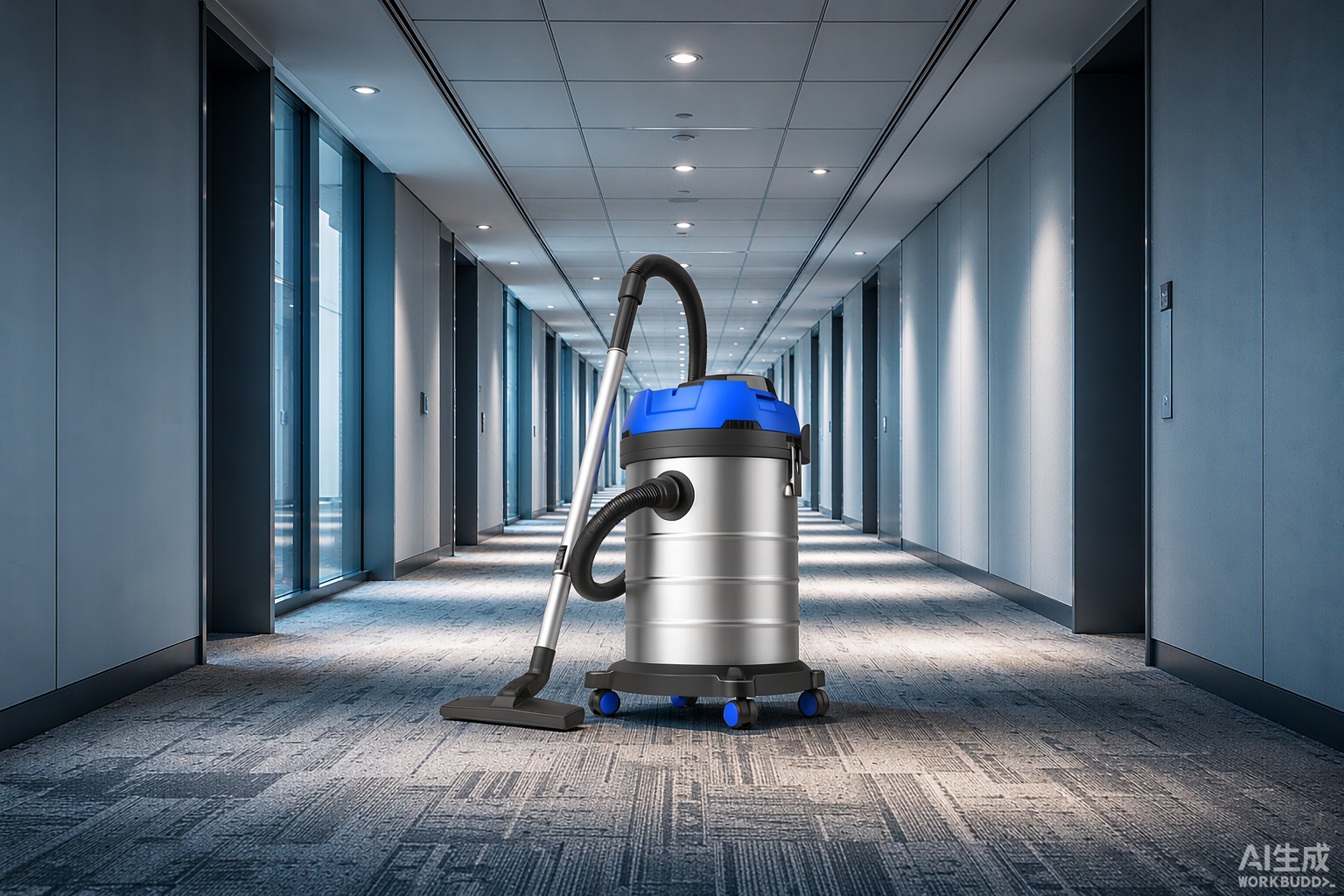
How Facility Management Companies Choose Commercial Vacuums
When a facility management company buys a vacuum, it is not buying a machine — it is buying a line item in a twenty-year services contract. The wrong fleet inflates labor costs, fails audits and loses tenders. The right fleet quietly earns margin across hundreds of sites. Yet most manufacturers sell to FM companies the way they sell to anyone: specifications and price lists. This guide shows the process from the other side of the table — how facility management cleaning equipment decisions are actually made, and what suppliers must understand to win them.
1. The FM Buying Reality: Five Stakeholders, One Decision 🏢
Commercial vacuum procurement in FM is never a single person's choice. Five roles shape it:
📋 The contract manager — worried about SLAs and penalty clauses; cleaning equipment failures become their escalations
💰 The procurement lead — owns the budget line and vendor shortlist; lives in spreadsheets of total cost
🧹 The operations supervisor — knows which machines actually survive a real shift; carries the loudest veto power in practice
🔧 The maintenance planner — thinks in spares, service intervals and downtime risk
🌱 The ESG or quality officer — increasingly writes noise, energy and sustainability requirements into tenders
A supplier who pitches only to procurement loses. A vacuum cleaner supplier who equips all five stakeholders with what they each need — spec sheets for procurement, durability data for operations, spares programs for maintenance, ESG documentation for compliance — wins the account. This is the first thing experienced commercial vacuum cleaner manufacturers learn about the FM channel.
2. Step One: The Site Audit Before the Spec 📝
Professional FM companies never write equipment specifications from brochures. They start with a site-by-site audit:
📐 Floor area and types — carpet ratio, hard floor ratio, entrance zones, washroom counts
🚶 Traffic patterns — when lobbies peak, when offices empty, which windows cleaning crews can actually use
🔊 Noise constraints — occupied-hours cleaning windows set decibel limits per site
💧 Wet event frequency — entrance rain exposure, pantry density, washroom counts
🏗️ Special zones — plant rooms, loading docks, parking levels, any laboratory or clinic tenancy requiring HEPA
The audit output is a duty profile per site: hours of use per day, wet/dry mix, noise ceiling, filtration class. Only then does the spec get written — because a machine specified without the duty profile is a guess wearing a purchase order.
3. Step Two: Total Cost of Ownership Over Unit Price 💰
FM companies do not ask "what does the vacuum cost?" They ask "what does cleaning cost per square meter, and how does this machine move that number?" The TCO model for a commercial grade vacuum cleaner typically runs:
💵 Acquisition cost (unit price amortized over expected service life)
⚡ Energy cost (kWh × daily hours × electricity rate × years)
🔧 Maintenance cost (filters, hoses, brushes, brushes, motor service, downtime labor)
👷 Labor productivity (a heavier or slower machine costs minutes per shift — the largest and most ignored line)
🚫 Failure risk (warranty terms, spare-parts lead time, replacement interruption)
That labor line deserves emphasis. A machine that adds four minutes per cleaning shift across a 40-site portfolio costs more in year one than the entire equipment budget. This is why FM evaluators weigh a fast lightweight vacuum cleaner and a portable quiet vacuum cleaner so heavily — those specs translate directly into labor hours, and labor is 70–80% of cleaning cost.
4. Step Three: The Tender Specification 📋
Once the duty profile and TCO model exist, the spec goes out. Typical FM tender language for vacuums includes:
✅ Working suction and airflow minimums, tested at working load
✅ Maximum noise at 1 meter — commonly 65 dB for occupied-hours sites; a low noise vacuum cleaner clause is now standard in office and healthcare portfolios
✅ Filtration class — HEPA where healthcare, education or sensitive tenancy applies
✅ Tank material — stainless steel vacuum tank for wet duty sites; food-grade tenancies may demand specific alloys
✅ Cord length, hose reach and weight maximums (crew ergonomics is a compliance topic, not a preference)
✅ Energy requirements — some tenders now require documented kWh consumption; an energy efficient vacuum cleaner spec supports portfolio ESG reporting
✅ Warranty period, spare-parts availability SLA and service documentation
✅ Certifications — CE, GS or market equivalents, with certificate numbers
Suppliers who cannot respond point-by-point to this structure are eliminated before price is even opened. A professional vacuum cleaner manufacturer in China experienced in FM channels answers tenders in the tender's own format — a capability signal in itself.
5. Step Four: Vendor Qualification and Audits 🔍
FM companies qualify the supplier, not just the machine:
🏭 Factory capability: Own production or trading company? Vertical integration (in-house tanks, motors, injection molding) predicts both price stability and quality consistency — a genuine industrial vacuum cleaner factory passes where intermediaries cannot
📜 Quality systems: ISO 9001 as baseline; test bench documentation for every shipped batch
🏥 Compliance history: Clean certification records across destination markets
📞 Service architecture: Where do spares ship from? What is the response SLA? Who trains the FM crews?
🤝 Reference accounts: Which FM or cleaning contractors already run the platform, and at what fleet size?
Distributors evaluating their own supply base should run the same screen on their industrial vacuum cleaner supplier partners — because in FM tenders, the supplier's credentials ride along with every bid you submit.
6. Step Five: Fleet Standardization — The Real Cost Lever 🔄
The strongest pattern across professional FM sourcing: standardize the fleet, then negotiate.
🔩 One platform, zone-matched configurations: A single multi-functional durable vacuum cleaner chassis configured with different tanks and accessory kits for lobby, office, washroom and dock duty
📦 One spares inventory: Standardized filters, hoses and gaskets across hundreds of sites cut parts logistics cost dramatically
🧑🔧 One training program: Crews transfer between sites without retraining; supervisors inspect one machine type they know deeply
💵 One negotiation: A 300–800 unit annual framework with a single vacuum cleaner manufacturer unlocks pricing tiers no fragmented purchasing can reach
This is also where private label enters: larger FM groups and cleaning contractors increasingly launch house-brand fleets via private label vacuum cleaner or ODM vacuum cleaner programs, converting equipment from a cost line into a brand asset visible in client walkthroughs.
7. Step Six: Sustainability Scoring Moves the Shortlist 🌱
In European and Gulf-state tenders especially, sustainability criteria now carry scoring weight:
⚡ Documented energy performance — an energy-saving efficient powerful vacuum cleaner spec with measured kWh data supports portfolio carbon reporting
🔧 Repairability — replaceable motors, published spare-parts lists and service manuals score points under EU ecodesign expectations
♻️ Materials — recycled-content plastics and steel provenance appear in questionnaires
🔇 Noise — framed as occupant wellbeing, not just courtesy
FM companies pursuing green-building certifications for client portfolios actively favor suppliers who deliver this documentation without being chased.
8. Real Cases: How the Decision Actually Went 📁
Case 1 — UK Integrated FM Provider, 400-Site Standardization 🇬🇧
A UK FM group running 400 varied sites replaced a fragmented fleet of 11 machine brands with one standardized wet/dry platform from a single vacuum cleaner manufacturer in China, configured three ways (lobby, office, dock). Spares inventory fell from 900 SKUs to 140; crew training time per new site dropped 60%; and the consolidated 650-unit annual framework priced 16% below the previous blended spend. The heavy duty vacuum cleaner variant absorbed the plant-room and dock duty that had been outsourced to a specialist contractor — pulling that service revenue in-house.
Case 2 — Singapore Hospital Support Services Tender 🇸🇬
A hospital support services company lost a tender in year one on noise: their proposed machines met suction specs but ran 71 dB against a 65 dB occupied-hours clause. In the following tender cycle, they returned with a low noise vacuum cleaner platform at 63 dB plus HEPA documentation and a nurse-shift-compatible cleaning schedule. They won the contract and held it three consecutive terms. The lesson their procurement lead recorded internally: read the cleaning windows in the SLA before choosing the machine.
Case 3 — Gulf FM Group's TCO Turnaround 🇦🇪
A Gulf FM group discovered through TCO modeling that their cheapest-acquisition fleet was their most expensive fleet: breakdown downtime and slow machines were adding 6 minutes per shift per operator across 90 sites. Switching to a lighter, faster commercial vacuum cleaner line at 9% higher unit price cut cleaning labor 11% — a saving that repaid the entire fleet premium in seven months and improved SLA compliance scores simultaneously.
Case 4 — European FM Company's Private Label Fleet 🇩🇪
A German FM company launched a house-brand cleaning fleet via an OEM vacuum cleaner program with a Chinese manufacturing partner: unified livery across client sites, branded color boxes for crew rooms, and a documented spares SLA. Client walkthrough feedback rated equipment professionalism measurably higher — and the equipment line's margin now contributes to bid pricing flexibility on competitive tenders. Their partner's willingness to co-develop the spec in the tender's own format was the deciding selection factor.
9. What Suppliers Should Take From This 🤝
If you sell into the FM channel, mirror their process:
📋 Answer tenders point-by-point in the tender's structure — with test data, not adjectives
💰 Provide a TCO worksheet pre-filled with your platform's energy, spares and service data
🏭 Open your factory: audits are an invitation to become the incumbent
🔇 Lead with the specs FM actually scores — noise, energy, ergonomics, filtration
📦 Offer fleet programs: standardization support, spares packages, crew training materials
🌱 Hand over sustainability documentation before it is requested
Manufacturers like Lanxstar build these six behaviors into their FM channel programs — which is precisely why FM procurement teams keep renewing with factory-direct partners rather than rebidding every cycle.
10. The Bottom Line 🎯
Facility management companies choose commercial vacuums through a disciplined chain: site audit → duty profile → TCO model → tender specification → vendor qualification → fleet standardization → sustainability scoring → contract. Every step filters suppliers who sell machines from partners who solve cleaning economics. If you are an FM buyer, run this chain deliberately. If you are a supplier, learn to speak it fluently. Either way, the decision is too large to be made by price alone — and too systematic to be won by luck.
If you are interested, please feel free to contact us anytime — our FM channel team will map your portfolio's duty profiles and return a standardization proposal. Begin at www.lxvacuum.com 🚀
50 Related Keywords (
facility management cleaning equipment, facility management vacuum cleaner, commercial vacuum cleaner, commercial grade vacuum cleaner, commercial cleaning equipment, industrial vacuum cleaner, commercial cleaning service equipment, wet dry vacuum cleaner, wet and dry vacuum cleaner, large-capacity wet dry vacuum cleaner, low noise vacuum cleaner, portable quiet vacuum cleaner, fast lightweight vacuum cleaner, energy efficient vacuum cleaner, energy-saving efficient powerful vacuum cleaner, HEPA filter vacuum cleaner, high suction vacuum cleaner, high suction power vacuum cleaner, heavy duty vacuum cleaner, dual motor vacuum cleaner, multi-functional durable vacuum cleaner, stainless steel vacuum tank, hotel cleaning equipment, hospital cleaning equipment, warehouse cleaning solution, factory floor cleaning, office cleaning equipment, vacuum cleaner supplier, vacuum cleaner supplier China, vacuum cleaner manufacturer, vacuum cleaner manufacturer in China, vacuum cleaner maker, vacuum manufacturer, industrial vacuum cleaner supplier, industrial vacuum cleaner factory, factory direct vacuum cleaner, wholesale vacuum cleaner, bulk vacuum cleaner purchase, vacuum cleaner price wholesale, industrial vacuum cleaner cost, buy industrial vacuum cleaner, best industrial vacuum cleaner, OEM vacuum cleaner, ODM vacuum cleaner, private label vacuum cleaner, import vacuum cleaner from China, cleaning equipment supplier, industrial equipment supplier, vacuum cleaner distributor Europe, Lanxstar



