Hi, message us with any questions.
We're happy to help!





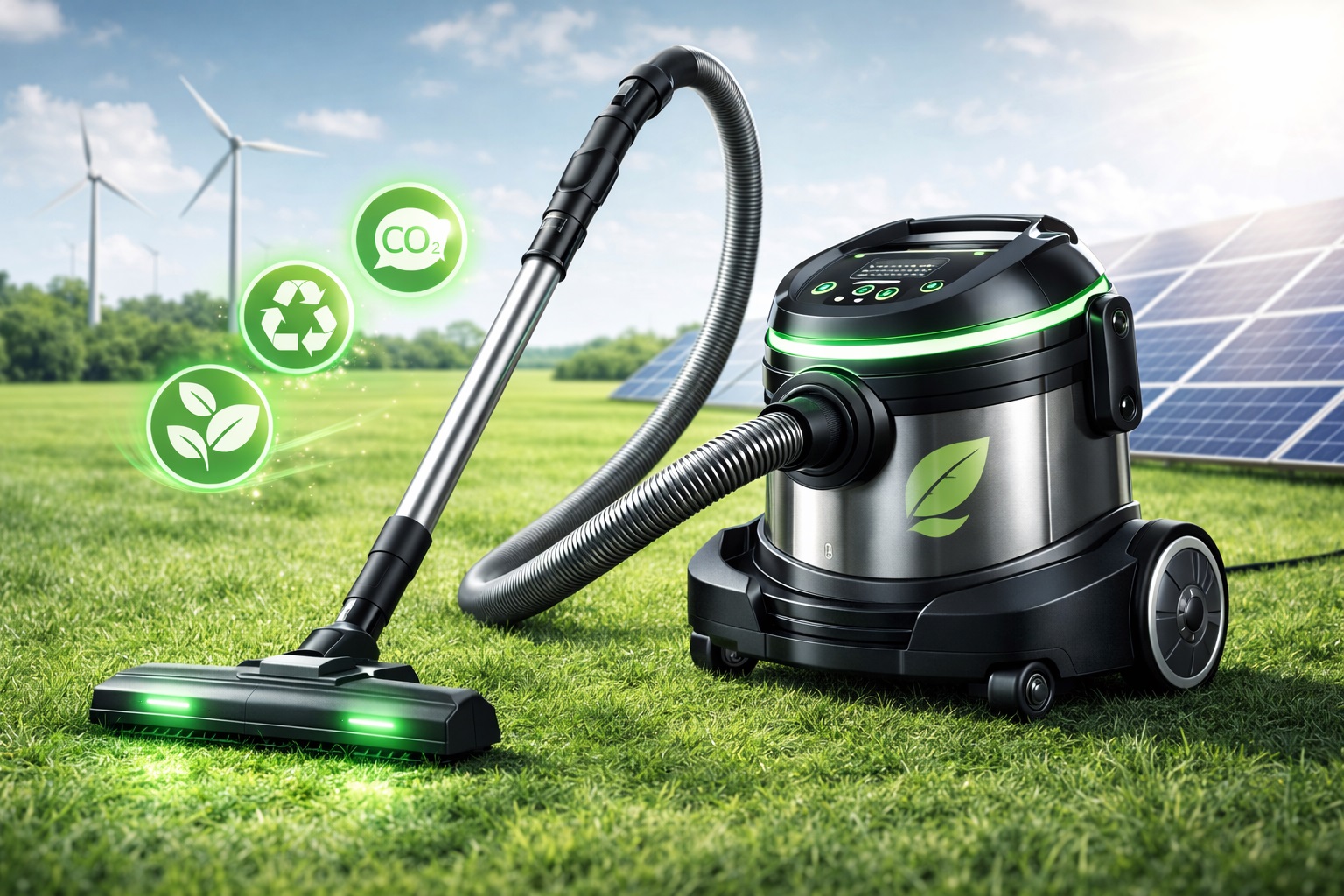 ⚙️ Introduction: Environmental Standards Driving Cleaner Technology
With climate targets tightening in Europe, North America, and the Middle East, regulatory pressure on appliance energy consumption, emissions, and recyclability is accelerating. Vacuum cleaners — especially household vacuum cleaners and commercial barrel vacuum cleaners — must now balance performance with sustainability. This article explores how manufacturers are adapting, covering energy efficiency, material innovation, emissions reductions, cleaner air technologies, and lifecycle improvements that meet increasingly strict environmental benchmarks.
⚡ Reducing Energy Use: Toward Energy‑Saving Efficient Powerful Vacuum Cleaners
Energy efficiency standards such as the EU Ecodesign regulation and U.S. ENERGY STAR® guidelines now require vacuum cleaners to deliver powerful suction with lower consumption. Barrel vacuum designs are evolving with:
High‑efficiency brushless motors: These use less power while maintaining strong airflow.
Advanced airflow management: Reduces turbulence and maximizes suction efficiency.
Smart power modes: Automatically adjust power for carpets, hard floors, and light debris.
Market Insight:
Analysts at IEA and EPA report that appliances achieving 15–25% energy savings over legacy models are critical for national energy reduction goals — and vacuum cleaners are no exception.
Case Example:
A European cleaning OEM redesigned its barrel vacuum model to meet new ERP 2025 standards. By optimizing motor control and ducting, the unit uses 20% less power while improving dust pick‑up — a key selling point for regulatory compliance and energy‑aware consumers.
🤖 Advanced Filtration: Meeting Air Quality and Emissions Targets
Environmental standards increasingly include indoor air quality considerations, pushing HEPA filtration beyond optional to essential, particularly in urban apartment buildings, hospitals, and schools.
HEPA and Beyond
True HEPA H13/14 Filters: Capture ≥99.97% of particles ≥0.3 microns.
Multi‑stage Filtration: Combines pre‑filters, HEPA, and odor control layers.
Washable/Reusable Elements: Reducing waste over time.
Why It Matters:
Airborne particulates are linked with respiratory health concerns. Stricter building codes in many regions now recommend or require certified filters in HEPA filter vacuum cleaners used in sensitive settings.
Real‑World Impact:
A healthcare system in the U.K. mandated HEPA‑equipped vacuum cleaners across wards in 2024. Follow‑up air monitoring showed measurable reductions in particulate load, contributing to improved patient outcomes and compliance with indoor air quality directives.
🐾 Addressing Specific Use Cases: Vacuum Cleaners for Pet Hair and Allergen Control
Pet owners represent a significant consumer segment demanding cleaner air and deeper cleaning without harsh chemicals. Environmental expectations here translate into optimized vacuum designs that:
Tackle embedded pet hair without excessive energy draw.
Minimize emissions of fine dust back into living spaces.
Use washable tools to reduce disposable plastic waste.
Innovation Spotlight:
Manufacturers now include specialized pet‑hair turbine heads and filter seals that prevent escape of allergens — a design priority in regions with strict indoor air quality codes.
💧 Versatility with Responsibility: Wet Dry Vacuum Cleaners and Resource Use
Multi‑purpose vacuums like wet dry vacuum cleaners reduce the need for multiple machines, lowering material use and environmental impact across their lifecycle. Key innovations include:
Separated liquid/dry chambers: Prevents cross‑contamination.
Re‑usable collection bins: Minimizes disposable bags and cartridges.
Self‑cleaning nozzles: Reduce water waste.
Economic & Environmental Advantage:
Organizations with large facilities (hotels, hospitals, industrial sites) benefit from reduced inventory and lower waste streams — a competitive edge where environmental reporting matters to stakeholders and regulators.
🧠 Lifecycle Sustainability: Materials, Manufacturing, and End‑of‑Life
Meeting strict environmental standards isn’t only about operation — it’s about the entire product lifecycle.
Material Choices
Recycled plastics and closed‑loop polymers reduce reliance on virgin resources.
Modular parts encourage repair rather than replacement, extending product life.
Manufacturing
Lower carbon manufacturing processes.
Renewable energy adoption in factories.
Reduced VOC emissions in paints, coatings, and components.
End‑of‑Life
Design for disassembly promotes recycling.
Manufacturer take‑back or buy‑back programs reduce landfill waste.
Clear labeling simplifies consumer recycling decisions.
Case Study:
A leading Asian OEM implemented modular design in late 2023, cutting landfill waste by 30% and reducing manufacturing CO₂ per unit by 18%. Sustainability reporting from the company’s European operations won recognition under regional eco‑product guidelines.
🚫 Emissions & Noise: Harmonizing Regulation and User Experience
Environmental standards address more than just energy and materials — they increasingly target emissions, including acoustic emissions:
Quiet Technology
Noise‑reduced housings.
Dynamic motor RPM control.
Night‑mode operation for low‑noise cleaning.
Quiet performance is not just a comfort feature — it’s often part of municipal noise ordinances and sustainability scores in mixed‑use buildings.
Data Insight:
Studies show that units incorporating noise‑reduction technology reduce sound emissions by up to 40%, aligning with certification requirements in noise‑sensitive environments.
📊 Compliance & Certification: Navigating Regulatory Landscapes
Manufacturers aiming for global markets must manage a patchwork of standards:
| Region | Key Standard or Directive |
|---|---|
| EU | Ecodesign, CE/CE‑EMC |
| US | ENERGY STAR®, UL/ETL |
| GCC | SASO/ESMA energy labelling |
| International | ISO 14001 environmental management |
Certification not only ensures compliance but enhances buyer confidence in household vacuum cleaners and commercial equipment on procurement lists.
🧠 Conclusion: Sustainability as Competitive Advantage
Environmental standards are not static — they are moving targets that reflect societal expectations, regulatory timelines, and scientific understanding of climate and health impacts. Barrel vacuum cleaners of 2025 and beyond are responding with:
✔ Stronger energy‑saving efficient powerful vacuum cleaner designs
✔ Certified HEPA and advanced filtration technologies
✔ Purpose‑built vacuum cleaners for pet hair and allergen control
✔ Versatile, resource‑efficient wet dry vacuum cleaners
✔ Lifecycle sustainability in materials and recyclability
✔ Lower emissions and quieter operation
For manufacturers, distributors, R&D engineers, and procurement leaders, integrating environmental compliance into product roadmaps is not merely regulatory — it’s strategic, socially aligned, and commercially differentiating.
Hashtags
Lanxstar, UprightVacuumCleaners, HouseholdVacuumCleaners, EnergySavingEfficientPowerfulVacuumCleaner, WetDryVacuumCleaners, VacuumCleanerForPetHair, HEPAFilterVacuumCleaner, SustainableCleaningTechnology, EcoFriendlyVacuumDesign, NoiseReductionVacuum, AdvancedFiltrationSystems, SmartPowerVacuum, RecyclableVacuumMaterials, ModularVacuumDesign, EnergyEfficientAppliances, CleanAirSolutions, LifecycleSustainability, CarbonReductionVacuum, PetAllergenControl, UrbanLivingCleaning, CommercialCleaningInnovation, RegulatoryComplianceVacuum, GreenProductCertification, QuietNightCleaning, WaterEfficientCleaning, IndustrialFacilityVacuum, SmartMaintenanceAnalytics, EnvironmentalManagementISO, SmartAirQualityControl, HEPAH13Vacuum, WashableFilterSystems, DurableCleaningEquipment, MultiModeCleaning, RenewableMaterialsVacuum, VOCFreeComponents, SustainabilityReporting, EnergyLabelCompliant, BuildingCodeCompliance, HVACCompatibleVacuum, ZeroWasteAccessory, LongLifeComponents, LowEmissionCleaning.



