Hi, message us with any questions.
We're happy to help!





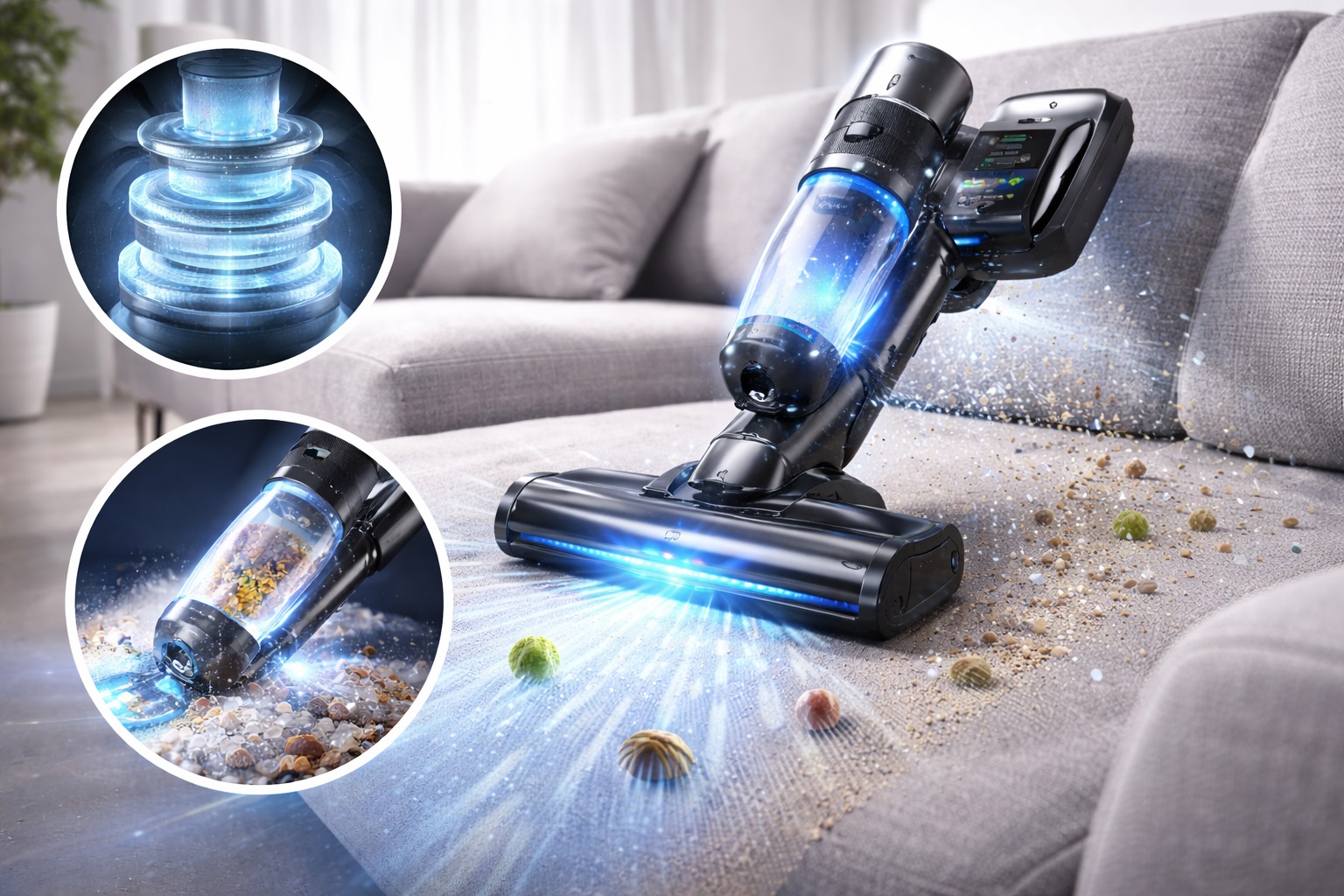
Filtration is one of the most powerful—and most misunderstood—differentiators in home vacuum cleaners. Consumers want cleaner air, less dust, and fewer allergy triggers. But the market is full of vague claims: “HEPA inside,” “anti-mite,” “anti-allergy,” and “deep clean.” If those claims aren’t supported by sealed design and credible testing, they create returns, negative reviews, and compliance risk.
Real differentiation comes from building a system: airflow path + sealing + filter media + maintenance workflow + documentation. When done correctly, it supports premium positioning for a HEPA Filter Vacuum Cleaner and credible messaging for a Vacuum Cleaner for Allergies—while remaining practical for procurement and distribution.
Below is a technical playbook for creating a filtration-based edge, including responsible ways to approach “anti-mite” functions without overclaiming.
I. Start by defining what consumers mean by “clean air” 🎯
Most consumers aren’t asking for a filtration lecture. They want three outcomes:
Less dust released during cleaning
Less odor and less “dusty feeling” after vacuuming
More confidence for sensitive households (allergy concerns)
This aligns naturally with the HEPA Filter Vacuum Cleaner narrative, but your product must be designed so HEPA performance isn’t undermined by leakage, poor fit, or confusing maintenance.
II. HEPA differentiation is mostly about sealing (not just the filter) ✅
A vacuum can contain a HEPA filter and still leak dust around it. That’s why “HEPA inside” is not the same as “HEPA performance.”
What “sealed system” differentiation includes
gasket design and compression control
tight tolerances at filter interfaces
dustbin seals that remain effective over time
structural rigidity that prevents gaps from opening after drops or fatigue
This is critical for:
Vacuum Cleaner for Allergies positioning
distribution programs where return risk is costly
quiet and high-suction builds where airflow pressures can expose weak seals
Practical outcome: sealing lets you maintain cleaning performance while controlling dust release—especially during emptying and filter changes.
III. Filter media choices: efficiency vs pressure drop tradeoffs 🌬️
Higher filtration efficiency often increases pressure drop, which can reduce cleaning power or increase noise if the motor compensates by running faster.
To balance performance and filtration:
select media that delivers filtration with manageable airflow resistance
design a large enough filter area to reduce pressure drop
avoid sharp airflow contractions near the filter housing
This is where filtration ties directly to other differentiation themes:
High Suction Vacuum Cleaner: filtration must not choke the system
Portable Quiet Vacuum Cleaner and quiet vacuum cleaner: higher motor speeds can increase whine
Energy-Saving Efficient Powerful Vacuum Cleaner: lower pressure drop improves efficiency
For cordless products, pressure drop is even more critical because it directly impacts runtime and heat.
IV. Anti-mite differentiation: define it responsibly ✅🧼
“Mite control” is a sensitive claim. Rather than promising medical outcomes, differentiate through dust management behaviors that matter in real homes.
Safer, practical “anti-mite” design approaches
Sealed HEPA filtration to reduce fine particulate escape
tools designed for mattresses and upholstery (strong agitation + stable suction)
maintenance features that prevent dust re-release
For a consumer-friendly story, position the product as supporting a cleaner home environment—while focusing on verifiable design elements and test methods.
Where this matters most: families, pet owners, and regions where allergy-aware marketing drives purchase decisions.
V. Maintenance UX: the hidden key to filtration performance 🔁
A HEPA system only works if users maintain it. Human-friendly maintenance is therefore a filtration differentiator.
Design for “clean, quick, obvious” maintenance
tool-free access to the filter
clear labeling: wash vs replace
replacement filters that are easy to source (distribution advantage)
dustbin emptying that minimizes dust clouds
This supports not only filtration credibility but also improves review sentiment. A vacuum that keeps the house clean but makes a mess at the trash can feels like failure.
VI. Filtration + pet hair: protect performance under real load 🐾
Pet homes generate hair, dander, and fine dust. Filtration systems can load quickly, causing suction drop and more noise.
To differentiate for Vacuum Cleaner for Pet Hair while maintaining filtration:
reduce upstream clog points (hair clumps)
ensure pre-separation to protect the HEPA stage
maintain stable airflow as the bin fills
This is also important for multi-surface models and homes with rugs, where fine dust loads filters faster.
VII. Filtration with wet/dry: avoid odor and contamination traps 💦
Wet/dry products face a unique challenge: moisture can turn trapped dust into odor sources. For Wet Dry Vacuum Cleaners, filtration differentiation must include hygiene design.
Key differentiators:
components that rinse clean quickly
materials and surfaces that resist residue buildup
drainage and drying paths that reduce standing moisture
a practical Self-Cleaning Vacuum Cleaner workflow when applicable
If you sell a 4 in 1 Cordless Smart Wet & Dry Vacuum Cleaner, smart prompts can guide users to rinse and dry correctly—improving long-term satisfaction.
VIII. Test protocols that prove filtration differentiation to buyers 🧪📊
For vacuums procurement and vacuum cleaner distribution, filtration differentiation should be backed by documentation.
Core test categories
Leakage / bypass evaluation (how much dust escapes around the filter system)
Pressure drop and airflow impact across filter loading stages
Dust containment during emptying (practical user scenario testing)
Performance stability: pickup tests before/after filter loading
Noise effects: dB(A) and tone changes as filters load
For consumer-facing claims, keep language tied to tested outcomes: “sealed filtration design,” “improved dust containment,” “supports allergy-sensitive cleaning routines,” rather than medical promises.
IX. How filtration differentiation supports multiple product types 🧩
A filtration edge can be applied across your lineup:
A main Cordless Vacuum Cleaner with sealed HEPA differentiation
cordless handheld vacuums for spot jobs and upholstery
A Car Vacuum Cleaner kit that emphasizes dust containment in tight spaces 🚗
A Portable Vacuum for Travel that keeps small spaces cleaner with less re-release 🧳
A wet/dry flagship designed for hygiene lifecycle stability
Filtration becomes a platform advantage, not a single SKU feature.
X. Consumables strategy: filtration differentiation that also increases channel strength 📦
From a distribution perspective, filtration is also a business model:
predictable filter replacement cycles
standardized SKUs for filters across multiple models
clear instructions that prevent misuse and warranty complaints
This strengthens vacuum cleaner distribution partnerships and helps procurement teams estimate total cost of ownership more accurately.
Conclusion: Advanced filtration is a system—build it to be sealed, efficient, and maintainable 🌟
To build a technical edge with advanced filtration and anti-mite functions, focus on sealed design, pressure-drop management, maintenance-friendly workflows, and procurement-ready test documentation. When filtration is engineered as a complete system—not a label—it supports credible positioning for a HEPA Filter Vacuum Cleaner and Vacuum Cleaner for Allergies, improves reviews, and reduces return risk across global markets. ✅
www.lxvacuum.com
Ideal Readers
Product R&D engineers and compliance-minded product managers
Global vacuum buyers / vacuums procurement teams
Distributors & brand owners / vacuum cleaner distribution professionals
Related Keyword Groups
Lanxstar HEPA vacuum system, Lanxstar filtration engineering, vacuums procurement, vacuum cleaner distribution, HEPA Filter Vacuum Cleaner sealed design, Vacuum Cleaner for Allergies positioning, advanced filtration vacuum design, sealed system leakage control, filter gasket compression design, bypass leakage prevention vacuum, pressure drop optimization for filters, airflow path near filter housing, quiet vacuum cleaner with HEPA, Portable Quiet Vacuum Cleaner sealed filtration, High Suction Vacuum Cleaner filtration tradeoff, Energy-Saving Efficient Powerful Vacuum Cleaner airflow efficiency, filter loading performance stability, dust containment during emptying, anti-mite vacuum function design, mattress upholstery vacuum tool kit, Vacuum Cleaner for Pet Hair dander management, pet hair pre-separation cyclone, multi-stage filtration architecture, washable pre-filter design, replacement HEPA filter supply plan, tool-free filter access design, filter replacement cadence strategy, Cordless Vacuum Cleaner sealed HEPA, Li-ion Cordless Handheld Vacuum Cleaner filtration, cordless handheld vacuums allergy care, Car Vacuum Cleaner dust containment, Portable Vacuum for Travel clean emptying, Vacuum for Multi-Surface filtration stability, Vacuum Cleaner for Hardwood Floors fine dust control, Wet Dry Vacuum Cleaners hygiene filtration, wet dry vacuum odor prevention, Wet and Dry Vacuum Cleaner contamination traps, Self-Cleaning Vacuum Cleaner rinse workflow, 4 in 1 Cordless Smart Wet & Dry Vacuum Cleaner hygiene prompts, Large-Capacity Wet Dry Vacuum Cleaner cleaning routine, filtration test protocol documentation, dB(A) change with filter loading, pickup test before after filter load, distributor consumables revenue model, warranty reduction via filtration maintenance, sealed dustbin latch design, compliance friendly allergy messaging



