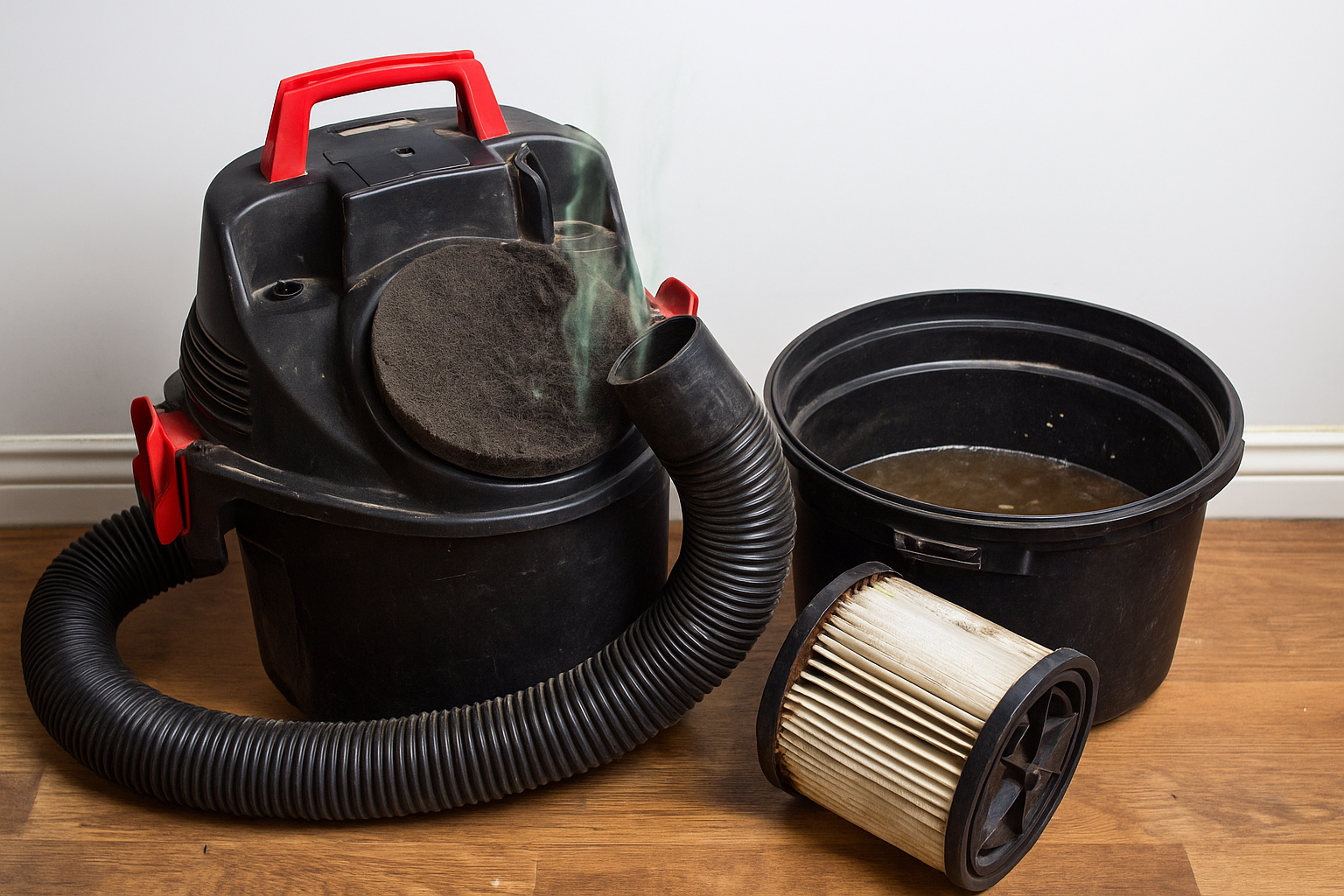
 “The nose never lies — when your vacuum smells bad, something inside has gone wrong.”
Wet-and-dry vacuums promise convenience, but improper design or maintenance quickly turns them into odor machines.
After only a few cleaning cycles, users complain about a sour, moldy scent every time the unit starts.
The cause is almost always the same: moisture trapped in dark, warm spaces where microbes thrive.
Understanding how this happens — and how engineers prevent it — helps buyers and maintenance teams keep vacuums hygienic for years.
🧫 1. Where the Odor Comes From
A wet vacuum collects water, dust, and organic debris.
Inside the tank, this mix becomes a nutrient soup for bacteria, mildew, and mold.
When airflow passes through, the odor is blown out with the exhaust.
Main culprits include:
Stagnant water: After cleaning, residual moisture remains in hoses or filters.
Organic buildup: Pet hair, food crumbs, and detergent residues feed microbes.
Poor airflow design: Narrow ducts trap humid air and delay drying.
Neglected filters: Wet HEPA or foam filters stay damp for days, accelerating growth.
The smell isn’t just unpleasant — it indicates microbial contamination that can trigger allergies and shorten component life.
⚙️ 2. Engineering Factors Behind Odor Formation
Odor issues start at the design stage.
Some low-cost wet-dry vacuums lack proper air-water separation or drainage geometry.
Key engineering weaknesses include:
🌀 a. Insufficient Drainage Angle
If the tank base is flat, water pools instead of draining fully.
Designs with a 5–10° slope toward the outlet prevent stagnation.
🌬️ b. Inefficient Airflow Path
When exhaust vents sit too close to the liquid surface, moisture is drawn into the motor housing, dampening insulation foam and creating odor.
🧱 c. Absorbent Materials
Sound-damping foams and soft rubber gaskets can retain moisture.
High-grade closed-cell foams resist water absorption far better.
🔋 d. Overlooked Temperature Effects
Warm air from the motor accelerates bacterial growth in residual water.
Smart temperature control or short post-dry cycles (a few minutes of airflow after shutdown) can mitigate this.
🧽 3. Common Maintenance Mistakes
Even the best design fails if users neglect simple hygiene steps.
Most odor complaints trace back to one of these five habits:
Leaving the tank closed after wet use – trapped humidity turns the bin into a greenhouse for mold.
Skipping filter cleaning – moisture binds dust, creating a sticky layer that decays.
Storing the vacuum in a hot garage – heat accelerates bacterial growth.
Using scented detergents – fragrances only mask odor while encouraging residue buildup.
Reusing dirty water tanks – cross-contamination keeps seeding new colonies.
Good maintenance is less about chemicals and more about dry air and airflow.
🌬️ 4. Effective Drying Techniques
🔧 a. Rinse Immediately
After each wet job, empty and rinse the tank with clean water.
Avoid harsh detergents that may damage seals; a mild neutral cleaner works best.
☀️ b. Air-Dry Thoroughly
Detach all parts—tank, hose, filters—and let them dry under shade.
Direct sunlight can warp plastics; a ventilated balcony is ideal.
💨 c. Use Post-Run Airflow
Run the vacuum for 2–3 minutes without water collection.
The internal airflow removes remaining moisture from hoses and ducts.
🪣 d. Open Storage
Leave the lid ajar to allow continuous ventilation.
Closed lids trap humidity even after apparent drying.
🧼 5. Filter Care and Replacement
Filters act as both protectors and odor sources.
Two types dominate wet-dry systems: foam pre-filters and HEPA cartridges.
Foam filters should be squeezed—not twisted—to remove water.
Replace when texture hardens or color darkens.
HEPA filters must never stay damp; they lose efficiency and harbor bacteria.
Dry with indirect air, never a hairdryer, which melts bonding adhesives.
For heavy commercial use, rotate two filter sets so one can dry completely between sessions.
🧰 6. Storage and Long-Term Hygiene
Proper storage prevents latent odor even during off-season months.
Keep hoses coiled loosely to prevent trapped water pockets.
Store the unit upright to maintain drainage alignment.
Every few weeks, wipe interiors with diluted vinegar or alcohol wipes—natural antimicrobials that leave no residue.
Never seal in a plastic bag; allow breathability.
If odor reappears, inspect seals and gaskets; mildew often hides beneath them.
🔬 7. Design Innovations Preventing Odor
Modern vacuums integrate new engineering solutions:
Hydrophobic coatings on tanks and hoses prevent moisture adhesion.
Self-cleaning cycles use residual motor heat to dry internals automatically.
Removable water channels simplify manual cleaning.
Antimicrobial plastics infused with silver ions reduce bacterial colonization by up to 99 %.
Smart sensors detect humidity and alert users to empty tanks before storage.
Such advances turn odor control from a maintenance issue into a design feature.
✨ 8. Key Takeaways
Odors come from microbial growth in leftover moisture.
Poor drainage, damp filters, and sealed storage accelerate the problem.
Proper airflow, thorough drying, and periodic cleaning prevent smells.
Engineers combat odor with better materials, slopes, and self-drying functions.
Clean design equals clean air — for both homes and workshops.
“A fresh-smelling vacuum isn’t luck; it’s science and routine care.”
📊 SEO TAG
wet and dry vacuum cleaner, vacuum odor, vacuum smell prevention, vacuum maintenance, vacuum filter cleaning, wet vacuum hygiene, odor-free vacuum, antimicrobial vacuum, vacuum storage tips, vacuum drying techniques, vacuum cleaner cleaning, HEPA filter care, foam filter maintenance, wet vacuum tank cleaning, vacuum odor removal, vacuum drying airflow, mold prevention vacuum, mildew smell vacuum, vacuum disinfection, vacuum hygiene design, wet vacuum filter, vacuum cleaning tips, vacuum smell after use, cleaning equipment maintenance, household vacuum hygiene, industrial wet dry vacuum, vacuum tank design, anti-bacterial vacuum, vacuum filter drying, vacuum smell guide, odorless vacuum cleaner, quiet wet vacuum, efficient drying vacuum, vacuum maintenance routine, eco cleaning vacuum, smart vacuum sensors, vacuum odor causes, hygiene vacuum system, anti-mold vacuum, sustainable vacuum cleaner, wet cleaning equipment, home cleaning appliance, cleaning machine maintenance, vacuum accessories hygiene, filter care vacuum, air flow vacuum cleaner, vacuum design innovation, cleaning industry tips, wet dry machine odor, hygienic vacuum storage, odor resistant vacuum hose.