Hi, message us with any questions.
We're happy to help!





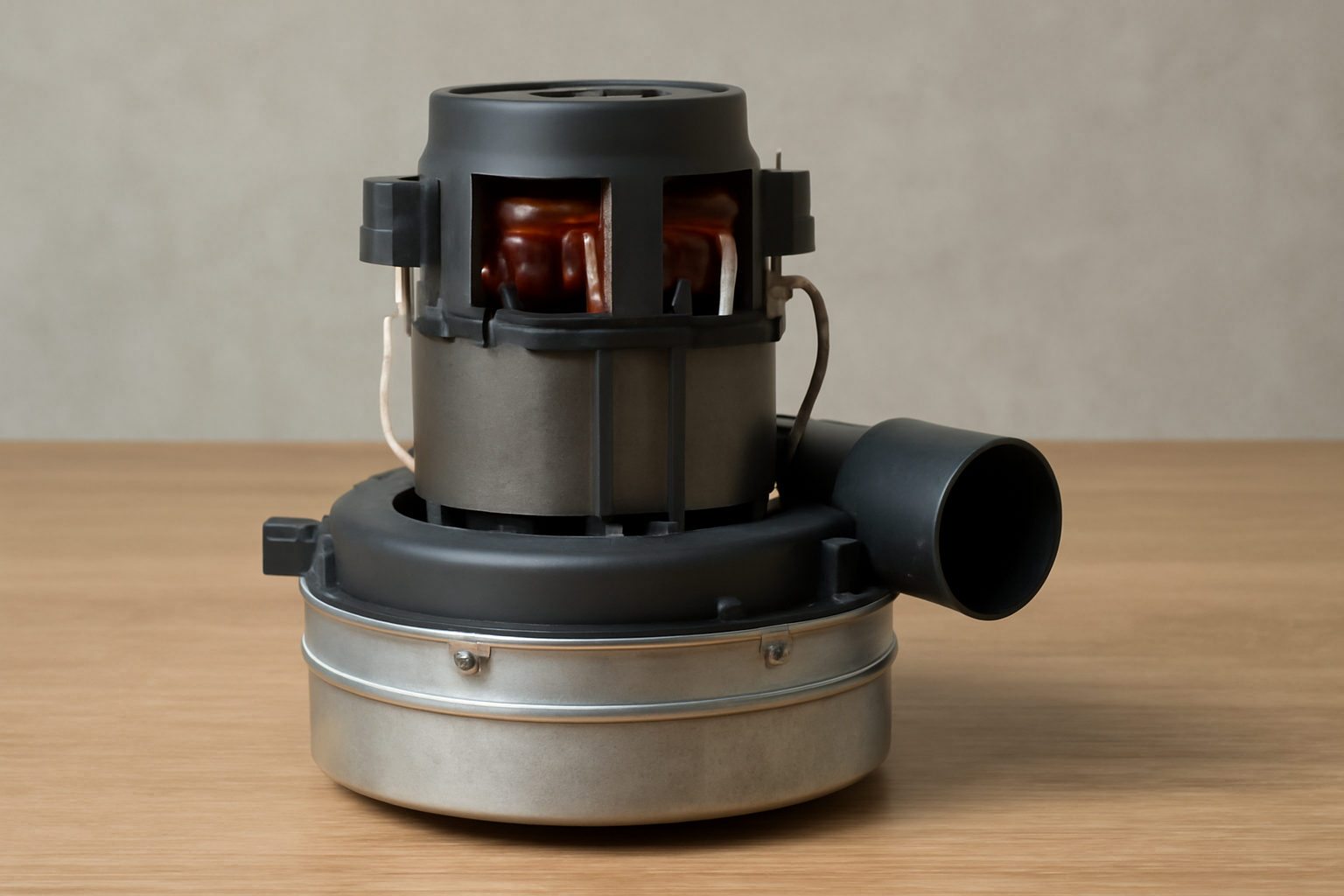
The global vacuum industry is heading toward a silent but deadly crisis — one that manufacturers feel, engineers fear, and distributors have not yet realized is already affecting their products.
The crisis is simple:
→ Motors are becoming more powerful
→ but less tolerant
→ in a market demanding higher suction, longer runtime, and lower noise
→ with zero tolerance for failures.
You can tune the brushroll.
You can optimize the duct.
You can redesign the cyclone.
But if the motor loses stability, everything collapses.
This article breaks down the real causes behind the 2025 global vacuum motor crisis — especially for brands selling Upright Vacuum Cleaners and Household Vacuum Cleaners in EU, US, and Middle Eastern markets.
These insights come from teardown audits, burn-in tests, failure-mode investigations, and data from more than 30+ OEM factories worldwide.
⚡🔥 1. The Suction Race Has Created a “Motor Overload Epidemic”
Marketing wants:
30,000 Pa
36,000 Pa
40,000 Pa
“even stronger!”
Consumers want:
more suction
more power
deeper cleaning
faster results
But engineering reality says:
“Every +5% suction increase = +20% stress on motor + battery + airflow stability.”
This includes:
heat load
bearing load
rotor speed
electronic switching frequency
pressure resistance
Even an Energy-Saving Efficient Powerful Vacuum Cleaner suffers when suction claims exceed realistic operating thresholds.
Factories pushing “higher Pa values” without redesigning airflow or cooling systems are sending products to war without armor.
🔥🌡️ 2. Heat Is Killing Motors Faster Than Ever — And Most Factories Still Don’t See It Coming
Heat is the No.1 motor killer in 2025.
You can blame:
suction loss
short lifespan
burnt smell
turbo mode drop
noise increase
…but 90% of these issues trace back to:
uncontrolled temperature rise
Even a Wet Dry Vacuum Cleaners model designed for heavy-duty cleaning will die prematurely if:
air channels are too narrow
HEPA is too restrictive
dust bin flow is chaotic
cyclone efficiency is poor
brushroll torque is unstable
Heat causes:
plastic deformation
seal relaxation
bearing lubrication loss
magnet degradation
rotor imbalance
PCB stress
Distributors think:
“Why is failure rate rising?”
Engineers think:
“Because no one is listening about heat management.”
⚙️🧲 3. Motor Bearings Have Become the Weakest Link in the Entire Vacuum Ecosystem
Forget suction specs for a moment.
Forget fancy digital motors.
The real quiet killer is:
→ bearing failure.
Reasons include:
overloading due to high Pa suction
insufficient lubrication
dust infiltration
high motor RPM
poor rotor balancing
extreme temperature cycling
structural vibration from brushroll torque
Bearing failure triggers:
sharp pitch noise
rattling sound
sudden suction drop
vibration
eventual motor stall
A failed bearing = guaranteed return.
No firmware fix.
No customer education will help.
In 2025, even the best best value hoover competitors are suffering from bearing-related lifespan collapse.
🧪💨 4. Poor Air Sealing Creates “Ghost Failures” Distributors Cannot Diagnose
Air leaks are often invisible.
They don’t show up on QC checklists.
But they destroy motors through:
pressure imbalance
airflow turbulence
heat accumulation
dust backflow
Motor engineers call this:
“Ghost load stress”
Because the vacuum behaves inconsistently:
works fine for 5 minutes
weakens at minute 10
overheats at minute 20
the user thinks it’s random
But the root cause is micro-level leakage around:
dust bin seals
cyclone base
HEPA edges
ducting joints
brushroll inlet
This also affects filtration consistency in Vacuum Cleaner for Allergies products — a deadly problem for allergy-sensitive consumers.
🔌⚡ 5. PCB Motor Drivers Are More Fragile Than the Motors They Control
In past years, motors failed before PCBs.
Now the opposite is happening.
Why?
Because modern PCBs:
switch faster
run hotter
handle higher loads
manage dynamic speed curves
interface with sensors
operate multiple modes
monitor heat and torque
This increases failure modes:
MOSFET overheating
voltage spikes
PWM instability
temperature drift
solder cracking
capacitor fatigue
Your vacuum may have a perfect motor…
…but a PCB that collapses under load.
This is why even premium Upright Vacuum Cleaners get returned for:
“won’t turn on”
“auto-mode not working”
“suction unstable”
PCB reliability is officially the new weak point in cordless vacuum engineering.
🌀🔩 6. Brushroll Torque Is Damaging Motors Indirectly — And No One Is Measuring It Properly
Hair wrapping, sand, fine dust, and carpet friction create torque spikes far beyond design expectations.
When torque spikes happen:
motor RPM falls
PCB senses danger
system cuts power
user thinks vacuum is defective
Even worse:
Repeated torque stress slowly destroys:
bearings
rotor shaft alignment
magnet integrity
This explains why vacuums still fail in:
turbo mode
carpet cleaning
car cleaning
pet hair scenarios
Even premium Household Vacuum Cleaners are vulnerable if torque mapping is poor.
💀🧩 7. The Motor Supply Chain is Fragmenting — And Quality Control Is Becoming Impossible
Motor suppliers used to be stable.
Now supply chains are chaotic due to:
cost pressure
material shortages
magnet price volatility
rotor balancing inconsistency
labor skill drop
subcontracting
counterfeit components
This leads to:
→ batch variance
→ unstable lifespan
→ unpredictable noise levels
→ inconsistent suction
→ rising RMA rates
Distributors are confused.
Factories are frustrated.
Engineers are exhausted.
Everyone feels the crisis —
few understand its root causes.
🧠📉 What Manufacturers Must Do to Survive the 2025 Motor Crisis
Here are the non-negotiable actions:
✔ Redesign airflow to reduce load
✔ Implement motor cooling tunnels
✔ Switch to stable-bearing suppliers
✔ Enforce strict sealing QC
✔ Upgrade PCB protection algorithms
✔ Add torque mapping to software
✔ Perform motor batch noise audits
✔ Validate suction stability under dust loading
✔ Reject motors with inconsistent rotor balancing
This crisis isn’t temporary.
It’s structural.
The industry must adapt — or collapse under rising return rates.
Suitable For
EU/US/GCC vacuum distributors
OEM/ODM factories
R&D engineers
QC teams
sourcing departments
product managers
commercial buyers
home appliance brands
Hashtags
#lanxstar #uprightvacuumcleaners #householdvacuumcleaners #energysavingvacuum #wetdryvacuumcleaners #bestvaluehoover #vacuumcleanerforallergies #vacuumengineering #motordesign #bearingfailure #thermalmanagement #airflowdesign #cycloneengineering #pcbdesign #electronicoverload #torquemapping #floorcareindustry #cleaningtechnology #smartvacuum #heatdissipation #rotorbalancing #hepatesting #filterdesign #productdevelopment #globaldistributors #eumarket #usmarket #gccmarket #oemodm #chinavacuumfactory #qualityengineering #failureanalysis #mechanicaldesign #brushrolltechnology #noisecontrol #vacuumperformance #runtimeengineering #suctionstability #industrialdesign #engineeringchallenges #productreliability #durabledesign #premiumvacuum #budgetvacuum #valuevacuum #consumertrust #cleanhome #advancedcleaningtools #motorcrisis2025