🚨 The Silent Collapse: When “Good Products” Disappear from European Shelves
Every year, dozens of vacuum cleaner brands enter the European market with confidence.
Solid factories. Competitive pricing. Decent performance. On paper, everything looks right.
Yet 12–24 months later, many of these brands quietly vanish.
No public failure.
No scandal.
No announcement.
Just… gone.
This article is written for European & Middle Eastern vacuum cleaner buyers, distributors, engineers, and serious end users who want to understand why seemingly capable vacuum brands fail silently—and more importantly, how to avoid becoming one of them.
This is not about features.
This is not about OEM slogans.
This is about structural mistakes, misread markets, and invisible decision errors.
🧩 The Uncomfortable Truth: Europe Rarely Rejects Products—It Rejects Systems
One of the biggest misconceptions among non-European suppliers is this:
“If the product is good enough, the market will accept it.”
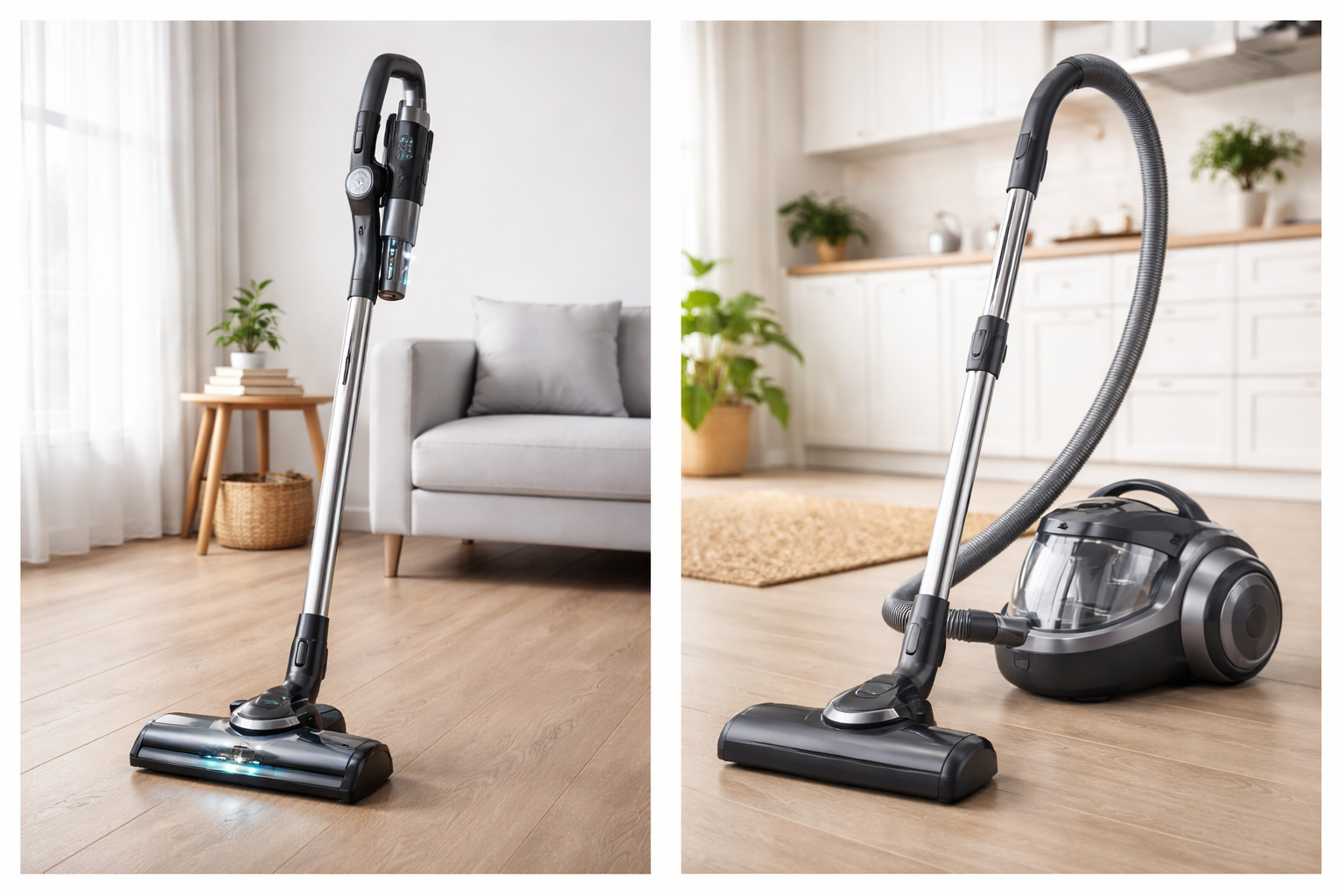
In reality, Europe does not primarily evaluate Upright Vacuum Cleaners or Household Vacuum Cleaners as standalone products.
It evaluates systems—energy logic, noise tolerance, after-sales burden, and long-term distribution sustainability.
Many brands fail not because they lack performance, but because they misunderstand how Europeans define ‘value’.
🔇 Noise Is Not a Feature—It’s a Market Gatekeeper
In several European countries, noise complaints are among the top three reasons for product returns in household appliances.
A Quiet Vacuum Cleaner is not just a comfort upgrade—it directly affects:
What suppliers often miss is this:
European consumers associate quietness with engineering quality, not weakness.
A product that balances suction and acoustic engineering often outperforms louder competitors—even if raw power is lower.
This is why Energy-Saving Efficient Powerful Vacuum Cleaner concepts outperform “maximum wattage” messaging in Europe.
⚡ Energy Labels: The Invisible Deal Breaker
European buyers rarely ask, “How strong is it?”
They ask, silently:
“Will this hurt my energy bill—and my conscience?”
Energy efficiency is no longer a regulatory checkbox.
It is a purchase filter.
Brands that ignore this often experience:
Ironically, many failed brands actually had efficient designs—but never communicated them properly to distributors.
📉 Distribution Is Where Most Brands Actually Fail
Here is the part no one likes to admit:
Most failures are not product failures.
They are vacuum cleaner distribution failures.
European distributors are risk managers, not gamblers.
They care about:
If your Household Vacuum Cleaners create uncertainty—even with good margins—distributors will quietly reduce orders.
This is where “best value for money hoover” positioning matters far more than premium storytelling.
Value, in Europe, means:
Predictable performance
Low complaint density
Stable long-term supply
🧪 The Engineering Blind Spot: Optimizing for the Wrong Stress
Many engineering teams test products under ideal lab conditions.
European households are anything but ideal.
Real-world stress includes:
When Upright Vacuum Cleaners are not optimized for these realities, they fail silently—through returns, reviews, and lost trust.
Engineering success in Europe is about reducing friction, not maximizing specs.
🧠 Why “Best Value” Beats “Best Performance” Every Time
European consumers are not chasing extremes.
They are optimizing life efficiency.
That’s why search behavior favors terms like:
This does not mean cheap.
It means low regret.
Products that minimize regret—noise, energy waste, storage hassle—build loyalty even without flashy innovation.
🧱 After-Sales: The Hidden Cost That Destroys Margins
Many brands collapse in year two.
Why year two?
Because that’s when:
Warranty claims accumulate
Spare parts logistics break
Distributors lose patience
A product that sells well but creates after-sales friction is a long-term liability.
European distributors remember this.
They may still smile.
They may still respond to emails.
But reorder volume quietly drops.
🌍 Middle East vs Europe: A Costly Misalignment
Brands often reuse Middle East configurations in Europe.
This is a mistake.
Middle Eastern households prioritize:
Capacity
Multi-room efficiency
European households prioritize:
Quiet operation
Energy discipline
Compact storage
Failing to adapt messaging and design logic leads to cross-market confusion and diluted brand identity.
🔍 The Brands That Survive Do One Thing Differently
Surviving brands don’t ask:
“How powerful can we make it?”
They ask:
“How little friction can we create?”
They invest in:
Acoustic balance
Energy storytelling
Distributor education
They understand that Upright Vacuum Cleaners succeed when they disappear into daily life—not dominate it.
🧠 A Practical Framework for Buyers & Distributors
If you are evaluating Household Vacuum Cleaners, ask these five questions:
Will noise complaints appear within 90 days?
Is energy efficiency clearly explainable to end users?
Can after-sales costs be predicted, not guessed?
Does the product reduce lifestyle friction?
Will distributors feel safe reordering it?
If the answer to any is unclear, risk is already present.
🏁 Final Thought: Failure Is Rarely Loud
European market failure rarely looks dramatic.
It looks like:
Smaller orders
Slower responses
Fewer recommendations
Understanding this early is the difference between long-term presence and quiet disappearance.
📌 #Hashtags
#lanxstar #uprightvacuumcleaners #householdvacuumcleaners #quietvacuumcleaner #energysavingvacuum#europeanappliancemarket #vacuumcleanerdistribution #vacuumindustryinsights#bestvalueformoneyhoover #goodbudgetvacuumcleaner #efficientvacuum#homeappliancesupply #vacuumengineering #appliancebuyers#b2bvacuum #appliancedistributors #vacuumdesign#lownoiseappliances #energylabeling #appliancecompliance
#europedistributors #vacuumtechnology #homecleaningsolutions#appliancebranding #productstrategy #afterSalesRisk#vacuummarketanalysis #consumerappliances#applianceinnovation#homecareindustry#vacuumbuyersguide#europeanconsumers#appliancequality#longtermvalue#applianceprocurement#cleaningtechnology #vacuumperformance📊