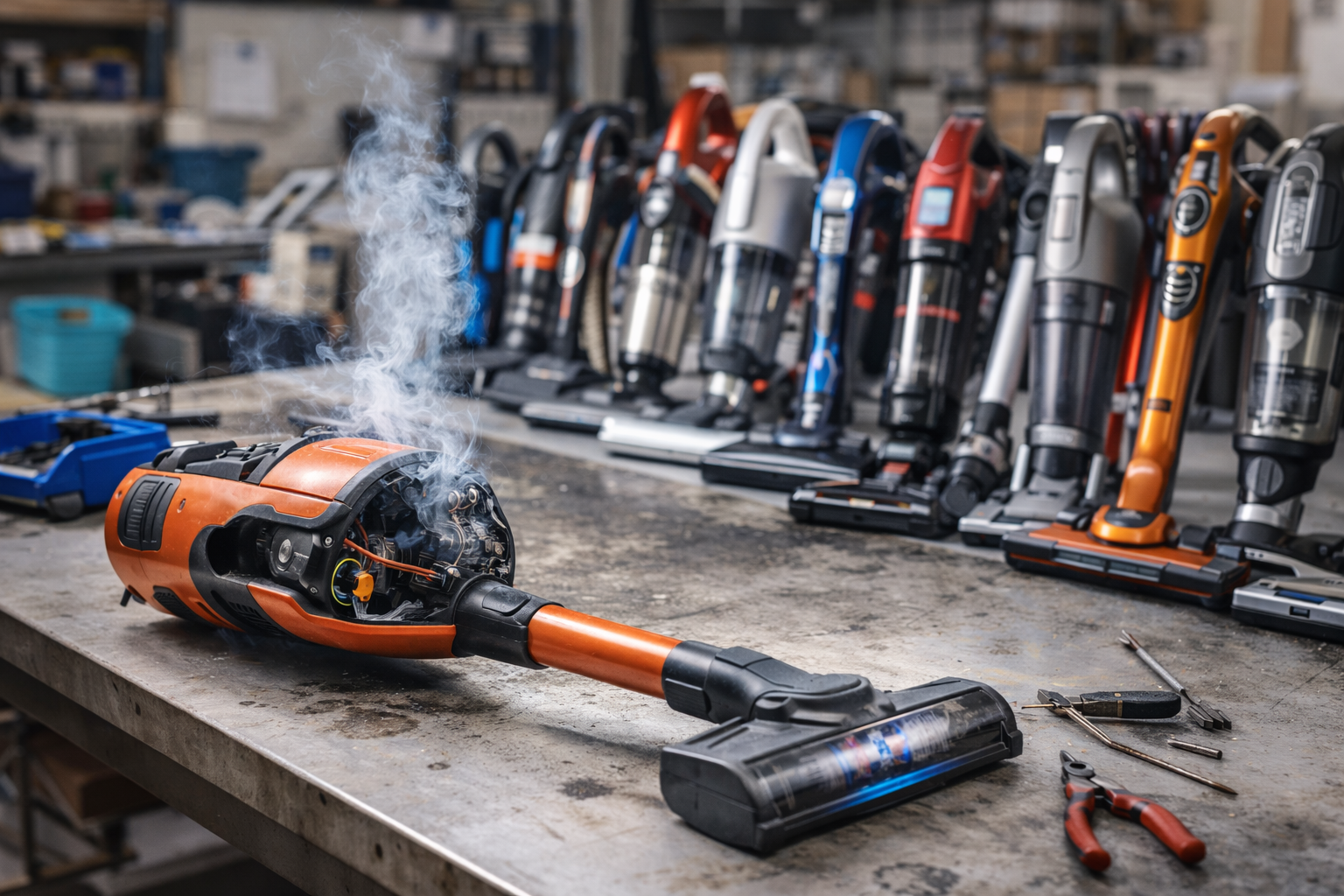
🧪 A Brutal Experiment Most Brands Never Publish
Over the past few years, our engineering and sourcing teams evaluated 37 different vacuum cleaner prototypes intended for Europe and the Middle East.
They came from:
Established factories
New startups
Well-funded brands
Cost-driven suppliers
On paper, most looked promising.
Yet 29 of them failed before reaching stable market adoption.
Not because of price.
Not because of suction.
Not because of design.
They failed for one hidden reason that procurement teams, engineers, and distributors rarely align on—and almost never talk about publicly.
This article is written for European & Middle Eastern vacuum cleaner buyers, distributors, R&D engineers, and serious users who want to understand what actually determines survival in the market.
🧠 The Failure Nobody Budgets For
When procurement teams evaluate Upright Vacuum Cleaners or Household Vacuum Cleaners, the checklist is familiar:
Suction power
Unit cost
Certification
Lead time
Engineering teams add:
Motor efficiency
Structural durability
Component lifespan
But almost no one seriously tests for usage friction accumulation.
That is where 29 prototypes collapsed.
🔍 The Hidden Reason: Micro-Frictions Add Up
A vacuum cleaner does not fail all at once.
It fails through small, repeated annoyances.
Examples we observed:
A slightly unbalanced handle causing wrist fatigue
Noise tone that feels “sharp,” even if decibel levels pass
Weight distribution that strains stairs usage
Filters that clog faster in real homes than labs
Each issue alone seems minor.
Together, they destroy repeat usage—and then reputation.
⚙️ High Suction Alone Is Not a Solution
Many failed prototypes proudly marketed themselves as High Suction Vacuum Cleaner models.
In controlled tests, suction was impressive.
In real households?
High suction amplified noise
Increased vibration loosened components
Power spikes reduced motor lifespan
The result: strong first impressions, poor long-term reviews.
European buyers and distributors care less about peak performance and more about performance stability over time.
🏗️ Durability Is Not the Same as Longevity
Several prototypes were labeled as Multi-Functional Durable Vacuum Cleaner designs.
Materials were solid.
Build quality looked premium.
Yet after extended testing, we saw:
Wear concentration in stress points
Modular components aging unevenly
Maintenance complexity increasing ownership fatigue
Durability without maintenance simplicity is a false promise.
🪶 Lightweight Speed Can Become a Liability
Another trend among failed units was aggressive weight reduction.
Yes, a Fast Lightweight Vacuum Cleaner feels great during demos.
But in long-term usage:
Reduced mass increased vibration
Lightweight frames amplified motor noise
Structural flex shortened lifespan
European households value balance—not extremes.
🧠 Procurement vs Engineering: The Silent Conflict
This is where vacuums procurement often goes wrong.
Procurement teams optimize for:
Engineers optimize for:
Performance ceilings
Technical elegance
Neither side fully owns real-life usage friction.
The prototypes that failed were not “bad”—they were misaligned.
🔇 Noise Is Psychological, Not Just Technical
One of the most surprising findings was this:
Two vacuums with identical decibel ratings received vastly different user reactions.
Why?
Because:
This is why Energy-Saving Efficient Powerful Vacuum Cleaner designs that balance motor load often outperform louder, more aggressive competitors.
🏠 The Household Reality Gap
Laboratory testing does not simulate:
Prototypes that required “perfect usage” failed fastest.
Successful Household Vacuum Cleaners adapt to imperfect human behavior.
📉 Distributor Feedback: The Early Warning System
Distributors noticed failures long before consumers complained.
Warning signs included:
When distributors lose confidence, the market exit begins—even if sales look fine on spreadsheets.
🧩 The 8 Prototypes That Survived
The surviving 8 shared common traits:
Balanced suction, not maximum suction
Predictable performance curves
Reduced vibration transfer
Simple maintenance logic
They were not the most exciting.
They were the most forgiving.
🛠️ A Practical Testing Framework That Actually Works
For buyers and engineers evaluating Upright Vacuum Cleaners, we recommend adding these tests:
30-day real-home noise fatigue assessment
Stair usage stress simulation
Filter clog frequency under mixed debris
Vibration transfer measurement
Maintenance time per month
If a prototype fails two or more, reconsider it—no matter how good the specs look.
🏁 Final Insight: Products Fail Quietly—Patterns Don’t
The 29 failures were not random.
They followed a pattern of:
Over-optimization
Under-observation
Misaligned incentives
Understanding this pattern is the fastest way to avoid repeating it.
📌 Excerpt
Out of 37 vacuum cleaner prototypes tested for Europe and the Middle East, 29 failed due to accumulated usage frictions rather than obvious defects. This article reveals the hidden testing gaps that buyers, engineers, and procurement teams often overlook when evaluating Upright and Household Vacuum Cleaners. K2
#Hashtags
#lanxstar #uprightvacuumcleaners #householdvacuumcleaners #highsuctionvacuumcleaner #multifunctionalvacuum #fastlightweightvacuum #energysavingvacuum #vacuumsprocurement #vacuumengineering #appliancetesting #vacuumprototypes #b2bappliances #appliancebuyers #europeanmarket #middleeastmarket #vacuumdurability #realworldtesting #applianceinnovation #productvalidation #vacuumdesign #homecleaningtechnology #engineeringinsights #appliancequality #vacuumperformance #longtermreliability #cleaningindustry #homeappliances #appliancefailureanalysis #distributorfeedback #vacuumtechnology #engineeringdecisions #applianceprocurement #consumerexperience #vacuumdevelopment