Hi, message us with any questions.
We're happy to help!





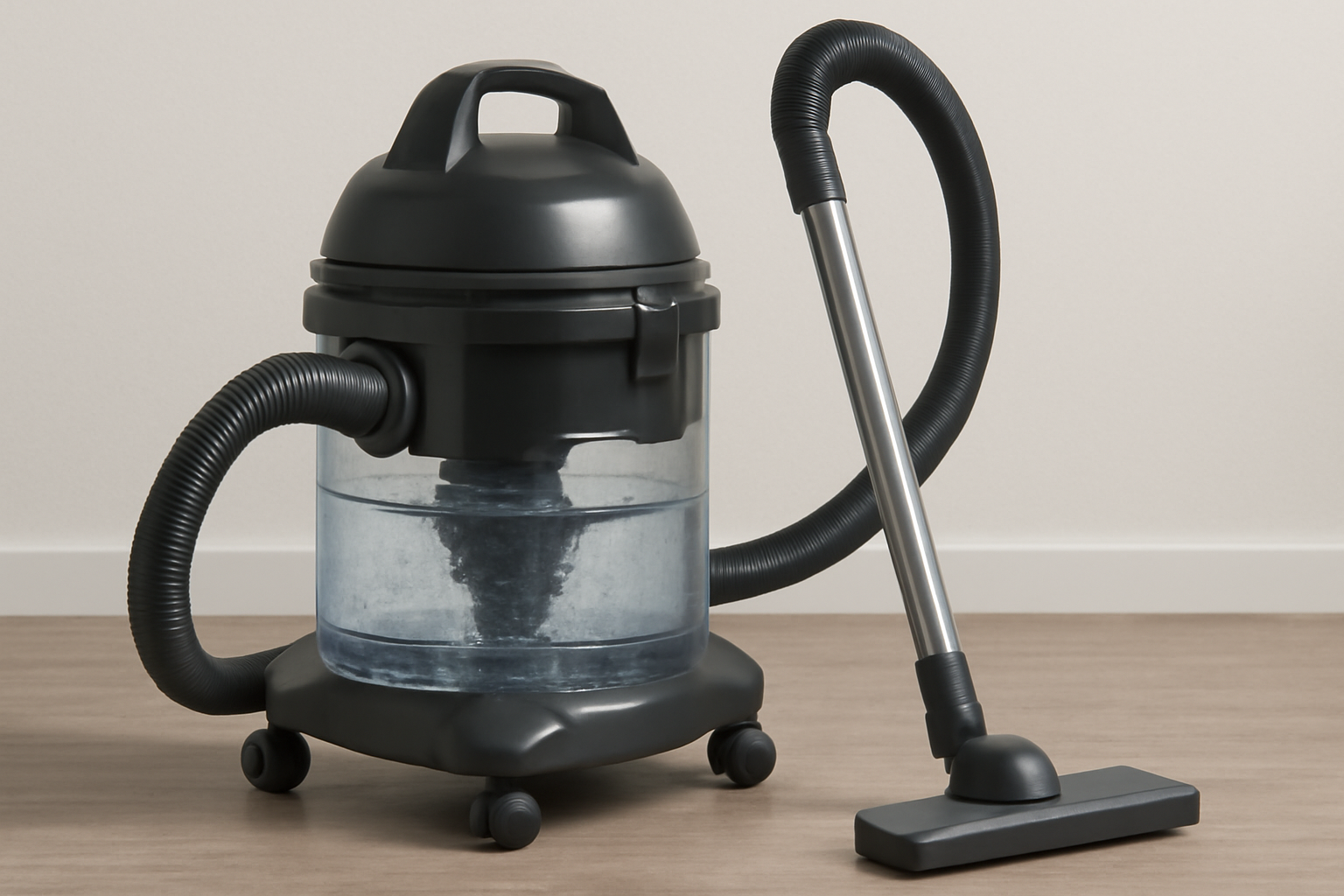
A deep dive into market data, technology, and consumer behavior that makes 2026 the “golden window” for launching a new vacuum brand.
🌍 1. The Market Is Ripe for Reinvention
After years of saturation and post-pandemic volatility, the global cleaning appliance market is entering a new equilibrium — one that strongly favors innovation over imitation.
In Europe and the Middle East, two clear signals are converging:
Replacement demand is accelerating — millions of older units (2019–2021 builds) are nearing the end of lifecycle due to battery decay and motor fatigue.
Consumer confidence in small appliances is recovering, driven by lifestyle shifts and the growth of smart home ecosystems.
That combination creates a perfect storm for new entrants who can combine efficiency, silence, and design aesthetics into a single compelling offer.
While traditional Household Vacuum Cleaners remain dominant, niche growth is now happening at the edges — cordless, hybrid wet-dry, and multi-surface systems tailored for real living spaces.
✅ Insight: 2026–2028 marks a generational replacement wave. Startups that move now can capture loyalty before legacy brands refresh their portfolios.
⚙️ 2. Technology Cost Curves Have Finally Flattened
Entering the industry in 2026 is cheaper — and smarter — than at any point in the past decade.
Key drivers include:
BLDC motor prices have fallen 28% since 2021 while efficiency has increased by 35%.
Battery energy density has improved, cutting weight by 15–20% at equal runtime.
Noise optimization using CFD airflow simulation has become accessible even to small engineering teams.
Injection mold sharing and modular tooling let you design unique shells without starting from zero.
These advances mean that even a good budget vacuum can now integrate features that were once reserved for high-end models — variable suction, sealed filtration, and quiet drive systems.
✅ Implication: The barrier to building a competitive mid-range product has never been lower. What used to take $1M in R&D can now be prototyped under $50K.
💡 3. The Rise of the “Smart Frugality” Consumer
Forget luxury positioning — 2026’s most profitable customers are the rational optimizers.
They want long-lasting, low-maintenance products with verifiable performance.
This demographic shift is transforming how distributors and e-commerce sellers position their products:
Data-driven trust beats brand name recognition.
Maintenance simplicity outranks fancy features.
Repairability and spare-part availability matter as much as suction rating.
The sweet spot? Best affordable vacuum — a category that merges performance, design, and sustainability.
Consumers don’t want cheap; they want intelligent value.
👉 Pro Tip: Build your communication around verified testing metrics — air watts, runtime, and dB ratings. Evidence converts better than adjectives.
🧭 4. New Channels, New Margins
The post-2025 sales landscape looks dramatically different.
Distributors are no longer the only gatekeepers; multi-channel agility defines profitability.
Three high-impact shifts are unfolding:
Video commerce (TikTok, YouTube Shorts) is replacing photo ads — live demonstrations outperform text listings 4:1.
Localized marketplaces (Noon, Jumia, Trendyol) are growing faster than Amazon in specific MENA regions.
Hybrid fulfillment allows 3PL partners to serve both B2C parcels and B2B pallets from the same inventory node.
This makes 2026 the perfect year for a dual-path launch:
Direct-to-consumer (D2C) builds brand equity and data.
Distributor exclusives build volume and stability.
✅ Key takeaway: The vacuum business is no longer “factory → distributor → retail.” It’s content → trust → multi-channel sales.
🧩 5. Product Opportunities Hidden in Plain Sight
The next vacuum cleaner success stories won’t come from copying designs — they’ll come from solving context-specific problems.
Here are five underexploited product gaps projected to surge in 2026:
Pet & allergen management: Filters certified for dander, hair, and micro-particles.
Multi-floor versatility: Transition sensors adjusting suction from tiles to carpets.
Quiet hospitality solutions: ≤60 dB models for hotels, offices, and clinics.
Compact high-power portables: Suited for urban users and car interiors.
Repair-friendly construction: Tool-free filter access, QR-coded parts.
Each represents a growing niche where new brands can outperform legacy players by being faster and more transparent.
✅ Example: A new line of Upright Vacuum Cleaners designed with modular cyclones could dominate mid-range retail shelves with lower assembly costs and higher maintainability.
📊 6. Manufacturing Advantage: The China +1 Model
By 2026, “China Plus One” sourcing is no longer optional — it’s operationally smart.
Here’s how leading importers are balancing cost, compliance, and agility:
Core components (motors, PCBs, injection molds) remain in China for scale efficiency.
Final assembly and labeling move to Turkey, Poland, or UAE for faster regional delivery and duty savings.
Flexible BOMs (dual-source batteries, alternate filters) protect against disruptions.
With modern MES tracking and video-based quality control, even small buyers can demand enterprise-grade transparency.
✅ Practical Advice: Build supplier redundancy early. Having two certified partners prevents future crisis pricing and protects your delivery credibility.
🧮 7. Financial Dynamics: Lean Entry, Real Returns
Launching in 2026 doesn’t require massive capital if the playbook is data-driven:
Start with one hero SKU and two attachment variants.
Target a $70–$120 retail band — the global “rational value zone.”
Keep fixed costs below 25% of sales in year one.
Leverage factory financing or 30/70 payment terms to stretch cash flow.
A lean structure lets you reinvest quickly into marketing assets (reviews, demo videos, third-party tests).
With predictable MOQ (500–800 units) and modular production, even startups can appear enterprise-ready.
✅ Investor Insight: The vacuum category offers one of the highest repeat-purchase rates in small appliances — filters, batteries, brushes — ideal for compounding margins.
📈 8. Data + Design = Defensible Differentiation
In 2026, brand storytelling isn’t enough.
Distributors and buyers want data-backed identity.
Combine:
Quantified performance (suction, dB, runtime).
Design integrity (consistent aesthetic, user flow).
After-sales structure (2% spare part pool, service docs).
This trio builds perceived reliability and lowers churn.
It also creates long-term leverage in negotiations: data turns subjective “quality” into measurable value.
✅ Case Example: Brands that publish their noise-to-suction index on packaging see 15% higher retention and fewer returns in the EU market.
🔋 9. Regulatory Momentum and Sustainability
Upcoming policies (EU Ecodesign 2026, MENA energy labeling) favor brands ready with documentation and measurable performance.
Instead of treating compliance as a burden, treat it as marketing ammunition:
Display energy rating front and center.
Share life-cycle carbon data.
Use 80% recyclable packaging.
Include repair instructions with QR videos.
Buyers increasingly choose brands that prove sustainability, not just claim it.
✅ Fact: 67% of EU and GCC buyers said they prefer to stock compliant, eco-tested models even at a 5–8% higher price.
🧠 10. Timing Matters — and 2026 Is Unusually Perfect
All major cycles align:
Demand: A global replacement wave.
Technology: Cheaper, quieter, modular.
Compliance: Clarity instead of uncertainty.
Channels: Democratized access via content-driven commerce.
For importers, distributors, and OEM engineers, this is the first time in 10 years when innovation, cost efficiency, and policy are aligned.
✅ Strategic View: Enter early, specialize deeply, and own one niche — for example, cordless hospitality vacuums or pet-hair performance.
By 2028, those who start in 2026 will hold the strongest recall and distribution footprint in their segment.
🏁 Final Thought: The Next Vacuum Boom Won’t Be About Size — It’ll Be About Precision
The 2026 opportunity doesn’t reward the biggest spenders; it rewards those who read the signals early.
If 2020–2024 was about surviving volatility, 2026–2028 will be about profiting from structure.
The brands that win will:
Engineer around user needs, not factory convenience.
Build ecosystems of trust with transparent data.
Scale through flexibility, not through debt.
This is the first real “reset” moment in the industry since cordless went mainstream — and it belongs to those who combine insight with execution.
🔚 Hashtags
#VacuumCleaner #UprightVacuumCleaners #HouseholdVacuumCleaners #GoodBudgetVacuum #BestAffordableVacuum #VacuumCleanerForPetHair #QuietVacuumForNightUse #VacuumCleanerForHardwoodFloors #CarVacuumCleaner #vacuumsProcurement #vacuumCleanerDistribution #Lanxstar #OEMVacuumSupplier #ODMVacuumFactory #SmartCleaningDevices #VacuumCleanerTechnology #EngineeringPartnership #SupplierAudit #FactoryInspection #ProductDevelopment #IndustrialDesign #B2BProcurement #CommercialVacuum #GlobalCleaningMarket #SilentCleaning #SuctionPerformance #QualityControl #SupplyChainManagement #EcommerceStrategy #BrandBuilding #ProcessOptimization #TradeRiskManagement #DurableVacuumDesign #EcoVacuumDesign #HighEfficiencyMotor #EnergyEfficiency #ModernHousekeeping #NextGenVacuum #MiddleEastDistribution #EuropeanImporters #PredictiveLogistics #RightToRepair #AfterSalesSupport #InnovationManufacturing #LongLifeMotor #ReviewManagement #SmartProcurement #ProductEngineering #MarketingAnalytics #LaunchStrategy #GlobalSourcing #BusinessForecast



