Hi, message us with any questions.
We're happy to help!





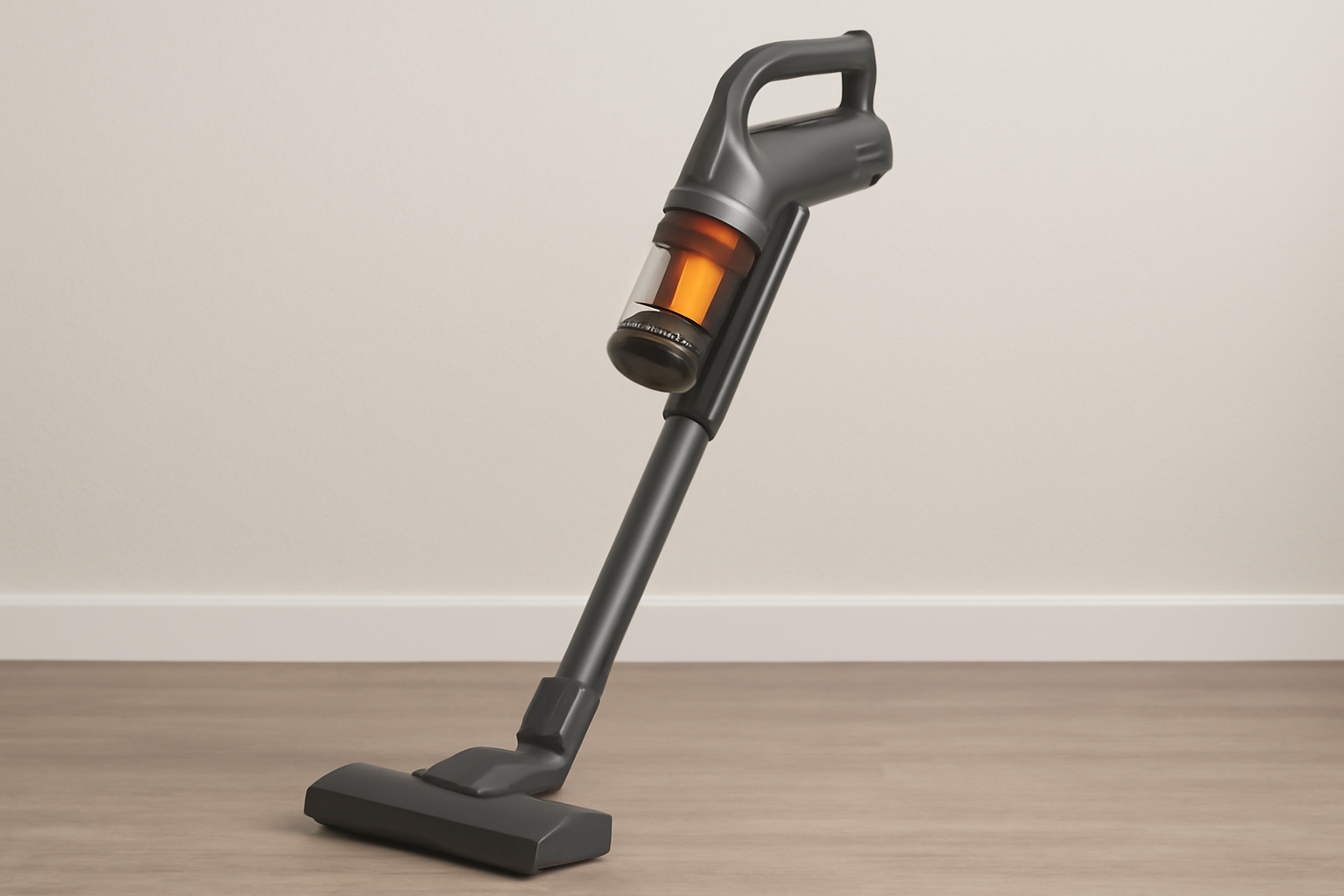
A data-driven case study on how a small startup entered the global vacuum cleaner market and built a sustainable niche brand.
🚀 1. Starting Small Became a Strategic Advantage
When a small team of three entrepreneurs launched a vacuum cleaner startup with just $5,000, the odds were against them.
The home appliance market was already dominated by global giants, yet this team managed to carve out a niche that became profitable within one year.
Their biggest insight: starting small can be an advantage.
Limited capital forced the team to be precise — to test market fit before scaling.
Instead of competing head-on in saturated segments of Household Vacuum Cleaners, they focused on solving a narrow but clearly defined problem: lightweight, efficient cleaning for small apartments.
That focus reduced risk and allowed them to build brand credibility with minimal waste.
🔍 2. Market Validation Came Before Manufacturing
Rather than rushing to production, the team began by studying user feedback across major e-commerce platforms.
They categorized over 2,000 Amazon reviews of competing models to understand why customers were dissatisfied.
The most frequent complaints included:
Short battery lifespan
Declining suction power over time
Excessive noise levels
Overly complex maintenance
These insights became the foundation of their design brief.
When approaching suppliers, the team didn’t just ask for products — they requested engineering solutions:
“We need a compact model that stays quiet under 60dB, with detachable filters and accessible motor housing.”
By translating user frustration into technical requirements, they positioned their first model as the best vacuum on a budget — not the cheapest unit, but the one with the smartest performance-to-price ratio.
✅ Takeaway: The most valuable product data doesn’t come from factories — it comes from customer complaints.
🏭 3. Choosing Factories Based on Flexibility, Not Size
With limited funding, major OEM factories were beyond reach.
Instead, the startup approached smaller, Tier-2 manufacturers that specialized in modular assembly and custom low-volume production.
They found one partner with existing experience producing Upright Vacuum Cleaners who was willing to modify color, handle angle, and nozzle design without requiring new molds.
That flexibility was crucial.
It allowed the brand to launch a customized product line that looked original — even with a minimal tooling budget.
✅ Expert Insight: A good supplier doesn’t just meet your request; they help you reshape it economically. Flexibility is the most undervalued form of technical competence in OEM relationships.
💡 4. Simplicity Outperformed Complexity
In an era obsessed with smart devices and voice control, the team learned that engineering simplicity wins customer trust faster than overdesign.
Early prototypes included Wi-Fi connectivity and sensor automation, but testing revealed users valued consistent suction, quiet operation, and easy cleaning more than extra features.
The final model focused purely on suction consistency and ergonomic comfort.
By reducing unnecessary complexity, they achieved higher reliability and a lower defect rate — and eventually, reviewers began referring to it as the best budget hoover for its balance of performance, price, and durability.
👉 Operational Lesson: In budget-sensitive categories, simplicity scales profit; complexity scales cost.
📦 5. Building Professional Credibility on a Small Budget
Even with limited resources, the team prioritized professional presentation.
They developed a lean branding system that used minimal colors, consistent typography, and storytelling-driven packaging.
Every package highlighted practical benefits — suction power, noise rating, and maintenance ease — instead of generic slogans.
User manuals were redesigned as micro brochures that reinforced brand reliability.
As a result, distributors perceived the startup as a structured micro-brand rather than an amateur importer.
It proved that credibility doesn’t come from marketing spend — it comes from coherence and consistency.
✅ Tip for New Brands: Professionalism is 80% discipline, 20% design.
🧰 6. Distribution Strategy: Blending E-Commerce with Micro-Wholesale
Instead of choosing between B2C and B2B, the team created a hybrid model:
Online sales for early feedback and cash flow.
Local distributors for stable recurring orders.
This approach allowed them to scale gradually while managing inventory risk.
When negotiating with distributors, they avoided price wars and focused on risk reduction — sharing real inspection reports, packaging test data, and return ratios.
This transparency built immediate trust.
Within nine months, they secured two repeat distributors in Europe and one in the Middle East.
✅ Lesson: Transparency is the strongest closing tool in B2B sales.
📊 7. Financial Results: Proof That Lean Can Work
After 12 months of operation, the startup’s data looked like this:
Units sold: 3,200
Geographic reach: 5 countries
Return rate: <1.8%
Net margin: 18–22%
Their growth came not from advertising, but from efficient processes — clear product-market fit, flexible OEM collaboration, and disciplined cash flow.
Even with minimal marketing, word-of-mouth and distributor referrals drove the majority of sales.
👉 Insight: In early-stage manufacturing, profitability is not about scale — it’s about stability and iteration.
🧠 8. The Strategic Lessons for Small Entrants
This case demonstrates how small startups can successfully enter a capital-intensive market through strategic focus and manufacturing alignment.
The key lessons include:
Market first, product second. Validate unmet needs before production.
Flexibility over size. Choose suppliers who adapt faster, not who produce more.
Focus equals speed. Narrow product scope reduces delays and improves quality.
Data equals credibility. Use verified metrics — noise levels, suction, defect rates — in all presentations.
Lean branding wins trust. Consistency across touchpoints builds perceived scale.
These principles transformed a $5,000 experiment into a sustainable small brand — one that distributors and consumers both trusted.
🏁 9. The Takeaway: Small Budgets Can Build Big Credibility
The case of this startup proves that discipline and data can replace capital.
By combining product clarity, supplier collaboration, and authentic communication, a small team managed to create a business that competed — and even partnered — with much larger brands.
In a global market where everyone is chasing scale, this story is a reminder:
“You don’t have to start big to be taken seriously — you just have to start intelligently.”
🔚 Hashtags
#VacuumCleaner #UprightVacuumCleaners #HouseholdVacuumCleaners #BestVacuumOnABudget #BestBudgetHoover #VacuumCleanerForPetHair #QuietVacuumForNightUse #VacuumCleanerForHardwoodFloors #CarVacuumCleaner #vacuumsProcurement #vacuumCleanerDistribution #Lanxstar #OEMVacuumSupplier #ODMVacuumFactory #SmartCleaningDevices #VacuumCleanerTechnology #EngineeringPartnership #SupplierAudit #FactoryInspection #ProductDevelopment #IndustrialDesign #B2BProcurement #GlobalCleaningMarket #CommercialVacuum #SilentCleaning #SuctionPerformance #QualityControl #SupplyChainManagement #EcommerceStartups #BrandBuilding #ProductPositioning #MarketingStrategy #Entrepreneurship #BusinessCaseStudy #EcoVacuumDesign #RDFocusedVacuum #HighEfficiencyMotor #DurableVacuumDesign #StartupJourney #MiddleEastBuyers #EuropeanImporters #SmartProcurement #TradeRiskManagement #ProcessOptimization #InnovationManufacturing #ModernHousekeeping #AfterSalesSupport #NextGenVacuum #LongLifeMotor #SmallBusinessSuccess #GlobalSourcing