Hi, message us with any questions.
We're happy to help!





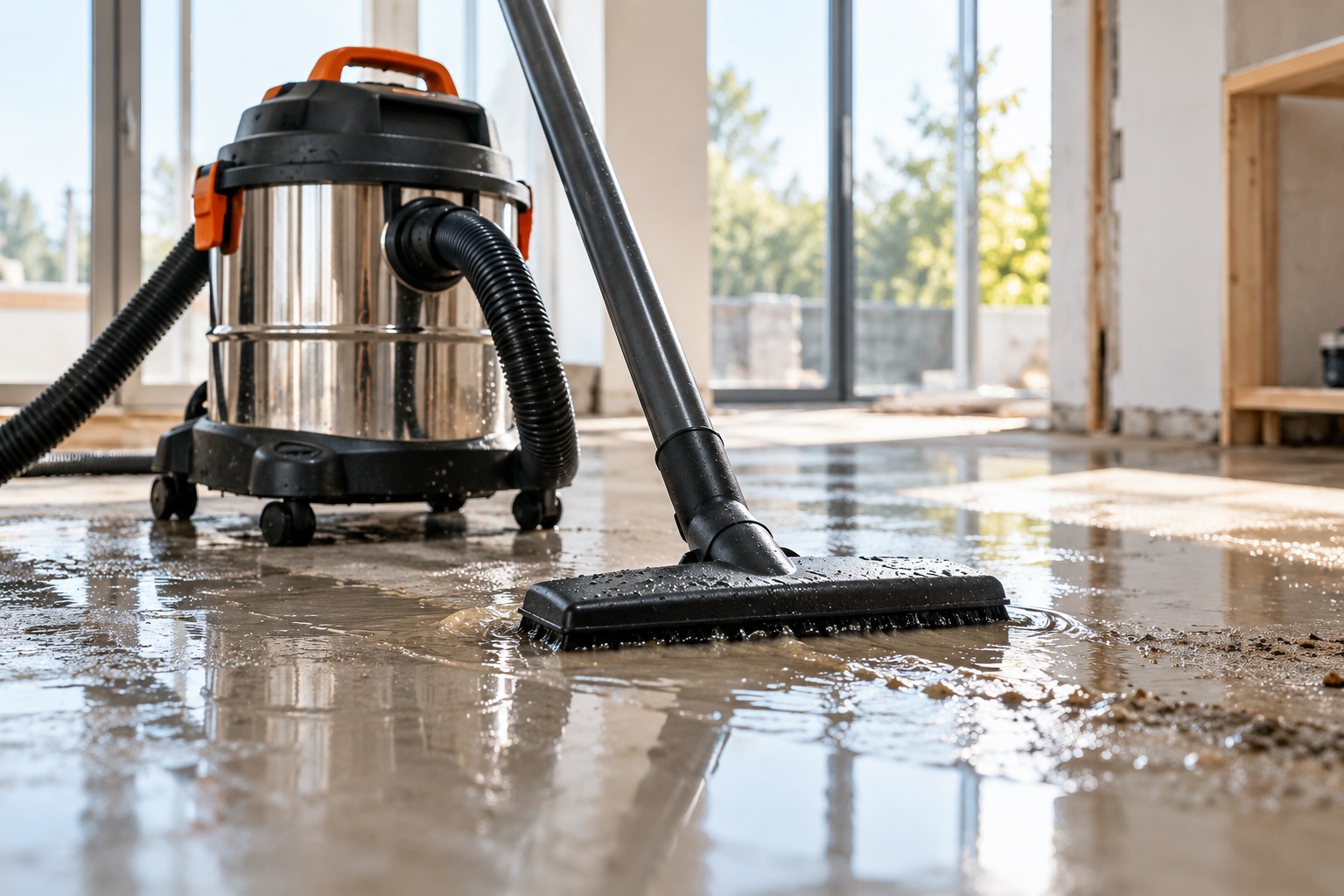
Wet Dry Vacuum for Flood Cleanup: What Buyers Should Look For
Flood cleanup creates a very different challenge from routine floor cleaning. Whether water enters a warehouse after heavy rain, leaks from plumbing in a hotel, spreads across a workshop floor, or accumulates during construction, the first priority is usually to remove standing water efficiently and safely.
For professional buyers, however, simply purchasing a machine labeled a wet dry vacuum cleaner is not enough. Equipment used for flood cleanup may need to operate for extended periods, handle dirty water, move between large areas, and withstand demanding commercial environments.
A suitable machine should combine suction performance, tank capacity, structural durability, convenient drainage, filtration, mobility, and practical maintenance. For distributors and wholesalers, there is another consideration: the product must also match the expectations of the target market.
Here are the most important factors buyers should examine. 💧
1. Start With the Actual Flood-Cleanup Environment
Before comparing specifications, identify where the vacuum will be used.
A homeowner removing water from a small basement has very different requirements from a contractor cleaning a flooded warehouse. Similarly, a hotel maintenance team may prioritize low noise and mobility, while an industrial facility may focus more heavily on durability and continuous operation.
Typical applications include:
Warehouses and logistics centers
Construction sites
Hotels and commercial buildings
Workshops and factories
Retail facilities
Parking areas and garages
Property restoration projects
Facility management operations
Vehicle detailing and service centers
For a warehouse cleaning solution, buyers may prefer a large tank and robust wheels because operators need to cover significant floor space.
A wet dry vacuum cleaner for construction site applications may require stronger structural components because dust, debris, dirty water, and rough surfaces can place additional stress on the equipment.
Hotel applications can be different again. A commercial vacuum cleaner for hotel use should offer effective water pickup while remaining relatively easy to maneuver and store.
🎯 Buyer Tip: Define the application first and specifications second. A machine that performs well in one environment may be unnecessarily large—or insufficiently robust—in another.
2. Suction Performance Matters More Than Marketing Numbers
Flood cleanup depends heavily on the machine's ability to collect water efficiently.
Buyers often see terms such as High Suction Vacuum Cleaner or high suction power vacuum cleaner in product descriptions. These phrases can be useful starting points, but professional purchasers should examine measurable specifications rather than relying only on marketing terminology.
Depending on the manufacturer's data, useful specifications may include:
Airflow
Vacuum pressure
Motor input power
Number of motors
Tank capacity
Recommended operating cycle
A dual motor vacuum cleaner, for example, may be appropriate when greater airflow or demanding commercial operation is required. However, more motor power does not automatically mean a machine is ideal for every application.
Performance should be balanced against energy consumption, noise, machine size, electrical requirements, and operating cost.
An Energy-Saving Efficient Powerful Vacuum Cleaner can be particularly attractive to facility operators who use cleaning equipment frequently. The objective is not simply maximum rated power—it is useful cleaning performance with reasonable energy consumption.
3. Evaluate the Wet and Dry Suction System
A flood-cleanup vacuum should be designed specifically to manage liquids.
A proper wet and dry suction system enables operators to collect water while also supporting dry cleaning tasks when configured according to the manufacturer's instructions. This versatility can improve equipment utilization after the immediate flood-cleanup job is finished.
For commercial buyers, this can strengthen the value proposition. Instead of purchasing equipment that remains unused until the next water emergency, customers can potentially use the same machine for routine industrial or commercial cleaning.
When comparing models, ask:
How does the machine switch between wet and dry operation?
Are filters or accessories changed between modes?
Does the unit include a float or water-level protection system?
How is collected water discharged?
What maintenance is required after liquid pickup?
These operational details influence real-world productivity.
⚙️ For procurement teams and product engineers, the internal airflow design, sealing system, motor protection strategy, and liquid shutoff mechanism deserve as much attention as exterior appearance.
4. Tank Capacity Can Determine Cleaning Efficiency
Flood cleanup can involve hundreds or thousands of liters of water. Although a vacuum tank cannot replace specialized pumping equipment in severe flooding, tank capacity still has a major impact on cleaning efficiency.
A Large-Capacity Wet Dry Vacuum Cleaner reduces how frequently operators need to stop and empty the tank.
However, bigger is not always better.
A large tank becomes heavier when filled with water. Therefore, buyers should consider:
Tank volume
Drain hose or drain outlet
Handle position
Wheel size
Machine stability
Tank material
Ease of cleaning
A stainless steel vacuum tank is commonly selected for commercial and industrial applications because buyers often associate stainless construction with durability and easy cleaning. The complete machine design, material thickness, joints, seals, and manufacturing quality remain important.
For large-volume water collection, a convenient drainage system can make a significant difference. Operators should not have to lift a heavy, water-filled tank whenever it needs emptying.
5. Durability Is Critical for Professional Applications
Flood restoration is demanding work.
Machines may be transported between sites, pulled over thresholds, exposed to dirty water, or operated for longer periods than household equipment. For these environments, buyers often search for a heavy duty vacuum cleaner or commercial grade vacuum cleaner.
Durability should be assessed across the whole product:
Tank construction
Motor housing
Wheel assembly
Hose connections
Power cable
Switches
Seals
Handles
Accessories
A Multi-Functional Durable Vacuum Cleaner can be especially valuable to rental companies, contractors, distributors, and commercial cleaning businesses because equipment downtime directly affects operating costs.
Importers should also ask suppliers about spare parts availability. A durable machine is useful, but a repairable machine can deliver greater long-term commercial value.
🔧 Replacement hoses, filters, wheels, brushes, switches, motors, and connectors can therefore become important considerations during supplier evaluation.
6. Filtration Still Matters During Flood Cleanup
Water removal is the immediate task, but flood cleanup often involves dirt, dust, sediment, and fine particles.
For dry operation or post-flood cleanup, filtration becomes particularly important. A HEPA filter vacuum cleaner configuration may be relevant in applications where control of fine airborne particles is required, although buyers should verify the actual filter specification, filtration rating, and intended operating mode.
Importantly, a HEPA-type filter should not automatically be assumed to be suitable for direct wet pickup. Buyers should follow the manufacturer's recommended wet and dry configurations.
In industrial environments, an industrial dust extractor may also be required for specific dry-dust applications. It should not automatically be treated as interchangeable with a general wet dry vacuum.
Procurement teams should match filtration systems to the actual material being collected and applicable workplace requirements.
7. Mobility Can Save Significant Labor Time
A powerful vacuum that is difficult to move can slow down a flood-cleanup team.
Mobility becomes particularly important in warehouses, hotels, factories, schools, retail buildings, and construction projects where operators need to move between multiple rooms or large floor areas.
A Fast Lightweight Vacuum Cleaner may be advantageous for smaller cleanup tasks, stairs, vehicle interiors, or applications requiring frequent transportation.
Buyers should inspect:
Front caster design
Rear wheel diameter
Wheel material
Handle ergonomics
Hose length
Cable length
Overall weight
Center of gravity
For a large-capacity model, stability is particularly important. A tall machine with a full water tank should remain manageable when operators turn or pull it across uneven surfaces.
🚚 Distributors selling to contractors should also consider transportation dimensions. Compact packaging and practical storage can influence logistics costs and customer convenience.
8. Noise Levels Matter in Occupied Buildings
Not every flood occurs in an empty industrial facility.
Hotels, hospitals, offices, schools, shopping areas, and residential properties may remain partially occupied during cleanup. In these situations, a low noise vacuum cleaner or Portable Quiet Vacuum Cleaner can offer practical advantages.
Noise should be considered alongside suction performance rather than in isolation.
For hotel cleaning equipment, operators may need to remove water without creating excessive disturbance for guests. Facility management companies may face similar requirements when cleaning office buildings during business hours.
Buyers should request actual noise-level specifications where available and compare products under similar test conditions.
9. Case Example: Warehouse Water Leak Cleanup
Consider a logistics warehouse where a damaged pipe releases water across a storage and packing area.
The maintenance team needs to remove standing water quickly so operations can resume. A small household vacuum could require frequent emptying and may not be designed for prolonged commercial work.
The procurement team instead evaluates an industrial wet and dry vacuum cleaner for warehouse cleaning supplier based on several practical criteria:
Large tank capacity
Strong wet suction
Convenient drain system
Robust wheels
Durable hose
Stable tank structure
Accessible replacement parts
Rather than choosing solely by motor wattage, the buyer evaluates the entire operating cycle—from collecting water to moving the machine, draining the tank, cleaning the unit, and preparing it for the next job.
This approach can reduce interruptions and improve equipment utilization.
10. Case Example: Construction Site After Heavy Rain
Imagine a construction project where overnight rain leaves water and loose debris across unfinished floors.
The contractor needs a wet dry vacuum cleaner for construction site cleanup that can handle demanding conditions. The machine may later be used for general site cleaning, making multifunctionality important.
In this scenario, the buyer may prioritize:
Heavy-duty construction
Wet pickup capability
High airflow
Large wheels
Durable accessories
Easy tank drainage
Simple maintenance
Once the water is removed, the equipment may continue supporting general cleaning tasks, depending on the type of debris and the machine's approved applications.
For wholesalers, this versatility makes wet dry machines relevant to construction equipment distributors as well as traditional cleaning-equipment channels.
11. Consider Total Cost, Not Just Purchase Price
Search terms such as industrial vacuum cleaner cost, vacuum cleaner price wholesale, and best vacuum on a budget show that price remains an important purchasing factor.
However, professional buyers should evaluate total cost of ownership.
A lower purchase price may become less attractive if the product has:
Short accessory life
Difficult maintenance
Limited spare parts
High energy consumption
Frequent downtime
Inefficient water drainage
A good budget vacuum cleaner should therefore provide appropriate value for its intended workload rather than simply having the lowest quotation.
For importers making a bulk vacuum cleaner purchase, even small differences in packaging size, accessory configuration, warranty arrangements, spare parts, and shipping efficiency can significantly affect total landed cost.
💡 For distributors, the better question is often: What value will this product deliver throughout its service life?
12. OEM, ODM, and Private Label Considerations
Wholesalers and established cleaning-equipment brands may require more than an off-the-shelf model.
An OEM vacuum cleaner program can support customized branding, packaging, accessories, specifications, or market positioning. An ODM vacuum cleaner project may involve deeper product configuration depending on the manufacturer's capabilities.
When evaluating an OEM industrial vacuum cleaner manufacturer, buyers should discuss:
Target market
Electrical standards
Certification requirements
Branding
Packaging
Tank capacity
Motor configuration
Accessories
Filtration options
Order quantities
Quality-control process
Spare parts support
A capable vacuum cleaner manufacturer in China should be able to communicate clearly about product specifications and production capabilities rather than simply offering a low unit price.
For distributors building their own product lines, private label vacuum cleaner programs can also help establish consistent branding across multiple cleaning-equipment categories.
13. Questions to Ask a Vacuum Cleaner Supplier
Before placing a wholesale order, buyers can use a structured supplier checklist.
Ask the industrial vacuum cleaner supplier:
What applications is this model designed for?
What are its airflow and vacuum specifications?
What is the usable tank capacity?
How does the water shutoff system work?
How is collected liquid drained?
Which filters are used for wet and dry operation?
Which spare parts are available?
What accessories are included?
Can the product be customized for OEM or private label orders?
Which certifications or compliance documents are available for the target market?
What quality-control procedures are used during production?
What packaging is suitable for international shipping?
These questions help buyers compare suppliers using operational requirements instead of price alone.
14. What Global Buyers Should Prioritize
There is no single best industrial vacuum cleaner for every flood-cleanup situation.
A restoration contractor may prioritize maximum water collection efficiency. A hotel may value quieter operation. A warehouse may require capacity and mobility. A distributor may prioritize reliability, price positioning, certifications, packaging, spare parts, and OEM flexibility.
The strongest purchasing process therefore begins with the intended application.
For many professional flood-cleanup environments, buyers should focus on a balanced combination of:
effective wet suction + practical tank capacity + durable construction + easy drainage + good mobility + suitable filtration + manageable noise + reliable supplier support.
🌍 This combination is particularly important for importers and wholesalers who need products capable of serving different commercial markets.
Conclusion
Choosing a wet dry vacuum for flood cleanup involves much more than selecting the machine with the largest motor or lowest wholesale price.
Professional buyers should evaluate how effectively the machine collects water, how often it must be emptied, how easily operators can move it, whether its components can withstand demanding use, and how straightforward maintenance will be.
For importers, distributors, and private-label brands, manufacturing capability, quality control, customization, spare parts, and after-sales support should also form part of the purchasing decision.
Lanxstar focuses on wet and dry vacuum solutions for commercial and industrial cleaning applications. Buyers evaluating wholesale, OEM, ODM, or customized vacuum cleaner projects can compare configurations according to their target market and cleaning requirements.
If you are interested, please feel free to contact us.
For additional vacuum cleaner and cleaning equipment information, visit www.lxvacuum.com
50 Related SEO Keywords:
wet dry vacuum cleaner, wet and dry vacuum cleaner, flood cleanup vacuum, industrial vacuum cleaner, commercial vacuum cleaner, Lanxstar, vacuum manufacturer, vacuum cleaner maker, industrial vacuum cleaner supplier, vacuum cleaner manufacturer, industrial cleaning equipment, commercial cleaning equipment, vacuum cleaner supplier, vacuum cleaner manufacturer in China, industrial vacuum cleaner factory, wholesale vacuum cleaner, bulk vacuum cleaner purchase, OEM vacuum cleaner, ODM vacuum cleaner, private label vacuum cleaner, cleaning equipment supplier, industrial equipment supplier, construction site cleaning equipment, warehouse cleaning solution, hotel cleaning equipment, facility management cleaning equipment, high suction power vacuum cleaner, heavy duty vacuum cleaner, dual motor vacuum cleaner, stainless steel vacuum tank, low noise vacuum cleaner, energy efficient vacuum cleaner, wet and dry suction system, industrial dust extractor, commercial grade vacuum cleaner, buy industrial vacuum cleaner, industrial vacuum cleaner cost, vacuum cleaner price wholesale, vacuum cleaner supplier China, commercial vacuum cleaner for sale, bulk order vacuum cleaner, factory direct vacuum cleaner, import vacuum cleaner from China, wet dry vacuum cleaner for construction site, commercial vacuum cleaner for hotel use, heavy duty vacuum cleaner supplier China, OEM industrial vacuum cleaner manufacturer, industrial flood cleanup vacuum, large capacity wet dry vacuum, professional water extraction vacuum