Hi, message us with any questions.
We're happy to help!





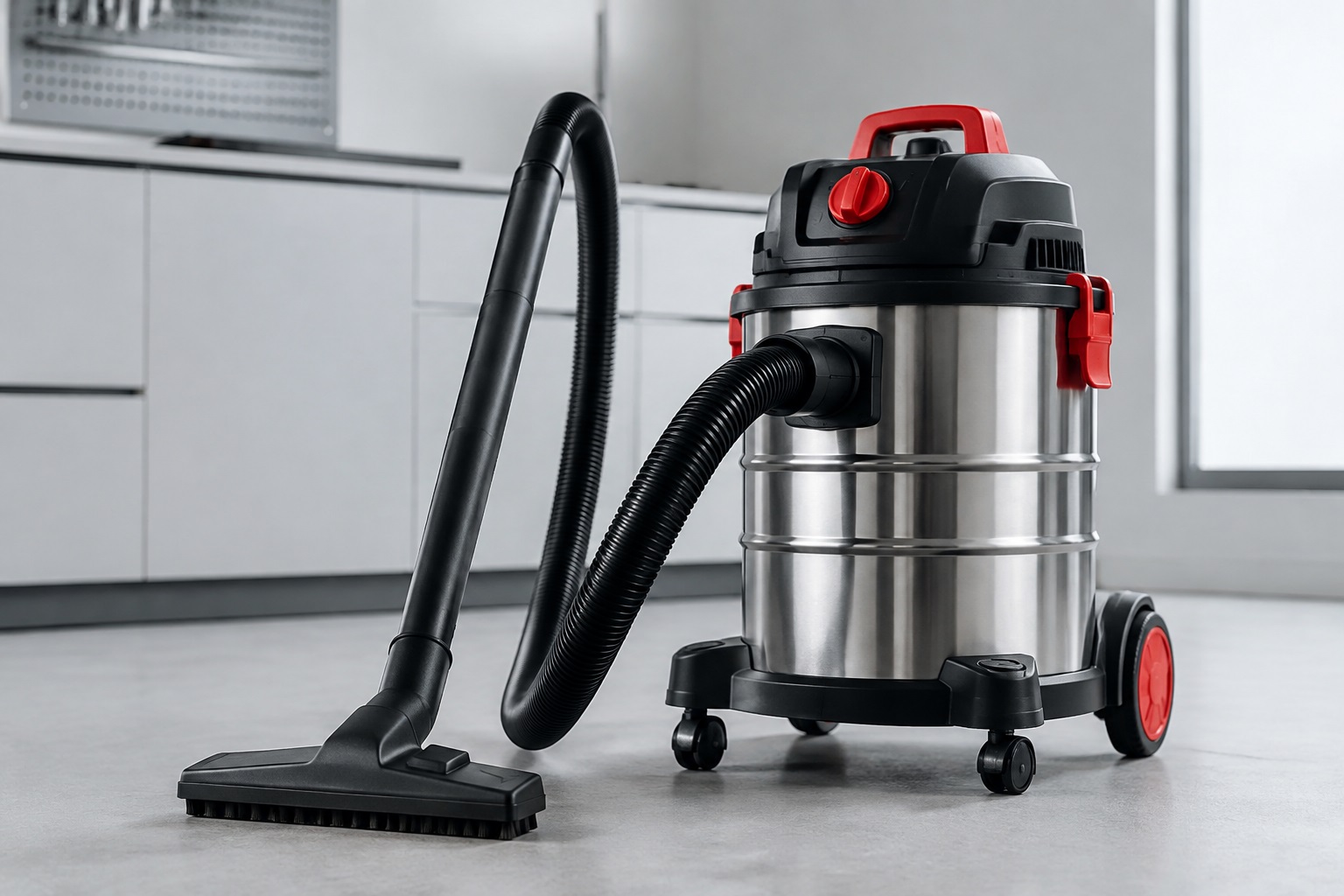
Cleaning requirements rarely involve only one type of dirt. A workshop may contain dust, wood particles, small debris, and accidental liquid spills. A hotel needs to clean guest areas as well as service spaces. Garages and car-detailing businesses regularly deal with sand, dirt, crumbs, and moisture.
A wet and dry vacuum cleaner is designed to handle both dry debris and liquids, reducing the need to switch between different cleaning machines.
The Y1 Wet and Dry Vacuum Cleaner is positioned as a practical cleaning solution for environments where flexibility, mobility, suction performance, and convenient waste collection matter. Depending on its final product configuration, it can be considered by users looking for a Multi-Functional Durable Vacuum Cleaner or a Large-Capacity Wet Dry Vacuum Cleaner.
🏠 Home cleaning: garages, basements, patios, utility rooms, vehicles, and renovation areas.
🏨 Commercial cleaning: hotels, shops, offices, restaurants, and facility-management applications.
🏭 Industrial-oriented cleaning: workshops, warehouses, production support areas, and other suitable environments.
The key advantage is versatility: one cleaning platform can address several common cleaning tasks.
2. Why Wet and Dry Cleaning Capability Matters
A conventional household vacuum is primarily intended for dry dirt. Using equipment that is not designed for liquids to collect water can damage the machine and create safety risks.
A properly designed wet and dry suction system, by contrast, is engineered to collect suitable dry debris as well as liquids according to the manufacturer's operating instructions.
This capability can make cleaning workflows considerably simpler.
For example, imagine a small workshop after a busy production day. Fine debris may accumulate around workstations while water or another permitted non-hazardous liquid is present near an entrance. Instead of bringing out separate cleaning machines, workers can use compatible wet/dry equipment for both tasks.
For commercial operators, fewer machine changes can mean:
Reduced cleaning preparation time
More efficient use of storage space
Greater equipment utilization
Simpler cleaning workflows
Potentially lower total equipment requirements
⚡ For buyers, therefore, comparing a vacuum only by motor wattage or purchase price can miss an important question: How much useful cleaning work can one machine perform?
3. Suction Performance: Look Beyond a Big Number
A High Suction Vacuum Cleaner sounds attractive, but professional buyers should evaluate suction performance more carefully.
Motor power alone does not determine real-world cleaning ability. Airflow, vacuum pressure, hose design, seals, filtration resistance, floor tools, and the complete air path all influence performance.
A high suction power vacuum cleaner should deliver useful pickup performance under realistic operating conditions rather than simply presenting an impressive specification on paper.
For buyers comparing a commercial grade vacuum cleaner, useful questions include:
How is suction performance measured?
Ask the supplier for consistent test conditions so that different models can be compared fairly.
Does suction remain stable during normal use?
Filter loading and airflow restrictions can affect practical performance.
Are the hose and accessories suitable for the intended debris?
An excellent motor paired with an inappropriate nozzle can reduce cleaning efficiency.
Is continuous operating performance important?
Commercial users may run equipment for substantially longer periods than occasional household users.
For demanding applications, buyers may also investigate a dual motor vacuum cleaner or heavy duty vacuum cleaner, although a larger or more powerful configuration is not automatically the best solution for every application.
4. Capacity Can Directly Affect Cleaning Productivity
Tank size is sometimes treated as a secondary specification. In commercial environments, it can directly influence labor efficiency.
A larger tank generally allows operators to work longer before emptying collected material. This can be valuable for warehouses, workshops, hotels, garages, and renovation projects.
A Large-Capacity Wet Dry Vacuum Cleaner may therefore be attractive where cleaning areas are large or debris volumes are substantial.
However, bigger is not always better.
A very large tank can increase machine dimensions and loaded weight. Buyers should balance capacity against mobility, storage requirements, emptying convenience, and operator comfort.
A stainless steel vacuum tank may also be desirable for certain commercial environments because of its durable construction and professional appearance. Material selection should nevertheless be matched to the substances being collected and the manufacturer's usage specifications.
🧹 Buyer tip: Compare usable capacity, drainage design, tank handling, and cleaning convenience—not simply the headline tank volume.
5. Filtration Is Essential for Dry Cleaning Performance
Filtration deserves particular attention when collecting fine dry dust.
Depending on the configuration, buyers may look for a HEPA filter vacuum cleaner when enhanced particulate filtration is relevant to their application. However, HEPA terminology should not be used casually. Procurement professionals should request documentation covering the filter specification, filtration level, test method, and complete machine configuration where applicable.
An effective filtration system helps reduce dust recirculation while supporting cleaner exhaust air.
Filter maintenance is equally important. Even an efficient filter can restrict airflow when heavily loaded with dust.
For this reason, buyers and operators should consider:
Filter accessibility
Replacement availability
Cleaning procedures
Filter cost
Recommended replacement intervals
Compatibility with wet and dry operating modes
For specialized hazardous dust or regulated environments, a general-purpose wet/dry machine should not automatically be treated as an industrial dust extractor. Appropriate certified equipment should be selected according to local safety requirements and the material being collected.
6. Noise, Mobility, and Energy Efficiency Matter Too
Cleaning equipment does not operate in isolation. People may be working, shopping, resting, or communicating nearby.
A Portable Quiet Vacuum Cleaner or low noise vacuum cleaner can therefore offer practical benefits in hotels, offices, retail spaces, and other noise-sensitive environments.
Mobility is another major consideration.
A Fast Lightweight Vacuum Cleaner may help operators move efficiently between rooms or cleaning zones. Buyers should examine wheel quality, handle ergonomics, hose storage, cable management, overall dimensions, and the machine's actual weight.
Energy use also deserves attention, particularly for commercial fleets.
An Energy-Saving Efficient Powerful Vacuum Cleaner should balance useful cleaning performance with reasonable power consumption. Procurement teams comparing an energy efficient vacuum cleaner should evaluate cleaning productivity rather than assuming that higher wattage always means better results.
🌱 Efficient equipment selection can contribute to both operational cost control and sustainability objectives.
7. Y1 Applications: From Homes to Commercial Facilities
The value of versatile commercial cleaning equipment becomes clearer when considering different operating environments.
Home, Garage, and DIY Cleaning
For households, a wet/dry vacuum can be useful for garages, utility rooms, vehicle interiors, patios, and suitable renovation cleanup.
Consumers searching for the best vacuum on a budget, good budget vacuum, or best affordable vacuum should focus on value rather than simply choosing the lowest price.
Useful accessories, dependable construction, appropriate suction, manageable noise, and replacement-part availability can matter more over the product's lifetime.
Hotels and Hospitality
A commercial vacuum cleaner for hotel use should combine effective cleaning with convenient movement and manageable operating noise.
Hotel operators may use suitable machines in maintenance rooms, service corridors, entrance areas, back-of-house spaces, and other permitted locations.
Warehouses and Logistics Facilities
Warehouse floors can accumulate packaging debris, dust, dirt, and material carried in by vehicles and workers.
For buyers searching for an industrial wet and dry vacuum cleaner for warehouse cleaning supplier, important considerations include tank capacity, maneuverability, accessories, durability, and service support.
A suitable warehouse cleaning solution can reduce manual collection work and improve routine housekeeping efficiency.
Construction and Renovation
A wet dry vacuum cleaner for construction site applications may be useful for appropriate non-hazardous debris and liquids.
Construction buyers should identify the material being collected before selecting equipment. Hazardous dust, combustible materials, asbestos, and other regulated substances require equipment specifically designed and certified for those risks.
Automotive Detailing
A car detailing vacuum cleaner benefits from strong pickup, flexible hoses, crevice tools, and wet suction capability. These features can help clean vehicle carpets, footwells, seats, trunks, and hard-to-reach interior spaces.
8. Case Study: Improving a Warehouse Cleaning Routine
Consider a hypothetical regional distributor operating a medium-sized logistics warehouse.
Its cleaning team previously used a basic dry vacuum for dust and loose debris while handling small liquid spills with separate manual equipment. This required employees to retrieve, use, clean, and store multiple tools.
The procurement manager decided to evaluate a wet dry vacuum cleaner as a more versatile alternative.
During the trial, the team focused on four practical factors: suction consistency, tank capacity, maneuverability, and the time required to switch between suitable dry and wet cleaning tasks.
The result was not simply about stronger suction. The main operational advantage was workflow consolidation. One suitable machine could address more routine cleaning situations, reducing equipment changes.
📊 This example illustrates an important procurement principle: the best industrial vacuum cleaner is not necessarily the model with the biggest motor or lowest quotation. It is the machine that delivers appropriate performance for the actual cleaning process while offering acceptable maintenance, operating cost, and service life.
9. How Commercial Buyers Should Evaluate Total Cost
Searching for industrial vacuum cleaner cost or vacuum cleaner price wholesale is a normal part of sourcing, but unit price should not be evaluated independently.
Professional buyers should consider the total cost of ownership.
A lower initial quotation can become less attractive when filters require frequent replacement, accessories are difficult to source, downtime is high, or components fail prematurely.
For a bulk vacuum cleaner purchase, evaluate:
Initial unit cost
Expected service life
Consumable costs
Spare-parts availability
Packaging and logistics
Warranty conditions
Maintenance requirements
Energy consumption
Downtime risk
Supplier technical support
💡 A best value for money hoover is ultimately one that achieves an appropriate balance between acquisition cost and long-term practical performance.
10. OEM, ODM, and Private-Label Opportunities
Distributors and cleaning-equipment brands often require more than an off-the-shelf product.
Working with an experienced OEM vacuum cleaner manufacturer can allow buyers to develop products for their own markets. Depending on order quantities, engineering feasibility, compliance requirements, and factory capabilities, customization may include branding, colors, packaging, accessories, specifications, manuals, and other product details.
An ODM vacuum cleaner program may offer another route for companies seeking existing product platforms that can be adapted to specific market requirements.
For a private label vacuum cleaner, brand presentation becomes particularly important. Carton design, labels, instruction manuals, product appearance, accessory combinations, and after-sales documentation should create a consistent customer experience.
Buyers searching for a heavy duty vacuum cleaner supplier China, vacuum cleaner supplier China, or OEM industrial vacuum cleaner manufacturer should therefore evaluate manufacturing capability—not only quotation price.
11. How to Evaluate a Vacuum Cleaner Manufacturer in China
Importing commercial equipment requires careful supplier qualification.
When evaluating a vacuum cleaner manufacturer in China or industrial vacuum cleaner factory, procurement teams should examine manufacturing systems, quality control, product testing, engineering support, production capacity, certifications applicable to the destination market, export experience, and after-sales service.
For a large wholesale vacuum cleaner order, consider requesting:
Product specification sheets
Applicable compliance documentation
Quality-control procedures
Packaging specifications
Spare-parts information
Sample evaluation
Production lead times
MOQ information
OEM/ODM capabilities
Warranty terms
🌍 A buyer planning to import vacuum cleaner from China should also verify the regulatory requirements of the destination country. Requirements may differ between Europe, North America, Asia-Pacific, the Middle East, and other markets.
A vacuum cleaner distributor Europe, for example, may have different documentation and compliance expectations from a buyer serving another region.
12. Choosing Between Household, Commercial, and Industrial Models
The terms household, commercial, and industrial are sometimes used too loosely.
A household wet/dry vacuum may be appropriate for occasional garage or DIY cleaning. A commercial vacuum cleaner is generally expected to support more frequent use in professional environments. An industrial vacuum cleaner may require stronger construction, specialized filtration, higher capacity, application-specific components, or other characteristics depending on the intended task.
Before deciding to buy industrial vacuum cleaner equipment, define the application first.
Ask:
What material will be collected?
Dust, coarse debris, water, metal particles, and hazardous substances require different solutions.
How many hours will the machine operate?
Usage frequency affects motor, component, and maintenance requirements.
How large is the cleaning area?
This influences capacity, cable length, mobility, and productivity.
What filtration level is required?
Different dust types and environments may have specific requirements.
Which accessories are necessary?
Floor heads, crevice tools, brushes, hoses, and specialized attachments can significantly affect productivity.
This application-first approach helps procurement teams avoid both under-specification and unnecessary overspending.
13. Maintenance Tips for Longer Vacuum Cleaner Life
Even a durable machine requires routine maintenance.
After collecting permitted liquids, operators should empty and clean the tank according to the product instructions. Filters should be inspected regularly, while hoses and accessories should be checked for blockages or damage.
🔧 Regularly inspect filters: Restricted filters can reduce airflow.
💧 Empty liquids promptly: Avoid unnecessarily storing collected liquid inside the tank.
🌀 Check hoses and nozzles: Blockages can reduce pickup performance.
⚙️ Inspect wheels and accessories: Commercial equipment is moved frequently and components experience wear.
📘 Follow the operating manual: Wet and dry modes may require different filter or accessory configurations.
Correct maintenance supports consistent performance and can extend equipment service life.
14. Is the Y1 Wet and Dry Vacuum Cleaner Right for Your Market?
The answer depends on the intended customer and application.
For consumers, the Y1 concept can provide a practical combination of wet and dry cleaning versatility. For retailers, it can occupy a useful category between ordinary household vacuums and specialized professional machines. For commercial users, capacity, mobility, suction, and multi-surface functionality may help improve everyday cleaning workflows.
For wholesalers and distributors, additional considerations include pricing structure, MOQ, packaging, compliance, spare parts, branding, and customization.
For engineers, product evaluation goes deeper: airflow design, motor characteristics, thermal management, filtration, sealing, tank construction, acoustic performance, structural durability, and accessory interfaces all influence the final user experience.
This is why selecting a reliable vacuum cleaner supplier, cleaning equipment supplier, or industrial equipment supplier is ultimately a combination of product evaluation and supply-chain evaluation.
Conclusion
The Y1 Wet and Dry Vacuum Cleaner represents the type of versatile cleaning equipment increasingly useful across homes, garages, workshops, hotels, warehouses, retail facilities, automotive environments, and other commercial spaces.
Rather than choosing a machine based only on price or advertised motor power, buyers should evaluate suction performance, wet and dry capability, filtration, tank capacity, mobility, noise, energy consumption, accessories, durability, maintenance, and total cost of ownership.
For professional procurement, supplier capability matters just as much as product specifications. Wholesalers, distributors, retailers, private-label brands, and commercial cleaning companies should verify quality systems, customization options, compliance documentation, production capability, spare-parts support, and after-sales service before committing to a bulk order.
Whether the goal is finding a good budget vacuum cleaner for everyday users or sourcing commercial equipment at scale, the best value comes from matching the machine to the real cleaning environment.
For more information about Lanxstar wet and dry vacuum cleaner solutions, OEM/ODM cooperation, wholesale purchasing, and commercial cleaning equipment, visit www.lxvacuum.com.
If you are interested, please feel free to contact us.
50 Related SEO Keywords
Lanxstar, vacuum manufacturer, vacuum cleaner maker, wet and dry vacuum cleaner, wet dry vacuum cleaner, High Suction Vacuum Cleaner, Portable Quiet Vacuum Cleaner, Multi-Functional Durable Vacuum Cleaner, Fast Lightweight Vacuum Cleaner, Energy-Saving Efficient Powerful Vacuum Cleaner, Large-Capacity Wet Dry Vacuum Cleaner, industrial vacuum cleaner, commercial vacuum cleaner, industrial vacuum cleaner supplier, vacuum cleaner supplier, vacuum cleaner manufacturer in China, industrial vacuum cleaner factory, wholesale vacuum cleaner, bulk vacuum cleaner purchase, OEM vacuum cleaner, ODM vacuum cleaner, private label vacuum cleaner, cleaning equipment supplier, industrial cleaning equipment, commercial cleaning equipment, industrial equipment supplier, construction site cleaning equipment, warehouse cleaning solution, hotel cleaning equipment, factory floor cleaning, logistics warehouse cleaning, car detailing vacuum cleaner, commercial cleaning service equipment, facility management cleaning equipment, retail cleaning equipment, HEPA filter vacuum cleaner, high suction power vacuum cleaner, heavy duty vacuum cleaner, dual motor vacuum cleaner, stainless steel vacuum tank, low noise vacuum cleaner, energy efficient vacuum cleaner, wet and dry suction system, industrial dust extractor, commercial grade vacuum cleaner, buy industrial vacuum cleaner, industrial vacuum cleaner cost, commercial vacuum cleaner for sale, factory direct vacuum cleaner, OEM industrial vacuum cleaner manufacturer