Hi, message us with any questions.
We're happy to help!





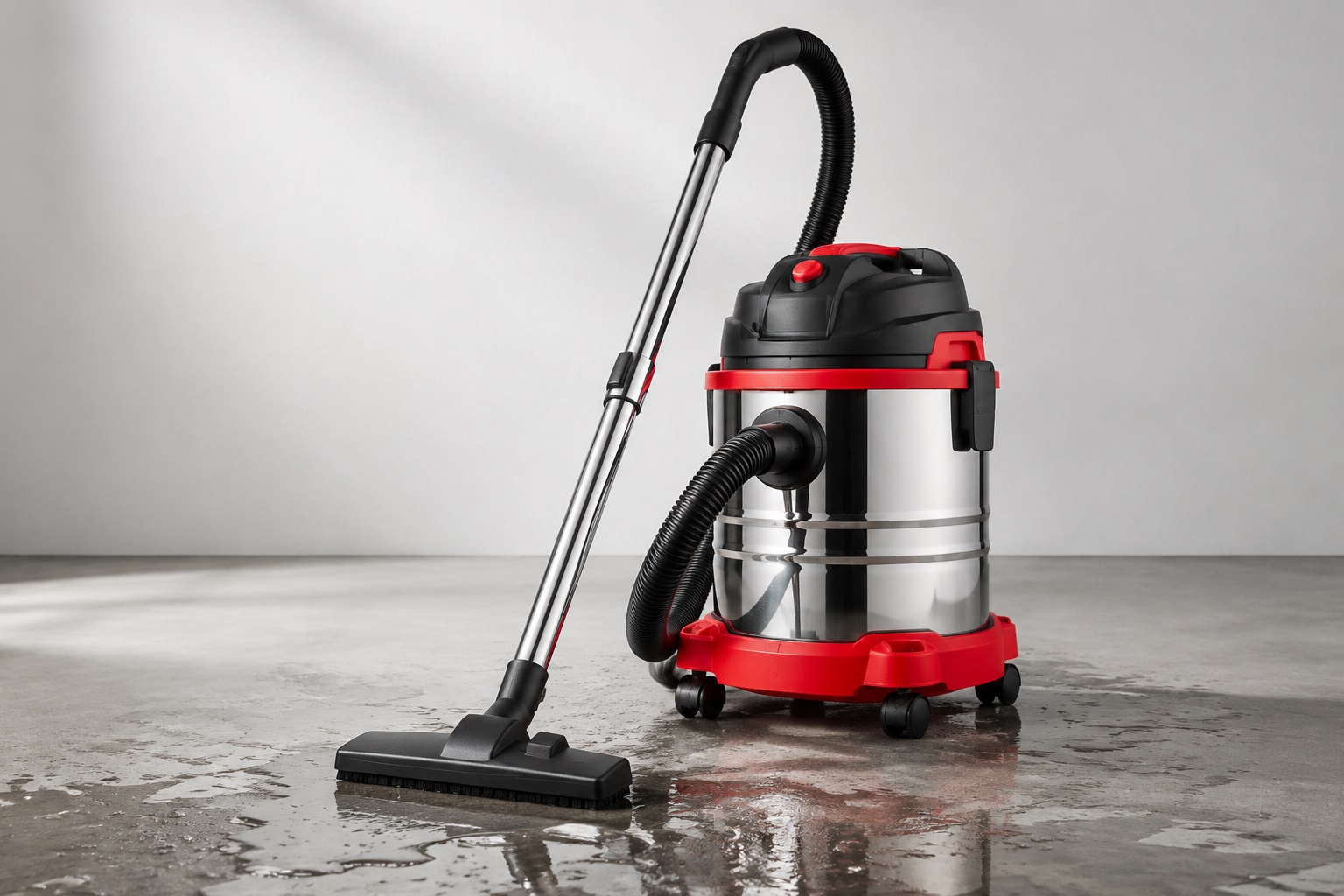
A wet and dry vacuum cleaner is designed to handle cleaning situations that conventional dry-only machines may not manage efficiently. From dust and debris to accidental liquid spills, a versatile machine can simplify cleaning workflows across warehouses, workshops, hotels, construction environments, retail spaces, and other commercial facilities.
However, choosing the right model involves more than comparing motor wattage or finding the lowest quotation.
For professional buyers, the real questions are: What material will the machine collect? How frequently will it operate? How large is the cleaning area? What filtration level is required? Is portability important? And what is the expected total cost of ownership?
The Y1 can be considered within this broader purchasing framework. Whether you are sourcing from a vacuum cleaner manufacturer in China, evaluating an industrial vacuum cleaner supplier, or developing an OEM product line, matching specifications to real applications should come before price comparisons.
💡 Buyer Tip: A machine with impressive specifications is not automatically the best choice. The better product is the one whose performance, durability, capacity, and operating characteristics match the intended cleaning environment.
2. Start by Defining Your Cleaning Application
Before selecting a Y1 configuration or comparing alternative models, define exactly where the vacuum will be used.
Warehouse and Logistics Cleaning
A warehouse may contain packaging fragments, dust, dirt, sand, and occasional liquid spills. For this environment, buyers should consider a wet dry vacuum cleaner with practical mobility, sufficient tank capacity, dependable suction, and straightforward maintenance.
An industrial wet and dry vacuum cleaner for warehouse cleaning supplier should also understand that warehouse operators frequently value productivity and machine uptime rather than suction performance alone.
For large logistics facilities, cord length, wheel design, hose reach, accessory storage, and tank emptying can significantly influence everyday efficiency.
Construction Site Cleaning
A wet dry vacuum cleaner for construction site applications needs to tolerate demanding environments where coarse debris and dust may be common.
🏗️ Buyers sourcing construction site cleaning equipment should examine tank construction, hose durability, wheel strength, filtration, and whether the machine is designed for the type and quantity of material expected on site.
Where hazardous or regulated dust is involved, buyers should select equipment specifically certified and designed for that hazard rather than assuming a general-purpose vacuum is suitable.
Hotels and Commercial Properties
A commercial vacuum cleaner for hotel use has different priorities. Cleaning teams may value maneuverability, relatively low operating noise, convenient accessories, simple storage, and efficient cleaning between rooms and public spaces.
A Portable Quiet Vacuum Cleaner or low noise vacuum cleaner can therefore be attractive for hospitality applications where cleaning may occur while guests are present.
3. Evaluate Suction Performance—But Don't Rely on One Number
Suction is naturally one of the first specifications buyers compare. Terms such as High Suction Vacuum Cleaner and high suction power vacuum cleaner are popular because buyers want fast debris removal.
Yet motor wattage alone does not tell the whole story.
Actual cleaning performance can depend on airflow, vacuum pressure, hose diameter, nozzle design, filter condition, air-path efficiency, and the material being collected.
A well-designed commercial grade vacuum cleaner should maintain practical performance under realistic working conditions rather than simply presenting an attractive motor specification.
For intensive applications, buyers may also evaluate a dual motor vacuum cleaner or heavy duty vacuum cleaner when additional performance and longer operating cycles are required.
⚙️ Engineering Tip: Procurement teams and R&D engineers should request comparable test conditions when evaluating different suppliers. Numbers measured using different methods can create misleading comparisons.
4. Choose Tank Capacity According to Cleaning Frequency
Tank size directly affects how frequently an operator needs to stop and empty the vacuum.
A Large-Capacity Wet Dry Vacuum Cleaner can make sense for warehouses, workshops, commercial facilities, and other environments where substantial debris or liquid needs to be collected.
However, bigger is not always better.
A larger tank can increase the overall footprint and may become heavier when full. Smaller machines can be easier to transport between floors, rooms, vehicles, or job sites.
This means buyers should balance:
Cleaning area and debris volume
Emptying frequency
Storage space
Transportation requirements
Operator handling
Wet versus dry collection frequency
For some professional applications, a stainless steel vacuum tank may be attractive because of its appearance, durability, and suitability for repeated commercial use, depending on the actual tank design and working environment.
5. Understand the Wet and Dry Suction System
One of the main advantages of this category is its ability to address both dry debris and liquids.
A properly designed wet and dry suction system can reduce the need for separate machines in environments where cleaning requirements change throughout the day.
For example, a workshop may need to collect dry floor debris in the morning and deal with a non-hazardous liquid spill later. A multi-purpose machine can potentially handle both tasks when operated according to its instructions.
🧹 This versatility is why a Multi-Functional Durable Vacuum Cleaner can be useful for:
factory floor cleaning, logistics warehouse cleaning, car detailing, hotel maintenance, retail cleaning equipment, commercial cleaning service equipment, and facility management cleaning equipment.
Buyers should nevertheless confirm the manufacturer's instructions for switching between wet and dry collection, compatible filters, liquid limits, and materials that must never be vacuumed.
6. Filtration Should Match the Environment
Filtration deserves particular attention when dry dust represents a significant portion of the workload.
A HEPA filter vacuum cleaner may be desirable in applications where fine-particle filtration is important. However, buyers should verify the actual filter specification and system configuration rather than relying only on a generic “HEPA” marketing statement.
Hospitals and healthcare-related environments require even greater care. Selecting hospital cleaning equipment involves hygiene protocols, filtration requirements, surface-cleaning procedures, and potentially local standards that extend well beyond the vacuum itself.
Similarly, an industrial dust extractor should not automatically be treated as interchangeable with a general wet and dry vacuum. Dust extraction requirements can vary significantly according to the material, process, exposure risk, and applicable regulations.
🔍 Procurement Tip: Ask your cleaning equipment supplier for filtration specifications, replacement filter information, maintenance requirements, and available test documentation.
7. Noise, Weight, Mobility, and Energy Use Affect Real Productivity
Procurement decisions sometimes focus heavily on suction and capacity while overlooking operator experience.
A Fast Lightweight Vacuum Cleaner can be valuable when employees frequently move the machine between rooms or work areas. Likewise, a Portable Quiet Vacuum Cleaner may provide practical benefits in hotels, offices, shops, and other occupied commercial environments.
An Energy-Saving Efficient Powerful Vacuum Cleaner is also increasingly relevant to buyers managing fleets of cleaning machines. Energy consumption may seem insignificant for one unit, but it can become more meaningful across many machines and long operating periods.
When comparing an energy efficient vacuum cleaner, evaluate efficiency together with usable cleaning performance. Lower power consumption is only valuable when the machine still completes the intended job effectively.
8. Real-World Case: Choosing a Vacuum for a Logistics Warehouse
Consider a hypothetical European distributor sourcing cleaning equipment for a logistics customer operating a medium-sized warehouse.
The facility has three recurring problems:
Cardboard and packaging debris, general floor dust, and occasional non-hazardous liquid spills around receiving and maintenance areas.
Initially, the purchasing team focuses on finding the best affordable vacuum and compares quotations primarily by unit price.
After reviewing the application, however, the team creates a more practical checklist covering wet/dry capability, suction performance, tank capacity, wheel durability, filtration, replacement accessories, noise, maintenance, and spare-parts availability.
The lowest-priced option is no longer automatically the preferred product.
Instead, the buyer selects a configuration that better matches daily cleaning frequency and operator requirements. The lesson is important for anyone searching for the best vacuum on a budget, best budget vacuum, or best value hoover:
Purchase price and value for money are not the same thing.
For B2B procurement, reduced downtime, easier maintenance, available spare parts, suitable accessories, and consistent product quality can matter more over the product lifecycle than a small difference in initial cost.
9. Commercial Applications Require Different Priorities
The ideal configuration can change substantially between industries.
Hotels 🏨
A hotel may prioritize low noise, maneuverability, convenient accessories, appearance, and storage. Buyers looking for a commercial vacuum cleaner should consider how easily housekeeping or maintenance personnel can operate the machine in real environments.
Car Detailing 🚗
A car detailing vacuum cleaner benefits from useful crevice tools, flexible hoses, strong practical suction, and convenient movement around vehicles.
Factories 🏭
For factory floor cleaning, durability and capacity may receive greater priority. Buyers should identify the actual debris before choosing equipment, particularly when manufacturing processes create specialized, combustible, hazardous, hot, sharp, or chemically reactive materials.
Retail and Facility Management 🏢
A facility management contractor may need versatile commercial cleaning equipment capable of supporting multiple cleaning situations. Ease of maintenance, accessory availability, transportability, and predictable operating costs can therefore be important purchasing factors.
10. B2B Buyers Should Evaluate the Manufacturer, Not Just the Machine
For importers and wholesalers, choosing a product is only half of the sourcing decision. The supplier behind the product can be equally important.
When evaluating a vacuum cleaner supplier China option or an industrial vacuum cleaner factory, buyers should examine manufacturing capabilities, quality-control procedures, production capacity, engineering support, documentation, customization options, packaging, spare parts, and after-sales communication.
A professional vacuum cleaner manufacturer should be able to communicate product specifications clearly and support buyers during sampling and mass-production stages.
🌍 Buyers planning to import vacuum cleaner from China should also investigate destination-market requirements before placing a bulk vacuum cleaner purchase.
Compliance requirements can differ between the EU, UK, North America, the Middle East, Asia, and other markets. Importers remain responsible for understanding the regulations applicable to their products and markets.
11. OEM, ODM, and Private Label Options for Global Buyers
For distributors and established cleaning brands, a standard product may only be the starting point.
An OEM vacuum cleaner program may involve brand logos, packaging, manuals, accessories, colors, labels, or other agreed specifications. An ODM vacuum cleaner relationship can involve deeper product-development cooperation depending on the manufacturer's capabilities.
A buyer seeking an OEM industrial vacuum cleaner manufacturer should discuss several details early:
MOQ, target market, required certification, product configuration, branding, packaging, accessory combinations, lead time, sample approval, quality requirements, and warranty arrangements.
A private label vacuum cleaner program can be particularly valuable for distributors seeking to build their own market identity instead of competing exclusively on generic products.
Lanxstar can be evaluated as part of this sourcing process alongside technical requirements, commercial terms, customization expectations, and target-market needs.
12. How to Compare Wholesale Price and Total Cost
Searches such as vacuum cleaner price wholesale, industrial vacuum cleaner cost, wholesale vacuum cleaner, and factory direct vacuum cleaner reveal a common procurement concern: price.
Price matters, especially when hundreds or thousands of units are involved. But buyers should compare quotations on equivalent terms.
📊 A meaningful B2B comparison should consider:
Product configuration + accessories + packaging + certification requirements + order quantity + spare parts + warranty terms + logistics + expected service life.
A quotation that appears cheaper may include fewer accessories or a different internal configuration. Conversely, an expensive machine is not automatically superior.
For buyers searching for a good budget vacuum cleaner, best vacuums on a budget, or best value for money hoover, the objective should be appropriate performance at a sustainable lifecycle cost.
13. A Practical Y1 Buying Checklist
Before deciding whether the Y1 is suitable for your business, ask these questions:
Cleaning material: Will you collect dry debris, liquids, or both?
Environment: Is the machine intended for a warehouse, hotel, workshop, construction site, retail facility, or vehicle detailing operation?
Capacity: How much material needs to be collected between emptying cycles?
Performance: What suction and airflow characteristics are appropriate for the intended debris?
Filtration: What filtration level does your application and market require?
Noise: Will the vacuum operate near guests, customers, employees, or residents?
Mobility: Will operators frequently move it between locations?
Durability: Are the tank, wheels, hose, accessories, and body appropriate for expected usage?
Maintenance: How easily can filters and consumable components be inspected or replaced?
Supply: Can the vacuum cleaner supplier provide stable production, spare parts, documentation, and consistent quality?
Customization: Do you require OEM branding, private-label packaging, accessories, or other modifications?
Compliance: Does the intended configuration satisfy applicable destination-market requirements?
✅ Answering these questions makes supplier discussions faster and helps prevent purchasing decisions based on a specification sheet alone.
14. Final Thoughts: Choosing the Right Y1 Configuration
The right Y1 wet and dry vacuum cleaner should be selected around its actual working environment rather than a single headline specification.
Warehouse operators may emphasize tank capacity, mobility, and durability. Hotels may prioritize quiet operation and maneuverability. Construction-related users may need robust components and application-appropriate filtration. Distributors and wholesalers must additionally evaluate manufacturing consistency, documentation, customization, pricing, and supply reliability.
Whether you are looking to buy industrial vacuum cleaner units, source a commercial vacuum cleaner for sale, place a bulk order vacuum cleaner, or develop a private-label cleaning equipment range, focus on the combination of performance, application suitability, durability, operating efficiency, supplier capability, and total value.
For global buyers comparing Y1 wet and dry vacuum cleaner solutions and OEM/ODM possibilities, further product and sourcing information is available at www.lxvacuum.com.
If you are interested, please feel free to contact us.
50 Related SEO Keywords
wet and dry vacuum cleaner, wet dry vacuum cleaner, industrial vacuum cleaner, commercial vacuum cleaner, High Suction Vacuum Cleaner, Portable Quiet Vacuum Cleaner, Multi-Functional Durable Vacuum Cleaner, Fast Lightweight Vacuum Cleaner, Energy-Saving Efficient Powerful Vacuum Cleaner, Large-Capacity Wet Dry Vacuum Cleaner, vacuum cleaner manufacturer, vacuum cleaner supplier, vacuum manufacturer, vacuum cleaner maker, Lanxstar, industrial vacuum cleaner supplier, vacuum cleaner manufacturer in China, industrial vacuum cleaner factory, wholesale vacuum cleaner, bulk vacuum cleaner purchase, OEM vacuum cleaner, ODM vacuum cleaner, private label vacuum cleaner, cleaning equipment supplier, industrial cleaning equipment, commercial cleaning equipment, construction site cleaning equipment, warehouse cleaning solution, hotel cleaning equipment, factory floor cleaning, logistics warehouse cleaning, car detailing vacuum cleaner, facility management cleaning equipment, HEPA filter vacuum cleaner, high suction power vacuum cleaner, heavy duty vacuum cleaner, dual motor vacuum cleaner, stainless steel vacuum tank, low noise vacuum cleaner, energy efficient vacuum cleaner, wet and dry suction system, industrial dust extractor, commercial grade vacuum cleaner, buy industrial vacuum cleaner, vacuum cleaner price wholesale, vacuum cleaner supplier China, factory direct vacuum cleaner, import vacuum cleaner from China, wet dry vacuum cleaner for construction site, OEM industrial vacuum cleaner manufacturer



