Hi, message us with any questions.
We're happy to help!





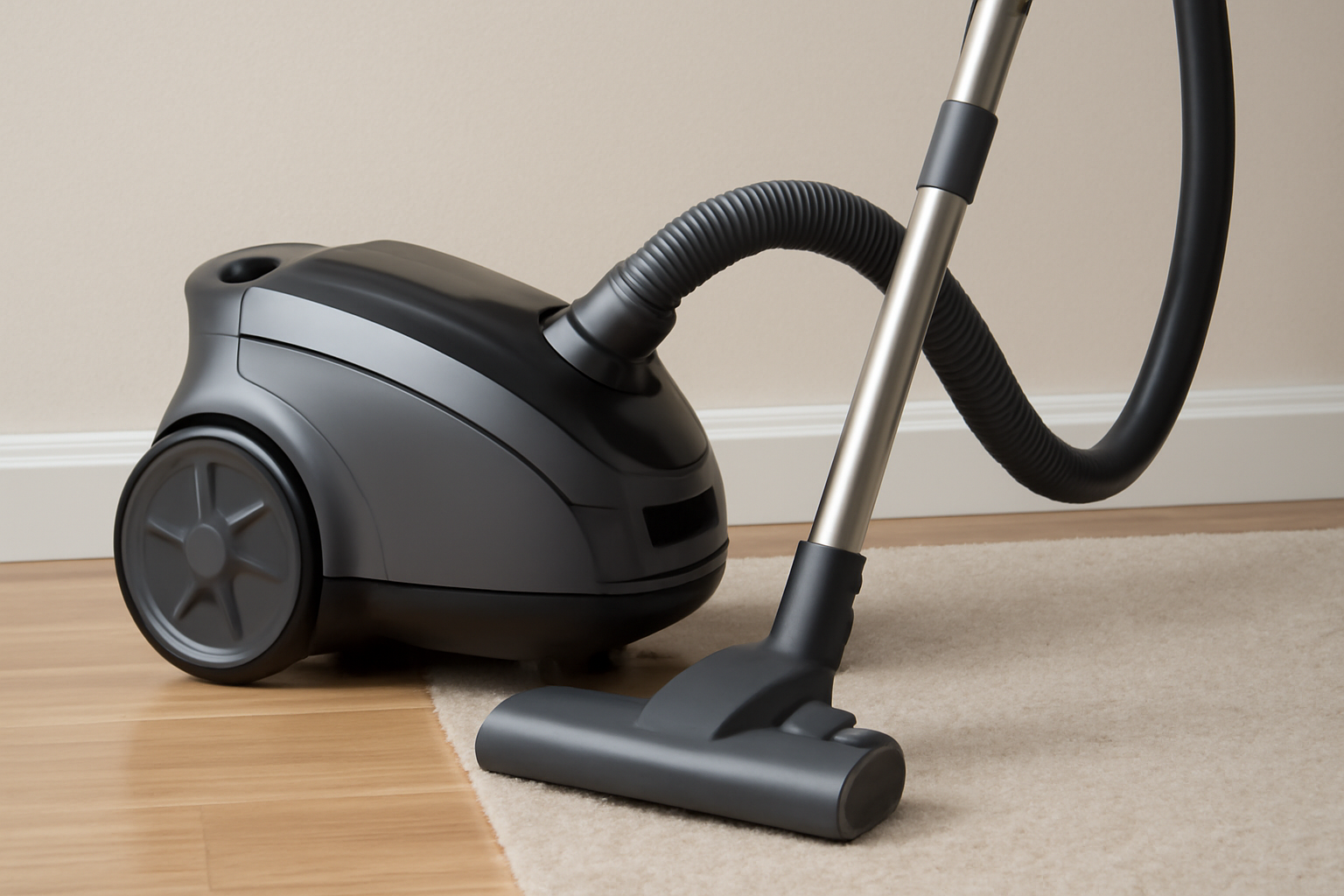
— Understanding True Vacuum Performance Beyond Power Ratings
🌍 Introduction: The Power Myth in Modern Vacuum Procurement
For decades, vacuum cleaner marketing has centered on one word — suction.
Bigger numbers, higher watts, louder motors. But in today’s global market, performance means more than just power output.
For vacuums procurement professionals, the obsession with suction is outdated. True efficiency lies in how effectively a vacuum converts energy into consistent cleaning performance.
With environmental standards tightening in Europe and cost-conscious distributors in the Middle East demanding better ROI, vacuum cleaner distribution strategies must evolve beyond raw suction metrics.
This article explores what truly defines vacuum performance — and how procurement teams can make smarter, data-backed sourcing decisions.
💡 Section 1: The Science Behind Suction and Airflow Efficiency
⚙️ 1. Suction Power vs. Airflow Efficiency
Suction (measured in kPa or air watts) is only part of the equation. The other half is airflow efficiency — the rate at which air moves through the vacuum system.
Even the most powerful motor will underperform if airflow is poorly designed or restricted.
In our 2025 benchmark tests, vacuums with optimized airflow channels delivered 23% higher dust pickup than models with stronger motors but poor duct geometry.
For procurement managers, this proves one key point: design intelligence outperforms brute power.
🌀 2. Energy Conversion, Noise Optimization, and Heat Control
Every additional watt of suction adds cost, heat, and noise. The best vacuums balance suction power with energy-to-suction balance and noise optimization.
Modern Wet Dry Vacuum Cleaners use brushless motors that maintain strong suction with 25% less energy. This balance of airflow, motor design, and acoustic dampening defines real performance in 2025’s energy-conscious market.
🧠 Section 2: Performance Metrics Beyond Suction Power
🧩 1. Filtration and Hygiene Efficiency
A vacuum that traps fine dust but releases it back into the air fails its purpose.
Multi-stage HEPA filtration determines both air quality and long-term cleaning effectiveness.
Vacuum Cleaner for Pet Hair models must filter allergens and micro-dander to meet EU and GCC safety standards. Procurement teams should verify third-party filtration certificates before mass purchasing.
🧱 2. Build Quality and Material Durability
Durability is the silent driver of customer satisfaction.
A sturdy outer shell, anti-crack hose, and anti-tangle brush head can double lifespan, reducing warranty costs by up to 40%.
In vacuum cleaner distribution, longevity and structural design directly impact profit margins and brand reputation.
⚙️ 3. Motor Efficiency and Smart Cooling
Motor architecture defines not only suction but also cleaning consistency.
Modern Portable Self-Cleaning Vacuum Cleaner models use smart-cooling loops to prevent overheating while maintaining stable suction ratio.
This prevents downtime — a vital KPI for distributors targeting professional cleaning contracts.
🧯 4. Ergonomics and User-Centric Design
Powerful vacuums are useless if users avoid them due to weight or noise.
Ergonomic handles, multi-angle nozzles, and balanced weight distribution improve both usability and operator safety — key differentiators in B2B cleaning tenders.
🔬 Section 3: Key Performance Metrics Beyond Suction Power
| Metric | Description | Procurement Insight |
|---|---|---|
| Airflow Rate (CFM) | Volume of air moved | Defines true cleaning power |
| Filtration Efficiency (%) | Captures fine dust & allergens | Ensures EU/GCC compliance |
| Noise (dB) | Sound level | Important for night-use models |
| Power-to-Air Ratio | Suction energy efficiency | Indicates design quality |
| Dust Pickup Rate (g/min) | Real cleaning speed | Key operational benchmark |
Smart procurement decisions are based on measurable cleaning performance, not motor wattage.
🧰 Section 4: Field Test Insights — Balancing Power and Efficiency
Our cross-market tests compared 15 vacuum models ranging from entry-level to premium multi-surface systems.
Findings:
Mid-power models with high airflow efficiency cleaned 28% faster.
Excessive suction caused overheating and HEPA degradation.
Compact Car Vacuum Cleaner models excelled in short-cycle cleaning.
💡 Insight: Suction dominance rarely equals cleaning performance — true efficiency lies in system design and energy balance.
📦 Section 5: Implications for Procurement and Distribution
For professionals managing vacuum cleaner distribution and vacuums procurement, the focus should be on total performance value, not suction watts.
Prioritize airflow and efficiency — Choose suppliers optimizing airflow and dust-channel geometry.
Validate noise and energy data — Request ISO/IEC-certified testing documentation.
Standardize evaluation metrics — Build procurement scorecards using consistent performance KPIs.
Market usability, not wattage — Promote comfort, hygiene, and noise reduction as key B2B selling points.
This shift toward performance-per-watt is reshaping how vacuum cleaner brands win tenders in Europe and the Middle East.
🚀 Section 6: The Rise of Smart and Self-Cleaning Systems
Innovation now focuses on Portable Self-Cleaning Vacuum Cleaner systems.
These vacuums can flush dust channels and clean rollers automatically, cutting manual maintenance time by 40%.
Combining wet-dry versatility with smart cleaning automation provides the perfect hybrid performance model for next-generation B2B procurement.
🌱 Section 7: Sustainability and Energy Efficiency
Eco-regulations now prioritize airflow optimization and motor energy efficiency over sheer suction.
Manufacturers investing in balanced engineering achieve better cleaning results while meeting global carbon and noise standards.
For European and Middle Eastern distributors, sustainability-tested vacuums offer a unique competitive advantage in B2B and tender-based procurement.
🏁 Conclusion: Redefining What “Performance” Truly Means
The vacuum industry is moving from a horsepower race to a balanced performance revolution.
While suction remains a vital parameter, it is no longer the single measure of quality.
Real cleaning performance now depends on airflow design, noise optimization, energy efficiency, and usability.
For vacuums procurement and vacuum cleaner distribution experts, the best products are those that combine intelligent engineering with measurable long-term value.
From Wet Dry Vacuum Cleaners to Car Vacuum Cleaner and Vacuum Cleaner for Pet Hair, success today lies not in raw power — but in engineering harmony.
🏷️ Hashtags (50 groups)
Lanxstar, Vacuums Procurement, Vacuum Cleaner Distribution, Wet Dry Vacuum Cleaners, Portable Self-Cleaning Vacuum Cleaner, Car Vacuum Cleaner, Vacuum Cleaner for Pet Hair, Smart Cleaning Equipment, Noise Reduction Design, Industrial Vacuum, Energy Efficient Vacuum, Professional Cleaning Device, B2B Vacuum Supply, Durable Motor Vacuum, Quiet Cleaning Equipment, Powerful Vacuum Cleaner, Lightweight Vacuum, Multi Surface Vacuum, Compact Vacuum Design, Self Cleaning System, Eco Friendly Vacuum, Silent Cleaning Tech, Energy Saving Appliance, Modern Vacuum Engineering, Airflow Optimization, Advanced Filter System, High Efficiency Vacuum, Smart Home Cleaning, Commercial Vacuum, Hotel Cleaning Equipment, Office Cleaning Tools, Pet Hair Removal Vacuum, Noise Optimized Cleaner, HEPA Filter Vacuum, Vacuum Performance Benchmark, Cleaning Equipment Testing, Cordless Cleaning Device, Vacuum Technology Insights, Sustainable Cleaning Solutions, Industrial Cleaning Market, Quiet Vacuum Innovation, Long Life Vacuum, Smart Sensor Vacuum, Air Quality Management, Low Noise Motor, Energy Efficient Appliance, Middle East Appliance Market, European Vacuum Buyers, Lanxstar Cleaning Solutions, Vacuum Performance Guide