Hi, message us with any questions.
We're happy to help!





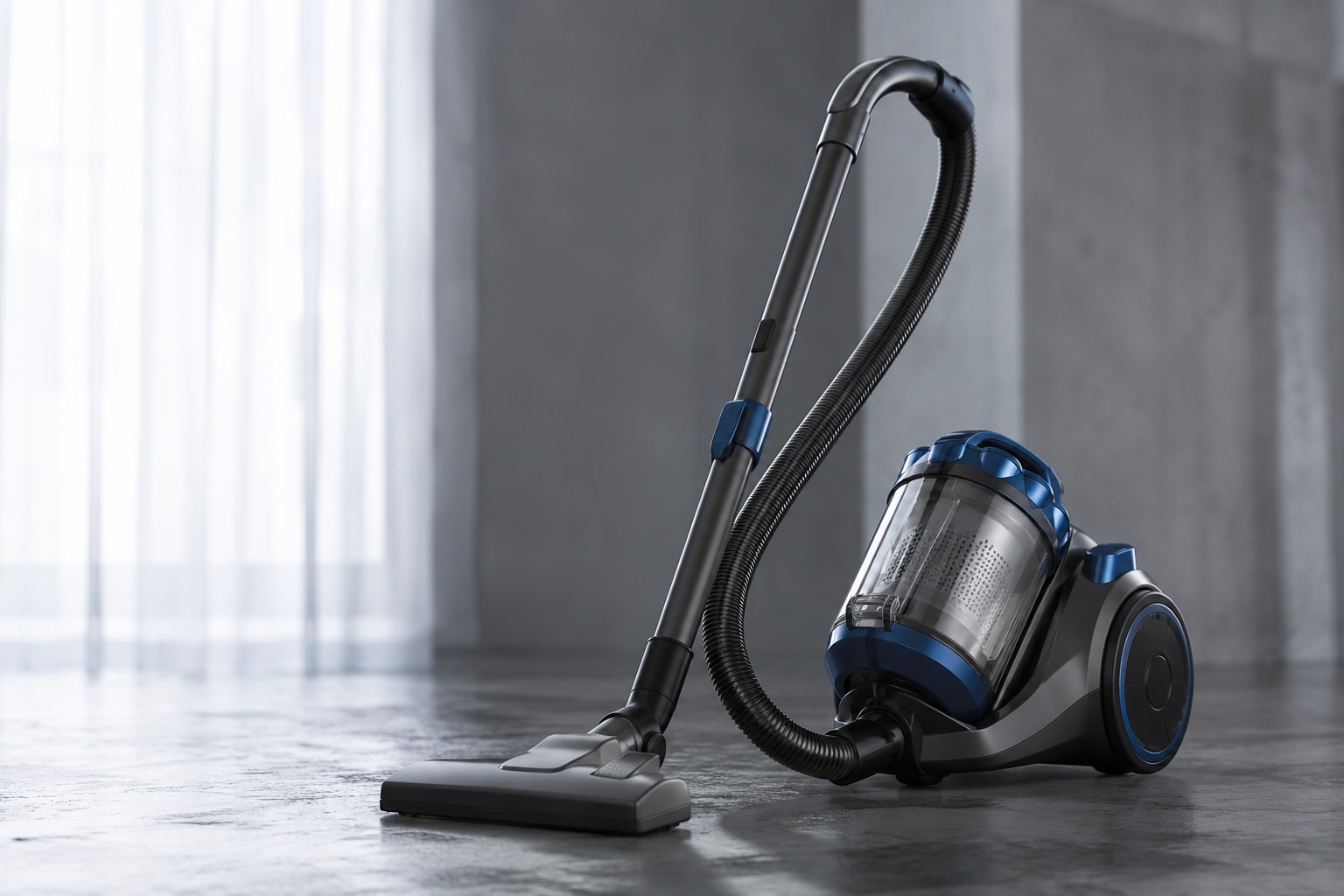
How Smart Vacuum Manufacturers Attract High-Value B2B Buyers in 2026 and Beyond
For many years, growing a vacuum cleaner business was relatively straightforward. Manufacturers attended trade shows, listed products on B2B platforms, and waited for inquiries.
Today, that approach is no longer enough.
The global vacuum cleaner industry has become increasingly competitive. Procurement managers, distributors, and private-label brands now conduct extensive online research before engaging with any supplier.
Before submitting an RFQ, buyers often compare multiple factories, review certifications, evaluate product quality, assess engineering capabilities, and verify production capacity.
This shift has fundamentally changed how successful companies approach vacuum lead generation.
The manufacturers generating the highest-quality leads today are not necessarily the largest factories. Instead, they are the suppliers that understand modern buyer behavior and build marketing systems around it.
🔍 The Hidden Buyer Journey Most Vacuum Suppliers Misunderstand
Many manufacturers assume that buyers move directly from search to inquiry.
In reality, the process is much more complex.
A typical North American or European procurement manager may follow a journey like this:
Google Search
↓
Visit 5–10 Supplier Websites
↓
Compare Product Specifications
↓
Review Certifications
↓
Check LinkedIn Profiles
↓
Watch Factory Videos
↓
Request Samples
↓
Internal Evaluation
↓
RFQ Submission
↓
Negotiation
↓
Purchase Decision
Many suppliers focus only on the final stages of this process.
The most successful vacuum cleaner suppliers influence buyers throughout the entire journey.
The objective is not simply generating inquiries.
The objective is becoming the supplier buyers trust before they are ready to buy.
📊 What B2B Vacuum Buyers Actually Look For
Many manufacturers emphasize production capacity and factory size.
However, experienced procurement professionals focus on different priorities.
Buyers rarely ask:
How many units can you produce monthly?
Instead, they ask:
Can you maintain consistent quality?
Do you comply with regional regulations?
Can you support private-label projects?
Are your lead times reliable?
How responsive is your engineering team?
What happens if quality issues occur?
This is where many vacuum manufacturers lose opportunities.
Suppliers sell products.
Buyers buy risk reduction.
Every effective B2B customer acquisition strategy should answer one question:
Why is partnering with your company safer than partnering with a competitor?
🚀 Why SEO Generates Higher-Intent Leads Than Most Channels
Trade shows and B2B marketplaces remain important.
However, neither channel consistently captures buyers at the earliest stage of their purchasing journey.
Google does.
When buyers search:
OEM vacuum cleaner manufacturer
cordless vacuum supplier
commercial vacuum manufacturer
private label vacuum factory
vacuum cleaner supplier USA
they are actively looking for solutions.
This makes SEO one of the most powerful long-term lead generation vacuum strategies available.
💡 Create Content That Solves Procurement Problems
Most supplier websites focus heavily on products.
Few address buyer concerns.
Instead of publishing another product page, consider creating content such as:
How to Evaluate a Vacuum Cleaner Factory
Common Mistakes When Selecting an OEM Partner
Vacuum Cleaner Certification Requirements for Europe
How Long Does Private Label Vacuum Development Take?
Reducing Product Returns Through Better Engineering
Educational content attracts decision-makers earlier in the buying cycle and positions your company as an industry authority.
📈 Case Study: How an OEM Vacuum Manufacturer Increased Distributor Inquiries by 172%
A mid-sized OEM vacuum manufacturer specializing in cordless vacuum cleaners struggled to generate consistent distributor inquiries.
The company relied heavily on trade shows and online marketplaces.
In 2024, management shifted its strategy toward educational SEO content targeting keywords such as:
OEM vacuum cleaner manufacturer
cordless vacuum supplier
private label vacuum cleaner
commercial vacuum manufacturer
Instead of creating product-focused pages, the company developed buyer-oriented resources addressing compliance requirements, sourcing challenges, and product development timelines.
Within ten months:
Organic traffic increased by 214%
Distributor inquiries increased by 172%
Sample requests increased by 96%
Lead acquisition costs decreased by 41%
The most valuable lesson was clear:
Educational content generated significantly more qualified opportunities than promotional content.
This became the company's strongest vacuum lead generation asset.
🎯 The 80/20 Rule of B2B Customer Acquisition
Many successful manufacturers discover that a small number of marketing activities generate the majority of qualified leads.
For most vacuum suppliers, those activities include:
1. SEO Content Marketing
Creates long-term organic visibility.
2. LinkedIn Thought Leadership
Builds trust and authority.
3. Distributor Partnerships
Expands market reach.
4. Email Lead Nurturing
Improves conversion rates.
Companies often spend excessive resources pursuing short-term inquiries while neglecting assets that continue generating leads for years.
🔥 Why Most Vacuum Suppliers Fail on LinkedIn
LinkedIn has become one of the most underutilized channels for sales leads vacuum generation.
The problem is not the platform.
The problem is the approach.
Many suppliers connect with buyers and immediately send product catalogs.
Procurement managers receive dozens of similar messages every week.
As a result, most are ignored.
Successful companies take a different approach.
Instead of selling immediately, they share valuable insights such as:
Vacuum technology trends
Industry compliance updates
Market demand forecasts
Product innovation developments
When buyers eventually need a supplier, these companies are remembered first.
In B2B markets, familiarity often outperforms visibility.
🔥 Case Study: LinkedIn Generated More Qualified Leads Than a Trade Show
One growing vacuum manufacturer attended a major international cleaning equipment exhibition and collected over 120 business cards.
During the same six-month period, the company consistently published LinkedIn content covering:
Vacuum technology innovations
OEM development insights
Market trend analysis
Regulatory updates
The results surprised management.
Trade shows generated visibility.
LinkedIn generated engagement.
Within six months:
37 qualified buyer conversations were initiated
11 formal RFQs were received
4 new distributor partnerships were established
Several buyers specifically mentioned LinkedIn content as the reason they made contact.
This demonstrates how modern lead generation vacuum strategies increasingly depend on authority rather than promotion.
📹 Factory Transparency Is Becoming a Competitive Advantage
Global buyers increasingly prefer transparency over polished marketing.
Procurement teams want evidence.
They want to see:
Production lines
Quality control systems
Testing laboratories
Engineering teams
Warehouse operations
A simple factory video often builds more trust than a professionally designed brochure.
Transparency reduces uncertainty.
Reduced uncertainty improves conversion rates.
📊 Case Study: Why a European Distributor Chose One Supplier Over Seven Competitors
A European distributor evaluated eight potential manufacturing partners for a new private-label vacuum cleaner project.
Price differences between suppliers were relatively small.
The final decision was based on:
Compliance documentation
Factory transparency
Product development support
Response speed
Interestingly, the chosen supplier was not the lowest-priced option.
Instead, the winning supplier provided:
Detailed testing reports
Production process videos
Dedicated engineering support
Faster communication
The sourcing team concluded that the selected supplier represented the lowest operational risk.
This case highlights a crucial reality:
Buyers frequently prioritize reliability over pricing.
For manufacturers seeking international growth, credibility often converts better than discounts.
💎 The "Trust Gap" Most Suppliers Never Address
Many vacuum suppliers believe they have a traffic problem.
In reality, they often have a trust problem.
Buyers can easily find hundreds of factories online.
What they struggle to find is proof of expertise, consistency, and reliability.
When procurement managers evaluate suppliers, they typically ask:
Can this factory consistently maintain quality?
Does the supplier understand regulatory requirements?
Will communication remain effective after ordering?
Can they support future product development?
Is the company operationally stable?
This gap between visibility and trust explains why some suppliers receive fewer inquiries despite offering competitive pricing.
The manufacturers winning more business are often those that reduce uncertainty most effectively.
🌎 Localized Market Pages Generate Better Leads
Many suppliers attempt to serve global markets with generic content.
Localized content performs better.
Examples include:
Vacuum Cleaner Supplier USA
OEM Vacuum Manufacturer Germany
Commercial Vacuum Solutions UK
Private Label Vacuum Factory Europe
Localized pages address:
Regional regulations
Consumer preferences
Market-specific trends
Distribution structures
Buyers are more likely to engage when suppliers demonstrate understanding of their market.
⚡ The Future of Vacuum Lead Generation
The next generation of buyer behavior is already emerging.
Procurement professionals increasingly use:
AI-powered search engines
ChatGPT-style research tools
LinkedIn communities
Industry knowledge platforms
Video-based supplier evaluations
Traditional lead generation methods alone will become less effective.
Forward-thinking vacuum manufacturers are investing in:
Technical knowledge libraries
Thought leadership content
Video marketing
Educational resources
AI-search visibility
The companies adapting earliest will gain a significant competitive advantage.
🏆 Conclusion
Successful vacuum lead generation is no longer about generating the highest volume of inquiries.
It is about attracting qualified buyers, building trust earlier in the purchasing journey, and positioning your company as a low-risk, high-value partner.
The most successful vacuum cleaner suppliers combine SEO, educational content, LinkedIn authority, factory transparency, localized marketing, and long-term relationship building.
In an increasingly competitive global marketplace, trust and expertise have become the ultimate lead-generation tools.
📌 Suitable Audience
Vacuum Cleaner Distributors
OEM Procurement Managers
Private Label Brand Owners
Product Development Engineers
Cleaning Equipment Importers
Vacuum Industry Entrepreneurs
Cleaning Industry Associations
International B2B Buyers
📌 Hashtags
vacuum cleaner supplier, vacuum manufacturer, vacuum lead generation, lead generation vacuum, sales leads vacuum, B2B customer acquisition, OEM vacuum manufacturer, private label vacuum, cordless vacuum supplier, commercial vacuum manufacturer, vacuum factory China, vacuum distributor, vacuum wholesaler, vacuum procurement, vacuum sourcing, vacuum industry, cleaning equipment manufacturer, vacuum innovation, vacuum technology, smart vacuum solutions, industrial vacuum systems, vacuum product development, vacuum R&D team, vacuum engineering, vacuum branding, vacuum marketing, vacuum SEO, B2B marketing, LinkedIn lead generation, global distributors, international buyers, ecommerce vacuum brand, retail vacuum buyer, vacuum certification, product compliance, factory audit, quality control vacuum, vacuum exporter, vacuum importer, cleaning industry, trade fair marketing, digital lead generation, manufacturing growth, supplier development, OEM business, private brand development, global supply chain, vacuum business growth, Lanxstar, vacuum sales strategy



