Hi, message us with any questions.
We're happy to help!





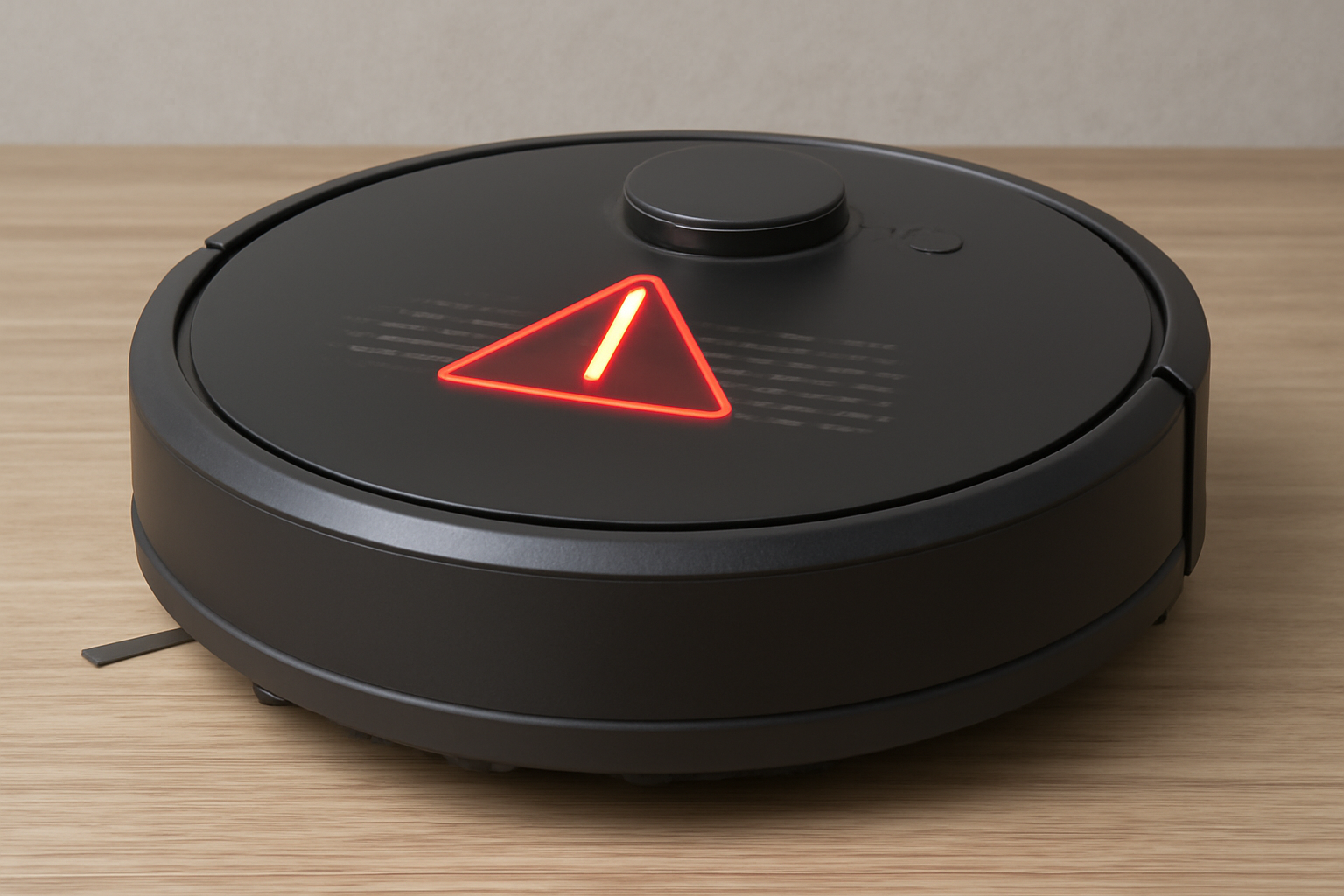
If motors are the muscles of a vacuum cleaner, firmware is the brain.
For years, the industry obsessed over suction, motors, batteries, and filters.
But quietly, a new failure source has become more dangerous than all of them:
Firmware bugs are killing more vacuum brands than motor failures — especially in Europe and the Middle East.
These bugs don’t show up on spec sheets.
You can’t see them in showrooms.
They don’t appear during a quick factory visit.
But after launch, they explode in the field as:
random shutdowns
stuck error codes
mode-switch glitches
inconsistent suction
broken self-cleaning cycles
false clog warnings
This article breaks down how firmware bugs are destroying trust in Upright Vacuum Cleaners, Household Vacuum Cleaners, Cordless Vacuum Cleaner lines, smart Portable Self-Cleaning Vacuum Cleaner systems, and compact Car Vacuum Cleaner models — and why the risk is even greater for any Vacuum Cleaner for Allergies, where reliability is non-negotiable.
We’ll also explore what serious buyers must do in 2025 to evaluate firmware, not just hardware.
🧠 1. What “Firmware” Really Means in Modern Vacuums
Firmware is not just “software inside the PCB.”
In modern vacuums, firmware:
reads sensors (dust, current, temperature, tilt, blockage)
controls the motor RPM
manages battery charge and discharge
switches cleaning modes
interprets user input
triggers safety shutdowns
runs self-cleaning routines
logs errors
In smart Upright Vacuum Cleaners and Household Vacuum Cleaners, firmware decides:
how hard the vacuum pulls on carpets
how quietly it runs on tiles
when it reduces power to protect the motor
when it warns about blocks or filter cleaning
When firmware logic is wrong, every other good component is wasted.
🔥 2. How Firmware Bugs Show Up in Real Life (Not in the Lab)
The biggest problem with firmware defects:
they usually don’t appear during factory tests.
Factories test:
power-on
mode switching a few times
basic safety thresholds
a short runtime sequence
But in real homes across Europe and the Middle East, bugs appear as:
vacuums that shut off randomly after 5–10 minutes
devices that refuse to start in one specific mode
suction that pulses or “breathes” on certain carpets
cordless models that drop from 40 minutes claimed runtime to 12–15 in real use
self-cleaning functions that freeze mid-cycle in a Portable Self-Cleaning Vacuum Cleaner
Car Vacuum Cleaner units that suddenly stop working inside hot car interiors
These aren’t bad motors or weak batteries.
They are logic errors in firmware.
🧨 3. Why Firmware Failures Hurt More Than Mechanical Failures
When a motor fails, it’s visible.
When a battery fails, it’s measurable.
When plastic cracks, you can see it.
Firmware bugs are different:
they are intermittent
they are hard to reproduce
they vary by user behaviour
they depend on environment (heat, voltage, humidity)
they often pass factory QC but fail in the field
Result:
higher customer frustration
more “mysterious” returns
longer troubleshooting time
higher support cost
A single firmware bug that affects one batch of Upright Vacuum Cleaners or Household Vacuum Cleaners can:
blow up return rates
damage retailer relationships
force emergency discounts
destroy months of brand-building overnight
🌍 4. Why Europe & the Middle East Are Hit Harder by Firmware Bugs
Firmware problems show up sooner and more violently in Europe and the Middle East due to:
1) Voltage Diversity
220–240V with varying grid stability
micro-outages
spikes and dips
Poorly designed firmware misreads power events as internal faults.
2) Climate Stress
hot, dusty environments in GCC countries
cold, humid environments in parts of Europe
Temperature and dust affect sensors and battery behavior — if firmware isn’t robust, vacuums malfunction.
3) Retail Structure
Strong consumer protection + strict retailers =
aggressive returns
penalties for high defect rates
demands for compensation
Firmware bugs that would be “tolerated” in some markets quickly become financial disasters in these regions.
🧩 5. The Five Most Common Firmware Bug Types in Vacuums
🧷 Bug 1 — Mode-Switch Logic Failures
The user presses “carpet mode,” but:
suction doesn’t increase
brush roll doesn’t speed up
or the vacuum shuts down
The root cause:
state machine logic that didn’t consider edge cases (switching modes too quickly, power fluctuations, battery thresholds).
🔌 Bug 2 — Battery Management Errors
In cordless models:
runtime is unpredictable
battery level shows 3 bars, then suddenly 0
device shuts down even though there should be reserve
Often caused by:
poor calibration of battery curves
simplistic state-of-charge estimation
no compensation for high load or heat
This is critical in Cordless Vacuum Cleaner and Car Vacuum Cleaner segments.
🌡️ Bug 3 — Over- or Under-Protective Thermal Logic
Some firmware:
shuts down too early (“overprotective”)
or doesn’t shut down at all (“underprotective”)
Both are bad:
overprotection → user frustration, “my vacuum keeps stopping”
underprotection → motor and PCB damage after prolonged overload
In hot Middle Eastern climates, this bug is especially deadly.
🧹 Bug 4 — Sensor Misinterpretation
Dust sensor, clog sensor, tilt sensor, hall sensors on brush rolls — any of them can cause:
false clog alarms
permanent error codes
flashing lights that can’t be reset
In a Vacuum Cleaner for Allergies, sensor reliability is tied directly to customer trust.
If HEPA or filter indicators behave inconsistently, customers lose faith in the entire product.
🔄 Bug 5 — Self-Cleaning & Wet/Dry Logic Bugs
Portable Self-Cleaning Vacuum Cleaner systems and 4-in-1 style wet/dry machines rely on:
suction reversing
roller rinsing
separate fluid paths
timed sequences
A small timing error can:
leave dirty water in rollers
flood internal cavities
lock the machine in an error state
These bugs are heavily reported in advanced smart models when firmware is rushed.
🚗 6. Why Cordless & Automotive Segments Suffer the Most
Cordless Vacuum Cleaner and Car Vacuum Cleaner products run in the harshest logical environments:
fluctuating loads
high amperage draws
aggressive user behavior
hot interiors (especially in Middle Eastern summers)
frequent on/off cycling
Cheap firmware stacks simply cannot handle these dynamics.
Similarly, a smart Portable Self-Cleaning Vacuum Cleaner combines:
fluid management
motor control
roller control
sensor fusion
If the firmware architecture is shallow, field failures are a matter of time — not chance.
🧪 7. How Serious Buyers Should Test Firmware (Not Just Hardware)
Most procurement teams still test vacuums like it’s 2015:
power on
check modes
check suction
run for a few minutes
In 2025, this is not enough.
You should be running scenario-based firmware tests, such as:
Rapid Mode Switching
Carpet ↔ hard floor ↔ turbo ↔ eco — pressed in fast sequence.Low Battery Edge Conditions
Switching modes at 15–20% battery and monitoring behavior.Hot Environment Simulation
Running devices in 35–45°C environments for extended periods.Sensor Obstruction Simulation
Partially blocked ducts, dust in sensors, slight tilt, and unstable surfaces.Multi-Surface Stress Test
Repeatedly switching from hard floor to carpets, rugs, car mats.Error Recovery Test
Trigger a fault, then see if the vacuum can recover gracefully or if it becomes permanently “stuck.”
If firmware fails here, the product is not ready — no matter how good the motor looks.
📊 8. The Data You Must Demand From Firmware-Driven Suppliers
Ask your suppliers to provide:
firmware version history
changelog of bug fixes
field failure breakdown by root cause
error code frequency logs
self-test coverage reports
battery runtime variance charts
environment-based test data (heat, humidity, voltage)
regression test checklist for each firmware update
If a supplier:
cannot provide this
or says “don’t worry, it’s stable” without proof
…then your risk is extremely high.
This applies to all digital categories of Upright Vacuum Cleaners and Household Vacuum Cleaners, and even more to cordless and automotive models.
🛠️ 9. What Reliable Firmware Architecture Looks Like
Brands that rarely suffer firmware disasters share similar technical patterns:
clear separation of safety logic and user interface logic
watchdog timers to reset stuck states
conservative defaults (fail-safe, not fail-dangerous)
robust state machines with defined transitions
safe battery limits with environment compensation
self-calibration routines for sensors
update mechanisms with rollback options
When you look at a stable Vacuum Cleaner for Allergies, it’s almost guaranteed that its firmware has gone through:
multiple lab iterations
edge-case testing
long-term simulation runs
Hardware matters — but firmware maturity decides whether that hardware survives.
💼 10. The Economics of a Single Firmware Bug
Consider one bug in one firmware version that:
causes vacuums to shut down after 7–10 minutes in carpet mode
affects 5,000 units shipped to one retailer
Consequences:
25–40% return rate
forced refunds or replacements
retailer penalties
emergency technical investigation
potential line delisting
brand rating collapse online
All triggered by a few lines of bad logic.
Firmware is now a financial risk factor, not just a technical one.
🛡️ 11. Building a “Firmware Maturity Score” Into Procurement
Forward-thinking buyers are starting to score suppliers on firmware, not just hardware:
Firmware Maturity Score (FMS) may include:
number of firmware engineers
years of embedded experience
internal QA process
test coverage rate
update/rollback capability
presence of automated testing
past field failure records
Suppliers with high FMS are far less likely to cause field disasters — even if their products are complex (for example, a Portable Self-Cleaning Vacuum Cleaner or advanced Cordless Vacuum Cleaner line).
🏁 Conclusion: The Future of Vacuum Quality Is Written in Code
Motors matter.
Batteries matter.
Plastic structure matters.
But in 2025 and beyond:
Firmware is the real battlefield where vacuum brands live or die.
In Europe and the Middle East, where climate stress is high and retail pressures are unforgiving, firmware bugs are quietly destroying brands that look perfectly fine on paper.
The best-performing vacuums of the next decade — whether Upright Vacuum Cleaners, Household Vacuum Cleaners, cordless systems, car-focused devices like Car Vacuum Cleaner models, or health-focused units such as any Vacuum Cleaner for Allergies — will share one trait:
Mature, thoroughly tested, transparent firmware.
If you are a buyer, engineer, or distributor, it’s time to stop asking only:
“How strong is the suction?”
and start asking:
“How strong is the firmware?”
Hashtags
lanxstar, #vacuumfirmware, #uprightvacuum, #householdvacuum, #cordlessvacuum, #carvacuum, #selfcleaningvacuum, #smartvacuum, #embeddedsoftware, #buganalysis, #qualitycontrol, #engineeringdesign, #batterymanagement, #sensorlogic, #thermalprotection, #multisurfacecleaning, #allergyvacuum, #productstability, #globaldistribution, #euromarket, #middleeastmarket, #retailrisk, #returnrate, #fieldfailures, #oemvacuum, #odmvacuum, #buyersguide, #procurementstrategy, #softwaretesting, #firmwarearchitecture, #embeddedengineering, #productreliability, #vacuumtechnology, #errorhandling, #watchdogdesign, #state-machine, #vacuuminnovation, #brandprotection, #marketinsights, #cleaningindustry, #engineeringmaturity, #smartappliances



