Hi, message us with any questions.
We're happy to help!





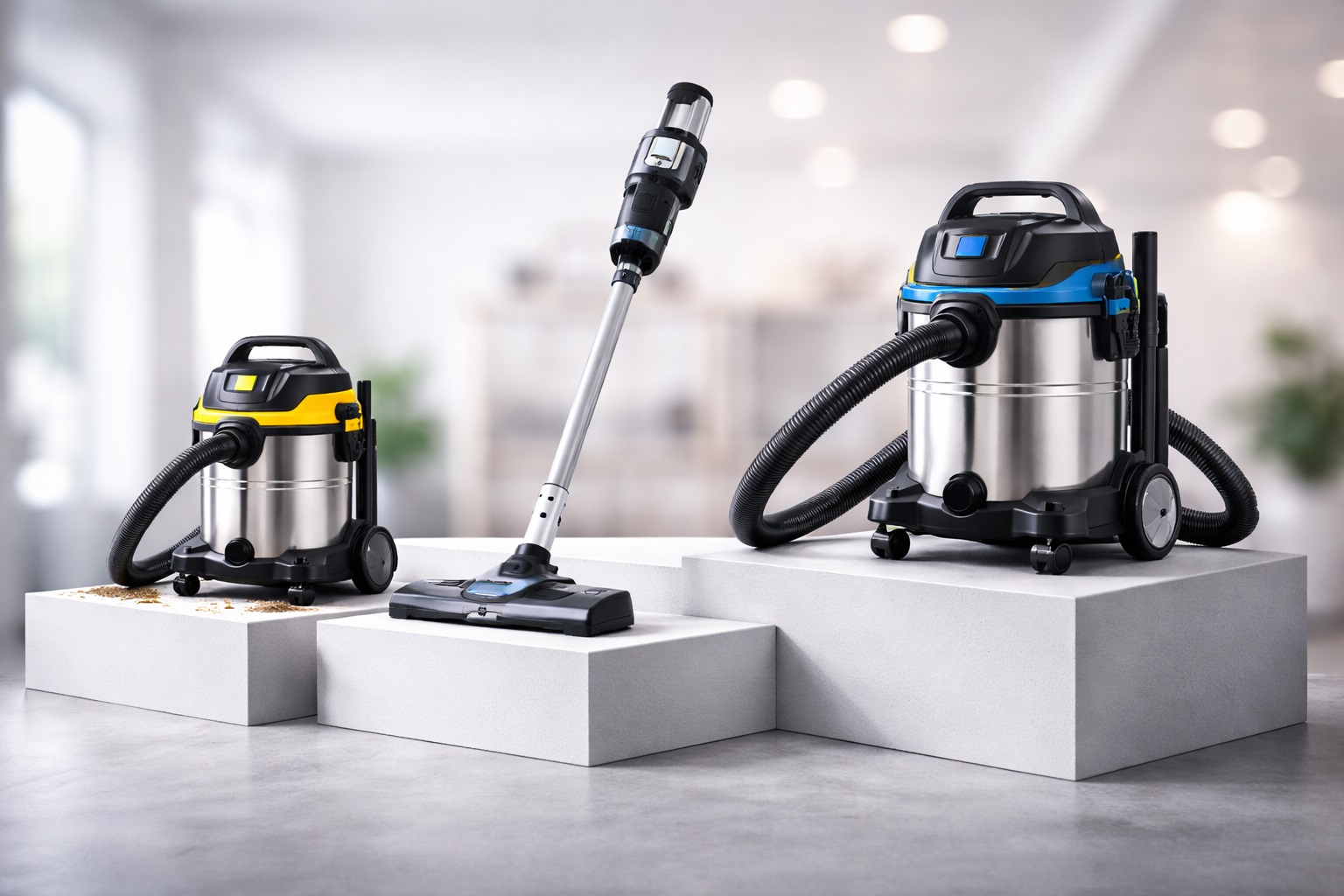
The vacuum cleaner market is no longer driven by a single “best product.” Buyers now expect brands and distributors to offer clearly defined product tiers that match different budgets, usage scenarios, and performance expectations.
A well-structured product line allows manufacturers and distributors to capture broader demand while improving margins and reducing internal competition between models.
1. Why Product Line Segmentation Matters
Not all buyers value the same features.
Some buyers prioritize affordability, others look for durability and balance, while premium buyers focus on performance, design, and advanced technology. A clear product line strategy aligns offerings with these expectations.
Segmentation prevents price confusion and strengthens brand clarity.
2. Understanding Entry-Level Vacuum Cleaner Buyers
Entry-level buyers focus on accessibility.
They often search for the best vacuum on a budget, good budget vacuum, or best affordable vacuum. These buyers value reliability, simplicity, and acceptable performance at a competitive price.
Entry-level products should remove complexity, not add it.
3. Entry-Level Product Feature Strategy
Functionality should be focused.
An entry-level vacuum cleaner may offer basic High Suction Vacuum Cleaner performance, simple filtration, and durable construction without advanced smart features. Corded or basic cordless designs are common.
Value comes from reliability, not innovation.
4. Pricing Logic for Entry-Level Models
Price sensitivity is high.
Clear pricing tiers help entry-level buyers compare options easily. Entry-level products often serve as volume drivers, supporting brand exposure and distribution expansion.
Margins are thinner, but volume compensates.
5. Mid-Range Buyers Seek Balance and Versatility
Mid-range buyers are value optimizers.
They want better performance, durability, and convenience without premium pricing. Keywords such as best value for money hoover and best vacuum cleaners on a budget often reflect this mindset.
Mid-range products should feel like an upgrade.
6. Mid-Range Feature Differentiation
Balance defines the mid-range.
Mid-range vacuum cleaners often include Multi-Functional Durable Vacuum Cleaner designs, Wet Dry Vacuum Cleaners, quieter operation, improved filtration, and better ergonomics.
These features justify moderate price increases.
7. Performance and Efficiency as Mid-Range Selling Points ⚡
Efficiency becomes visible.
An Energy-Saving Efficient Powerful Vacuum Cleaner appeals strongly to mid-range buyers who consider long-term operating costs. Reduced noise and lightweight design further enhance perceived value.
Efficiency builds trust.
8. Premium Buyers Expect Performance and Experience
Premium buyers buy confidence.
They expect advanced technology, strong branding, superior design, and top-tier performance. Premium buyers are less price-sensitive but highly sensitive to experience and reliability.
Premium positioning must feel intentional.
9. Premium Product Feature Strategy 🚀
Premium models showcase innovation.
Features may include 4 in 1 Cordless Smart Wet & Dry Vacuum Cleaner systems, Self-Cleaning Vacuum Cleaner technology, advanced motors, HEPA Filter Vacuum Cleaner systems, and refined industrial design.
Technology defines differentiation.
10. Branding and Design for Premium Segments
Premium buyers buy brands, not just products.
Packaging, materials, UI design, and perceived quality matter as much as technical specifications. Premium vacuum cleaners should visually communicate performance and durability.
Design reinforces price positioning.
11. Managing Cannibalization Across Product Tiers
Overlap creates confusion.
Clear feature separation prevents mid-range models from cannibalizing premium sales or entry-level models from undercutting mid-range value. Each tier should solve a distinct problem.
Clear boundaries protect margins.
12. Distribution Strategy by Product Tier
Different tiers perform differently across channels.
Entry-level models suit mass distribution. Mid-range models perform well in B2B and specialty retail. Premium models benefit from targeted distribution, demonstrations, and professional endorsement.
Channel strategy must align with tier positioning.
13. Using Product Lines to Support Distributors
Distributors need structure.
A tiered product line allows distributors to upsell, bundle, and cross-sell effectively. This improves average order value and strengthens long-term partnerships.
Structured portfolios drive growth.
14. OEM/ODM Flexibility for Tiered Product Lines
Customization enables scalability.
Through OEM/ODM strategies, brands can adjust features, colors, accessories, and packaging for different tiers while sharing core platforms. This reduces development cost.
Efficiency supports expansion.
15. Aligning Product Strategy with Global Markets
Market maturity varies.
Emerging markets may favor entry-level models, while developed markets support mid-range and premium growth. A flexible product line adapts to regional demand.
Global reach requires segmentation.
16. Choosing the Right Manufacturing Partner
Execution determines success.
Manufacturers such as Lanxstar support tiered vacuum cleaner strategies through scalable platforms, consistent quality control, and export-ready compliance, helping brands grow across segments.
Strong partners enable long-term strategy.
Conclusion
A successful vacuum cleaner product line strategy depends on clear segmentation between entry-level, mid-range, and premium buyers. By aligning features, pricing, performance, and branding with buyer expectations, companies can expand market coverage while protecting margins.
For global buyers, brand owners, and distributors, structured product lines create clarity, efficiency, and sustainable growth.
To explore scalable vacuum cleaner product line solutions for global markets, visit
www.lxvacuum.com
50 Related Keyword Groups
Lanxstar vacuum cleaner, vacuum cleaner product line, vacuum market segmentation, entry level vacuum cleaner, mid range vacuum cleaner, premium vacuum cleaner, High Suction Vacuum Cleaner, Multi-Functional Durable Vacuum Cleaner, Energy-Saving Efficient Powerful Vacuum Cleaner, Wet Dry Vacuum Cleaners, 4 in 1 Cordless Smart Wet & Dry Vacuum Cleaner, Self-Cleaning Vacuum Cleaner, HEPA Filter Vacuum Cleaner, best vacuum on a budget, best budget hoover, good budget vacuum, best affordable vacuum, best value for money hoover, best vacuum cleaners on a budget, vacuum pricing strategy, vacuum product positioning, OEM vacuum cleaner, ODM vacuum cleaner, B2B vacuum strategy, vacuums procurement, vacuum cleaner distribution, wholesale vacuum cleaner, global cleaning equipment market