Hi, message us with any questions.
We're happy to help!





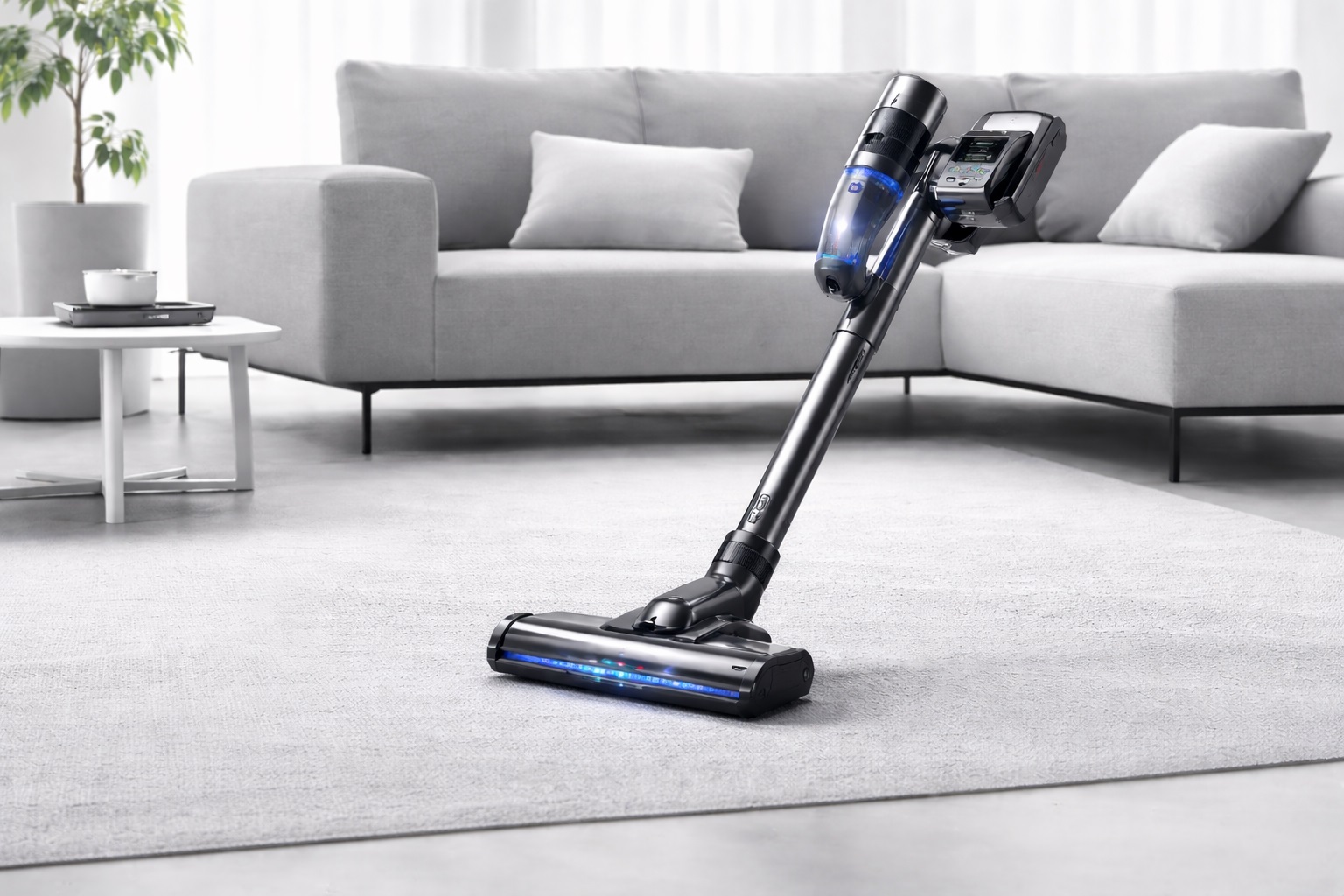
The vacuum cleaner category is crowded, fast-moving, and increasingly review-driven. For global buyers and distributors, “another vacuum” is not a strategy—especially when marketplaces make it easy to compare models by price, claimed suction, noise, and battery life in seconds. For engineers, the pressure is different: turn a short list of marketing requirements into a product that performs consistently after months of real-world use.
The most sustainable way to win is product differentiation that is (1) clear to shoppers, (2) measurable to procurement teams, and (3) repeatable at mass-production scale. Below is a practical framework to help you build a lineup that can compete across price tiers without relying on risky keyword-stuffing, exaggerated claims, or fragile “gimmick” features.
一、Start with differentiation that procurement can verify ✅
If you’re sourcing for multiple regions, your advantage is rarely one “killer feature.” It’s a consistent proof system: lab tests, durability cycles, and a warranty/parts plan that reduces return rates.
Here’s how buyers typically evaluate competitive vacuums:
1) Cleaning power that holds up
A High Suction Vacuum Cleaner claim should be supported by more than one demo. Ask for standardized tests that reflect real conditions:
Sealed suction and airflow test method (and the test environment)
Pickup performance on mixed debris (fine dust + larger particles)
Edge cleaning and corner pickup (often where products fail visibly)
For procurement, the key isn’t just peak power—it’s stable performance across common use patterns: half-full bins, partially clogged filters, or brush roll hair wrap.
2) Noise as a conversion feature, not a footnote 🤫
In apartments and shared living environments, noise is a dealbreaker. A Portable Quiet Vacuum Cleaner becomes meaningful when you can show:
dB(A) at a standard distance
A “quiet mode” that still cleans effectively
Reduced high-frequency whine (tone matters as much as volume)
This is also where the Quiet Vacuum for Night Use positioning becomes an easy story for distributors: “clean anytime without waking anyone.”
3) Filtration credibility for allergy-sensitive markets 😷
A HEPA Filter Vacuum Cleaner can differentiate strongly, but only if filtration is sealed and consistent. For a Vacuum Cleaner for Allergies, buyers will scrutinize:
HEPA grade and fit tolerance
Bypass leakage prevention
Clear guidance for maintenance intervals and filter replacement
If your HEPA story is credible, it doesn’t just win households—it can become a procurement advantage for hospitality and urban markets where dust and allergens are common concerns.
二、Build a scenario-led SKU matrix (so each model has a “job”) 🎯
The fastest way to stand out is to stop building “one vacuum for everyone.” Instead, create a scenario-led lineup where each product owns a use-case.
Scenario A: Everyday whole-home cleaning (core volume)
This is where the Cordless Vacuum Cleaner category often wins. The differentiators here are:
Balanced weight distribution and maneuverability
Multi-surface cleaning ability for rugs + floors
Easy dustbin emptying and washable components
Position this SKU as a reliable daily driver—then support it with accessories and consumables that simplify ownership.
Scenario B: Wet mess + hygiene-first households 💦
Wet/dry is growing fast, but it’s also where quality problems show up quickly—odor, leakage, and mold risk. This is why Wet Dry Vacuum Cleaners must be differentiated by lifecycle hygiene.
If you’re building a wet/dry lineup, define it clearly as a Wet and Dry Vacuum Cleaner that is tested for:
Seal integrity and leak prevention
Dirty-water tank cleaning ease (no hidden corners)
Odor control and drying path after use
For premium positioning, a 4 in 1 Cordless Smart Wet & Dry Vacuum Cleaner can stand out if “smart” is real: reliable mode switching, clear alerts, and stable cleaning results across wet and dry modes.
For families or light commercial buyers who want fewer refills, a Large-Capacity Wet Dry Vacuum Cleaner needs a strong spill-handling story—but make sure weight and tank handling remain user-friendly.
Scenario C: Pet hair dominance 🐾
A vacuum that truly handles pet hair wins repeat purchases. Differentiate with:
Anti-tangle brush roll geometry
Upholstery tool performance and hair pickup on fabric
Easy maintenance without tools
This makes Vacuum Cleaner for Pet Hair a durable keyword theme because it maps directly to a painful daily problem.
Scenario D: Travel + car convenience 🚗🧳
Portable vacuums are not “mini versions” of home vacuums—they require purpose-built accessories. For this segment:
A Car Vacuum Cleaner needs crevice reach, stable suction, and practical dust containment.
A Portable Vacuum for Travel must be compact, sealed, quick-charging, and easy to store.
This is where cordless handheld vacuums and a Li-ion Cordless Handheld Vacuum Cleaner platform can anchor a profitable bundle strategy—especially in distribution channels that sell add-ons.
Scenario E: Small homes and apartments 🏙️
An Apartment Vacuum Cleaner differentiates through:
Compact docking and storage
Quiet operation and quick cleanup
Low-effort maintenance that prevents dust clouds
Combine this with “quiet” and HEPA narratives and you have a very strong cross-region positioning set.
三、Differentiate through ownership experience (not just features) ✨
A product can have good specs and still lose because it feels annoying. The most defensible differentiation often comes from “ownership experience” improvements.
1) Self-cleaning that’s actually hygienic 🧼
A Self-Cleaning Vacuum Cleaner feature should solve the real problem: sticky residue, odor buildup, and time-consuming cleanup.
To make self-cleaning a true differentiator:
Ensure the water path is rinse-friendly and drains fully
Minimize “dead zones” that trap dirty water
Design for easy drying (standing water is the odor source)
If self-cleaning reduces user workload, reviews improve—and returns drop.
2) Lightweight speed without fragility ⚡
A Fast Lightweight Vacuum Cleaner should feel quick:
Quick-release dustbin
Easy head steering
Fast pickup on visible debris (crumbs, hair, sand)
But “lightweight” cannot mean weak plastics or loose tolerances. Differentiation fails if the product develops squeaks, cracks, or wobbly joints after a few months.
3) Durability that distributors can trust 🛠️
For B2B programs, durable design is a margin protector. A Multi-Functional Durable Vacuum Cleaner should be defined by testable outcomes:
Latch fatigue cycles
Brush motor endurance
Drop testing for handheld modules and main body
Heat and clog protection behavior
Durability is also a marketing story when it’s backed by proof.
4) Efficiency and performance together ♻️
In many regions, energy messaging matters. An Energy-Saving Efficient Powerful Vacuum Cleaner positioning is credible when you can demonstrate:
Effective pickup at optimized power
Smarter motor control and airflow design
Practical runtime efficiency for cordless models
Efficiency is not just “green”—it can also mean better battery experience and fewer overheating issues.
四、Winning budget searches without brand damage 💰
Search intent for value is huge. Phrases like best vacuum on a budget, best budget hoover, good budget vacuum, best affordable vacuum, best budget vacuum, best value for money hoover, best value hoover, best vacuum cleaners on a budget, best vacuums on a budget, and good budget vacuum cleaner attract high traffic—but also high scrutiny.
The right differentiation strategy is value engineering, not cheap engineering:
Keep the “touch points” premium (latch feel, seals, head glide)
Reduce complexity where it doesn’t matter (fewer fragile parts)
Provide clear maintenance instructions (QR video guides help)
Ensure replacement filters/brush parts are consistently available
Budget positioning should still feel reliable—and that’s what converts once reviews accumulate.
五、Turn differentiation into assets for procurement and distribution 📦
To make differentiation scalable, build a “proof + package” system:
RFQ spec sheet with test methods and thresholds
Standardized pickup and noise demo script (30–60 seconds)
Consistent accessory bundling by scenario (pet kit, car kit, travel kit)
Consumables plan (HEPA filters, brush rolls, tanks)
Warranty workflow and service readiness
This is where brands like Lanxstar can stand out: not only by product features, but by being procurement-ready and distribution-ready.
Conclusion:
Standing out in the vacuum cleaner market doesn’t require wild innovation—it requires clear scenario ownership, measurable performance, and low-friction maintenance. Build a lineup that covers daily cordless needs, wet/dry hygiene, pet hair dominance, and portable car/travel use. Support every claim with tests, and your differentiation will survive procurement scrutiny, retail comparison, and long-term ownership.
Hashtags
Lanxstar vacuum cleaner, Lanxstar cordless vacuum, vacuums procurement, vacuum cleaner distribution, product differentiation vacuum cleaner, Cordless Vacuum Cleaner lineup, cordless handheld vacuums bulk, Li-ion Cordless Handheld Vacuum Cleaner OEM, Portable Quiet Vacuum Cleaner low noise, quiet vacuum cleaner for apartments, Quiet Vacuum for Night Use, Apartment Vacuum Cleaner compact storage, HEPA Filter Vacuum Cleaner sealed system, Vacuum Cleaner for Allergies HEPA, Vacuum Cleaner for Pet Hair anti-tangle, Vacuum Cleaner for Hardwood Floors soft roller, Vacuum for Multi-Surface testing, High Suction Vacuum Cleaner specs, Fast Lightweight Vacuum Cleaner design, Energy-Saving Efficient Powerful Vacuum Cleaner, Multi-Functional Durable Vacuum Cleaner durability, Self-Cleaning Vacuum Cleaner hygiene cycle, Wet Dry Vacuum Cleaners supplier, wet dry vacuum odor control, Wet and Dry Vacuum Cleaner leak test, Large-Capacity Wet Dry Vacuum Cleaner tank design, 4 in 1 Cordless Smart Wet & Dry Vacuum Cleaner features, Car Vacuum Cleaner accessory kit, Portable Vacuum for Travel compact kit, cordless vacuum runtime validation, HEPA vacuum replacement filter supply, anti-hair wrap brush roll, brush motor endurance testing, latch fatigue cycle testing, low noise motor airflow design, sealed filtration vacuum engineering, wet dry vacuum for pet mess, multi-surface pickup benchmark, edge cleaning performance test, budget vacuum value engineering, best vacuum on a budget keywords, best budget vacuum cleaner SKU, good budget vacuum cleaner positioning, best affordable vacuum build quality, best value for money hoover strategy, best value hoover for retail, best vacuum cleaners on a budget SEO, best vacuums on a budget search intent, good budget vacuum for apartments, distributor-ready vacuum packaging, warranty and after-sales vacuum program