Hi, message us with any questions.
We're happy to help!





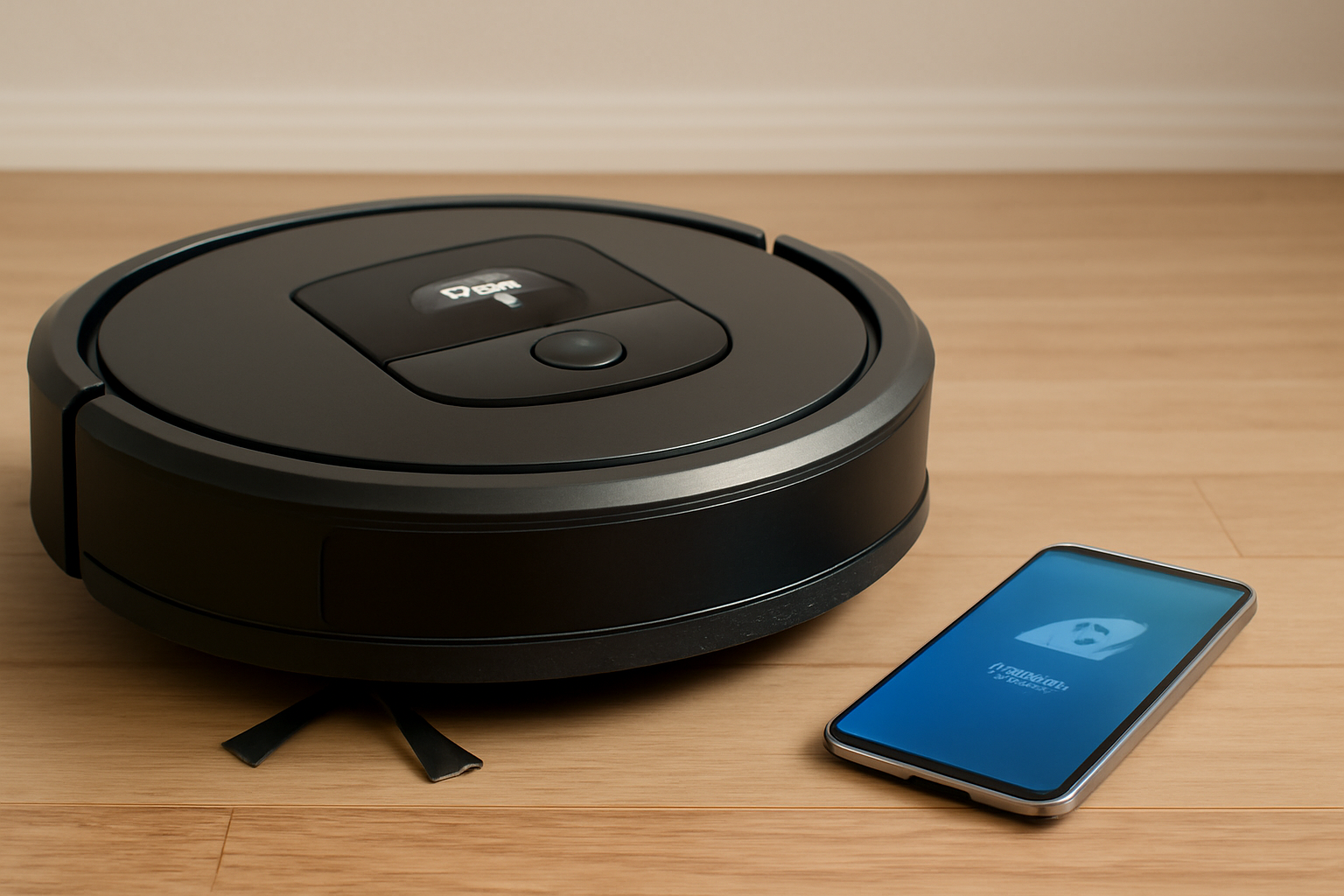
When Sensors, Software, and Sustainability Meet in Everyday Appliances
🌍 1. The Connected Revolution in Cleaning
Over the past decade, the Internet of Things (IoT) has redefined what “home appliance” means.
Vacuum cleaners—once purely mechanical devices—are now data nodes in digital ecosystems.
They communicate with mobile apps, adjust power in real time, and even share performance logs with service teams.
For procurement officers, engineers, and facility managers, this shift changes both value and responsibility.
A smart vacuum is no longer a single product; it’s part of a network that records, learns, and optimizes behavior over time.
⚙️ 2. From Hardware to Firmware: The New Brain of the Machine
Traditional vacuums depended entirely on mechanical precision.
Today’s designs balance embedded processors, sensors, and adaptive algorithms that respond to dust density, floor friction, and motor temperature.
Microcontrollers interpret signals from pressure sensors and accelerometers, regulating suction power moment-to-moment.
This makes modern units energy-aware: they draw only the power they need, lowering both noise and electricity use.
The result is a generation of appliances that perform better, last longer, and cost less to operate—a clear gain for sustainability and user satisfaction alike.
🧭 3. Mapping the Environment: Spatial Intelligence
Smart vacuums no longer “bump and learn.”
Using LiDAR, ultrasonic, and infrared sensors, they map rooms with centimeter accuracy.
Algorithms translate that data into efficient cleaning routes, reducing overlap and wasted motion.
For industrial and commercial buyers, this means predictable cleaning times and measurable productivity.
For engineers, spatial data unlocks design improvements: better wheel traction, optimized suction angle, and smarter obstacle avoidance.
Spatial awareness also feeds analytics platforms that visualize usage patterns across entire facilities, turning maintenance into a science.
🌐 4. Data as a Design Material
Every connected appliance generates terabytes of data—motor RPM, airflow resistance, battery temperature, and filter condition.
Designers treat these datasets as a new material to sculpt performance.
Aggregated anonymized data from thousands of machines reveal failure points, average run times, and preferred user settings.
That insight drives iterative design: quieter fans, more durable seals, and firmware updates that extend service life.
The appliance becomes a self-reporting prototype—an evolving product rather than a finished one.
📲 5. The User Interface: From Buttons to Dashboards
The control panel has migrated to smartphones.
Through mobile apps, users schedule cleaning, view energy consumption, and receive maintenance alerts.
Some interfaces visualize air quality or noise levels, translating technical metrics into intuitive color codes.
Accessibility is another frontier: voice control integrates with digital assistants, enabling hands-free operation.
For aging populations or people with mobility challenges, that’s not convenience—it’s inclusion.
By making complex systems approachable, UI design turns smart technology into universal technology.
💡 6. Predictive Maintenance and the End of Downtime
Sensors that once served convenience now underpin predictive maintenance.
When a filter clogs or a motor overheats, the system logs the anomaly and recommends action before failure occurs.
Large cleaning fleets in hotels or airports can connect multiple vacuums to a central dashboard.
Algorithms forecast when each unit requires service, reducing unplanned downtime and extending equipment lifespan.
For distributors, predictive data transforms after-sales service from reactive repair to proactive partnership.
🔋 7. Energy Efficiency Meets Automation
Automation isn’t just about autonomy; it’s about precision energy control.
Variable-speed motors adjust to surface types in milliseconds, consuming up to 40 % less power than fixed-speed models.
Adaptive scheduling allows devices to run during low-tariff hours, aligning household or facility energy use with renewable-supply peaks.
These cumulative optimizations make IoT-enabled cleaning systems significant contributors to energy-management strategies, not just housekeeping tools.
🧩 8. Interoperability and the Smart-Home Ecosystem
Smart vacuums rarely operate alone.
They connect through protocols like Matter, Zigbee, and Wi-Fi 6, syncing with thermostats, air purifiers, and security sensors.
Imagine a workflow where air-quality sensors detect rising dust levels and automatically trigger a short cleaning cycle.
Or a system that pauses vacuuming when motion detectors sense occupants entering a room.
Interoperability turns individual devices into cooperative agents within an intelligent building.
🔐 9. Cybersecurity: The Hidden Engineering Frontier
Connectivity introduces risk.
IoT vacuums handle mapping data that reveals floor plans and user habits—information that must remain private.
Engineers now embed encryption chips, secure bootloaders, and firmware-update authentication.
Procurement teams increasingly request cyber-resilience certifications alongside energy ratings.
The future of appliance engineering will depend as much on digital trust as on mechanical reliability.
🧠 10. Machine Learning and Continuous Optimization
Machine learning transforms raw sensor data into actionable knowledge.
Algorithms identify optimal suction profiles for specific floor types and predict component wear based on past patterns.
Some models already “learn” user preferences—quiet cleaning in the morning, deep cleaning at night—and adjust automatically.
Over-the-air updates continuously refine these behaviors, ensuring each unit becomes more efficient the longer it operates.
The concept of planned obsolescence gives way to planned improvement.
🌱 11. Environmental Impact and Lifecycle Thinking
Smart design supports sustainability in several ways:
Longer lifespan: software updates delay hardware replacement.
Efficient logistics: predictive maintenance reduces shipping of spare parts.
Data transparency: sensors quantify actual energy use, informing carbon reporting.
Lifecycle assessments increasingly include digital components: data storage, server energy, and connectivity footprints.
Balancing these with physical sustainability goals is the next challenge for green engineering.
🏭 12. Manufacturing and Quality in the Age of Connectivity
Smart products require smarter factories.
Manufacturers adopt Industry 4.0 methods—robotic assembly, real-time QA monitoring, and traceable component tagging.
Every vacuum leaves the line with a digital birth certificate: firmware version, calibration data, and test results.
If a batch later shows abnormal vibration, engineers trace it to the precise production window and supplier.
This transparency shortens root-cause analysis from weeks to minutes.
💼 13. Procurement Metrics for Smart Appliances
Buyers no longer ask only about wattage or warranty.
They evaluate:
integration with existing IoT platforms
data-security compliance
total cost of connectivity (software licensing, updates)
energy-consumption analytics
Tenders increasingly include clauses for data-sharing APIs or standardized dashboards, ensuring multi-brand compatibility.
Procurement thus becomes a driver of interoperability standards across the entire appliance sector.
🧭 14. Regional Outlook: Europe and the Middle East
Europe leads in regulatory frameworks for energy and data privacy (GDPR).
Manufacturers targeting the region must design devices that collect minimal personal data while offering full functionality.
In the Middle East, rapid infrastructure growth and smart-city projects generate strong demand for connected cleaning solutions suited to commercial towers and airports.
Dust, heat, and long operating hours push engineers to develop resilient electronics and easily replaceable batteries.
Both regions share one vision: technology that merges efficiency with environmental responsibility.
🔭 15. Future Horizons: Autonomy, Collaboration, and Ethics
The next decade will see vacuums that collaborate—multiple units mapping, dividing, and sharing tasks dynamically.
Edge AI chips will process data locally, reducing cloud dependence and latency.
Some prototypes already communicate directly with HVAC systems to coordinate air filtration cycles.
Ethical design discussions are emerging: how much data should machines store?
How can engineers guarantee transparency without exposing users to risk?
These questions shape the moral architecture of the connected home.
🌟 16. Conclusion: Intelligence as the New Clean
Smart vacuum technology shows how intelligence—not horsepower—defines progress.
By embedding sensors, software, and ethics into design, engineers transform cleaning from a repetitive chore into a responsive service.
The quiet whirr beneath your desk is no longer just airflow; it’s an orchestra of microcontrollers, data packets, and algorithms playing in harmony with human life.
In the age of IoT, the cleanest rooms will belong to the smartest systems.
🔖 Hashtags
#SmartVacuum #IoTTechnology #VacuumEngineering #EnergyEfficientAppliance #DataDrivenDesign #PredictiveMaintenance #ConnectedDevices #SmartHome #SustainableAppliances #Automation #LowNoiseDesign #GreenManufacturing #DigitalTwin #ArtificialIntelligence #MachineLearning #CircularEconomy #SmartCleaningTech #GreenInnovation #EnergyManagement #ApplianceDesign #EnvironmentalEngineering #LifecycleThinking #EnergySavingAppliance #HomeAutomation #SustainableEngineering #EcoDesign #ModernHomeCare #SmartHomeDevices #IndoorAirQuality #CyberSecurity #ProductInnovation #NextGenVacuum #SmartFactory #Industry40 #ProcurementTrends #DataAnalytics #UserExperienceDesign #HumanCenteredDesign #SystemIntegration #EnergySmartHome #FutureOfCleaning #DigitalTransformation #SensorTechnology #ApplianceMarketInsights #QualityAssurance #AutomationEngineering #CloudIntegration #SustainabilityTrends #EngineeringExcellence #TechnologyInsights #SustainableLiving #Lanxstar